

Expanding your patio is a great way to create more room for relaxing, dining, and entertaining outdoors. Whether you have a small backyard or a spacious garden, the right patio extension can improve both comfort and style. From affordable gravel designs to elegant stone surfaces and covered seating areas, these 26 patio extension ideas will help you transform your outdoor space into a beautiful, functional retreat.
1. Concrete Patio Extension

A concrete patio extension is a practical and durable way to expand your outdoor living space. It creates a smooth, sturdy surface for outdoor furniture, dining areas, and relaxing spaces. Concrete is also versatile, allowing homeowners to choose different finishes, colors, and textures that complement their existing patio. With proper installation and maintenance, a concrete extension can provide an attractive outdoor area for many years.
Design and Layout Ideas
A concrete patio extension can blend seamlessly with an existing patio or create a separate outdoor seating area. For a modern appearance, choose a smooth concrete finish with clean edges and simple furniture. A brushed finish offers additional traction, making it suitable for spaces exposed to rain.
You can also incorporate decorative borders, planters, or subtle color variations to make the extension visually appealing. Consider the location of doors, walkways, and garden beds when planning the layout.
Materials and Installation Tips
Choosing suitable materials and preparing the ground properly are essential for a long-lasting concrete patio extension.
- Concrete mix: Use an appropriate exterior-grade concrete mix for durability.
- Gravel base: Install a compacted gravel foundation to support the concrete.
- Reinforcement: Consider steel reinforcement where required by the design and soil conditions.
- Drainage: Provide a gentle slope away from the house to prevent standing water.
- Control joints: Include properly spaced joints to help manage cracking.
Maintenance and Decoration
Concrete patios require relatively little maintenance compared with many other outdoor flooring materials. Sweep regularly, wash away dirt when necessary, and apply a suitable concrete sealer according to the manufacturer’s recommendations.
Decorate the extended patio with comfortable outdoor seating, large planters, and weather-resistant rugs. String lights or pathway lighting can create a welcoming atmosphere during the evening. Adding greenery around the edges also helps soften the concrete surface and connect the patio with the surrounding landscape.
2. Paver Patio Extension
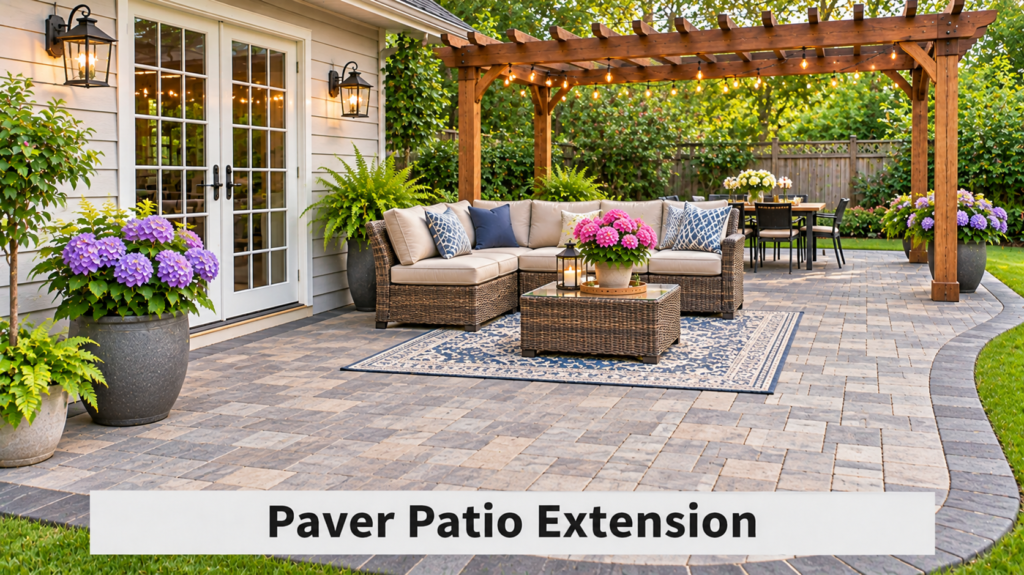
A paver patio extension is a stylish and versatile way to increase your outdoor living space. Pavers come in different shapes, sizes, colors, and textures, making them suitable for traditional and modern backyard designs. They create a durable surface for seating, dining, and entertaining while allowing homeowners to customize the layout. With proper installation, a paver extension can blend beautifully with an existing patio.
Design and Layout Ideas
Paver patio extensions offer excellent flexibility when creating an attractive outdoor area. For a modern appearance, choose large rectangular pavers arranged in a simple running bond pattern. Traditional homes often look beautiful with smaller pavers installed in herringbone or basketweave patterns.
Consider matching the extension’s color to your existing patio for a unified appearance. Alternatively, use contrasting borders to define different outdoor living zones. Curved edges can soften the overall design and create a natural transition into surrounding garden beds.
Materials and Installation Tips
Proper preparation and quality materials help ensure that your paver patio extension remains stable and attractive.
- Concrete pavers: Choose durable, weather-resistant pavers suitable for outdoor use.
- Compacted base: Prepare a stable crushed-stone foundation to minimize shifting.
- Bedding layer: Use suitable bedding sand or aggregate to support the pavers.
- Edge restraints: Install sturdy borders to keep the pavers securely positioned.
- Joint material: Fill spaces with appropriate joint sand to improve stability.
Maintenance and Decoration
Paver patios are relatively easy to maintain. Sweep away leaves and debris regularly, remove weeds from joints, and replace damaged pavers when necessary. Periodic cleaning helps preserve their natural appearance.
Decorate the extended space with an outdoor dining set, comfortable chairs, and decorative planters. Add solar pathway lights or string lighting to create an inviting atmosphere. A weather-resistant outdoor rug can help define the seating area while adding warmth and personality.
3. Natural Stone Patio Extension
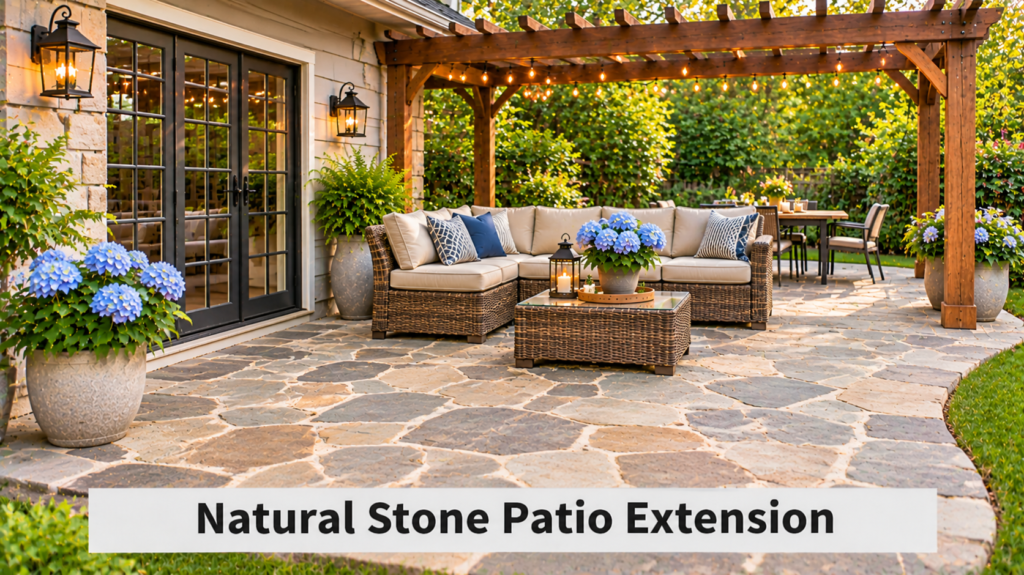
A natural stone patio extension creates an elegant and timeless outdoor living space. Materials such as slate, limestone, sandstone, and granite offer unique colors, textures, and patterns that enhance backyard landscapes. Natural stone complements gardens, outdoor kitchens, and traditional home designs. Its durability and distinctive appearance make it an attractive choice for homeowners who want a functional patio with a sophisticated finish.
Design and Layout Ideas
Natural stone patio extensions work beautifully in both formal and informal backyard settings. Large rectangular stone slabs create a clean, contemporary appearance, while irregularly shaped stones provide a relaxed, rustic atmosphere.
Choose stone colors that complement your home’s exterior and existing patio materials. Light beige limestone can brighten smaller spaces, while darker slate adds contrast and depth. Combining natural stone with garden borders, ornamental grasses, or low-growing plants creates a smooth transition between the patio and surrounding landscape.
Materials and Installation Tips
Selecting appropriate stone materials and preparing a stable foundation are important for long-term performance.
- Stone selection: Choose durable stones suitable for your local climate and outdoor conditions.
- Base preparation: Install a properly compacted foundation to support the stone surface.
- Stone thickness: Select thicknesses appropriate for the installation method and expected use.
- Drainage planning: Maintain a gentle slope to direct rainwater away from buildings.
- Joint filling: Use compatible jointing material to stabilize stones and reduce weed growth.
Maintenance and Decoration
Natural stone patios require regular cleaning to prevent dirt, moss, and stains from accumulating. Use cleaning products specifically designed for the selected stone type. Some stones benefit from sealing, while others may not require it.
Enhance the extension with wooden outdoor furniture, comfortable cushions, and decorative ceramic planters. Soft landscape lighting can highlight the stone’s natural texture during the evening. Adding a small water feature or surrounding flower beds creates a peaceful outdoor retreat.
4. Wooden Deck Patio Extension
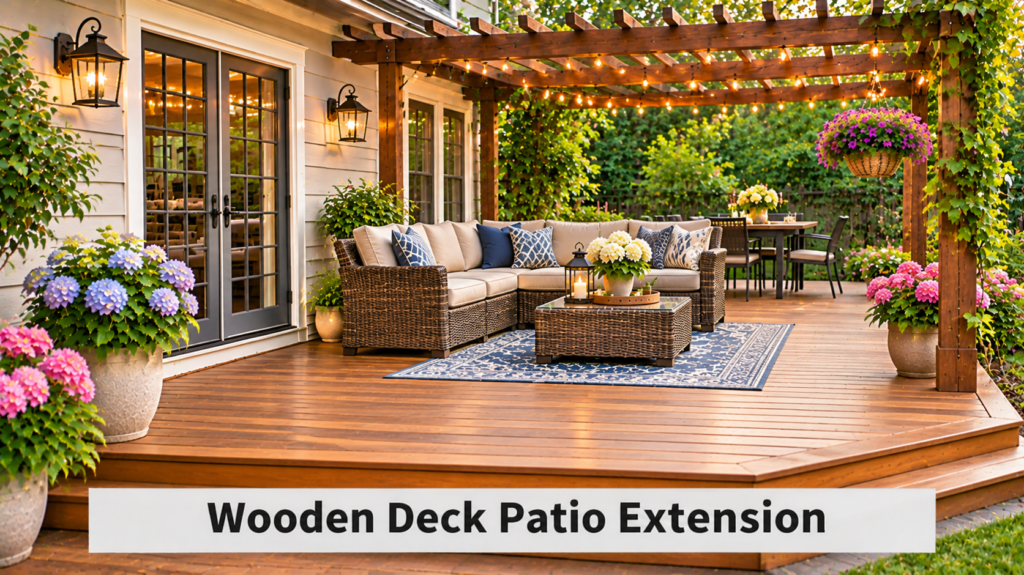
A wooden deck patio extension adds warmth, natural beauty, and functionality to an existing outdoor space. It is particularly useful for homeowners who want to extend their patio over uneven ground or create a slightly elevated seating area. Natural wood complements greenery, outdoor furniture, and traditional backyard landscapes. With thoughtful design and proper maintenance, a wooden deck extension can transform an ordinary patio into a welcoming outdoor gathering space.
Design and Layout Ideas
Wooden deck extensions can be designed to match the height of an existing patio or create a separate raised outdoor living area. A simple rectangular deck works well for modern homes, while curved edges or multiple levels can add visual interest.
Choose natural wood tones that coordinate with your home’s exterior. Light-colored decking creates an airy appearance, while rich brown finishes offer a cozy atmosphere. Built-in benches, planter boxes, and integrated steps can improve functionality without overcrowding the space.
Materials and Installation Tips
A strong foundation and weather-resistant materials are essential for a safe, durable wooden deck extension.
- Decking boards: Select pressure-treated lumber, cedar, or another suitable outdoor wood.
- Support structure: Install properly sized joists, beams, and posts according to local building requirements.
- Footings: Use appropriate foundations to support the deck and prevent movement.
- Fasteners: Choose corrosion-resistant screws and connectors designed for exterior construction.
- Ventilation: Maintain adequate airflow beneath the deck to reduce moisture buildup.
Maintenance and Decoration
Wooden deck extensions require periodic maintenance to protect against moisture, fading, and surface deterioration. Sweep regularly, clean with wood-safe products, and apply appropriate protective finishes when needed. Inspect boards, railings, and structural connections for damage.
Decorate the deck with a comfortable outdoor sectional, potted flowers, and a small coffee table. Add warm string lights or recessed deck lighting for evening use. A pergola or shade umbrella can provide relief from direct sunlight while making the extended patio more comfortable throughout the day.
5. Gravel Patio Extension

A gravel patio extension is an affordable and attractive way to expand your outdoor living space without major construction. Gravel creates a natural, textured surface that blends beautifully with gardens, lawns, and backyard landscapes. It is especially suitable for homeowners looking for a budget-friendly DIY project. With proper ground preparation, edging, and decorative elements, a gravel patio extension can become a comfortable seating or entertainment area.
Design and Layout Ideas
Gravel patio extensions work well in rustic, cottage-style, and modern backyard designs. For a traditional appearance, choose warm beige or brown gravel surrounded by wooden or brick edging. Gray gravel creates a more contemporary look, especially when combined with black metal furniture and simple landscaping.
Consider creating a rectangular gravel seating area connected to your existing patio. Curved borders can provide a softer transition into garden beds. Adding large stepping stones makes walking easier while introducing visual interest.
Materials and Installation Tips
Installing a gravel patio extension requires careful ground preparation to prevent uneven surfaces and excessive gravel movement.
- Gravel selection: Choose compactable crushed gravel for a firmer walking surface.
- Ground preparation: Remove grass, roots, and loose soil before installation.
- Base layer: Install a compacted aggregate foundation where necessary.
- Landscape fabric: Use suitable geotextile beneath the aggregate when soil conditions require separation.
- Edging materials: Install metal, brick, stone, or wooden borders to contain the gravel.
Maintenance and Decoration
Gravel patio extensions require occasional raking to maintain an even surface. Remove fallen leaves, control weeds, and replenish gravel when necessary. Check for low spots after heavy rainfall and correct drainage problems promptly.
Decorate the extension with Adirondack chairs, a small outdoor table, and large decorative planters. Solar garden lights can illuminate pathways and define patio borders. Adding ornamental grasses or flowering plants around the edges creates a relaxed atmosphere while blending the gravel patio into the surrounding landscape.
6. Brick Patio Extension
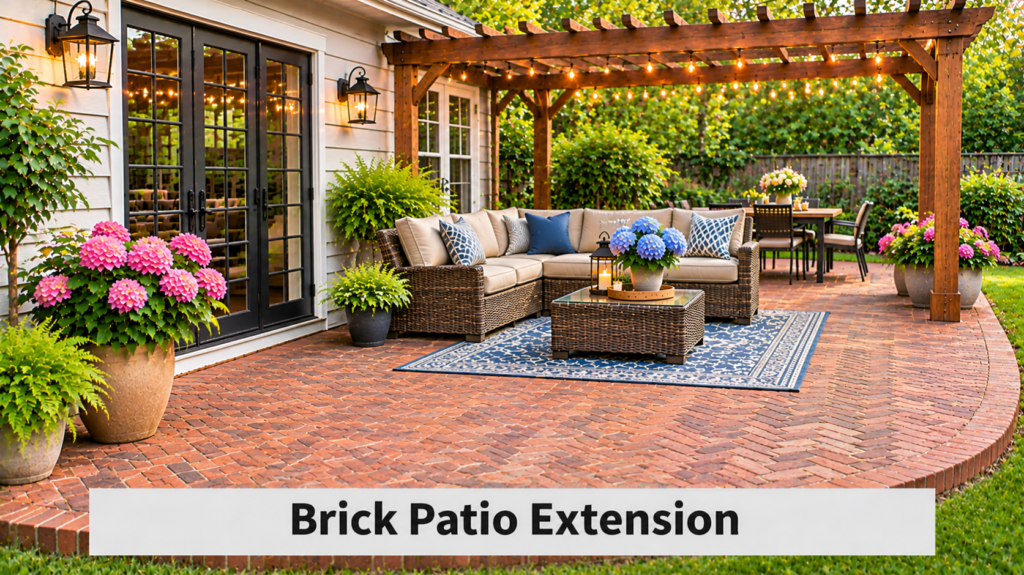
A brick patio extension adds timeless character and warmth to an outdoor living space. Brick provides a durable surface with rich, earthy colors that complement traditional homes, cottage gardens, and rustic backyard designs. Its versatility allows homeowners to create attractive patterns and decorative borders. Whether extending a small seating area or building a larger entertainment space, a brick patio can enhance both functionality and visual appeal.
Design and Layout Ideas
Brick patio extensions offer numerous design possibilities. A classic herringbone pattern creates an elegant appearance, while a running bond layout provides a clean, organized look. Basketweave patterns are particularly attractive for traditional gardens and smaller patios.
Choose brick colors that coordinate with your home’s exterior and existing outdoor flooring. Red and brown tones provide warmth, while weathered gray bricks offer a softer, aged appearance.You can also combine brick flooring with natural stone borders to create contrast. Surrounding the extension with flower beds, low hedges, or decorative planters helps establish a welcoming outdoor environment.
Materials and Installation Tips
Proper installation is essential for preventing uneven surfaces, shifting bricks, and drainage problems.
- Clay paving bricks: Choose bricks manufactured specifically for outdoor paving.
- Compacted foundation: Prepare a stable crushed-stone base to support the surface.
- Bedding sand: Install an even bedding layer to help position the bricks.
- Edge restraints: Secure the perimeter to prevent movement.
- Joint sand: Fill joints with suitable sand to improve stability and reduce weed growth.
Maintenance and Decoration
Brick patios benefit from regular sweeping and occasional washing to remove dirt and debris. Inspect joints for weeds or missing sand and refill them when necessary. Replace damaged bricks to maintain an even walking surface.
Decorate your brick patio extension with wrought-iron furniture, wooden benches, and colorful flowering pots. Warm outdoor lighting can highlight the brick’s natural tones during the evening. A small dining table or comfortable conversation seating creates a charming space for family gatherings and outdoor relaxation.
7. Flagstone Patio Extension

A flagstone patio extension creates a beautiful outdoor space with natural textures and an organic appearance. Flagstone consists of relatively flat pieces of natural stone that can be arranged in various patterns. Its irregular shapes and earthy colors make it particularly suitable for gardens, rustic landscapes, and traditional homes. A properly installed flagstone extension provides an attractive area for outdoor dining, relaxing, and entertaining.
Design and Layout Ideas
Flagstone patio extensions look especially appealing when designed with irregular stone shapes and natural spacing. This arrangement creates a relaxed appearance that complements surrounding garden beds and greenery.
For a more organized design, choose rectangular or square-cut flagstones arranged in straight lines. Neutral shades such as gray, beige, tan, and brown blend easily with different outdoor furniture styles.
Consider connecting the extension to an existing patio through a matching stone border. Planting low-growing ground covers near the edges can soften the transition between the patio and lawn. A curved flagstone extension is also an excellent choice for creating a cozy garden seating area.
Materials and Installation Tips
Selecting suitable flagstone and preparing the installation area carefully helps create a durable, attractive surface.
- Flagstone material: Choose sandstone, slate, limestone, or another stone suitable for your climate.
- Stone thickness: Use appropriate thicknesses for the chosen installation method.
- Base preparation: Install a compacted aggregate foundation for dry-laid installations.
- Stone placement: Arrange pieces to create comfortable walking surfaces with consistent joints.
- Drainage: Maintain a gentle slope away from the house to prevent water accumulation.
Maintenance and Decoration
Flagstone patios require regular sweeping and occasional cleaning to remove dirt, moss, and organic debris. Use cleaning solutions appropriate for the specific stone to avoid discoloration or surface damage. Inspect joints periodically and replace loose jointing material when needed.
Enhance the extension with rustic wooden chairs, comfortable outdoor cushions, and decorative planters. Garden lanterns or low-voltage landscape lighting can highlight the stone’s natural beauty. Surrounding the patio with flowering shrubs, ornamental grasses, and perennial plants creates a peaceful backyard retreat.
8. Stamped Concrete Patio Extension
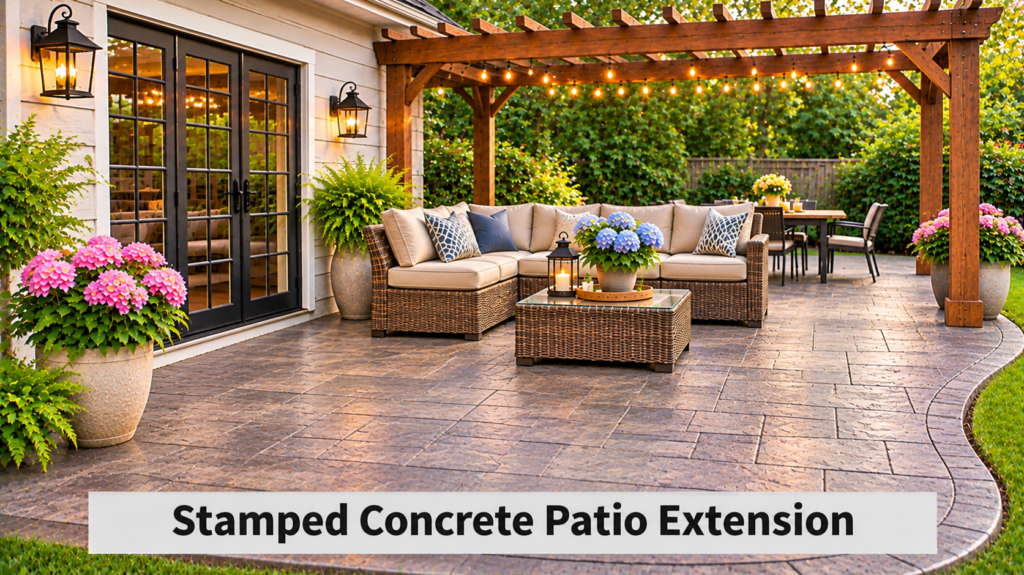
A stamped concrete patio extension is an attractive way to expand your outdoor living space while achieving the appearance of natural stone, brick, or wood. This decorative concrete option offers numerous patterns, textures, and colors to complement different backyard styles. It provides a durable, continuous surface suitable for outdoor furniture, dining areas, and entertainment spaces. With professional installation and proper maintenance, stamped concrete can create a beautiful patio extension that looks stylish for years.
Design and Layout Ideas
Stamped concrete offers excellent design flexibility for homeowners who want a decorative patio without installing individual stones or pavers. Popular patterns include slate, cobblestone, brick, and wood plank textures. Choose a pattern that complements your home’s architecture and existing patio.
For a modern outdoor space, consider large slate patterns in soft gray or charcoal tones. Rustic backyards look attractive with warm brown finishes that resemble natural flagstone. Decorative borders can separate the extension from the original patio while creating a coordinated appearance.
Materials and Installation Tips
Proper installation is essential for achieving a durable stamped concrete surface with consistent patterns and colors.
- Concrete mix: Use an exterior-grade concrete mix suitable for local weather conditions.
- Base preparation: Install a stable, compacted foundation to minimize settling.
- Stamping patterns: Choose textured stamping mats that create the desired decorative finish.
- Coloring products: Use suitable integral colors or surface color hardeners for realistic results.
- Control joints: Include properly planned joints to help manage concrete cracking.
Maintenance and Decoration
Stamped concrete requires regular sweeping and occasional washing to remove dirt and debris. Apply an appropriate exterior concrete sealer according to the manufacturer’s recommendations. Avoid harsh cleaning products that may damage decorative finishes.
Decorate the extension with comfortable outdoor furniture, large ceramic planters, and weather-resistant cushions. A pergola or shade umbrella can provide protection from direct sunlight. Add subtle landscape lighting around the patio edges to highlight the stamped patterns and create an inviting evening atmosphere.
9. Porcelain Tile Patio Extension

A porcelain tile patio extension creates a sleek, sophisticated outdoor living area with a clean and polished appearance. Outdoor-rated porcelain tiles are available in various colors, textures, and finishes that resemble natural stone, concrete, and wood. Their low water absorption and resistance to stains make them a practical flooring choice for many climates. Porcelain tiles are especially suitable for contemporary patios, covered outdoor spaces, and elegant backyard dining areas.
Design and Layout Ideas
Porcelain tile extensions work beautifully in modern and minimalist backyard designs. Large-format tiles create a spacious appearance with fewer visible grout lines. Neutral colors such as beige, light gray, and charcoal complement contemporary architecture.
For a natural look, choose wood-effect porcelain tiles that provide the warmth of timber without requiring traditional wood maintenance. Stone-effect tiles can create a luxurious appearance while coordinating with garden beds and outdoor furniture.Consider matching the extension’s tile color with the existing patio for a seamless transition. Contrasting borders or alternating tile patterns can also help define separate seating and dining areas.
Materials and Installation Tips
Selecting appropriate outdoor tiles and following proper installation methods are important for long-term durability.
- Outdoor-rated tiles: Choose frost-resistant porcelain where freezing temperatures occur.
- Slip resistance: Select textured tiles with a suitable slip-resistance rating for wet outdoor areas.
- Stable foundation: Prepare a properly engineered concrete base or compatible outdoor pedestal system.
- Exterior adhesive: Use weather-resistant tile adhesives designed for outdoor applications.
- Drainage and joints: Include appropriate slope, grout, and movement joints to accommodate moisture and temperature changes.
Maintenance and Decoration
Porcelain tile patios are relatively easy to maintain. Sweep regularly and clean the surface with mild detergent and water. Avoid abrasive cleaning methods that could damage certain finishes.
Decorate the extended patio with modern outdoor sofas, minimalist dining furniture, and large architectural planters. Neutral cushions and textured outdoor accessories complement the smooth tile surface. Add recessed lighting or contemporary wall fixtures to create an elegant outdoor setting during the evening.
10. Composite Deck Patio Extension

A composite deck patio extension is a practical option for homeowners who want the appearance of natural wood with reduced maintenance requirements. Composite decking typically combines wood fibers or other fillers with plastic materials to create durable outdoor boards. It is available in numerous colors and textures, making it suitable for modern and traditional backyard designs. Composite decking can transform an existing patio into a comfortable, functional outdoor living area.
Design and Layout Ideas
Composite deck extensions provide a clean, organized appearance that works well with contemporary outdoor spaces. Choose light gray or natural oak-colored boards for a bright, modern look. Dark brown or charcoal finishes create a sophisticated appearance and pair beautifully with black metal furniture.
A rectangular deck extension is ideal for maximizing usable space, while an L-shaped layout can wrap around an existing patio or garden feature. Consider incorporating built-in benches, steps, or raised planter boxes to improve functionality.Using contrasting deck board colors for borders can add visual interest without making the design overly complicated. For larger patios, different board directions can help distinguish dining and lounging zones.
Materials and Installation Tips
Proper structural support and manufacturer-approved installation methods are essential for a long-lasting composite deck extension.
- Composite boards: Choose quality decking materials rated for outdoor exposure.
- Support framing: Use pressure-treated lumber or compatible framing systems designed for the project.
- Joist spacing: Follow the decking manufacturer’s recommended spacing requirements.
- Fastening systems: Install approved hidden fasteners or corrosion-resistant deck screws.
- Expansion gaps: Allow the recommended spacing between boards to accommodate temperature-related movement.
Maintenance and Decoration
Composite decking generally requires less maintenance than natural wood, although regular cleaning is still necessary. Sweep away leaves and debris, wash the surface with mild soap and water, and remove spills promptly to prevent staining. Inspect fasteners and structural components periodically.
Decorate the extension with weather-resistant lounge chairs, an outdoor sectional, and decorative planters. Add LED deck lighting along steps or seating areas to improve nighttime visibility. A pergola, retractable shade, or large patio umbrella can make the extended deck more comfortable during warmer months.
11. Raised Patio Extension
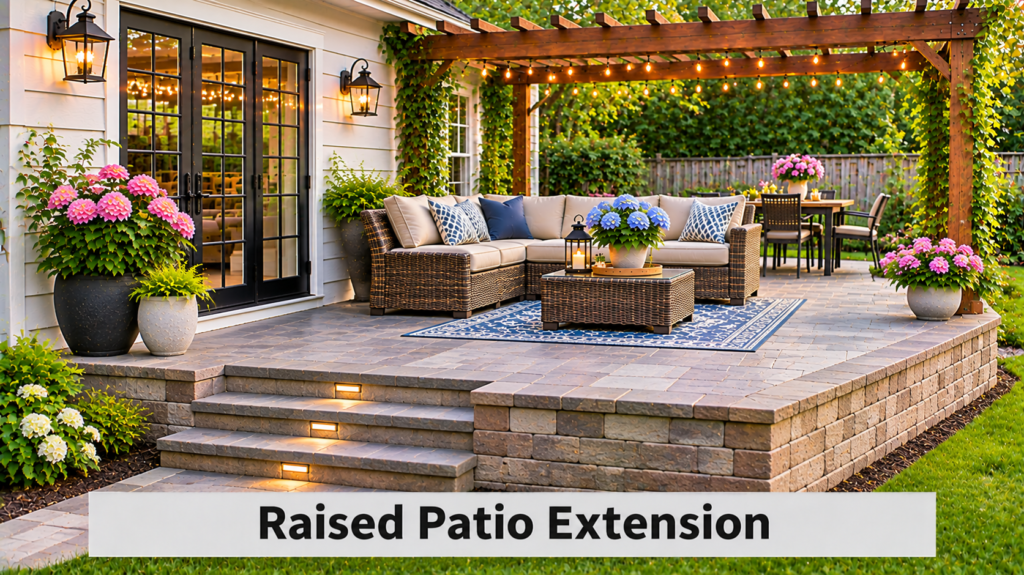
A raised patio extension is an excellent way to expand your outdoor living space while adding height and visual interest to your backyard. It is particularly useful for properties with sloping ground or uneven landscapes. Raised patios can be constructed using concrete, natural stone, brick, or pavers, creating a stable surface for outdoor furniture and entertaining. With thoughtful design, a raised patio extension can connect your home to the garden while creating a stylish, functional outdoor area.
Design and Layout Ideas
Raised patio extensions work beautifully in both modern and traditional backyard settings. For a contemporary appearance, choose large concrete pavers with clean edges and neutral colors. Natural stone or brick creates a warmer, more rustic atmosphere that blends with surrounding landscaping.Consider adding wide steps to connect the raised patio with the lawn or garden. Built-in seating walls can define the space while providing additional seating for guests.You can also incorporate raised flower beds around the patio perimeter to soften the structure. A pergola or comfortable outdoor seating arrangement can transform the elevated area into a relaxing retreat.
Materials and Installation Tips
Proper structural support and drainage are essential when constructing a raised patio extension.
- Retaining walls: Use suitable concrete blocks, natural stone, or engineered wall systems to support the raised surface.
- Compacted foundation: Prepare a stable base to reduce settling and movement.
- Drainage system: Install appropriate drainage materials to prevent water pressure behind retaining walls.
- Patio surface: Choose durable pavers, stone, or concrete designed for outdoor use.
- Safety features: Include stable steps, adequate lighting, and guards where required by local building codes.
Maintenance and Decoration
Inspect retaining walls, joints, and patio surfaces regularly for movement or damage. Remove debris, clean the flooring, and ensure drainage outlets remain clear. Repair loose stones or pavers promptly to maintain a safe walking surface.
Decorate the raised extension with outdoor sofas, decorative planters, and comfortable cushions. Landscape lighting along steps and retaining walls improves visibility after sunset. Adding ornamental grasses, flowering shrubs, or climbing plants around the edges helps connect the elevated patio with the surrounding garden.
12. Multi-Level Patio Extension

A multi-level patio extension creates a dynamic outdoor living space by dividing the backyard into separate functional areas. Different levels can accommodate dining, lounging, cooking, or entertaining while making better use of uneven terrain. This design is especially attractive for larger backyards or properties with natural slopes. Combining materials, plants, and decorative features can create a visually appealing patio that feels organized and welcoming.
Design and Layout Ideas
Multi-level patio extensions provide an opportunity to create distinct outdoor zones without using walls or fences. For example, the upper level can feature an outdoor dining table near the house, while the lower level provides comfortable lounge seating overlooking the garden.
Choose complementary flooring materials to maintain a consistent appearance. Natural stone steps connecting concrete or paver surfaces can introduce attractive contrasts.Incorporate built-in planters, seating walls, or low retaining walls to define each level. A fire pit on the lower patio can create a cozy gathering space, while a pergola over the upper level provides shade for outdoor dining.
Materials and Installation Tips
Building a multi-level patio requires careful planning to ensure structural stability, proper drainage, and convenient access.
- Site evaluation: Assess the slope, soil conditions, and available backyard space before construction.
- Foundation preparation: Create stable, compacted bases for each patio level.
- Retaining walls: Install properly designed walls where necessary to support changes in elevation.
- Steps and pathways: Provide comfortable transitions between levels with suitable tread dimensions.
- Drainage planning: Direct rainwater away from the house and prevent water accumulation between levels.
Maintenance and Decoration
Keep each patio level clean and inspect retaining walls, steps, and paved surfaces regularly. Check drainage systems after heavy rainfall and repair loose materials when necessary.Use outdoor furniture to establish a different purpose for each level. A dining set works well near the kitchen, while cushioned lounge chairs create a comfortable relaxation area below. Install pathway lighting along connecting steps and highlight landscaping with subtle garden lights. Decorative containers and flowering plants can soften the transitions between levels.
13. Covered Patio Extension

A covered patio extension expands your outdoor living space while providing shelter from direct sunlight and light rain. It creates a comfortable area for dining, relaxing, and entertaining throughout much of the year. Covered extensions can feature solid roofs, pergolas, or adjustable shade structures, depending on the desired protection and style. With coordinated materials and furnishings, a covered patio can feel like a natural extension of your home’s interior living space.
Design and Layout Ideas
Covered patio extensions can complement different architectural styles. A solid roof supported by wooden posts creates a warm, traditional appearance, while a slim aluminum structure offers a clean, contemporary look.For a seamless connection between indoor and outdoor spaces, choose roofing colors and materials that coordinate with your home’s exterior. Large sliding glass doors can make the transition feel more open and inviting.Consider incorporating an outdoor dining table beneath the covered section, leaving nearby uncovered space for plants or sun loungers. Ceiling fans, outdoor curtains, and integrated lighting can improve comfort while creating a welcoming atmosphere.
Materials and Installation Tips
Choosing weather-resistant materials and designing a stable roof structure are essential for a successful covered patio extension.
- Roofing materials: Select metal, polycarbonate, shingles, or other materials suitable for your climate and roof design.
- Support posts: Use appropriately sized wood, steel, or aluminum posts to support the structure.
- Foundation: Install suitable footings to carry roof loads safely.
- Water drainage: Include appropriate roof slope, gutters, and downspouts to manage rainfall.
- Building requirements: Check local permits and structural standards before attaching a roof to your home.
Maintenance and Decoration
Inspect the roof, posts, connections, and drainage components periodically. Clear leaves from gutters, clean roofing materials when necessary, and look for signs of rust, moisture damage, or loose fittings.
Decorate the covered patio with weather-resistant sofas, an outdoor dining set, and soft cushions. Hanging plants, decorative lanterns, and warm string lights can create an inviting atmosphere. A ceiling fan may improve comfort during warm weather, while outdoor curtains provide extra shade and privacy.Choose furniture and accessories that complement the existing patio to create a cohesive outdoor living space.
14. Pergola Patio Extension
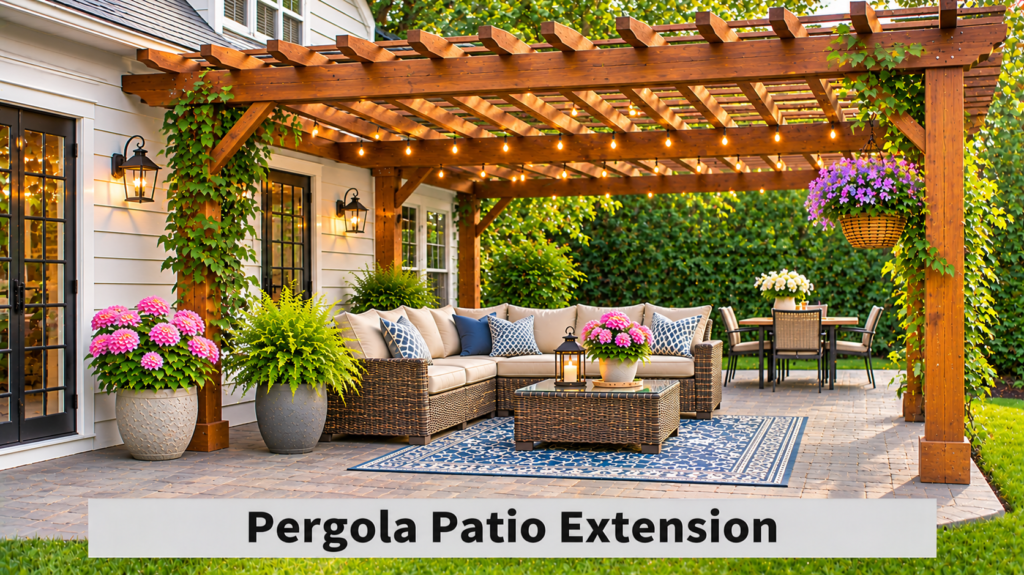
A pergola patio extension is a beautiful way to expand your outdoor living space while adding partial shade and architectural interest. Pergolas feature an open framework supported by posts, creating an inviting area for relaxing, dining, or entertaining. They can be constructed from wood, aluminum, or vinyl to complement different backyard styles. With comfortable furniture, climbing plants, and decorative lighting, a pergola extension can transform an ordinary patio into a stylish outdoor retreat.
Design and Layout Ideas
Pergola patio extensions work beautifully in modern, rustic, and traditional backyard settings. A natural wooden pergola creates a warm, welcoming atmosphere, while a black aluminum structure provides a sleek, contemporary appearance.
Consider extending the pergola directly from your existing patio to create a connected outdoor living area. A freestanding pergola can also define a separate garden seating space.For added beauty, grow climbing roses, jasmine, or other suitable vines around the structure. Outdoor curtains, retractable canopies, and hanging planters can provide additional shade and visual interest.
Materials and Installation Tips
Choosing durable materials and preparing a stable foundation are important for creating a long-lasting pergola extension.
- Pergola materials: Choose pressure-treated wood, cedar, aluminum, or weather-resistant vinyl.
- Support posts: Install properly sized posts with secure foundations.
- Roof structure: Use suitable beams and rafters to create the desired open-roof design.
- Shade options: Add a retractable canopy or compatible shade fabric for additional sun protection.
- Weather resistance: Select corrosion-resistant fasteners and finishes suitable for outdoor exposure.
Maintenance and Decoration
Wooden pergolas require periodic cleaning and protective treatments to prevent moisture damage and deterioration. Aluminum and vinyl structures generally need less maintenance, although regular inspections remain important.
Decorate the pergola extension with comfortable outdoor sofas, a small dining table, and weather-resistant cushions. String lights across the overhead beams to create a cozy evening atmosphere. Hanging baskets and decorative planters can introduce greenery and soften the structure’s appearance.A retractable shade canopy can make the seating area more comfortable during sunny afternoons, while outdoor curtains provide additional privacy.
15. Fire Pit Patio Extension
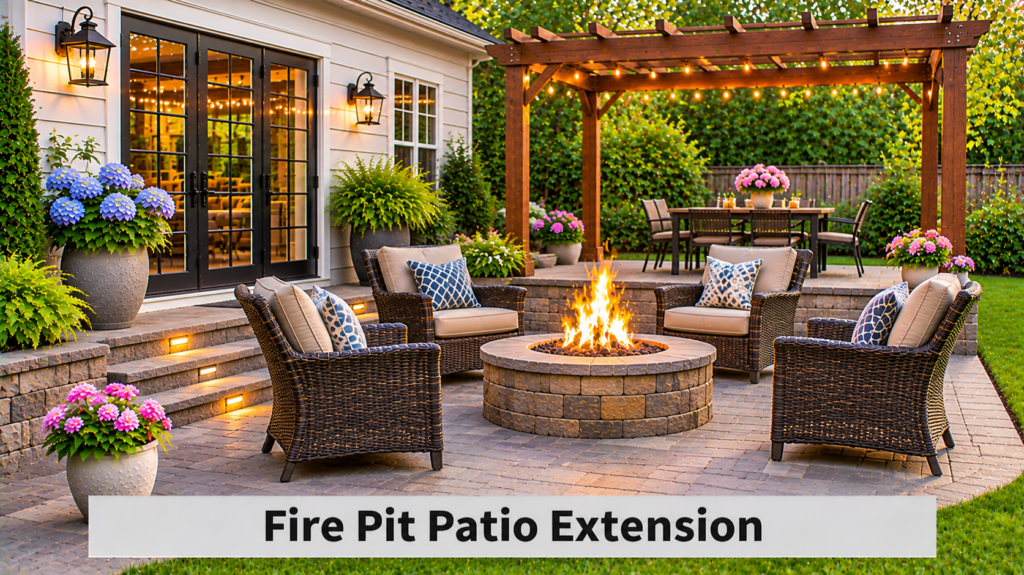
A fire pit patio extension creates a warm and inviting backyard gathering area where family and friends can relax and socialize. It expands your existing patio while providing a dedicated space for outdoor conversations and evening entertainment. Fire pit extensions can feature natural stone, concrete pavers, or brick flooring, making them suitable for various landscaping styles. With comfortable seating and thoughtful lighting, this design can become a favorite backyard destination.
Design and Layout Ideas
Fire pit patio extensions look particularly attractive when arranged in circular or semicircular layouts. A round stone patio with a central fire pit creates a natural conversation area, while a rectangular extension with a modern gas fire feature offers a contemporary appearance.Choose paving materials that complement your existing patio. Natural stone creates a rustic atmosphere, while smooth concrete pavers provide a cleaner, more modern design.
Consider adding curved seating walls or arranging Adirondack chairs around the fire feature. Surrounding the area with garden beds, decorative grasses, or low-growing shrubs can help integrate the extension into the backyard landscape.
Materials and Installation Tips
A safe fire pit patio requires proper planning, heat-resistant construction materials, and adequate separation from combustible objects.
- Patio flooring: Choose durable, noncombustible paving materials suitable for the fire pit design.
- Fire pit construction: Use manufacturer-approved fire-rated materials and components.
- Seating clearance: Maintain safe distances between the fire feature and surrounding furniture.
- Drainage: Provide appropriate drainage to prevent water accumulation around the patio.
- Safety requirements: Follow local fire regulations and manufacturer clearance instructions, especially near buildings and overhead structures.
Maintenance and Decoration
Clean the fire pit regularly and remove ash from wood-burning models after it has completely cooled. Inspect the fire feature, paving joints, and surrounding surfaces for damage. Gas fire pits should be maintained according to the manufacturer’s instructions.Decorate the extension with comfortable outdoor chairs, weather-resistant cushions, and low-voltage landscape lighting. A small side table provides convenient space for drinks and snacks.Add decorative planters around the outer edges, keeping vegetation at a safe distance from the flames. Soft pathway lighting can improve visibility and create a welcoming atmosphere during evening gatherings.
16. Outdoor Kitchen Patio Extension

An outdoor kitchen patio extension transforms your backyard into a functional space for cooking, dining, and entertaining. It provides additional room for preparing meals while allowing family members and guests to enjoy the outdoors together. Outdoor kitchens can range from simple grilling stations to elaborate designs featuring countertops, sinks, refrigerators, and storage cabinets. With proper planning, an outdoor kitchen extension can improve backyard functionality while creating a stylish entertainment area.
Design and Layout Ideas
Outdoor kitchen patio extensions can be designed to complement both small and large backyards. A straight-line kitchen layout works well for narrow patios, while an L-shaped design provides additional preparation space and separates cooking from dining activities.Consider positioning the kitchen near the house for convenient access to electricity, water, and indoor cooking supplies. Choose countertop and cabinet colors that coordinate with the existing patio flooring.For a modern appearance, combine stainless steel appliances with dark countertops and smooth concrete pavers. Rustic designs look attractive with natural stone finishes, wooden accents, and warm outdoor lighting.
Materials and Installation Tips
Outdoor kitchens require weather-resistant materials, stable foundations, and carefully planned utility connections.
- Countertops: Choose durable granite, concrete, or outdoor-rated porcelain surfaces.
- Cabinet materials: Use stainless steel, masonry, or other moisture-resistant materials.
- Cooking appliances: Select grills and equipment specifically rated for outdoor installation.
- Utility connections: Have qualified professionals install electrical, plumbing, and gas systems where required.
- Ventilation and clearance: Follow appliance specifications for airflow and safe distances from combustible materials.
Maintenance and Decoration
Clean countertops, grills, and cooking surfaces after use to prevent grease buildup and staining. Inspect outdoor cabinets and appliances regularly for moisture damage or corrosion. Protect equipment with appropriate covers when not in use.Decorate the extension with a comfortable outdoor dining table, bar stools, and decorative planters. Add task lighting above food preparation areas and warm ambient lighting around the seating space.
A pergola or properly designed outdoor kitchen roof can provide shade and weather protection. Include sufficient ventilation around cooking appliances and consider adding storage cabinets to keep utensils and supplies organized.A well-designed outdoor kitchen patio extension creates a practical and welcoming space for backyard meals, weekend gatherings, and outdoor celebrations.
17. Outdoor Dining Patio Extension

An outdoor dining patio extension is a wonderful way to create additional space for family meals, weekend gatherings, and entertaining guests. It allows homeowners to enjoy fresh air while dining comfortably in their backyard. Whether you prefer a rustic wooden dining table or a modern outdoor dining set, this extension can complement your existing patio. With proper flooring, shade, and lighting, an outdoor dining area can become a beautiful and functional part of your home.
Design and Layout Ideas
Outdoor dining patio extensions work beautifully in both small and spacious backyards. A rectangular patio with a large dining table creates a practical setting for family gatherings, while a circular dining area offers a more intimate atmosphere.Consider positioning the extension near your kitchen for convenient food preparation and serving. Use pavers, natural stone, or concrete flooring that complements your existing patio.
For a modern appearance, combine neutral flooring with black metal dining furniture. Rustic designs look attractive with wooden tables, woven chairs, and surrounding greenery. Adding a pergola or shade umbrella can make the dining area more comfortable during sunny afternoons.
Materials and Installation Tips
Choosing durable materials and planning the layout carefully will help create a comfortable outdoor dining space.
- Patio flooring: Select weather-resistant concrete, pavers, or natural stone for a stable surface.
- Dining furniture: Choose outdoor-rated tables and chairs designed to withstand changing weather.
- Space planning: Leave enough clearance around the dining table for comfortable movement.
- Shade structures: Install a pergola, retractable awning, or large patio umbrella.
- Lighting: Use outdoor-rated pendant lights, string lights, or pathway fixtures.
Maintenance and Decoration
Keep the dining area clean by regularly sweeping the flooring and wiping down furniture. Protect cushions during heavy rain and inspect shade structures for wear or damage.Decorate the space with potted flowers, outdoor table runners, and comfortable seat cushions. A centerpiece featuring fresh greenery can add natural beauty without overcrowding the table.Warm string lights or hanging lanterns create an inviting evening atmosphere. Consider adding decorative planters around the patio edges to provide a seamless transition into the garden.
18. Garden Patio Extension
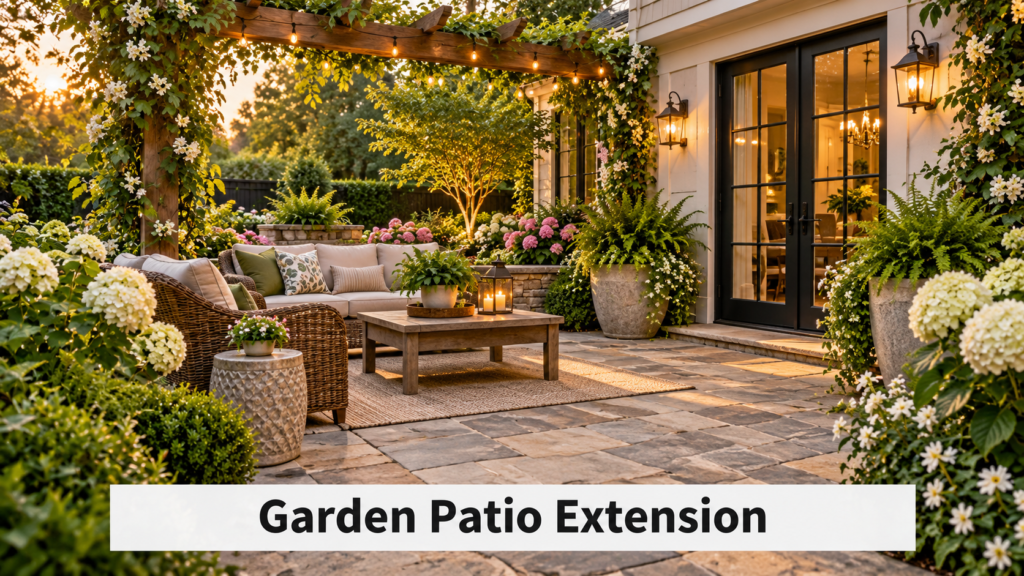
A garden patio extension creates a peaceful outdoor living space surrounded by plants, flowers, and natural greenery. This design combines the functionality of a traditional patio with the relaxing atmosphere of a landscaped garden. It is ideal for homeowners who enjoy gardening, reading outdoors, or spending quiet afternoons in nature. With carefully selected plants, pathways, and comfortable seating, a garden patio extension can transform an ordinary backyard into a charming retreat.
Design and Layout Ideas
Garden patio extensions look especially beautiful when surrounded by colorful flower beds and lush foliage. Consider creating a small seating area using natural stone or brick pavers, allowing the patio to blend naturally with the surrounding garden.For a cottage-style appearance, combine irregular flagstones with flowering perennials and decorative shrubs. Modern garden patios can feature large concrete pavers, raised planters, and ornamental grasses.
Curved pathways provide a gentle transition between the patio and garden. Adding climbing plants along a trellis or pergola can create vertical interest and provide partial shade.Choose plants with different heights, textures, and blooming seasons to maintain visual appeal throughout the year.
Materials and Installation Tips
A garden patio extension requires thoughtful material selection and proper drainage to protect both the paved surface and surrounding plants.
- Natural flooring: Use flagstone, brick, gravel, or permeable pavers to complement the garden setting.
- Planting beds: Create defined garden borders with suitable soil and adequate drainage.
- Pathways: Include comfortable walking routes connecting the patio with nearby garden areas.
- Plant selection: Choose flowers, shrubs, and ornamental grasses suitable for your local climate.
- Water management: Direct runoff away from the house and prevent excess water from collecting around plant roots.
Maintenance and Decoration
Regularly remove fallen leaves and garden debris from the patio surface. Trim surrounding plants to keep pathways clear and prevent overgrowth. Water garden beds according to plant requirements, and inspect paved areas for weeds or shifting materials.
Decorate the extension with a wooden garden bench, comfortable chairs, and decorative ceramic pots. A small water fountain can introduce a soothing background sound.Solar garden lights placed along pathways or flower beds help create a welcoming evening atmosphere. Bird-friendly plants and a shallow birdbath can also bring additional wildlife activity to the garden.
19. Curved Patio Extension
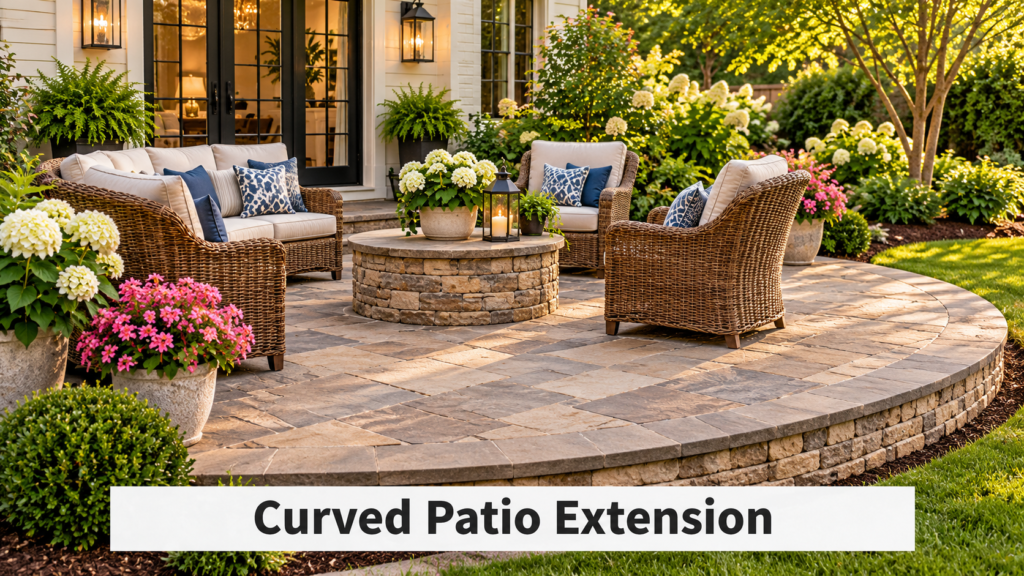
A curved patio extension adds softness, movement, and visual interest to an outdoor living space. Unlike traditional rectangular patios, curved designs create a more natural appearance that blends beautifully with lawns, gardens, and surrounding landscaping. They are particularly attractive for homeowners who want to avoid sharp corners or create a flowing backyard layout. With suitable materials and thoughtful planning, a curved patio extension can provide an elegant space for seating, dining, and relaxation.
Design and Layout Ideas
Curved patio extensions can be designed in semicircular, oval, or free-form shapes depending on available backyard space. A semicircular extension connected to an existing rectangular patio creates an attractive transition into the lawn.For a natural appearance, use irregular flagstones or curved paver patterns that follow the patio’s outline. Smooth concrete with rounded edges creates a cleaner, contemporary design.
Consider arranging outdoor chairs around a circular coffee table to complement the patio’s curved shape. Built-in seating walls can follow the perimeter while providing extra space for guests.Surrounding the curved edges with flower beds, decorative grasses, or low-growing shrubs helps connect the patio to the landscape.
Materials and Installation Tips
Creating a curved patio requires careful measurements and appropriate materials to maintain smooth, attractive edges.
- Flexible paving materials: Choose small pavers, brick, natural stone, or poured concrete for curved layouts.
- Accurate marking: Use a garden hose, rope, or landscape marking paint to outline the desired shape.
- Stable foundation: Prepare a compacted base suitable for the selected patio material.
- Curved edging: Install flexible metal, plastic, or appropriately shaped stone restraints.
- Drainage planning: Maintain a suitable slope to prevent standing water and protect nearby structures.
Maintenance and Decoration
Curved patio extensions require regular cleaning and occasional inspection of joints, edges, and paved surfaces. Remove weeds from gaps and replace damaged pavers when necessary. Keep surrounding plants trimmed to maintain the intended curved outline.Decorate the patio with rounded outdoor furniture, comfortable cushions, and large decorative planters. Circular seating arrangements can make the space feel balanced and welcoming.
Add subtle landscape lighting along the curved perimeter to emphasize its shape after sunset. A small fire bowl or decorative water feature may create a focal point, provided appropriate safety clearances are maintained.Combining natural materials, soft landscaping, and comfortable furniture helps a curved patio extension become an attractive and functional backyard gathering space.
20. Stepping Stone Patio Extension
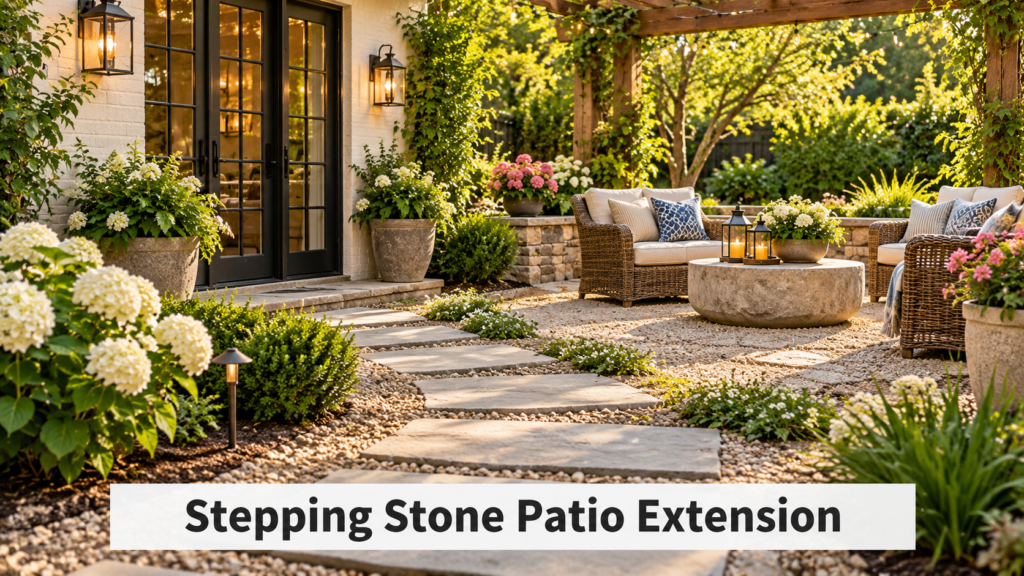
A stepping stone patio extension is a creative and budget-friendly way to expand your outdoor living space while maintaining a natural backyard appearance. Large stepping stones arranged over gravel, grass, or decorative pebbles create an attractive surface that connects the existing patio with surrounding garden areas. This design works especially well in small backyards, cottage gardens, and modern landscapes. With thoughtful spacing and suitable materials, a stepping stone extension can provide a functional seating area without making the outdoor space feel overcrowded.
Design and Layout Ideas
Stepping stone patio extensions offer flexibility in shape, arrangement, and material selection. Large rectangular concrete stepping stones create a clean, contemporary appearance, especially when surrounded by gray gravel or decorative pebbles.
For a natural garden setting, choose irregular flagstones arranged with small gaps between them. Low-growing ground covers can soften the appearance and create a beautiful transition into nearby flower beds.Consider extending stepping stones from your existing patio toward a garden bench, outdoor dining area, or small seating corner. Keeping the stones evenly spaced and level helps maintain a comfortable walking surface.
Materials and Installation Tips
Proper placement and ground preparation are important for creating an attractive and stable stepping stone patio extension.
- Stepping stones: Choose durable concrete, flagstone, or natural stone slabs designed for outdoor use.
- Ground preparation: Remove grass and loose soil before preparing the installation area.
- Foundation: Install a compacted aggregate base appropriate for the stone size and soil conditions.
- Stone spacing: Arrange stones to provide comfortable walking distances and sufficient support for furniture.
- Drainage: Maintain proper surface drainage to prevent puddles and shifting stones.
Maintenance and Decoration
Regularly remove leaves, dirt, and weeds from the stepping stone surfaces. Inspect individual stones for movement or unevenness and adjust them when necessary. Trim surrounding plants to keep pathways accessible.
Decorate the extended patio with a compact bistro table, comfortable chairs, and decorative planters. Solar pathway lights can highlight the stepping stone arrangement during the evening.For a modern appearance, combine large concrete stepping stones with white or gray decorative gravel. Adding ornamental grasses around the perimeter creates a natural, relaxed atmosphere.
21. Pea Gravel Patio Extension

A pea gravel patio extension is an affordable and attractive option for homeowners who want to expand their outdoor living space without installing expensive paving materials. Pea gravel consists of small, rounded stones that create a soft, textured appearance. Its natural colors complement gardens, wooden furniture, and rustic backyard landscapes. With suitable edging and proper preparation, a pea gravel patio can become a charming area for outdoor seating, casual dining, and relaxation.
Design and Layout Ideas
Pea gravel patio extensions work particularly well in cottage-style, farmhouse, and informal garden settings. Warm beige gravel creates a welcoming atmosphere, while gray or mixed-color gravel offers a more contemporary appearance.Consider designing a rectangular pea gravel extension beside an existing concrete or brick patio. Wooden or metal edging can provide a clean separation between the different flooring materials.
For a cozy backyard arrangement, place Adirondack chairs around a small outdoor coffee table. Surrounding the seating area with lavender, ornamental grasses, or flowering shrubs creates a peaceful environment.Large stepping stones can also be incorporated into the gravel surface to improve walking comfort and provide stable routes between seating areas.
Materials and Installation Tips
Careful ground preparation helps maintain the appearance and functionality of a pea gravel patio extension.
- Pea gravel: Choose clean, appropriately sized rounded gravel in a color that complements your backyard.
- Ground leveling: Remove existing vegetation and level the installation area.
- Compacted base: Prepare a suitable crushed-stone foundation to reduce settling.
- Edging: Install metal, brick, or timber borders to prevent gravel from spreading into the lawn.
- Surface stability: Consider gravel stabilization grids, particularly where outdoor furniture will be placed.
Maintenance and Decoration
Pea gravel requires occasional raking to redistribute stones and maintain an even surface. Remove fallen leaves and weeds regularly to keep the patio looking neat.Because rounded gravel shifts under pressure, use furniture with broad, stable legs or place large paving slabs beneath chairs and tables.
Decorate the extension with weather-resistant wooden furniture, decorative pots, and soft outdoor lighting. A nearby flower bed can add color and improve the overall appearance.String lights or solar lanterns create a warm atmosphere during evening gatherings. Periodically replenish gravel where necessary to maintain a consistent surface.
22. Modern Minimalist Patio Extension
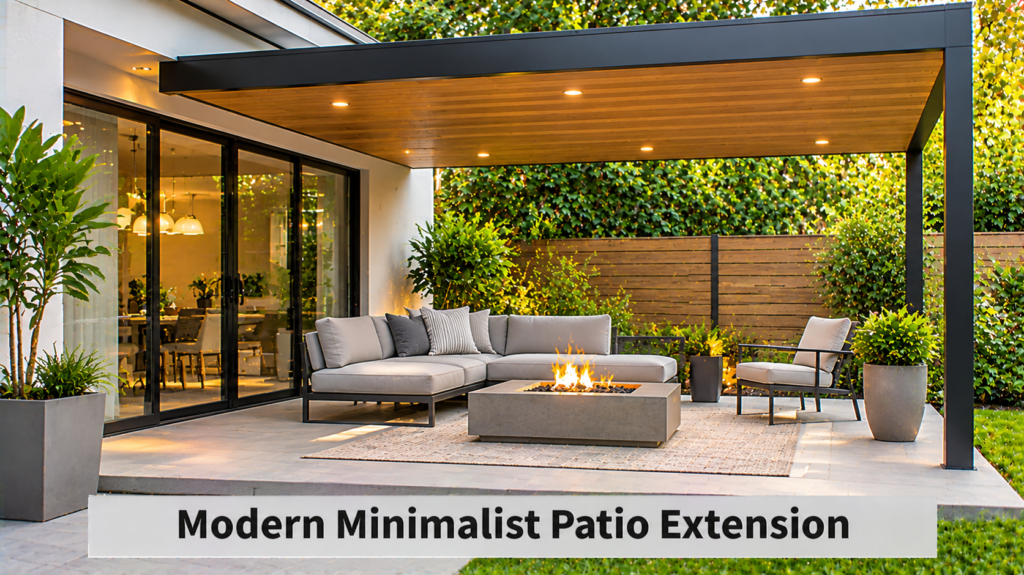
A modern minimalist patio extension creates a clean, functional outdoor living space using simple shapes, neutral colors, and carefully selected materials. This design focuses on open space, uncluttered arrangements, and practical furniture rather than excessive decoration. It is particularly suitable for contemporary homes and smaller backyards where maximizing usable space is important. With coordinated flooring, greenery, and lighting, a minimalist patio extension can provide a stylish area for relaxing, dining, and entertaining.
Design and Layout Ideas
Modern minimalist patio extensions typically feature straight lines, geometric shapes, and a restrained color palette. Large concrete slabs, porcelain pavers, or smooth stone surfaces create a seamless appearance that complements modern architecture.Choose neutral colors such as white, beige, light gray, or charcoal. Combining two complementary shades can introduce subtle contrast without making the space feel busy.
Consider extending the patio in a rectangular layout with clean edges and minimal level changes. Position a low-profile outdoor sectional along one side to maintain an open central area.Large architectural planters containing ornamental grasses or compact evergreen shrubs can introduce natural texture. Built-in seating and concealed storage help maintain a clutter-free appearance.
Materials and Installation Tips
Selecting durable, coordinated materials is essential for achieving a modern minimalist patio design.
- Large-format pavers: Choose concrete, porcelain, or natural stone slabs with clean edges.
- Neutral flooring: Use consistent colors and finishes to maintain a simple appearance.
- Clean borders: Install discreet metal or concrete edging for well-defined patio boundaries.
- Drainage: Incorporate appropriate slopes or discreet drainage channels to manage rainwater.
- Integrated lighting: Consider recessed step lights, low-profile wall fixtures, or concealed LED strips.
Maintenance and Decoration
Modern minimalist patios look best when surfaces remain clean and outdoor accessories are carefully organized. Sweep regularly, wash the flooring with suitable cleaning products, and remove stains promptly.Choose furniture with simple silhouettes and weather-resistant materials. A low-profile sofa, streamlined coffee table, and a few neutral cushions can create a comfortable seating area without unnecessary clutter.
Add one or two large planters rather than numerous small containers. Ornamental grasses, compact shrubs, or sculptural plants can introduce greenery while preserving the minimalist appearance.Soft integrated lighting helps highlight architectural features and creates a welcoming evening atmosphere. A retractable awning or simple pergola can provide shade without disrupting the patio’s clean design.
23. Rustic Stone Patio Extension

A rustic stone patio extension adds natural beauty, warmth, and timeless character to an outdoor living space. Using irregular stones, earthy colors, and textured surfaces, this design creates a welcoming atmosphere that blends beautifully with gardens and traditional homes. It is particularly suitable for homeowners who prefer a natural, countryside-inspired backyard. With comfortable furniture, thoughtful landscaping, and decorative lighting, a rustic stone patio extension can become a charming place for relaxing and entertaining.
Design and Layout Ideas
Rustic stone patio extensions look especially attractive when designed with irregular flagstones, weathered limestone, or natural sandstone. These materials create an organic appearance that complements surrounding lawns, flower beds, and mature trees.Choose warm earth tones such as tan, beige, brown, and muted gray to maintain a natural look. Mixing stones of different shapes and sizes can add character without making the design feel overly complicated.Consider incorporating a low stone seating wall along one side of the extension. Wooden benches, wrought-iron chairs, and large terracotta planters can enhance the rustic atmosphere.Curved edges and nearby planting beds help soften the transition between the stone patio and surrounding garden.
Materials and Installation Tips
Selecting durable stones and preparing a stable foundation are important for creating a long-lasting rustic patio extension.
- Natural stone: Choose flagstone, sandstone, limestone, or other outdoor-rated stones suitable for your climate.
- Base preparation: Install a properly compacted foundation to minimize settling and movement.
- Stone arrangement: Position irregular stones carefully to create a stable, comfortable walking surface.
- Joint materials: Use compatible sand, mortar, or appropriate jointing compounds.
- Drainage: Maintain a gentle slope away from buildings to prevent standing water.
Maintenance and Decoration
Rustic stone patios require regular sweeping and occasional cleaning to remove dirt, moss, and fallen leaves. Inspect joints periodically and replace loose materials when necessary. Use cleaning solutions appropriate for the selected stone.
Decorate the extension with wooden outdoor furniture, woven cushions, and decorative ceramic pots. Lantern-style lighting can create a warm atmosphere during evening gatherings.Surround the patio with lavender, ornamental grasses, or flowering perennials to enhance its natural character. A small water fountain or decorative garden feature can provide an attractive focal point.
24. Poolside Patio Extension
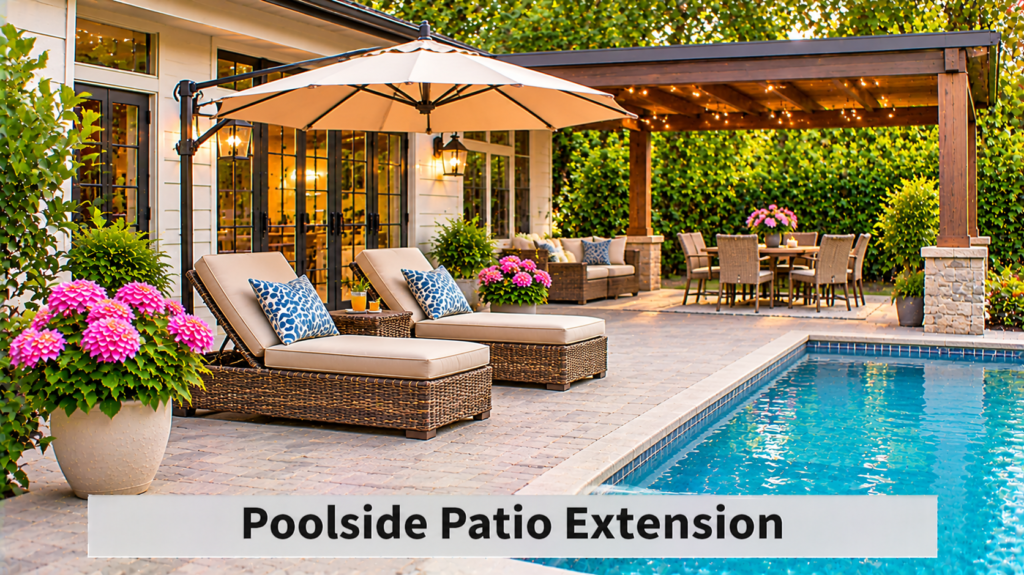
A poolside patio extension creates additional space for relaxing, sunbathing, and entertaining around a swimming pool. It provides a functional area for lounge chairs, outdoor dining, and shaded seating while improving movement between the pool and surrounding backyard. With suitable flooring, thoughtful drainage, and comfortable furniture, a poolside extension can transform an ordinary swimming area into a stylish outdoor retreat.
Design and Layout Ideas
Poolside patio extensions work beautifully with modern, tropical, and Mediterranean-inspired backyard designs. Large porcelain pavers or textured concrete slabs create a clean, contemporary appearance, while natural stone provides warmth and character.Consider extending the patio along one side of the pool to accommodate several lounge chairs. A separate shaded seating area can provide a comfortable place for relaxing away from direct sunlight.
Light-colored flooring can help reduce heat buildup compared with darker surfaces, although actual surface temperatures vary by material and exposure.For a resort-inspired appearance, combine neutral patio flooring with comfortable loungers, large tropical planters, and a shade umbrella.
Materials and Installation Tips
Poolside patio extensions require materials that perform safely in wet conditions and withstand frequent water exposure.
- Slip-resistant flooring: Choose textured concrete, outdoor porcelain, or suitable natural stone with appropriate wet-slip resistance.
- Drainage system: Direct surface water away from the pool and nearby buildings.
- Stable foundation: Prepare a compacted base or suitable structural foundation for the selected flooring.
- Poolside materials: Choose finishes compatible with pool chemicals and regular moisture exposure.
- Safety considerations: Maintain required pool barriers, clear walking routes, and safe distances from electrical equipment.
Maintenance and Decoration
Regularly rinse and clean the patio to remove dirt, pool chemicals, and organic debris. Inspect the flooring for slippery buildup, loose materials, or damaged joints.Choose weather-resistant lounge chairs with quick-drying cushions. Large umbrellas or a pergola can provide comfortable shaded areas during sunny afternoons.
Decorate the extension with oversized planters, outdoor side tables, and subtle landscape lighting. Keep decorative furniture and accessories away from pool edges to maintain safe circulation.Adding greenery around the perimeter can create a relaxing atmosphere while improving privacy from neighboring properties.
25. Budget-Friendly DIY Patio Extension
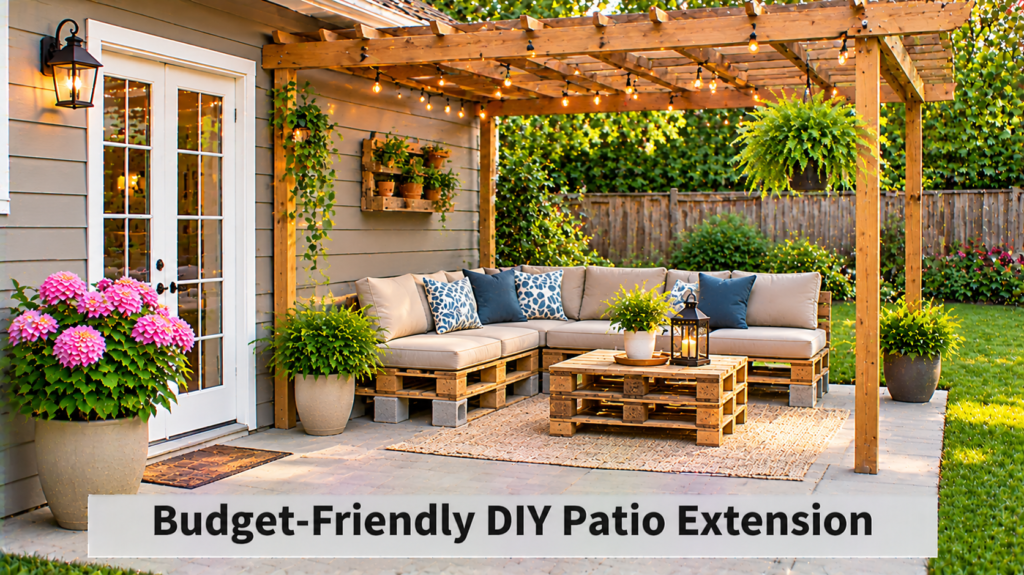
A budget-friendly DIY patio extension is an excellent option for homeowners who want more outdoor living space without spending heavily on professional landscaping. Using affordable materials such as gravel, concrete pavers, reclaimed bricks, or stepping stones, you can create a functional and attractive backyard area. Simple designs and careful planning help reduce construction costs while maintaining an appealing appearance. This type of extension is especially suitable for small patios and straightforward ground-level projects.
Design and Layout Ideas
Budget-friendly patio extensions work best with simple layouts that minimize material waste and installation time. A rectangular gravel extension is one of the easiest options, particularly when connected directly to an existing patio.Concrete pavers arranged in a basic grid pattern create a clean, organized appearance without complicated cutting. Reclaimed bricks can introduce rustic character while reducing material expenses when suitable materials are available.
Consider creating a small seating corner using a compact outdoor table and two comfortable chairs. Decorative planters or solar lights can make the extension attractive without expensive landscaping features.Using similar colors and materials helps the new section blend with the existing patio.
Materials and Installation Tips
Careful material selection and proper ground preparation help keep a DIY patio extension affordable and functional.
- Affordable flooring: Choose gravel, basic concrete pavers, reclaimed bricks, or stepping stones.
- Ground preparation: Remove vegetation and loose soil before leveling the installation area.
- Compacted base: Use suitable crushed stone or aggregate to provide a stable foundation.
- Simple edging: Install affordable metal, plastic, or timber restraints where appropriate.
- DIY-friendly layout: Choose rectangular or square arrangements to reduce cutting and installation complexity.
Maintenance and Decoration
Budget-friendly patios require regular cleaning and occasional adjustments to maintain their appearance. Rake gravel surfaces, remove weeds, and inspect pavers for movement or unevenness.Decorate the extension with secondhand outdoor furniture, inexpensive planters, and weather-resistant cushions. Repurposed wooden benches can provide additional seating when properly constructed and maintained.
Solar pathway lights offer a simple lighting solution without extensive electrical installation. Adding low-maintenance plants around the edges creates a welcoming atmosphere.Focus on comfortable seating, stable flooring, and a few attractive accessories rather than excessive decoration. This approach helps create a practical outdoor space while controlling expenses.
26. Mixed-Material Patio Extension
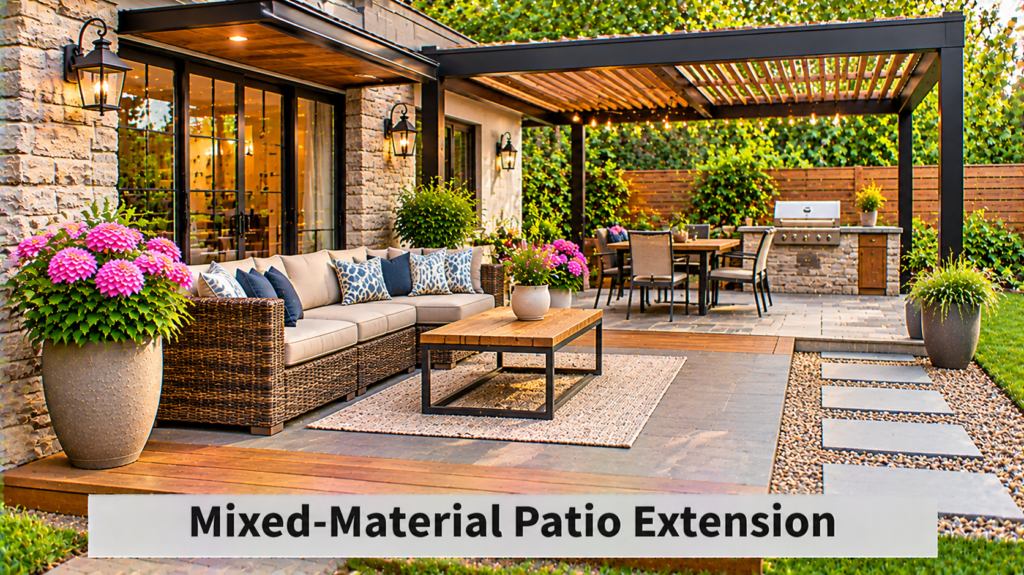
A mixed-material patio extension is a creative way to expand your outdoor living space while combining different textures, colors, and finishes. Materials such as concrete, natural stone, brick, gravel, and wood can work together to create a distinctive backyard design. This approach allows homeowners to define separate seating, dining, and relaxation areas without building walls. With thoughtful material combinations and coordinated landscaping, a mixed-material patio extension can make your outdoor space more stylish, functional, and visually appealing.
Design and Layout Ideas
Mixed-material patio extensions offer endless possibilities for modern, rustic, and traditional backyard designs. Combining large concrete pavers with decorative gravel creates a clean, contemporary appearance, while natural stone and brick provide a warmer, more traditional look.Consider using one flooring material for the main seating area and another for surrounding pathways. For example, a wooden deck extension connected to a stone patio can create an attractive transition between different outdoor living zones.
Choose materials with complementary colors to maintain a balanced appearance. Neutral gray pavers combined with warm wooden accents and green landscaping create an inviting outdoor setting.Decorative borders, raised planters, and subtle lighting can help connect the different materials into one cohesive design.
Materials and Installation Tips
Proper planning and installation are essential when combining different patio materials because each surface may have unique foundation and maintenance requirements.
- Material combinations: Choose compatible materials such as concrete and gravel, brick and stone, or wood and pavers.
- Foundation preparation: Provide a suitable base for each material to prevent uneven settling.
- Surface transitions: Keep adjoining surfaces level and minimize potential tripping hazards.
- Drainage planning: Direct rainwater away from the house and prevent water accumulation between different surfaces.
- Edging and borders: Use durable restraints to maintain clean divisions between materials.
Maintenance and Decoration
Mixed-material patios require maintenance suited to each surface. Sweep paved sections regularly, rake gravel areas when necessary, and clean wooden surfaces with appropriate products. Inspect the transitions between materials for movement, gaps, or drainage problems.
Decorate the extension with comfortable outdoor furniture, decorative planters, and weather-resistant cushions. Choose furniture colors that coordinate with the patio’s different textures and finishes.String lights, pathway lighting, and low-voltage landscape fixtures can highlight individual materials while creating a welcoming atmosphere during the evening.
Adding ornamental grasses, flowering shrubs, or raised garden beds around the perimeter helps soften the design and connect the patio with the surrounding landscape.A well-designed mixed-material patio extension combines creativity with practicality, creating a beautiful outdoor living space that accommodates different activities and complements your home’s overall style.
FAQs
1. What Is the Cheapest Way to Extend a Patio?
Gravel, pea gravel, and basic concrete pavers are among the cheapest materials for patio extensions. A simple DIY installation can reduce labor costs significantly. However, proper ground preparation, drainage, and edging are essential for creating a durable, attractive outdoor space.
2. Can You Extend an Existing Concrete Patio?
Yes, you can extend an existing concrete patio by pouring a new concrete slab beside it. Proper soil preparation, a compacted foundation, and appropriate joints are important. Matching the original color and texture can help create a more consistent appearance.
3. Do You Need a Permit to Extend a Patio?
Permit requirements depend on local building regulations, patio size, and construction type. Simple ground-level patios may not require permits, while raised patios, retaining walls, and covered structures often do. Always check with your local building department before beginning construction.
4. What Is the Best Material for a Patio Extension?
The best material depends on your budget, climate, and preferred design. Concrete offers durability and versatility, while pavers provide flexibility and easy repairs. Natural stone creates an elegant appearance, and gravel is an affordable option for simple backyard extensions.
5. How Can I Make My Patio Extension Look Seamless?
Choose flooring materials, colors, and textures that complement your existing patio. Maintain consistent surface heights where practical, and use coordinated borders or landscaping. Matching furniture, decorative planters, and outdoor lighting can also help create a unified, attractive outdoor living space.