
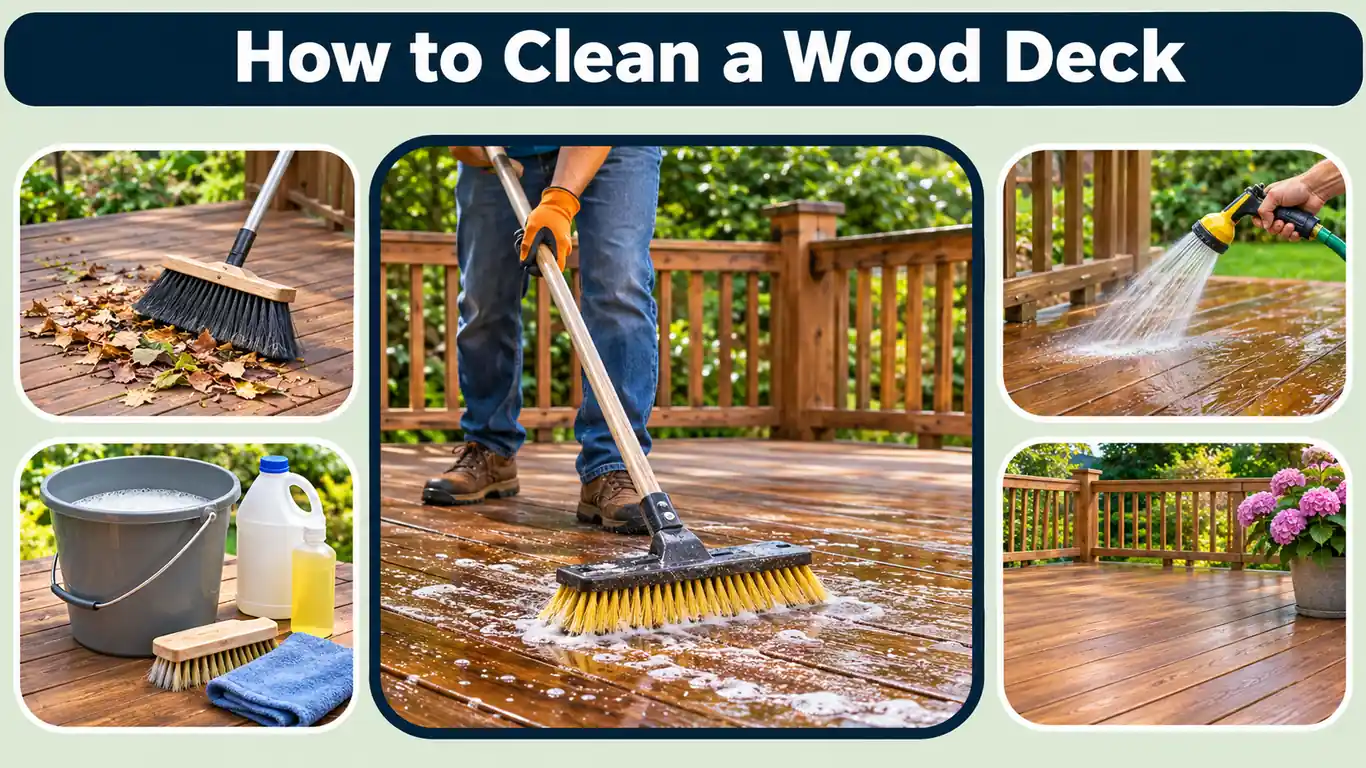
A wooden deck adds natural beauty and comfortable outdoor living space to your home, but regular exposure to dirt, rain, sunlight, and moisture can make it look dull and weathered. Learning how to clean a wood deck properly helps remove stubborn stains, prevent mold growth, and protect the wood from long-term damage. Whether your deck is made from cedar, redwood, or pressure-treated lumber, using the right cleaning methods makes a difference. This guide explains simple steps, safe cleaning solutions, and maintenance tips to keep your deck looking beautiful.
What You Need to Clean a Wood Deck
Before cleaning your wood deck, gathering the right equipment makes the process easier and prevents unnecessary damage. Wood surfaces require gentle cleaning tools because stiff metal brushes and harsh chemicals can scratch or weaken the boards. Choosing suitable products also helps remove dirt without stripping away protective finishes. Most homeowners can clean their decks using basic household tools and a wood-safe cleaner.
Essential Cleaning Tools
Prepare the following supplies before starting:
- Soft-bristle brush: Removes dirt and stains without scratching the wood.
- Garden hose: Rinses away loose debris and cleaning solutions.
- Outdoor broom: Sweeps leaves, dust, and accumulated dirt.
- Bucket: Holds water and diluted cleaning solutions.
- Wood deck cleaner: Breaks down stubborn grime and organic stains.
- Protective gloves: Protect your hands from cleaning chemicals.
- Safety glasses: Prevent splashes from reaching your eyes.
- Plastic scraper: Removes stuck-on debris without damaging the surface.
Choose a brush with synthetic bristles and a long handle for comfortable cleaning. Avoid metal brushes because they can leave scratches and embedded metal particles that may cause discoloration.
How to Clean a Wood Deck in 7 Easy Steps
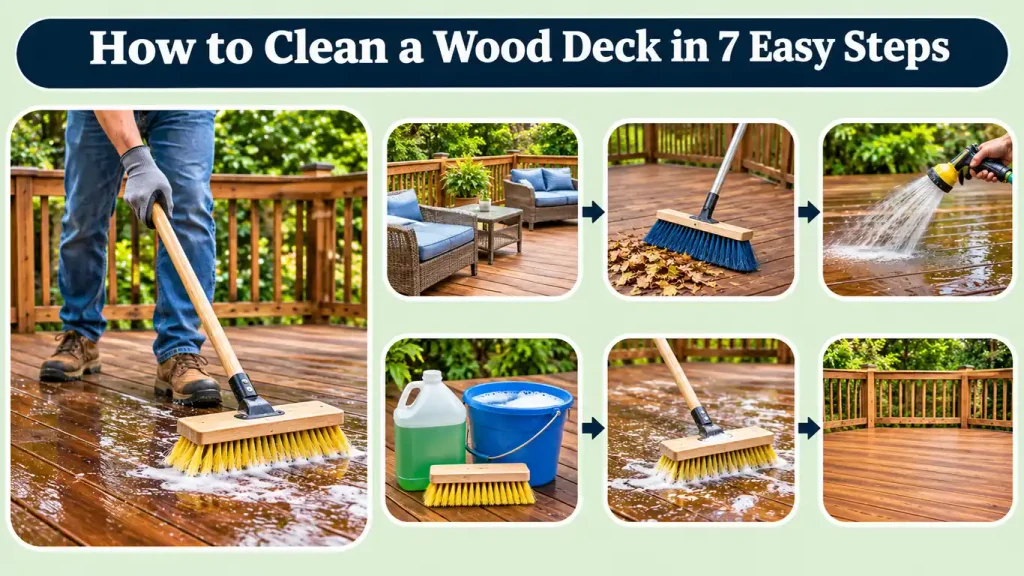
Cleaning a wooden deck does not require expensive equipment or complicated techniques. A careful process involving sweeping, washing, scrubbing, and rinsing can restore its appearance while protecting the wood. The most important consideration is using gentle cleaning products and avoiding excessive water pressure. Follow these seven steps to remove accumulated dirt, algae, and stains effectively.
Step 1: Remove Furniture and Decorations
Start by removing chairs, tables, planters, rugs, and other decorations from your deck. Clearing the surface allows you to reach every corner and prevents cleaning products from damaging outdoor furniture.
Check underneath planters and rugs for trapped moisture or discoloration. These areas often collect dirt and may need additional attention during cleaning.
Step 2: Sweep Away Loose Dirt and Leaves
Use an outdoor broom to remove dry leaves, dust, twigs, and other loose debris. Pay special attention to gaps between boards, where organic material can collect and hold moisture.
A plastic scraper or narrow deck-cleaning tool can help remove stubborn debris from board gaps. Avoid forcing tools against the wood or damaging the edges.
Step 3: Wet the Deck With Water
Lightly rinse the wooden surface using a garden hose to loosen dirt and prepare it for cleaning. Wetting the boards also helps prevent some cleaning products from absorbing too quickly into dry wood.
Use a gentle spray rather than a concentrated jet of water. Work in manageable sections so the surface does not dry before you apply the cleaning solution.
Step 4: Apply a Wood-Safe Cleaning Solution
Apply a commercial cleaner specifically designed for your deck’s wood and finish. Follow the manufacturer’s instructions for dilution, application, and recommended contact time.
For lightly soiled decks, warm water with a small amount of mild liquid soap may be sufficient if the wood finish permits it. Test any cleaner on an inconspicuous area before treating the entire deck.
Step 5: Scrub the Deck Gently
Use a soft-bristle brush to scrub the wooden boards along the direction of the grain. This technique helps lift dirt while minimizing scratches and damage to wood fibers.
Concentrate on heavily soiled areas, corners, and high-traffic sections. Avoid excessive force, especially when cleaning older wood that may already be weathered.
Step 6: Rinse Thoroughly With Clean Water
Rinse the deck with a garden hose until all loosened dirt and cleaning residue have been removed. Leaving cleaning products on the surface can contribute to discoloration or interfere with future staining.
Start at one end and work toward the opposite side to prevent dirty water from spreading over cleaned areas. Keep rinse water and chemical runoff away from ponds and sensitive plants.
Step 7: Allow the Wood Deck to Dry Completely
After rinsing, allow the deck to dry naturally before replacing furniture or applying protective treatments. Drying time depends on sunlight, temperature, humidity, and the condition of the wood.
A deck may become surface-dry within a day or two, but wood can require longer before staining or sealing. Always follow the coating manufacturer’s moisture and drying requirements.
How to Clean a Wood Deck Naturally

Natural and mild cleaning methods can work well when your deck has light dirt, dust, or ordinary surface grime. These approaches may reduce the need for stronger cleaning chemicals, particularly during routine maintenance. However, even household ingredients can affect certain wood finishes. Always test a small hidden section before applying a homemade solution across the entire deck.
Cleaning With Mild Soap and Water
Mix a small amount of mild liquid soap with warm water in a bucket. Apply the mixture using a soft brush, gently scrub the boards, and rinse thoroughly with clean water.
This method works best for routine cleaning and lightly soiled surfaces. Avoid using excessive detergent because leftover soap can create slippery conditions and attract dirt.
Cleaning With Baking Soda
Baking soda can help loosen minor localized stains on some unfinished wood surfaces. Mix a little baking soda with water to create a soft paste, then gently apply it to the stained area.
Avoid aggressive scrubbing because baking soda is mildly abrasive and may dull certain finishes. Test the mixture first, rinse completely, and do not use it as a substitute for treating established mold.
Cleaning With an Oxygen-Based Deck Cleaner
Oxygen-based cleaners formulated for wood can help remove organic dirt and discoloration. Many products contain sodium percarbonate, which releases cleaning agents when mixed with water.
Follow the product label carefully because concentrations and compatibility vary. Never mix these cleaners with bleach, vinegar, ammonia, or other household chemicals.
How to Remove Mold, Mildew, and Green Algae From a Wood Deck
Wood decks frequently develop mold, mildew, or green algae in shaded environments where moisture remains trapped. Besides affecting appearance, algae can make walking surfaces dangerously slippery. Removing this growth promptly helps improve traction and reduces persistent dampness. A suitable wood-safe cleaning product, gentle scrubbing, and proper drainage are important for addressing these problems without damaging the boards.
Removing Mold and Mildew
Use a deck-cleaning product labeled for mold or mildew removal and compatible with your wood finish. Apply it according to the manufacturer’s directions, allowing the specified contact time before scrubbing gently.
Wear gloves and eye protection, and avoid breathing spray mist. If the deck has extensive decay, deeply embedded growth, or repeated moisture problems, cleaning alone may not solve the underlying issue.
Removing Green Algae
Green algae commonly appears on damp decking near trees, walls, and shaded corners. Scrub affected areas with a suitable wood-safe algae cleaner and rinse thoroughly.
Improve airflow around the deck by trimming overgrown vegetation and removing debris. Keeping the surface dry between rainfall events helps discourage algae from returning.
Can You Pressure Wash a Wood Deck?
Pressure washing can remove dirt quickly, but excessive pressure can seriously damage wooden decking. A strong water stream may raise the grain, splinter boards, and strip protective coatings. For most routine cleaning, a garden hose and soft-bristle brush provide a safer alternative. If pressure washing is necessary, use equipment and settings approved for the specific type of decking.
Safe Pressure Washing Techniques
Begin with the lowest effective pressure and use a wide-angle spray tip rather than a concentrated nozzle. Test the equipment on an inconspicuous section before continuing.
Keep the nozzle moving, maintain adequate distance, and spray along the wood grain. Never hold the water stream in one spot, because this can cut grooves into the boards.
When to Avoid Pressure Washing
Avoid pressure washing decks with loose boards, rotting wood, significant splintering, or deteriorating finishes. These surfaces may suffer further damage even when relatively low pressure is used.
Hand cleaning is generally more appropriate for delicate or aging decking. Repair damaged boards before attempting intensive cleaning.
How to Remove Stubborn Stains From a Wood Deck
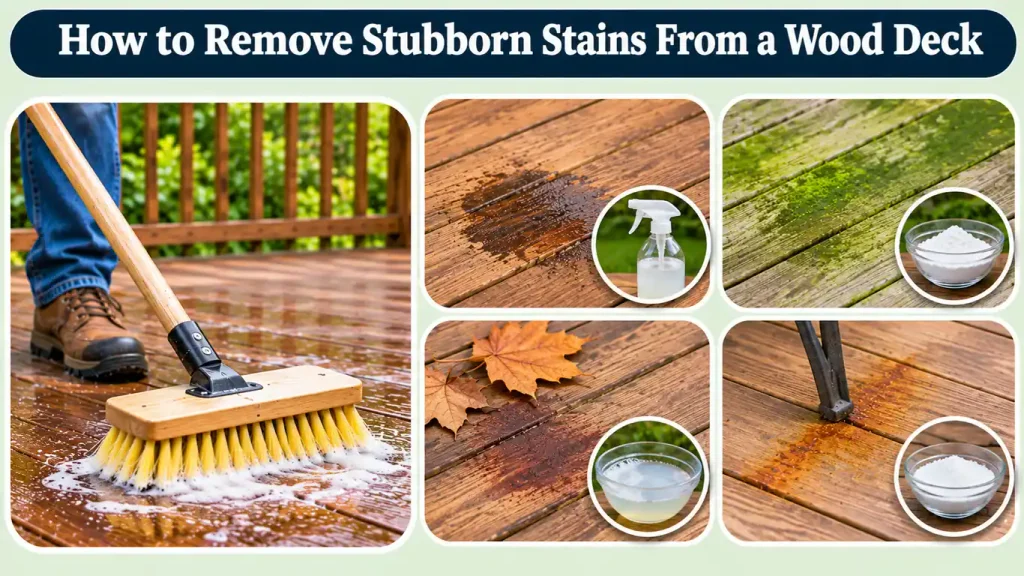
Some wood deck stains require more attention than ordinary dirt because they penetrate the surface or leave persistent discoloration. Grease, spilled beverages, leaf tannins, and rust marks may respond differently to cleaning products. Identifying the stain before treatment helps you choose an effective solution. Avoid aggressive scraping or random chemical mixtures, as these can permanently change the wood’s appearance.
Removing Grease and Food Stains
Blot fresh grease immediately using absorbent paper towels without spreading it across the surface. Apply a wood-compatible degreasing cleaner and gently scrub the affected area.
Rinse thoroughly and repeat only if the manufacturer recommends it. Older oil stains may penetrate deeply and remain partially visible after cleaning.
Removing Leaf and Tannin Stains
Wet leaves can leave brown marks caused by natural tannins. Remove the leaves, wash the area with a suitable wood cleaner, and allow the surface to dry before assessing the remaining stain.
For persistent tannin discoloration, a manufacturer-approved wood brightener may help. Test it first because some brighteners can alter the color of treated or stained decking.
Removing Rust Stains
Rust stains may develop around metal furniture, fasteners, or decorative items. Use a rust remover specifically labeled safe for the wood and its existing finish.
Avoid ordinary acid-based rust cleaners unless explicitly approved for the surface. Some products can discolor wood or damage surrounding metal components.
How Often Should You Clean a Wood Deck?
Regular cleaning helps preserve the appearance and usable lifespan of outdoor wooden decking. The ideal schedule depends on local weather conditions, nearby trees, foot traffic, and exposure to moisture. Decks in humid or heavily shaded locations generally require more frequent attention. A consistent maintenance routine can prevent small problems from developing into extensive cleaning or repair projects.
Weekly and Monthly Maintenance
Sweep your deck regularly to remove leaves, dust, and food debris. Inspect shaded areas for slippery growth, standing water, and dirt trapped between boards.
During months with heavy rainfall or falling leaves, more frequent sweeping may be necessary. Clean spills promptly before they penetrate the wood.
Seasonal Deep Cleaning
Most wood decks benefit from a thorough cleaning once or twice a year, depending on their condition. Spring is often a convenient time to remove accumulated winter dirt, while another cleaning may be useful after periods of heavy use.
Check the boards for loose fasteners, splinters, and damaged areas during seasonal maintenance. Repairing these problems early helps keep the deck safe and attractive.
Tips to Keep Your Wood Deck Clean for Longer
Preventive maintenance reduces cleaning time and helps protect wood from moisture-related deterioration. Simple habits such as clearing debris, improving drainage, and inspecting protective coatings can make a noticeable difference. A well-maintained deck is also easier to wash because dirt has fewer opportunities to accumulate. Consider the following practices to keep your outdoor wooden surface in better condition throughout the year.
- Sweep frequently: Remove leaves and dirt before they trap moisture.
- Clean spills promptly: Prevent grease, drinks, and food from staining boards.
- Move planters occasionally: Reduce prolonged moisture exposure beneath containers.
- Maintain drainage: Prevent water from accumulating on or around decking.
- Use breathable outdoor mats: Avoid moisture-trapping rubber-backed rugs.
- Inspect protective finishes: Reapply stain or sealer when the manufacturer recommends it.
- Trim nearby plants: Improve airflow and reduce persistent shade.
- Repair damaged boards: Replace rotting or severely splintered wood promptly.
Choose protective treatments suitable for the wood species and existing finish. Cleaning before applying a new coating helps it adhere properly, but the wood must meet the product’s drying requirements.
FAQs
1. What is the best thing to clean a wood deck with?
A wood-safe deck cleaner, soft-bristle brush, and garden hose are usually the best combination for routine cleaning. For minor dirt, mild soap and water may work. Always select products compatible with the wood species and existing finish.
2. Can I clean a wood deck without a pressure washer?
Yes, you can clean a wooden deck effectively without pressure washing. Sweep away loose debris, apply a suitable deck cleaner, gently scrub along the wood grain, and rinse with a garden hose. This approach reduces the risk of damaging wood fibers.
3. Is vinegar safe for cleaning a wood deck?
Vinegar is acidic and may affect some wood finishes, fasteners, or surrounding materials. It is not the best general-purpose deck cleaner, particularly on coated wood. A manufacturer-approved cleaning product is usually a safer and more predictable option.
4. How long should a wood deck dry after cleaning?
A wooden deck may require 24 to 48 hours or longer to dry after washing, depending on temperature, humidity, shade, and airflow. Before staining or sealing, follow the coating manufacturer’s drying instructions and moisture requirements rather than relying only on appearance.
5. How do I keep my wood deck from turning green?
Prevent green algae by sweeping regularly, removing trapped leaves, improving drainage, and allowing sunlight and airflow around the deck. Clean slippery areas with an appropriate wood-safe algae cleaner. Consistent moisture control helps reduce recurring growth.