
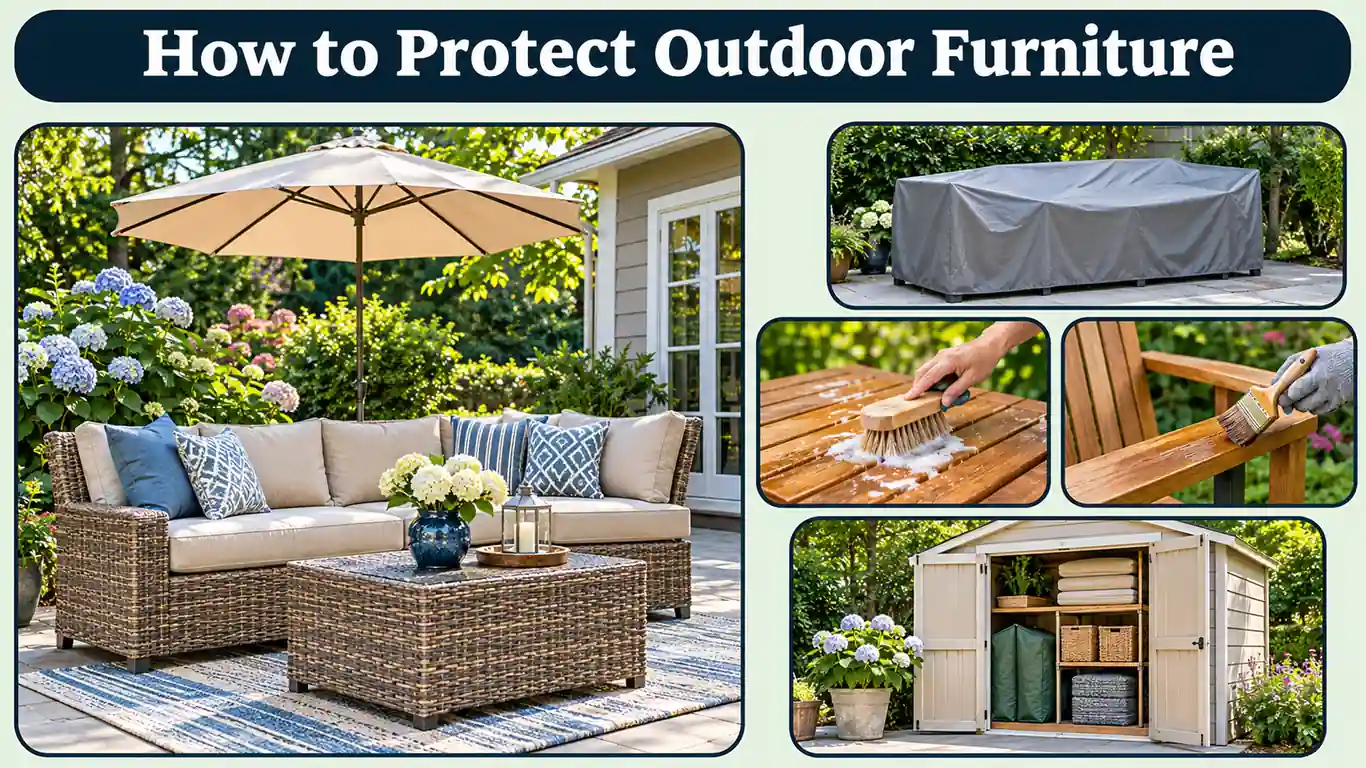
Outdoor furniture adds comfort, style, and functionality to patios, decks, gardens, and backyards. However, constant exposure to sunlight, rain, humidity, dust, and changing temperatures can gradually damage furniture materials. Learning how to protect outdoor furniture helps prevent fading, rust, mold, cracking, and premature wear. Whether you have wooden chairs, metal tables, wicker sofas, or cushioned patio sets, proper maintenance makes a significant difference. With simple cleaning routines, weather-resistant covers, protective treatments, and smart storage solutions, you can keep your outdoor furniture attractive, comfortable, and durable throughout the year.
1. Choose Weather-Resistant Outdoor Furniture Materials
Choosing durable materials is one of the most effective ways to protect outdoor furniture from weather damage. Some materials naturally resist moisture, sunlight, and temperature changes, while others require regular protective treatments. Understanding the strengths and maintenance requirements of different materials helps homeowners select furniture that lasts longer and remains attractive in outdoor environments throughout the seasons.
Best Materials for Outdoor Furniture
- Teak Wood: Contains natural oils that help resist moisture, decay, and insect damage.
- Aluminum: Lightweight, rust-resistant, and suitable for humid outdoor environments.
- Synthetic Wicker: High-quality polyethylene wicker offers better moisture resistance than natural wicker.
- Stainless Steel: Durable and corrosion-resistant, especially when maintained properly.
- Recycled Plastic: Resists moisture, rot, and many common outdoor weather conditions.
Why Material Quality Matters
High-quality outdoor furniture usually performs better under changing weather conditions and requires fewer repairs. However, even weather-resistant materials benefit from routine cleaning, proper storage, and occasional maintenance to preserve their original appearance.
2. Use Waterproof Outdoor Furniture Covers
Outdoor furniture covers create a protective barrier against rain, dust, bird droppings, and harmful environmental exposure. Choosing covers designed for outdoor use helps reduce moisture accumulation and surface damage. Properly fitted covers are particularly useful during rainy seasons, long vacations, and periods when patio furniture remains unused for several days or weeks.
How to Choose the Right Furniture Covers
- Waterproof Fabric: Select durable materials that prevent rainwater from reaching furniture surfaces.
- UV Protection: Choose UV-resistant covers to reduce fading and sun-related damage.
- Proper Fit: Use covers that fit securely without dragging across the ground.
- Ventilation: Look for breathable designs or ventilation openings to reduce trapped humidity.
- Secure Fasteners: Adjustable straps and buckles help prevent covers from blowing away.
How to Use Furniture Covers Correctly
Always ensure outdoor furniture is clean and dry before placing protective covers over it. Position covers so rainwater drains away rather than collecting in low areas, and allow airflow when conditions are humid.
3. Protect Outdoor Furniture From Sun Damage
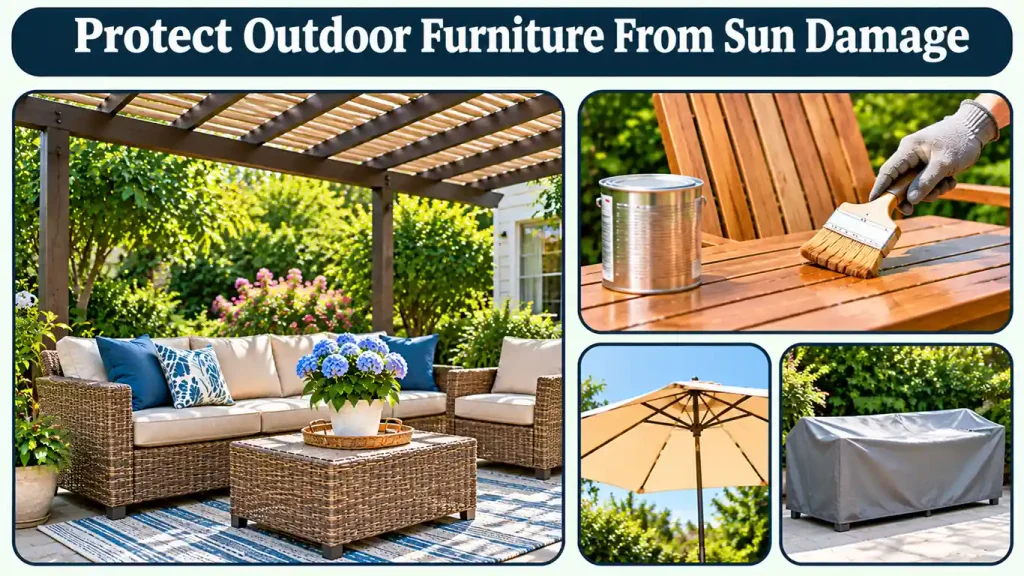
Direct sunlight can gradually fade furniture colors, weaken certain plastics, and dry out exposed wood surfaces. Ultraviolet radiation is especially damaging when patio furniture remains uncovered throughout summer. Creating shaded areas and applying suitable protective products can help preserve furniture finishes while keeping outdoor seating spaces cooler and more comfortable during sunny afternoons.
Use Shade to Reduce UV Exposure
Position patio furniture beneath pergolas, umbrellas, covered decks, or retractable awnings whenever possible. These structures reduce direct sunlight exposure and help prevent excessive heating of furniture surfaces.
Apply UV-Resistant Protective Treatments
Use outdoor-rated UV-resistant finishes on compatible wooden furniture and manufacturer-approved protectants on suitable plastic materials. Always check product instructions because different furniture materials require different treatments.
4. Keep Outdoor Furniture Clean Regularly
Regular cleaning removes dirt, pollen, food residue, and environmental contaminants that can damage outdoor furniture finishes over time. Dust and moisture buildup may also encourage mold and mildew, especially in shaded or humid areas. Establishing a simple cleaning routine helps maintain furniture appearance, prevents stubborn stains, and reduces the need for expensive restoration.
Easy Outdoor Furniture Cleaning Steps
- Remove loose dirt, leaves, and debris using a soft brush or microfiber cloth.
- Mix mild dish soap with lukewarm water according to the furniture manufacturer’s instructions.
- Gently scrub compatible furniture surfaces using a soft sponge or cloth.
- Rinse with clean water when appropriate, avoiding excessive moisture around joints.
- Allow furniture to dry completely before replacing cushions or covers.
Avoid Harsh Cleaning Products
Strong chemical cleaners, abrasive brushes, and inappropriate pressure washing can damage protective coatings and delicate materials. Always test cleaning solutions on a small hidden area before applying them to an entire furniture set.
5. Protect Outdoor Furniture From Rain and Moisture
Rainwater and prolonged humidity can cause wood swelling, metal corrosion, mildew growth, and deterioration of certain furniture finishes. Even furniture labeled weather-resistant may develop problems when exposed to standing water for extended periods. Proper drainage, protective treatments, and thoughtful placement help prevent unnecessary moisture damage and extend the useful life of patio furniture.
Prevent Water From Collecting
Place outdoor furniture on well-drained patios or decks rather than consistently wet ground. Slightly adjusting the position of tables and chairs can prevent water from collecting on flat surfaces.
Apply Water-Resistant Treatments
Use suitable outdoor wood sealers on furniture that requires moisture protection. Metal furniture may benefit from compatible corrosion-resistant coatings, particularly when the original finish becomes scratched or damaged.
Allow Furniture to Dry Naturally
After heavy rainfall, remove standing water using a clean cloth and allow furniture to dry in a ventilated location. Avoid immediately covering wet furniture because trapped moisture can encourage mold and mildew.
6. Protect Outdoor Furniture Cushions and Fabrics
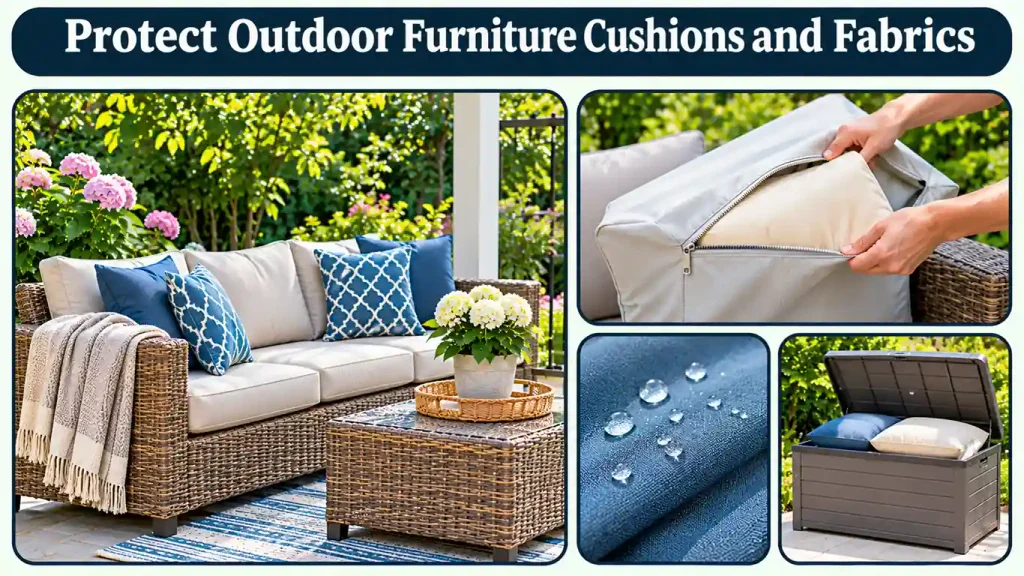
Outdoor cushions improve seating comfort but are often more vulnerable to moisture, stains, and prolonged sunlight than furniture frames. Even water-resistant fabrics can absorb moisture through seams or deteriorate under constant exposure. Protecting cushions through suitable fabric treatments, regular cleaning, and proper storage helps preserve their color, shape, and comfort.
Choose Outdoor-Friendly Cushion Fabrics
Look for solution-dyed acrylic, outdoor polyester, or other fabrics specifically designed for patio furniture. These materials generally provide better resistance to fading and moisture than ordinary indoor upholstery.
Use Fabric Protection Sprays
Apply an outdoor fabric protector only when recommended for the specific cushion material. Follow the manufacturer’s directions carefully because some sprays may affect fabric breathability, appearance, or existing protective treatments.
Store Cushions During Bad Weather
Move cushions into a dry storage box, shed, or indoor storage area during prolonged rain. Make sure cushions are completely dry before storing them to prevent unpleasant odors and mildew growth.
7. Protect Different Outdoor Furniture Materials Properly
Different outdoor furniture materials react differently to environmental exposure, making material-specific maintenance essential. Wooden furniture may experience cracking and discoloration, while metal surfaces can corrode when protective coatings fail. Wicker and plastic furniture also require appropriate care to prevent brittleness, fading, or structural damage. Understanding these differences allows homeowners to select effective protection methods.
How to Protect Wooden Outdoor Furniture
Clean wooden surfaces regularly and apply a suitable outdoor sealant or protective finish when needed. Avoid leaving untreated wood in standing water, and inspect joints for signs of cracking or deterioration.
How to Protect Metal Outdoor Furniture
Inspect metal furniture for scratches, peeling paint, and corrosion. Remove minor rust using an appropriate method and repair damaged finishes with a compatible rust-resistant primer and outdoor coating.
How to Protect Wicker and Plastic Furniture
Clean synthetic wicker using a soft brush to remove dirt trapped between woven sections. Keep plastic furniture away from excessive heat and follow manufacturer recommendations for sunlight exposure and protective cleaning products.
8. Store Outdoor Furniture During Winter and Storms
Extreme weather can shorten the lifespan of outdoor furniture, even when products are designed for year-round use. Strong winds, heavy storms, snow, and freezing temperatures may damage furniture frames, finishes, and cushions. Preparing outdoor seating areas before severe weather helps prevent avoidable damage and reduces maintenance expenses when warmer weather returns.
Best Outdoor Furniture Storage Practices
- Clean Before Storage: Remove dirt, stains, and debris before putting furniture away.
- Dry Completely: Allow all furniture surfaces and cushions to dry thoroughly.
- Use Indoor Storage: Store vulnerable furniture in a garage, shed, or other protected location.
- Protect With Covers: Use breathable furniture covers suitable for the storage environment.
- Secure Lightweight Items: Bring lightweight chairs, umbrellas, and decorative accessories indoors before storms.
Avoid Improper Storage Conditions
Do not store damp cushions inside sealed plastic bags or stack heavy objects on fragile furniture frames. Choose a dry, ventilated storage location to minimize moisture damage and unnecessary pressure on furniture components.
9. Arrange Outdoor Furniture in Protected Locations
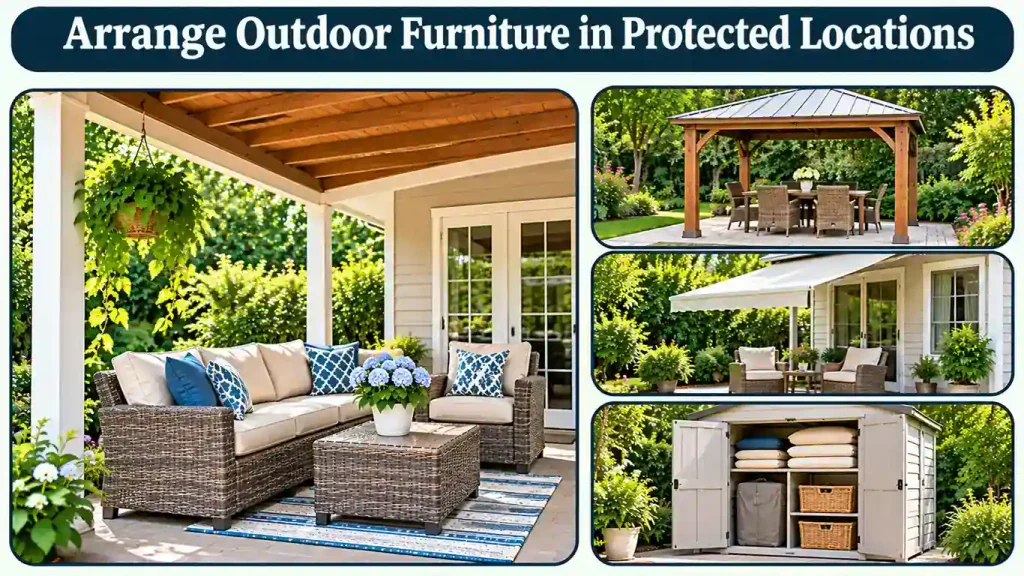
Furniture placement plays an important role in preventing weather-related damage and reducing maintenance requirements. Positioning furniture beneath covered patios or sheltered garden structures can limit exposure to rain, intense sunlight, and falling debris. Well-planned layouts also improve drainage, airflow, and accessibility, making outdoor furniture easier to clean and maintain.
Create a Covered Outdoor Seating Area
A pergola with a suitable weatherproof roof, covered porch, or outdoor pavilion can provide additional protection from rain and sunlight. These structures also create comfortable seating areas for entertaining and relaxation.
Keep Furniture Away From Moisture-Prone Areas
Avoid positioning furniture directly beneath roof drainage outlets or in areas where puddles frequently form. Maintaining adequate airflow around seating arrangements helps surfaces dry faster after rainfall.
10. Inspect and Maintain Outdoor Furniture Throughout the Year
Preventive maintenance helps identify small problems before they develop into costly furniture repairs or replacements. Loose screws, damaged coatings, deteriorating fabric, and early corrosion often become more serious when ignored. Inspecting outdoor furniture regularly allows homeowners to correct minor issues while maintaining safe, comfortable, and attractive outdoor seating areas.
Check Furniture Frames and Hardware
Inspect screws, bolts, hinges, and joints periodically to ensure they remain secure. Tighten loose connections and replace severely corroded hardware with suitable outdoor-rated alternatives.
Repair Small Damage Early
Touch up chipped protective coatings, address early rust, and repair minor wooden surface damage before moisture penetrates further. Use repair materials compatible with the original furniture finish.
Follow a Seasonal Maintenance Routine
Clean and inspect outdoor furniture at the beginning and end of each major season. Increase cleaning frequency during periods of heavy pollen, rainfall, or frequent outdoor entertaining.
FAQs
1. What is the best way to protect outdoor furniture?
The best approach combines regular cleaning, weather-resistant covers, appropriate protective treatments, and dry storage during severe weather. Keeping furniture shaded, preventing standing water, and inspecting materials regularly also helps minimize damage and maintain its appearance over time.
2. Can outdoor furniture be left outside all year?
Some weather-resistant outdoor furniture can remain outside throughout the year, depending on its materials and local climate. However, protective covers and seasonal storage are recommended during extreme weather, particularly for wooden furniture, delicate wicker, and upholstered cushions.
3. How do I protect outdoor furniture from rain?
Use properly fitted waterproof covers with ventilation features, keep furniture on well-drained surfaces, and apply appropriate protective finishes. Remove standing water after rainfall and ensure furniture is completely dry before covering it to reduce moisture-related problems.
4. How can I prevent outdoor furniture from fading in the sun?
Place outdoor furniture under shade structures, use UV-resistant covers, and choose fade-resistant materials. Suitable protective finishes can also help certain surfaces resist sunlight damage, although regular maintenance remains necessary to preserve furniture color and appearance.
5. How often should outdoor furniture be cleaned and maintained?
Light cleaning every one to two weeks is helpful during frequent use, while deeper cleaning can be performed seasonally. Furniture exposed to heavy rainfall, dust, or pollen may need more frequent attention, depending on material requirements.