
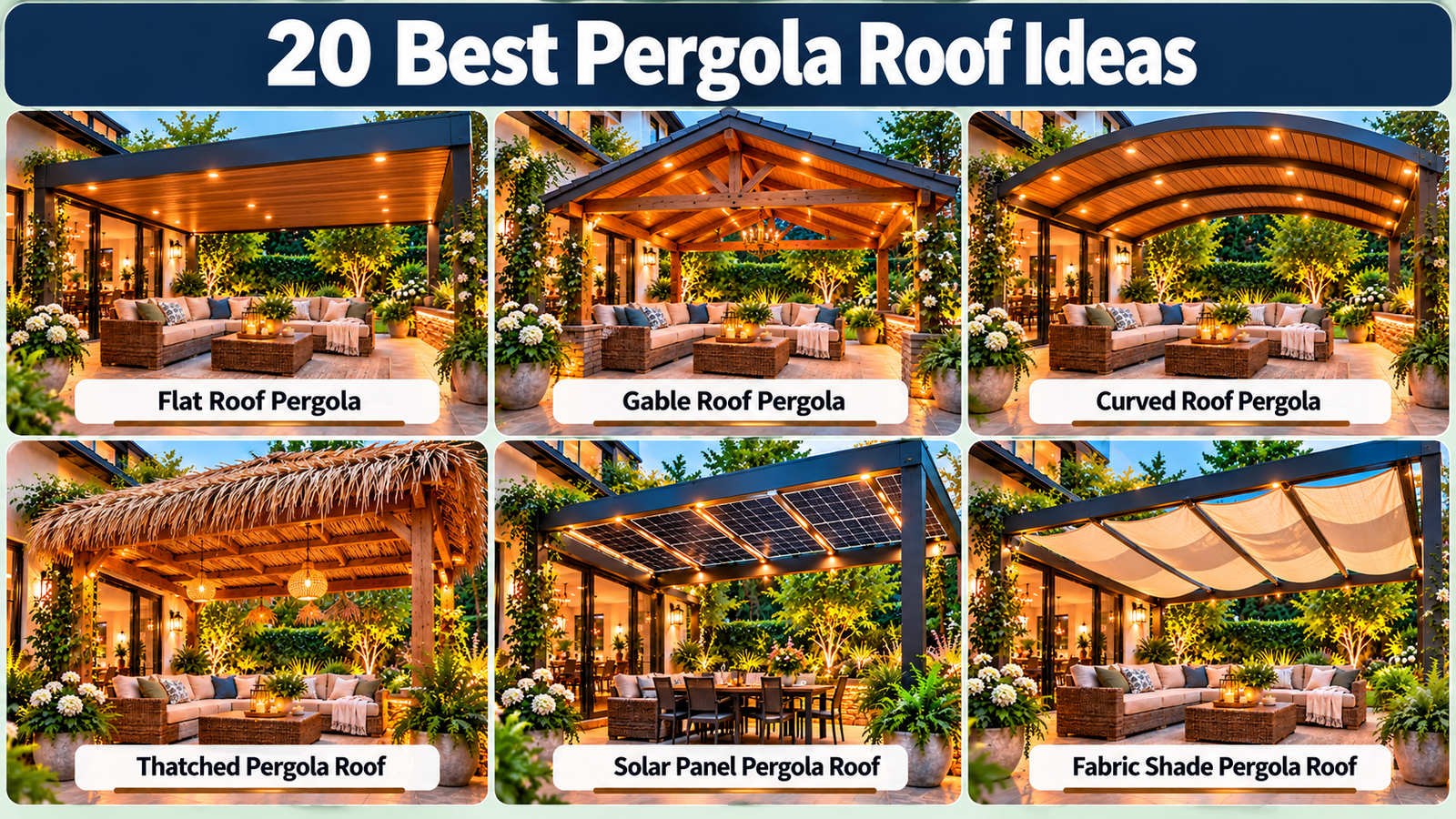
A beautiful pergola roof can transform your backyard into a comfortable and stylish outdoor retreat. From classic wooden designs to modern aluminum, glass, and retractable canopies, there are plenty of options to match your space and budget. Whether you need shade, rain protection, or decorative appeal, these 20 pergola roof ideas will help you create the perfect outdoor living area.
1. Wooden Pergola Roof
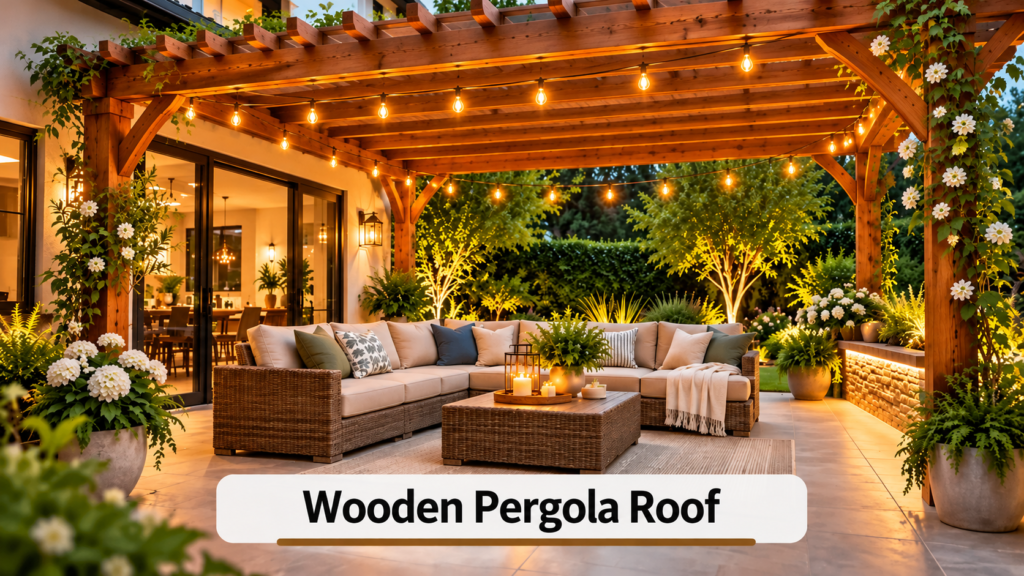
A wooden pergola roof is a classic choice for creating a warm, natural, and inviting outdoor space. It blends beautifully with gardens, patios, decks, and backyard seating areas. Wooden roofs can feature open slats, solid panels, or decorative beams, depending on the amount of shade and weather protection you need. Cedar, redwood, and pressure-treated lumber are popular options because of their durability and attractive appearance.
Design Tips
- Choose cedar or redwood for a naturally attractive and weather-resistant finish.
- Use evenly spaced wooden slats to create partial shade while allowing sunlight through.
- Add a waterproof roofing layer if you want protection from rain.
- Apply a natural wood stain to highlight the grain and complement your outdoor furniture.
- Incorporate climbing plants or string lights for a cozy atmosphere.
Best Placement
A wooden pergola roof works especially well over backyard patios, outdoor dining areas, garden pathways, and deck seating spaces. Positioning it near the house can create a seamless transition between indoor and outdoor living. For better shade during hot afternoons, consider the direction of the sun when planning the roof’s slat orientation.
Maintenance and Care
Wooden pergola roofs require regular maintenance to preserve their appearance and structural strength. Clean the surface periodically to remove dirt, leaves, and mildew. Apply an appropriate exterior wood sealant or stain as recommended for the wood type and local climate. Inspect the beams, fasteners, and roof panels annually for cracks, rot, insect damage, or loose connections. Proper maintenance helps extend the roof’s lifespan and keeps your outdoor space attractive throughout the year.
2. Metal Pergola Roof

A metal pergola roof is a modern and durable option for homeowners who want long-lasting outdoor protection with minimal maintenance. Metal roofing provides excellent resistance to rain, wind, and harsh sunlight when properly installed. It works beautifully with contemporary patios, backyard dining spaces, and minimalist outdoor designs. Aluminum and steel are popular materials because of their strength, sleek appearance, and versatility. Metal pergola roofs are available in various colors and finishes, making them suitable for different architectural styles.
Design Tips
- Choose powder-coated aluminum for a lightweight, corrosion-resistant roofing option.
- Use galvanized or properly coated steel for strength and durability.
- Select matte black, charcoal gray, or bronze finishes for a modern appearance.
- Add insulated metal roof panels to reduce heat transfer and rain noise.
- Install gutters and proper drainage to prevent water accumulation.
Best Placement
Metal pergola roofs are excellent for outdoor kitchens, backyard patios, poolside seating areas, and covered dining spaces. They are particularly useful in locations that experience frequent rain or strong sunlight. Installing a metal pergola next to the house can create a practical outdoor extension while maintaining a clean architectural appearance.
Maintenance and Care
Metal pergola roofs typically require less maintenance than natural wood roofing. Clean the panels occasionally with mild soap and water to remove dirt, dust, and debris. Inspect fasteners, roof joints, and protective coatings for corrosion or damage. Keep gutters and drainage channels clear to prevent water buildup. Repair scratches in protective finishes promptly to help prevent rust, especially on steel roofs.
3. Polycarbonate Pergola Roof

A polycarbonate pergola roof is a lightweight and versatile solution that provides outdoor protection while allowing natural light to enter the space below. Polycarbonate panels are available in clear, tinted, and opaque finishes, offering different levels of brightness and privacy. This roofing material is especially popular for modern patios, garden pergolas, and outdoor relaxation areas. Its impact resistance and relatively easy installation make it an attractive alternative to traditional glass roofing.
Design Tips
- Choose UV-protected polycarbonate panels to reduce harmful ultraviolet exposure.
- Use tinted or opal panels to diffuse sunlight and reduce glare.
- Select multiwall polycarbonate sheets for improved thermal insulation.
- Pair the roofing with aluminum or wooden pergola frames for a balanced appearance.
- Install panels with the recommended slope and expansion allowances for proper drainage and temperature changes.
Best Placement
Polycarbonate pergola roofs are ideal for patios, garden seating areas, outdoor dining spaces, and small backyard pergolas. They work particularly well where homeowners want rain protection without blocking too much daylight. Clear panels help maintain a bright atmosphere, while tinted versions offer additional comfort in sunny locations. They can also be used for attached pergolas near living rooms or kitchen entrances.
Maintenance and Care
Polycarbonate roofing needs occasional cleaning to maintain its transparency and attractive appearance. Wash the panels using mild soap, lukewarm water, and a soft cloth or sponge. Avoid abrasive cleaners that could scratch the surface. Inspect seals, fasteners, and panel edges periodically for leaks or damage. Make sure drainage channels remain clear and follow the manufacturer’s instructions when replacing damaged panels.
4. Glass Pergola Roof

A glass pergola roof creates a luxurious and sophisticated outdoor setting while maintaining an open, airy atmosphere. It allows natural daylight to pass through while providing protection from rain when properly sealed and installed. Glass roofing complements contemporary homes, elegant patios, and modern garden spaces. Tempered and laminated safety glass systems are commonly considered for overhead applications, depending on local building requirements. Glass pergola roofs can transform an ordinary backyard into a stylish outdoor living area with unobstructed views of the sky.
Design Tips
- Choose overhead-rated laminated safety glass specified by a qualified glazing professional.
- Consider tinted or solar-control glass to reduce glare and solar heat gain.
- Pair glass panels with black aluminum or steel frames for a sleek appearance.
- Incorporate proper roof slopes, gutters, and waterproof seals to manage rainwater.
- Add retractable shades underneath the glass for adjustable sunlight protection.
Best Placement
Glass pergola roofs are ideal for modern patios, outdoor lounges, dining terraces, and garden seating areas. They work especially well when positioned beside contemporary homes with large windows or sliding glass doors. A glass-covered pergola can create a seamless connection between indoor and outdoor spaces while preserving natural light and garden views.
Maintenance and Care
Glass pergola roofs require regular cleaning to prevent dirt, water spots, and leaf debris from accumulating. Use a suitable glass cleaner and nonabrasive cleaning tools to maintain a clear finish. Inspect the seals, drainage systems, and structural supports periodically for signs of wear or leaks. Avoid placing heavy objects on the glass panels. Have damaged or cracked overhead glazing assessed and replaced by a qualified professional to maintain safety and durability.
5. Retractable Canopy Pergola Roof

A retractable canopy pergola roof is a flexible and stylish option for homeowners who want adjustable shade and an attractive outdoor living space. This roofing system features a fabric canopy that can be extended or retracted depending on sunlight and weather conditions. It allows you to enjoy natural sunshine during cooler days while providing comfortable shade during hot afternoons. Retractable canopies are available in various colors, fabrics, and operating mechanisms, making them suitable for modern and traditional outdoor designs.
Design Tips
- Choose UV-resistant and water-resistant outdoor fabric for better durability and sun protection.
- Install a manual or motorized retractable system based on your budget and convenience.
- Select neutral canopy colors such as beige, cream, or light gray for an elegant appearance.
- Pair the canopy with wooden or aluminum pergola frames to complement your outdoor décor.
- Consider a motorized system with wind and rain sensors for automatic retraction when conditions become unsafe.
Best Placement
Retractable canopy pergola roofs are ideal for backyard patios, outdoor dining areas, poolside lounges, and garden seating spaces. They work particularly well in locations where sunlight changes throughout the day. Installing one over an outdoor dining table allows you to adjust the shade during meals. These pergolas are also excellent for attached patios where homeowners want flexible sunlight control without installing a permanent solid roof.
Maintenance and Care
Retractable canopy roofs need regular cleaning and occasional inspection to maintain smooth operation. Brush away leaves, dust, and debris before retracting the fabric. Clean the canopy with mild soap and water, following the manufacturer’s instructions. Inspect tracks, rollers, and operating mechanisms for wear or damage. Retract the canopy during strong winds, heavy rain, or snow unless the system is specifically rated for those conditions. Allow the fabric to dry before storing it for extended periods.
6. Adjustable Louvered Pergola Roof
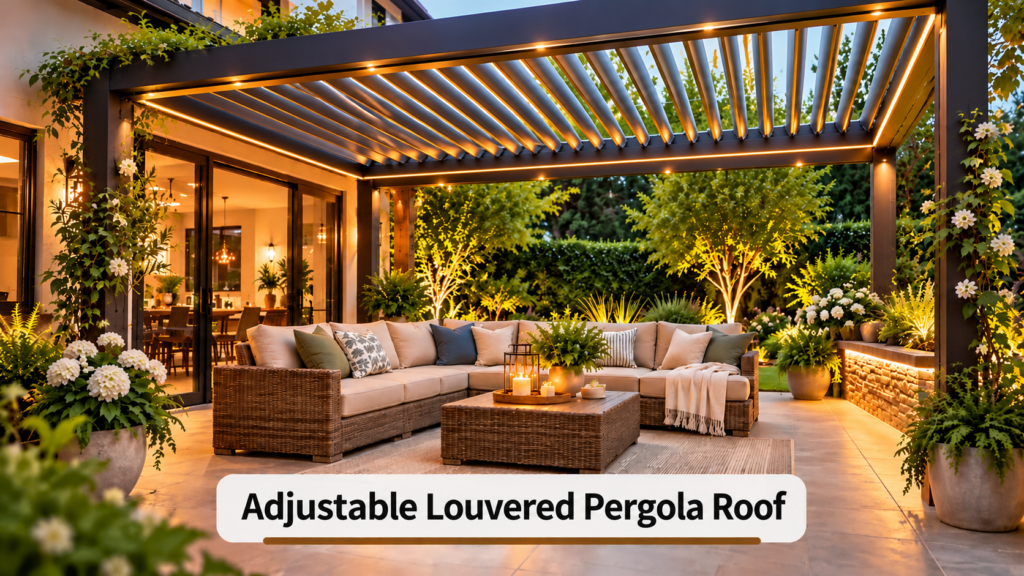
An adjustable louvered pergola roof is a modern roofing solution that provides excellent control over sunlight, ventilation, and outdoor comfort. It features rotating slats that can be opened, partially tilted, or closed to adjust the amount of natural light entering the space. Most systems use aluminum louvers, making them durable and relatively low-maintenance. Some advanced designs include motorized controls, integrated drainage, and weather sensors. This roofing style is particularly popular for contemporary patios and luxury outdoor living spaces.
Design Tips
- Choose powder-coated aluminum louvers for a durable and corrosion-resistant finish.
- Install a motorized adjustment system for convenient control of sunlight and ventilation.
- Select black, white, or charcoal finishes to complement modern architectural styles.
- Consider integrated gutters and drainage channels for improved rainwater management.
- Add recessed LED lighting or ceiling fans designed for outdoor use to improve comfort and functionality.
Best Placement
Adjustable louvered pergola roofs work beautifully over outdoor kitchens, backyard dining areas, modern patios, and poolside lounges. They are especially suitable for locations that receive strong sunlight during different parts of the day. By adjusting the louvers, homeowners can create shade during hot afternoons and allow more sunlight during cooler mornings. Attached louvered pergolas can also provide a stylish extension of indoor living areas.
Maintenance and Care
Adjustable louvered roofs require periodic cleaning and inspection to maintain their performance. Remove leaves, dirt, and debris from the louvers and drainage channels. Clean the aluminum surfaces with mild soap and water to preserve their protective coating. Check moving components, seals, and motorized mechanisms for unusual noise or restricted movement. Follow the manufacturer’s maintenance guidelines, particularly for electrical controls and automated systems. Keep the louvers in the recommended position during severe weather.
7. Bamboo Pergola Roof
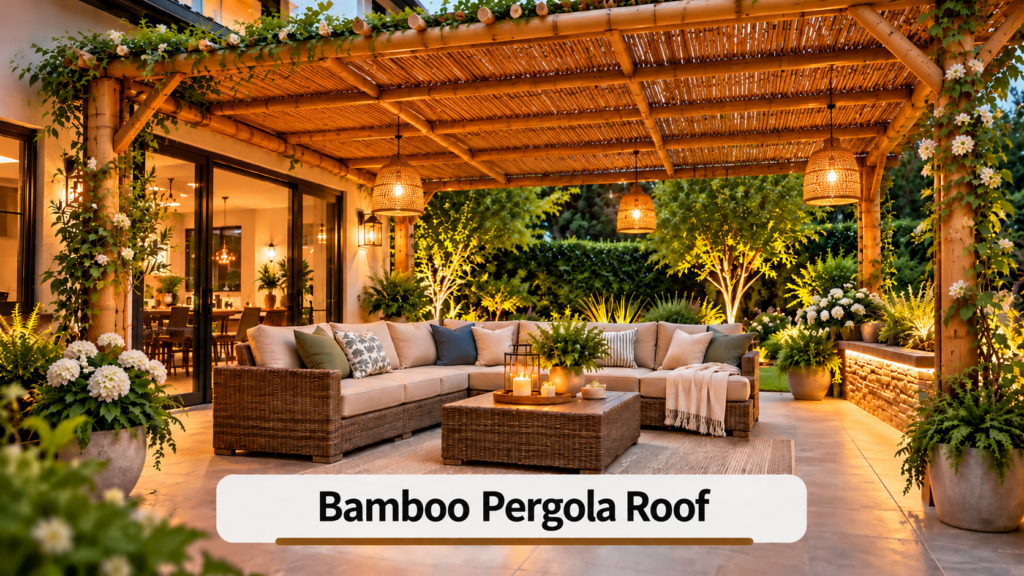
A bamboo pergola roof creates a natural, tropical, and relaxing atmosphere in outdoor spaces. Its distinctive texture and warm appearance make it a popular choice for garden retreats, rustic patios, and tropical-inspired backyard designs. Bamboo poles or woven bamboo panels can be arranged to provide decorative shade while allowing varying amounts of sunlight to filter through. This material pairs beautifully with wooden furniture, stone pathways, and lush greenery. However, bamboo roofing generally requires careful treatment and maintenance to withstand outdoor conditions.
Design Tips
- Choose properly treated bamboo poles or panels to improve resistance to insects, moisture, and decay.
- Arrange bamboo slats closely together for increased shade or space them apart for filtered sunlight.
- Combine bamboo roofing with sturdy wooden or metal supports for a stable structure.
- Add tropical plants, hanging lanterns, and natural woven furniture to enhance the outdoor atmosphere.
- Install a suitable waterproof layer above the bamboo if you need dependable rain protection.
Best Placement
Bamboo pergola roofs are ideal for tropical gardens, backyard relaxation areas, poolside retreats, and small outdoor seating spaces. They work especially well in landscapes featuring palm trees, ornamental grasses, and other lush plants. A bamboo-covered pergola can create a peaceful reading corner or a shaded area for casual gatherings. It is also an attractive choice for outdoor spaces inspired by coastal, bohemian, or resort-style designs.
Maintenance and Care
Bamboo pergola roofs need consistent maintenance because prolonged moisture and sunlight exposure can cause cracking, fading, or deterioration. Clean the bamboo periodically using a soft brush to remove dirt and debris. Apply a compatible exterior protective treatment according to the manufacturer’s recommendations. Inspect the poles and panels for signs of insects, mold, splitting, or decay. Replace damaged bamboo sections promptly and maintain adequate ventilation to prevent moisture buildup. Proper treatment and regular care can help extend the lifespan of a bamboo pergola roof.
8. Corrugated Metal Pergola Roof

A corrugated metal pergola roof is a practical and durable option for creating a weather-protected outdoor living space. Its distinctive wavy or ribbed design adds texture and character while efficiently directing rainwater away from the roof. Corrugated metal panels are commonly made from galvanized steel or aluminum, offering excellent strength and resistance to outdoor conditions when properly installed. This roofing style works beautifully with rustic, industrial, farmhouse, and modern backyard designs. It is also a cost-effective choice for homeowners seeking long-lasting outdoor coverage.
Design Tips
- Choose galvanized steel or aluminum panels for improved weather resistance and durability.
- Select matte black, charcoal gray, or natural metallic finishes to complement your outdoor décor.
- Install the roofing panels with a suitable slope to ensure proper rainwater drainage.
- Combine corrugated metal roofing with wooden beams for an attractive rustic-industrial appearance.
- Consider insulated panels or additional shade materials to reduce heat buildup beneath the roof.
Best Placement
Corrugated metal pergola roofs are ideal for backyard patios, outdoor kitchens, garden seating areas, and covered dining spaces. They work particularly well in regions that experience frequent rainfall because their ribbed surfaces help channel water toward the roof edges. A corrugated metal roof can also complement farmhouse-style homes and rustic outdoor entertainment areas. Positioning the pergola near the house creates a functional extension for relaxing or entertaining guests.
Maintenance and Care
Corrugated metal pergola roofs require relatively little maintenance compared with many natural roofing materials. Remove leaves, dirt, and debris regularly to maintain proper drainage. Inspect roofing screws, protective coatings, and panel connections for signs of rust or loosening. Clean the surface occasionally with mild soap and water. Repair damaged coatings promptly, especially on steel panels, to prevent corrosion. Keeping gutters and drainage outlets clear helps maintain the roof’s performance throughout the year.
9. Clear Acrylic Pergola Roof

A clear acrylic pergola roof is an attractive solution for homeowners who want reliable rain protection without sacrificing natural daylight. Acrylic roofing panels offer excellent transparency, creating a bright and open atmosphere beneath the pergola. They are lighter than glass and can be used with properly designed wooden, aluminum, or steel frames. Clear acrylic roofing is especially suitable for contemporary patios, garden sitting areas, and outdoor spaces where maintaining visibility of the sky is important. UV-protected acrylic panels can also help reduce ultraviolet exposure while preserving natural brightness.
Design Tips
- Choose UV-stabilized acrylic panels designed specifically for outdoor roofing applications.
- Use clear panels to maximize natural light or lightly tinted options to reduce glare.
- Pair acrylic roofing with black aluminum or natural wooden frames for a clean, modern appearance.
- Install panels with appropriate spacing and expansion allowances to accommodate temperature changes.
- Include a suitable roof slope and waterproof sealing system to prevent rainwater accumulation.
Best Placement
Clear acrylic pergola roofs work beautifully over backyard patios, garden seating spaces, outdoor dining areas, and small attached pergolas. They are particularly useful in locations where a solid roof would make the area feel too dark. Installing an acrylic-covered pergola beside large windows or glass doors can help maintain daylight inside the home. This design also complements gardens filled with flowering plants and decorative landscaping.
Maintenance and Care
Clear acrylic roofing requires gentle cleaning to maintain its transparency and appearance. Wash the panels periodically using mild soap, water, and a soft microfiber cloth. Avoid abrasive brushes, harsh chemicals, and cleaners that are incompatible with acrylic because they may cause scratching or surface damage. Inspect panel connections, seals, and fasteners for leaks or looseness. Remove fallen leaves and other debris to prevent staining. Replace cracked or significantly damaged panels to maintain the roof’s safety and performance.
10. Fabric Shade Pergola Roof

A fabric shade pergola roof is a lightweight, affordable, and decorative option for creating comfortable outdoor spaces. It uses outdoor-rated fabric panels, shade cloth, or stretched canopy materials to reduce direct sunlight while maintaining an airy atmosphere. Fabric roofing is available in various colors, textures, and patterns, allowing homeowners to personalize their backyard designs. Depending on the fabric and construction, these roofs can provide filtered shade or limited rain protection. Their flexible appearance makes them especially popular for casual patios, garden lounges, and Mediterranean-inspired outdoor settings.
Design Tips
- Choose UV-resistant outdoor fabric to provide effective shade and improve material longevity.
- Select breathable shade cloth for better airflow during hot summer afternoons.
- Use neutral colors such as beige, ivory, or light gray to create a relaxing outdoor atmosphere.
- Install tensioned fabric panels or overlapping canopy sections for an attractive modern design.
- Consider removable fabric panels that can be stored during severe weather or winter months.
Best Placement
Fabric shade pergola roofs are ideal for backyard patios, outdoor dining spaces, poolside relaxation areas, and garden seating corners. They work particularly well in warm climates where reducing direct sunlight is more important than providing complete rain protection. A fabric-covered pergola can create a comfortable space for reading, entertaining, or enjoying afternoon meals. It is also an excellent choice for small backyards because the lightweight material creates shade without making the area feel enclosed.
Maintenance and Care
Fabric shade pergola roofs need regular cleaning and proper storage to maintain their appearance and performance. Remove dust, leaves, and bird droppings using a soft brush or gentle washing method recommended by the fabric manufacturer. Allow the material to dry completely before folding or storing it to reduce mildew growth. Inspect attachment points, tension cables, and fabric edges for wear or tearing. Remove fabric panels during strong winds, heavy snowfall, or severe storms unless the system is specifically rated for those conditions. Replace faded or damaged material when necessary to maintain effective shade protection.
11. Slatted Wood Pergola Roof

A slatted wood pergola roof is a timeless and attractive option for creating partial shade while maintaining an open outdoor atmosphere. This roofing style features evenly spaced wooden slats that allow sunlight and fresh air to pass through. The spacing and orientation of the slats determine how much shade the pergola provides throughout the day. Slatted wood roofs complement modern, rustic, and traditional outdoor designs. They are especially popular for backyard patios, garden seating areas, and outdoor dining spaces where natural beauty and ventilation are important.
Design Tips
- Choose cedar, redwood, or properly treated lumber for improved outdoor durability.
- Install evenly spaced wooden slats to create balanced shade and attractive shadow patterns.
- Use wider slats or reduce spacing to increase shade during sunny afternoons.
- Apply a natural wood stain or weather-resistant finish to enhance the appearance.
- Add climbing plants, hanging lights, or outdoor curtains to create a cozy atmosphere.
Best Placement
Slatted wood pergola roofs are ideal for backyard patios, garden pathways, outdoor dining spaces, and relaxation areas. They work particularly well in gardens where homeowners want filtered sunlight rather than complete shade. Installing a slatted pergola over a deck can create a comfortable gathering space while maintaining an open connection with the surrounding landscape. The design also complements modern homes with wooden architectural features.
Maintenance and Care
Slatted wood pergola roofs require regular care to preserve their appearance and structural strength. Clean the slats periodically to remove dirt, leaves, and mildew. Apply an appropriate exterior wood stain or sealant according to the manufacturer’s recommendations. Inspect the wooden components for cracks, insect damage, and signs of decay. Check fasteners and connections annually to ensure the structure remains secure. Replace damaged slats promptly to prevent further deterioration.
12. Cedar Pergola Roof
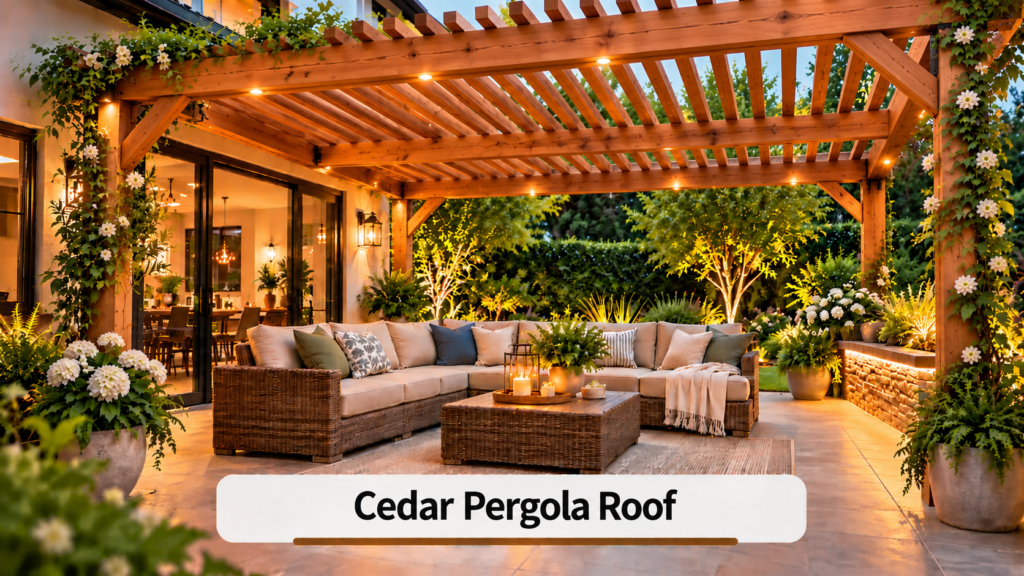
A cedar pergola roof is a beautiful and durable choice for homeowners who appreciate natural wood textures and warm outdoor designs. Cedar is valued for its attractive grain, pleasant appearance, and natural resistance to decay and certain insects. Its relatively lightweight structure makes it suitable for various pergola styles, including open-beam roofs and partially covered designs. Cedar pergola roofs blend beautifully with gardens, wooden decks, and traditional backyard landscapes. With proper installation and maintenance, they can provide years of outdoor enjoyment while enhancing the overall appearance of a patio.
Design Tips
- Choose quality cedar lumber suitable for outdoor construction to improve durability and appearance.
- Use exposed cedar beams and rafters to create a natural, rustic architectural style.
- Apply a clear exterior wood finish to highlight the cedar’s grain and warm color.
- Combine cedar roofing with stone flooring or wooden outdoor furniture for a coordinated design.
- Add decorative lighting or climbing vines to create an inviting evening atmosphere.
Best Placement
Cedar pergola roofs are excellent for garden patios, backyard lounges, wooden decks, and outdoor dining areas. They work especially well in natural landscapes featuring flowering plants, shrubs, and stone walkways. A cedar pergola positioned beside the house can create a welcoming outdoor extension that complements traditional architecture. Freestanding cedar pergolas are also attractive additions to garden retreats and quiet relaxation areas.
Maintenance and Care
Cedar pergola roofs need periodic maintenance to protect them from weather exposure and preserve their natural beauty. Clean the wood occasionally using a soft brush and an appropriate wood-cleaning solution. Apply a suitable exterior finish when necessary to reduce moisture absorption and ultraviolet damage. Inspect beams and roof components for cracking, rot, or insect activity. Keep leaves and debris from accumulating between the boards. Proper ventilation and drainage help prevent excessive moisture buildup and extend the lifespan of the cedar roof.
13. Aluminum Pergola Roof

An aluminum pergola roof is a modern, lightweight, and low-maintenance solution for creating a stylish outdoor living area. Aluminum is naturally resistant to rust, making it suitable for various outdoor environments, including humid and coastal locations. Aluminum pergola roofing systems are available in solid panels, adjustable louvers, and decorative slatted designs. Their sleek appearance complements contemporary homes, minimalist patios, and sophisticated backyard spaces. Many aluminum systems also feature powder-coated finishes that provide additional protection and allow homeowners to match the roofing with their exterior color scheme.
Design Tips
- Choose powder-coated aluminum panels for improved weather resistance and an attractive finish.
- Select matte black, white, bronze, or charcoal gray for a contemporary appearance.
- Consider adjustable aluminum louvers to control sunlight and ventilation.
- Install an integrated gutter system when using solid roofing panels to improve drainage.
- Add outdoor-rated LED lighting or decorative privacy screens for greater comfort and functionality.
Best Placement
Aluminum pergola roofs are ideal for modern patios, outdoor kitchens, rooftop terraces, poolside lounges, and backyard dining spaces. Their lightweight construction makes them a practical option for many residential applications, provided the supporting structure is properly engineered. They are especially useful in areas with frequent rainfall or high humidity. An aluminum pergola attached to a contemporary home can create a seamless transition between indoor and outdoor living spaces.
Maintenance and Care
Aluminum pergola roofs generally require minimal maintenance compared with natural wooden roofing systems. Clean the panels periodically using mild soap, water, and a soft cloth to remove dust and dirt. Inspect fasteners, joints, and drainage channels for debris or damage. Check powder-coated surfaces for scratches or deterioration and repair them according to the manufacturer’s instructions. Avoid abrasive cleaning products that may damage the protective finish. For adjustable systems, inspect moving components regularly to maintain smooth and reliable operation.
14. Thatched Pergola Roof

A thatched pergola roof is a charming and natural roofing option that creates a tropical, rustic, and resort-inspired outdoor atmosphere. This roofing style uses dried grasses, reeds, palm leaves, or other traditional thatching materials to provide shade and decorative appeal. Thatched roofs are especially popular for garden retreats, poolside lounges, and tropical-themed patios. Their organic textures and earthy colors blend beautifully with natural landscapes. When properly designed and installed, a thatched pergola roof can provide comfortable shade and a relaxing outdoor environment.
Design Tips
- Choose high-quality thatching materials such as water reed, palm leaves, or specially treated natural grasses.
- Use a steep roof pitch where appropriate to help rainwater drain efficiently.
- Combine thatched roofing with wooden or bamboo support structures for a tropical appearance.
- Add wicker furniture, natural stone flooring, and tropical plants to enhance the resort-inspired design.
- Consider fire-retardant materials or treatments where approved, and follow local fire safety requirements.
Best Placement
Thatched pergola roofs are ideal for tropical gardens, poolside relaxation areas, backyard lounges, and outdoor dining spaces. They work particularly well in landscapes featuring palm trees, ornamental grasses, and lush greenery. A thatched pergola can create an attractive focal point beside a swimming pool or within a spacious garden. It is also suitable for coastal-inspired patios where homeowners want a relaxed and natural atmosphere.
Maintenance and Care
Thatched pergola roofs require regular inspection and maintenance to preserve their appearance and functionality. Remove fallen leaves and debris that may trap moisture and encourage decay. Inspect the thatching for loose sections, mold, insect activity, or deterioration. Replace damaged materials promptly to prevent further problems. Keep overhanging branches trimmed to improve airflow and reduce debris accumulation. Because natural thatching can be combustible, avoid placing fire pits, grills, or other heat sources near the roof.
15. Solar Panel Pergola Roof

A solar panel pergola roof is an innovative and environmentally friendly option that combines outdoor shade with renewable energy production. This roofing style incorporates photovoltaic solar panels into the pergola structure, allowing homeowners to generate electricity while creating a functional outdoor living space. Solar pergolas are particularly attractive for modern homes, sustainable gardens, and energy-conscious outdoor designs. Depending on the system, solar panels can provide substantial shade while helping reduce household electricity consumption. Their dual-purpose design makes them a practical addition to contemporary patios and backyard entertainment areas.
Design Tips
- Choose high-efficiency solar panels designed for outdoor installation and suitable for the available roof area.
- Position the panels to receive sufficient sunlight throughout the day while minimizing shade from nearby trees or buildings.
- Use a properly engineered aluminum or steel frame capable of supporting the solar panels and required environmental loads.
- Consider bifacial solar panels where the installation design allows useful light to reach both sides.
- Integrate outdoor-rated electrical components and concealed cable management for a clean and professional appearance.
Best Placement
Solar panel pergola roofs are ideal for sunny backyard patios, outdoor dining areas, garden lounges, and spacious residential terraces. They work best in locations that receive consistent sunlight throughout the day. A solar pergola can also be installed over an outdoor seating area or driveway when the structure is designed for that purpose. Positioning it away from tall trees and other major obstructions can improve energy production while providing comfortable shade beneath the panels.
Maintenance and Care
Solar panel pergola roofs require periodic cleaning and professional inspection to maintain safety and performance. Remove dust, leaves, and bird droppings using cleaning methods approved by the panel manufacturer. Check the supporting structure for corrosion, loose connections, or visible damage. Monitor the solar system’s energy production to identify unexpected performance changes. Electrical wiring, inverters, and panel connections should be inspected or serviced by qualified professionals. Follow manufacturer guidelines for maintenance, and avoid walking on solar panels or attempting electrical repairs without proper training.
16. Green Living Pergola Roof
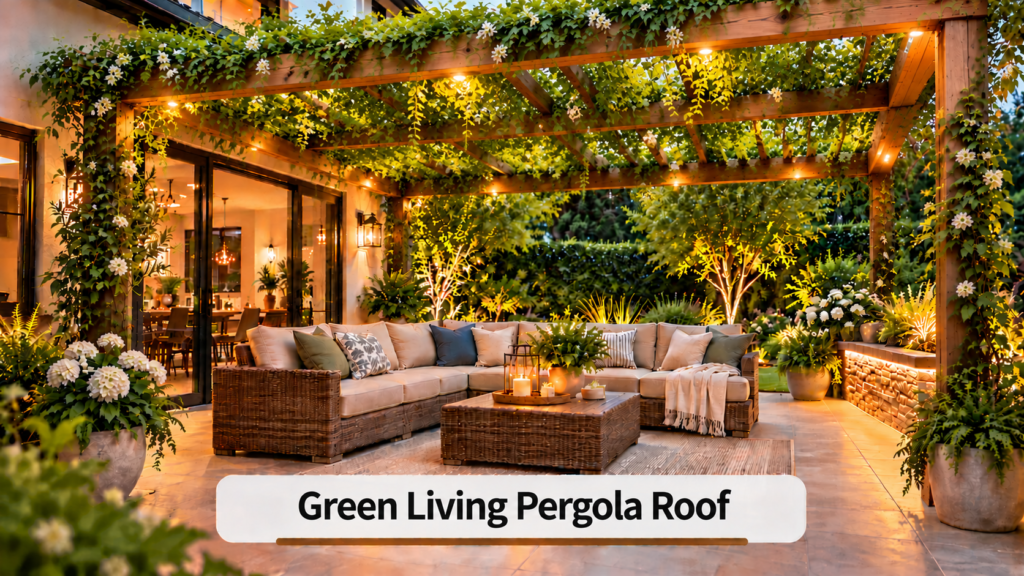
A green living pergola roof is a beautiful and nature-inspired design that uses climbing plants and vegetation to create a shaded outdoor retreat. This roofing style allows vines and other climbing plants to grow across a sturdy pergola framework, forming a natural overhead canopy. Popular plant choices include grapevines, wisteria, jasmine, and climbing roses, depending on the local climate and growing conditions. A living pergola roof enhances backyard greenery while providing seasonal shade and supporting garden biodiversity. It is an excellent choice for homeowners who enjoy gardening and want an environmentally friendly outdoor space.
Design Tips
- Choose climbing plants that are suitable for your local climate, sunlight exposure, and available growing space.
- Install a sturdy wooden or metal framework capable of supporting mature vines and their additional weight after rainfall.
- Use trellises, wires, or horizontal supports to guide plants across the pergola roof.
- Combine flowering vines with attractive garden furniture to create a colorful outdoor retreat.
- Consider deciduous climbing plants if you want summer shade and more natural sunlight during winter.
Best Placement
Green living pergola roofs are ideal for backyard gardens, outdoor dining spaces, garden pathways, and peaceful seating areas. They work particularly well in landscapes featuring flower beds, ornamental shrubs, and natural stone pathways. A plant-covered pergola can create a relaxing reading corner or a shaded area for casual gatherings. Positioning the structure near garden beds or suitable planting containers makes it easier for climbing plants to establish and spread across the roof.
Maintenance and Care
Green living pergola roofs require ongoing plant care to maintain their appearance and structural safety. Water the climbing plants according to their specific needs, especially during establishment and dry periods. Prune vines regularly to control excessive growth and maintain adequate airflow. Inspect the pergola framework for damage, loose connections, and excessive plant weight. Remove dead branches, fallen leaves, and unwanted growth to keep the canopy healthy. Provide suitable fertilizer when needed and monitor plants for pests or diseases. Proper maintenance helps create an attractive and long-lasting natural roof.
17. Insulated Panel Pergola Roof

An insulated panel pergola roof is a practical and comfortable roofing solution for homeowners who want reliable weather protection and improved temperature control. This roofing style features insulated panels, typically made with metal outer layers and a thermal insulation core, designed to reduce heat transfer. It helps create a more comfortable outdoor environment during hot summer days while providing protection from rain. Insulated panel roofs are especially suitable for modern patios, outdoor kitchens, and covered entertainment areas where comfort and durability are essential.
Design Tips
- Choose high-quality insulated roof panels with suitable thermal performance for your local climate.
- Select aluminum or coated steel panels for durability and weather resistance.
- Use white, cream, or light gray roofing finishes to reflect sunlight and complement modern outdoor designs.
- Install integrated gutters and drainage systems to prevent rainwater accumulation.
- Add recessed outdoor-rated LED lighting or ceiling fans to improve comfort and functionality.
Best Placement
Insulated panel pergola roofs are ideal for backyard patios, outdoor dining areas, garden lounges, and covered outdoor kitchens. They work particularly well in locations that experience intense summer heat or frequent rainfall. Installing an insulated pergola beside the house can create a comfortable extension of the indoor living space. This roofing style is also suitable for larger entertainment areas where homeowners want dependable shade and protection throughout the year.
Maintenance and Care
Insulated panel pergola roofs generally require minimal maintenance when properly installed. Clean the roofing surfaces periodically using mild soap and water to remove dirt, leaves, and debris. Inspect panel joints, fasteners, and waterproof seals for signs of wear or leakage. Keep gutters and drainage outlets clear to prevent water accumulation. Check protective coatings for scratches or corrosion, especially on steel panels. Repair damaged sections promptly to preserve insulation performance and structural durability.
18. Gable Roof Pergola

A gable roof pergola is an attractive architectural design featuring two sloping roof sections that meet at a central ridge, forming a triangular shape. This traditional roofing style creates a spacious and airy atmosphere while providing effective rainwater drainage when covered with suitable roofing materials. Gable roof pergolas complement farmhouse, rustic, and contemporary outdoor designs. Their elevated central roofline can make outdoor seating areas feel larger and more open. Homeowners can use materials such as metal, polycarbonate, or insulated panels to create a functional and stylish covered pergola.
Design Tips
- Choose a roof pitch appropriate for your roofing material, rainfall conditions, and local building requirements.
- Use exposed wooden beams to create a traditional or farmhouse-inspired appearance.
- Select metal or polycarbonate roofing panels for reliable weather protection.
- Add decorative trusses or exposed rafters to enhance the architectural character.
- Install outdoor-rated pendant lighting or ceiling fans beneath the elevated roof for additional comfort.
Best Placement
Gable roof pergolas are excellent for spacious backyard patios, outdoor dining areas, garden entertainment spaces, and covered lounges. They work particularly well in locations where homeowners want an open atmosphere with generous overhead space. A gable pergola positioned beside a traditional home can complement the existing roofline and architectural style. Freestanding designs also create attractive focal points in large gardens or backyard entertainment areas.
Maintenance and Care
Gable roof pergolas require regular inspections to maintain their appearance and structural reliability. Remove leaves and debris from the roofing panels and gutters to ensure proper drainage. Check the ridge, rafters, roof connections, and supporting posts for damage or movement. Wooden structures may need periodic staining or sealing to protect against moisture and sunlight. Inspect metal fasteners for corrosion and replace damaged components when necessary. Maintaining proper drainage and secure connections helps extend the pergola’s lifespan.
19. Flat Roof Pergola

A flat roof pergola is a sleek and minimalist outdoor structure that complements modern and contemporary homes. Its clean horizontal lines create an elegant appearance, making it a popular choice for stylish patios, outdoor kitchens, and backyard lounges. Although described as flat, the roof usually includes a slight slope to allow rainwater to drain efficiently. Flat roof pergolas can feature aluminum panels, timber, polycarbonate, or other suitable roofing materials. Their simple design makes them versatile and easy to integrate with different outdoor landscaping styles.
Design Tips
- Choose aluminum, steel, or treated timber frames to create a strong and durable structure.
- Incorporate a slight roof slope and appropriate drainage system to prevent standing water.
- Select matte black, charcoal gray, or natural wood finishes for a modern appearance.
- Use solid roofing panels for complete shade or slatted materials for partial sunlight.
- Add integrated LED strip lighting and minimalist outdoor furniture to enhance the contemporary design.
Best Placement
Flat roof pergolas are ideal for modern backyard patios, rooftop terraces, outdoor dining areas, and poolside lounges. They work especially well beside homes with clean architectural lines and large glass doors. A flat roof pergola attached to the house can create a seamless transition between indoor and outdoor spaces. Freestanding versions also suit compact gardens and contemporary landscapes where a simple, uncluttered appearance is preferred.
Maintenance and Care
Flat roof pergolas need regular cleaning and inspection to maintain effective drainage and structural performance. Remove leaves, dirt, and other debris from the roof surface and drainage channels. Check waterproof seals, fasteners, and panel connections for signs of deterioration. Inspect the roof periodically for standing water, which may indicate blocked drainage or insufficient slope. Wooden components should receive suitable protective finishes, while metal surfaces should be checked for corrosion. Prompt repairs help prevent leaks and extend the roof’s service life.
20. Curved Roof Pergola
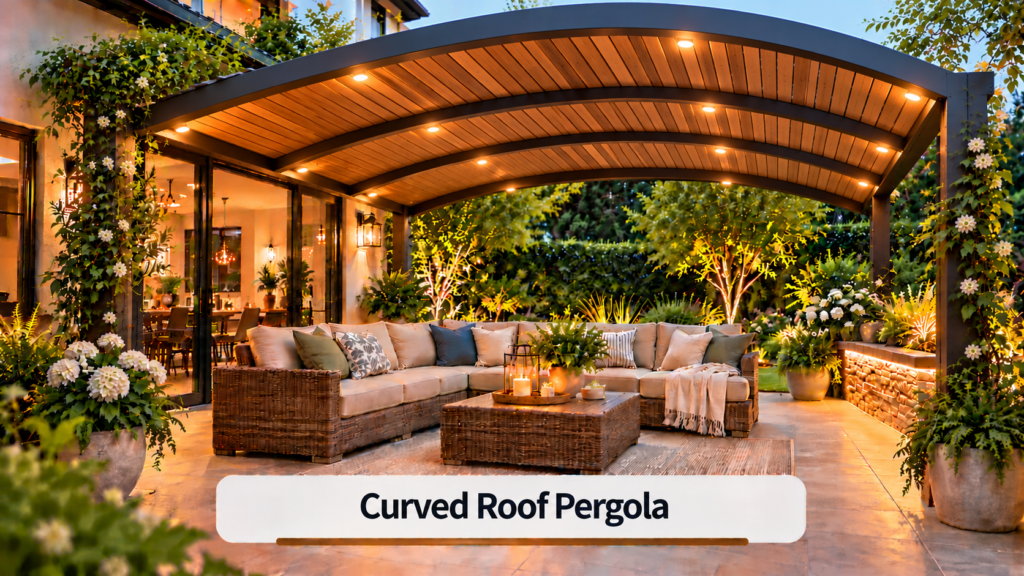
A curved roof pergola is a stylish and modern outdoor structure that adds elegance and architectural interest to any backyard. Its gently arched or rounded roof design creates a distinctive appearance while providing comfortable shade and weather protection when covered with suitable materials. Curved pergola roofs are commonly constructed using aluminum, steel, or flexible polycarbonate panels. Their flowing design complements contemporary gardens, outdoor patios, and poolside relaxation areas. This roofing style is particularly attractive for homeowners who want a unique outdoor feature that combines functionality with modern aesthetics.
Design Tips
- Choose aluminum or steel frames designed for curved structures to ensure strength and durability.
- Use flexible polycarbonate panels or appropriately curved metal roofing for a smooth, attractive finish.
- Select matte black, white, or charcoal gray finishes to complement modern outdoor architecture.
- Incorporate integrated gutters and suitable drainage channels to manage rainwater effectively.
- Add outdoor-rated LED strip lighting along the curved framework to create an elegant evening atmosphere.
Best Placement
Curved roof pergolas are ideal for backyard patios, garden seating spaces, outdoor dining areas, and poolside lounges. They work particularly well in contemporary landscapes where architectural shapes and decorative structures create visual interest. A curved pergola positioned near a swimming pool can provide a comfortable shaded retreat while enhancing the surrounding landscape. Freestanding curved pergolas also make attractive focal points in spacious gardens, especially when combined with decorative pathways, flowering plants, and modern outdoor furniture.
Maintenance and Care
Curved roof pergolas require periodic cleaning and inspections to maintain their appearance and structural performance. Remove leaves, dust, and debris from the roofing panels and drainage channels. Clean metal or polycarbonate surfaces with mild soap and water, following the manufacturer’s recommendations. Inspect curved beams, panel connections, and fasteners for signs of wear, corrosion, or loosening. Check waterproof seals and drainage outlets to prevent leaks and water accumulation. Repair damaged panels or protective finishes promptly. Regular maintenance helps preserve the pergola’s elegant appearance and ensures long-term outdoor durability.
FAQs
1. What Is the Best Material for a Pergola Roof?
The best material for a pergola roof depends on your budget, climate, and design preferences. Aluminum and metal roofing offer excellent durability, while polycarbonate allows natural light to pass through. Wooden roofs provide a classic appearance, and adjustable louvered systems offer flexible shade control.
2. What Is the Cheapest Way to Cover a Pergola Roof?
Shade cloth and basic outdoor fabric canopies are among the most affordable ways to cover a pergola roof. Bamboo panels and corrugated metal sheets are other budget-friendly options. The overall cost depends on the pergola’s size, roofing material, installation requirements, and local prices.
3. Which Pergola Roof Is Best for Rain Protection?
Solid metal, insulated panel, and properly installed polycarbonate roofs provide excellent rain protection. Adjustable louvered roofs can also offer rain resistance when fully closed, depending on their design. Proper roof slope, waterproof seals, and effective drainage are essential for preventing leaks and water accumulation.
4. Can You Put a Permanent Roof on a Pergola?
Yes, you can install a permanent roof on a pergola if its structure can safely support the additional weight and environmental loads. Popular permanent roofing materials include metal, polycarbonate, glass, and insulated panels. Check local building regulations and structural requirements before installing a permanent roof.
5. How Long Does a Pergola Roof Last?
A pergola roof’s lifespan depends on its material, installation quality, climate, and maintenance. Well-maintained aluminum and metal roofing can last several decades, while polycarbonate panels often last around 10–20 years. Fabric canopies and natural bamboo roofing generally require replacement sooner due to weather exposure.