
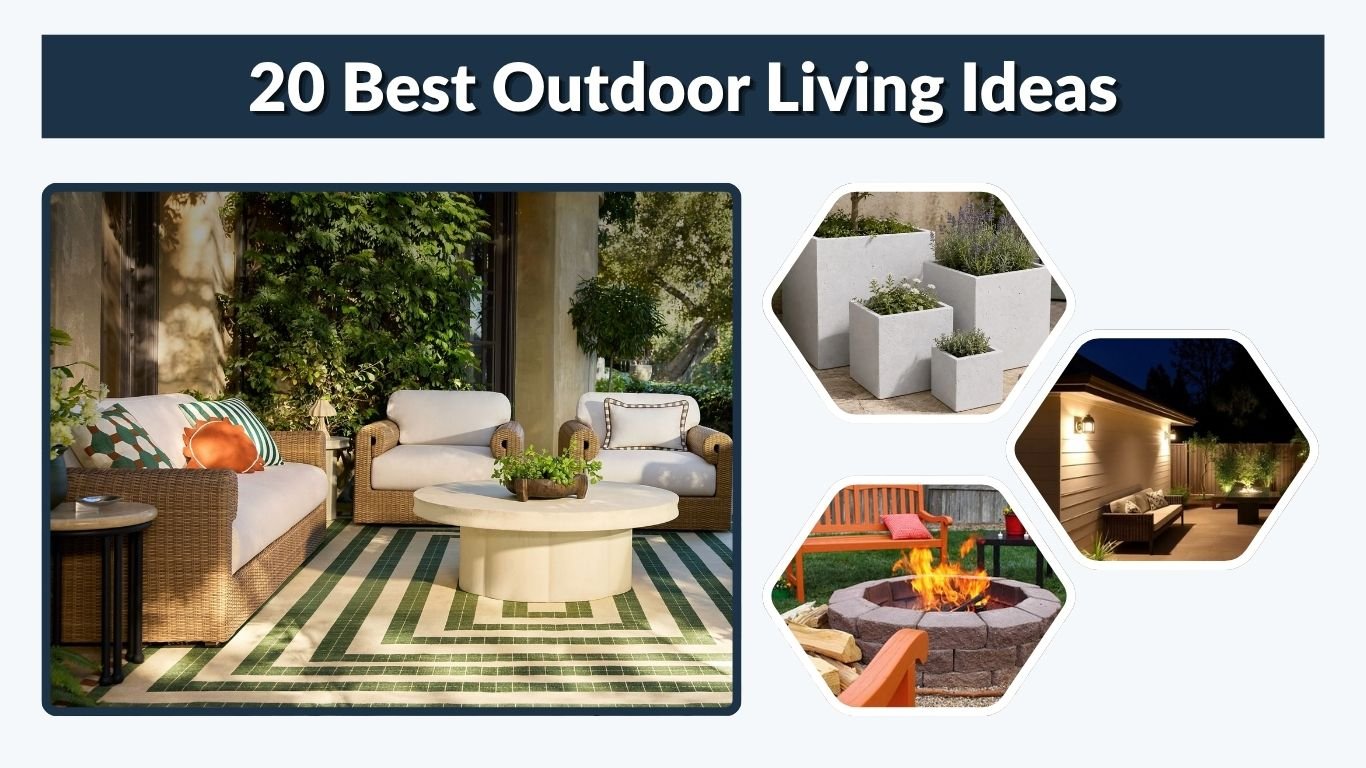
The best outdoor living ideas can turn an ordinary backyard, patio, or garden into a comfortable extension of your home. From cozy outdoor living rooms and shaded dining areas to fire pits, kitchens, and relaxing garden corners, thoughtful design can make almost any outdoor space more functional. You do not always need a huge yard or expensive renovation either. These 20 outdoor living space ideas combine comfort, style, shade, greenery, lighting, and practical features to help you create a welcoming space for relaxing and entertaining.
Outdoor Living Room Ideas for Everyday Comfort
An outdoor living room creates a comfortable place for conversation, reading, entertaining, or simply enjoying fresh air. Start with weather-resistant seating and then build around comfort with shade, lighting, textiles, and a central focal point. Even a small patio can feel like a complete living room when furniture is arranged intentionally and the area is visually separated from the rest of the yard.
1. Create a Cozy Outdoor Living Room
Arrange an outdoor sofa, lounge chairs, and a coffee table much like you would indoors. Position seating so people can easily talk without moving furniture.
Weather-resistant cushions and an outdoor rug make the area feel softer and more welcoming while defining it as a separate living zone.
2. Add a Pergola for Shade
A pergola adds architectural structure while creating partial shade over an outdoor living area.
Use it above seating, dining furniture, or an outdoor kitchen. Climbing plants, retractable shade panels, or outdoor curtains can provide additional protection while making the pergola feel more private and integrated into the surrounding landscape.
3. Build Around an Outdoor Fireplace
An outdoor fireplace creates a strong focal point and makes a patio feel more like an indoor living room.
Arrange sofas and chairs facing the fireplace to encourage conversation. Stone or brick designs work particularly well in rustic spaces, while smooth concrete and simple lines complement modern outdoor living designs.
4. Use Outdoor Rugs to Define Spaces
An outdoor rug can visually separate a seating area from dining, cooking, or garden zones.
Choose a size large enough for at least the front legs of the furniture to sit on it. Patterns and texture can also introduce character without requiring permanent changes to the patio or deck.
5. Add Comfortable Outdoor Cushions
Outdoor furniture becomes significantly more inviting with supportive cushions and pillows.
Use fabrics designed for outdoor conditions so occasional moisture and sunlight are easier to manage. Mixing several cushion sizes can make benches and deep seating feel especially comfortable while adding color to an otherwise neutral outdoor living space.
Backyard Outdoor Living Space Ideas
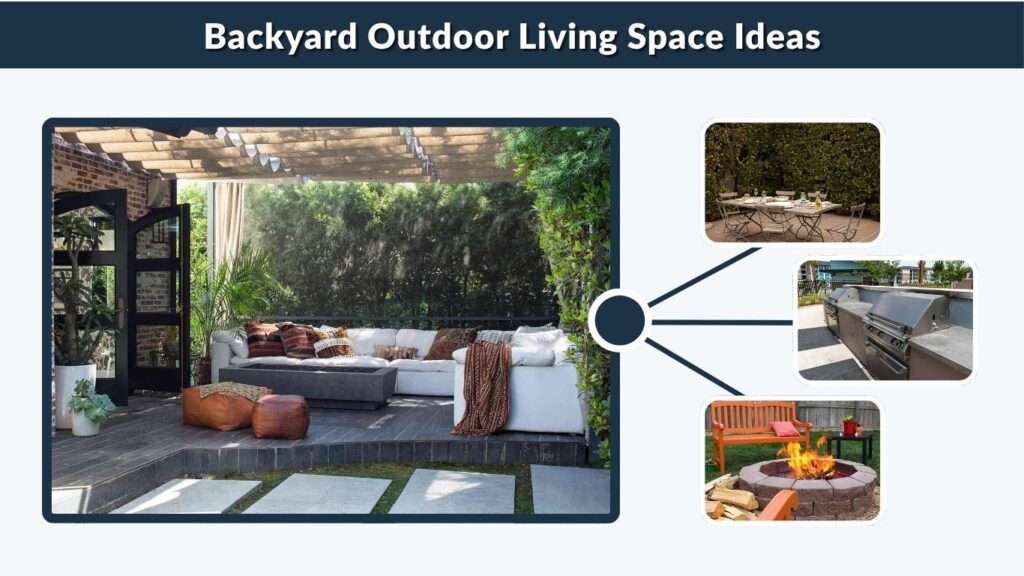
A backyard can support several activities when it is divided into useful zones rather than treated as one large open area. Think about how you actually want to spend time outside—eating, cooking, relaxing, gardening, or gathering with friends. Creating dedicated spaces for those activities improves flow and makes even modest backyards feel more organized and thoughtfully designed.
6. Design an Outdoor Dining Area
Create a dedicated dining zone with a table sized for your household and occasional guests.
Place it close enough to the kitchen for convenient serving. An umbrella, pergola, or covered patio can make the area more useful during sunny weather while overhead lighting keeps dinners comfortable after sunset.
7. Install an Outdoor Kitchen
An outdoor kitchen can range from a simple grill station to a complete cooking area with counters, storage, refrigeration, and a sink.
Choose the features you will realistically use. Good counter space is often more valuable than adding appliances that rarely get used.
8. Create a Fire Pit Gathering Space
A fire pit offers an informal place for conversation during cooler evenings.
Provide enough space around it for safe circulation and comfortable seating. Built-in benches create a permanent gathering zone, while movable chairs offer greater flexibility when the patio is used for other activities.
9. Build a Garden Lounge
Place a bench, loveseat, or pair of chairs within a quieter part of the garden.
Surrounding the seating with ornamental grasses, flowering plants, or small trees creates a relaxing retreat separated from the main entertainment area. This works particularly well in larger backyard living spaces.
10. Add a Backyard Bar
A small outdoor bar creates a convenient serving station for drinks, snacks, and casual entertaining.
It can be incorporated into an outdoor kitchen or built as a standalone counter. Include stools on one side and storage underneath so frequently used outdoor items remain easy to reach.
Modern Outdoor Living Space Ideas
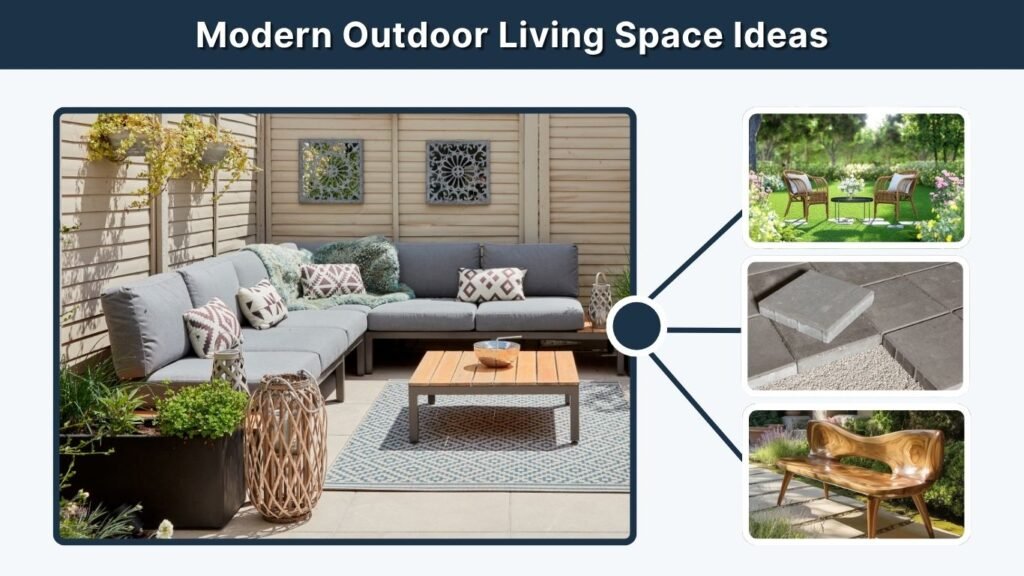
Modern outdoor living spaces usually emphasize simplicity, clean lines, practical layouts, and a limited material palette. Instead of filling every available area, focus on creating several strong features that work together. Neutral furniture, large-format paving, architectural lighting, structured planting, and streamlined shade solutions can create a sophisticated space without making the backyard feel overly formal or difficult to maintain.
11. Choose Clean, Minimal Furniture
Modern outdoor furniture typically features simple profiles rather than heavy ornamentation.
Look for pieces with straight lines, low backs, or slim frames. Keeping the main furniture neutral gives you flexibility to update the space later through cushions, plants, and smaller decorative pieces.
12. Use Large Patio Pavers
Large-format pavers can make an outdoor area appear more open and contemporary.
Use them for patios, walkways, and transitions between different outdoor zones. Keeping joint lines simple creates a cleaner visual effect, particularly when combined with modern furniture and restrained landscaping.
13. Install a Sleek Water Feature
A compact fountain, reflecting basin, or narrow water wall can become a calming focal point.
Water introduces sound and movement without requiring a large swimming pool. Choose a scale that fits the surrounding patio so the feature complements rather than dominates the outdoor living area.
14. Mix Wood and Stone Materials
Combining materials gives outdoor spaces depth while maintaining a natural appearance.
For example, a timber pergola can soften a stone patio, while wooden seating can warm up concrete paving. Repeating the same two or three materials throughout the space creates visual consistency.
15. Add Built-In Seating
Built-in benches maximize seating while reducing the number of individual furniture pieces required.
They work especially well along retaining walls, patio edges, and around fire pits. Add removable outdoor cushions so the seating remains comfortable while still maintaining the clean appearance of a built-in feature.
Outdoor Living Decorating Ideas
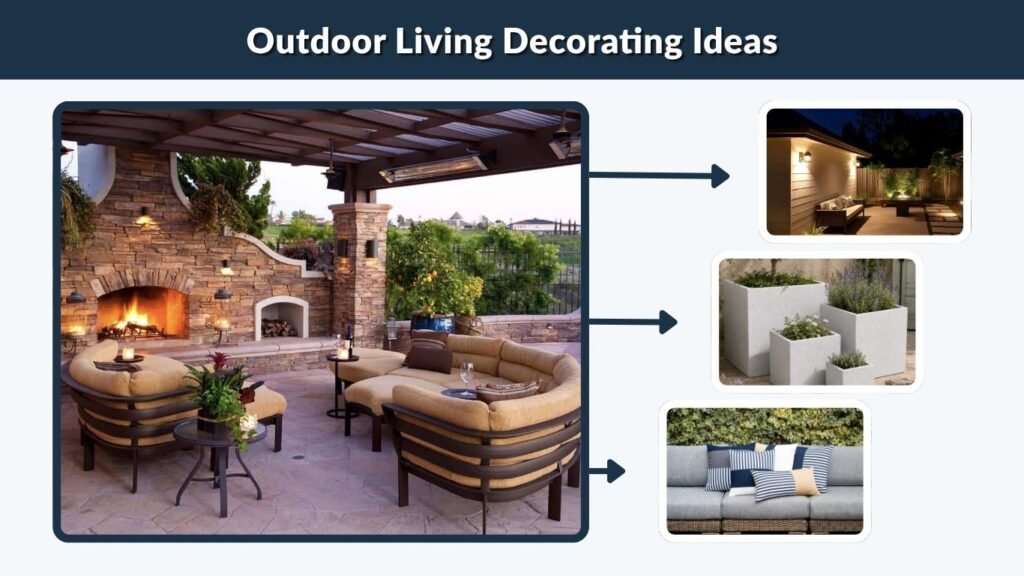
Decorating should make an outdoor room feel comfortable without filling it with items that require constant maintenance. Focus on pieces that serve both visual and practical purposes. Lighting improves nighttime usability, planters add life and privacy, while textiles soften hard patio surfaces. A few carefully selected details usually create a stronger design than numerous unrelated decorations.
16. Layer Your Outdoor Lighting
Use more than one type of lighting:
- String lights for atmosphere
- Wall lights near doors
- Path lights for safer movement
- Lanterns around seating
- Task lighting near grills or kitchens
- Accent lights for trees and architectural features
Layered lighting makes outdoor living spaces more comfortable after dark while emphasizing important design elements.
17. Decorate With Large Planters
Large containers can:
- Frame patio entrances
- Separate dining and seating zones
- Add seasonal color
- Screen unattractive views
- Create privacy around seating
- Bring greenery onto paved areas
Choose plants suited to the amount of sunlight in the location rather than selecting them only for appearance.
18. Add Privacy Screens
Privacy can make an outdoor room feel much more relaxing.
Useful options include:
- Decorative wood screens
- Slatted privacy walls
- Trellises
- Tall planters
- Hedges
- Outdoor curtains
- Climbing vines
Place screening where neighboring windows, streets, or nearby activity are most visible rather than enclosing the entire backyard unnecessarily.
19. Introduce Outdoor Textiles
Use weather-resistant pillows, seat cushions, rugs, and curtains to soften hard surfaces.
Choose a limited color palette so different textiles work together rather than competing for attention. These items are also among the easiest outdoor decorating elements to replace when you want to refresh the overall style.
20. Add a Statement Feature
Finish the space with one memorable focal point instead of many small decorations.
This could be a sculptural fire bowl, large planter, water feature, hanging chair, outdoor artwork, or distinctive light fixture. Position it where it naturally draws attention without interfering with walking paths.
How to Design a Functional Outdoor Living Space
Good outdoor living space design starts with function before decoration. Determine how much room you have, which activities matter most, and how people will move between the house and different backyard areas. Sun exposure, drainage, privacy, electrical access, and proximity to the kitchen should also influence the layout before permanent structures or expensive furniture are installed.
Plan Different Activity Zones
Instead of placing everything together, divide the space according to purpose. Dining should generally remain close to food preparation, while lounging can occupy a quieter section.
Leave clear walking routes between areas. Furniture should define zones without blocking doors, stairs, gardens, or frequently used paths.
Consider Sun and Weather
Observe your yard at different times of day before deciding where to place seating.
Afternoon sun may make an uncovered western patio uncomfortable, while a deeply shaded area may feel cool during other seasons. Pergolas, umbrellas, trees, and covered structures can help balance exposure.
Simple Ways to Improve an Outdoor Living Area
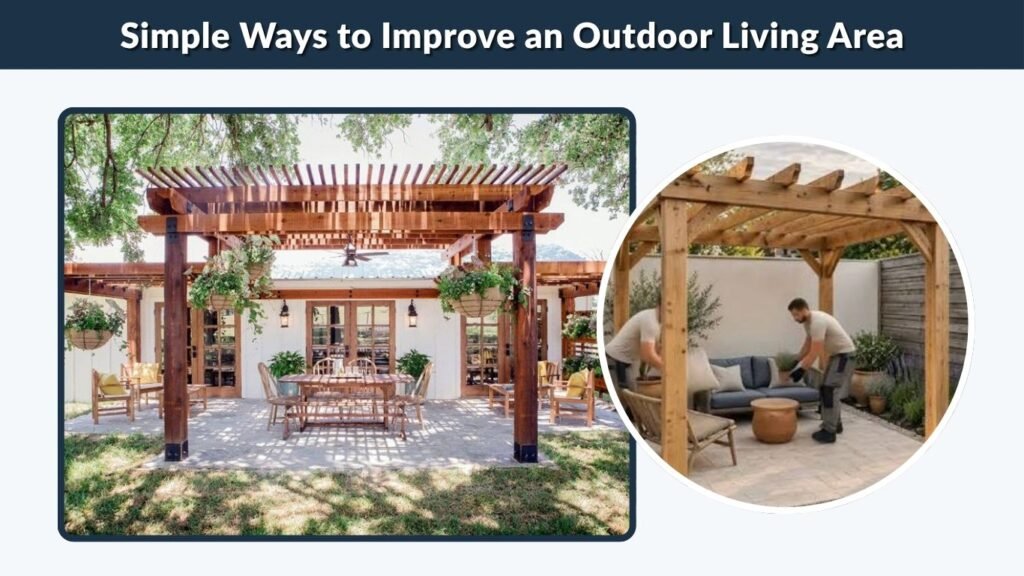
You do not need to completely rebuild a backyard to create a more beautiful outdoor living area. Small improvements can have a noticeable effect when they solve practical problems. Concentrate first on comfortable seating, shade, lighting, and visual organization. Once those essentials work well, decorative features can be added gradually without making the project unnecessarily expensive.
Start With the Features You Will Use Most
Prioritize improvements such as seating, dining surfaces, shade, or lighting before decorative accessories.
A comfortable chair that gets used every evening provides more value than an elaborate feature that looks impressive but does not suit your lifestyle.
Keep the Design Connected to Your Home
Outdoor areas generally feel more intentional when their colors, materials, and architectural style relate to the house.
You do not need to match everything exactly. Repeating a similar wood tone, stone color, furniture shape, or accent color is often enough to visually connect indoor and outdoor living spaces.
FAQs
What are the best outdoor living ideas?
The best ideas include comfortable outdoor seating, dining areas, pergolas, fire pits, outdoor kitchens, layered lighting, privacy screens, landscaping, and large planters. Choose features based on how you actually use your yard. A smaller functional design is often more enjoyable than a large space filled with features you rarely use.
How can I make an outdoor living space look expensive?
Use a consistent color palette, large planters, layered lighting, quality outdoor cushions, and clearly defined activity zones. Repeating materials such as wood, stone, or metal can also create a more cohesive appearance. Avoid overcrowding the patio, since open space and intentional furniture placement often produce a more refined result.
What should every outdoor living space have?
At minimum, provide comfortable seating, some form of shade, appropriate lighting, and enough surface space for drinks or food. Depending on your lifestyle, you might also include dining furniture, privacy screening, an outdoor kitchen, fire feature, or storage. Prioritize comfort and function before adding decorative accessories.
How can I create an outdoor living space on a budget?
Start by improving an existing patio or deck rather than building a completely new structure. Rearrange current furniture, add affordable outdoor cushions, use string lighting, introduce container plants, and create shade with an umbrella. Complete larger improvements gradually so your budget can focus on the features that provide the greatest everyday value.
How do I make a small outdoor space feel larger?
Choose appropriately scaled furniture, maintain clear walking paths, and avoid filling every corner. Built-in benches and multifunctional pieces can reduce clutter. Use vertical planting, light colors, and consistent flooring to create visual continuity. Dividing the area into compact but recognizable zones can also make a small outdoor space feel more organized.