

The right patio flooring can transform an ordinary outdoor area into a beautiful and comfortable retreat. Whether you prefer natural stone, modern tiles, rustic wood, or affordable gravel, the flooring you choose affects both appearance and functionality. A well-designed patio floor provides a stable foundation for furniture, improves outdoor aesthetics, and makes maintenance easier. These 17 patio flooring ideas offer practical and stylish options for small patios, spacious backyards, and outdoor entertaining areas.
1. Natural Stone Patio Flooring

Natural stone flooring creates a timeless and elegant outdoor appearance. Materials such as limestone, sandstone, and granite add organic textures and distinctive colors to patios. Each stone has unique patterns, making the finished surface attractive and individual.
Design and Installation Tips
- Choose textured stone for better traction.
- Combine irregular shapes for a natural appearance.
- Use neutral colors to complement garden greenery.
- Install stone over a properly prepared, stable base.
Best Placement and Maintenance
Natural stone works beautifully in garden patios, outdoor dining areas, and traditional backyard landscapes. Large stone slabs create a sophisticated appearance, while smaller pieces provide rustic charm.
Some stones benefit from periodic sealing to reduce staining. Regular sweeping and gentle washing help preserve their natural beauty.
2. Concrete Paver Patio Flooring
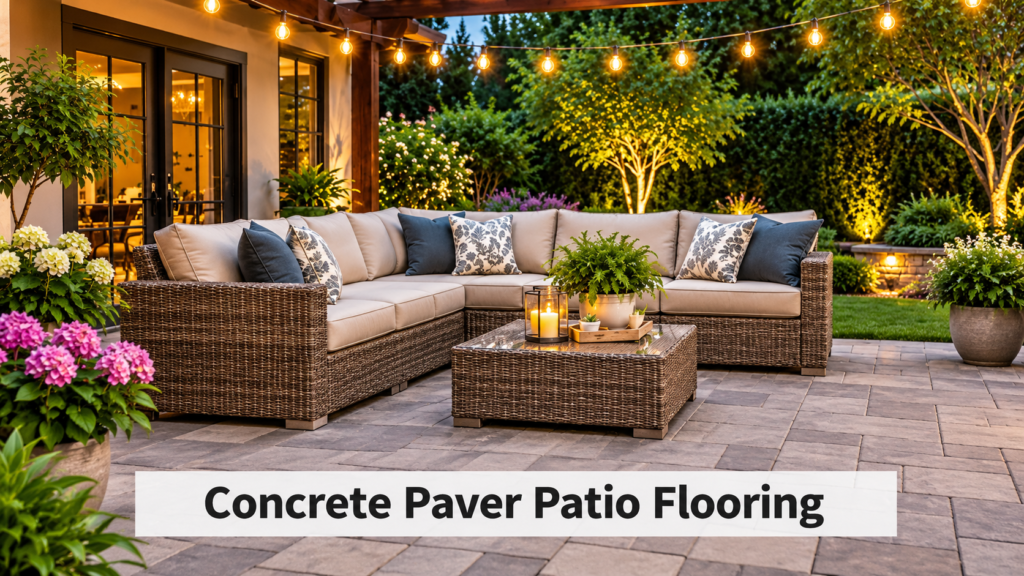
Concrete pavers are a practical option for creating attractive outdoor surfaces. Available in different shapes, colors, and sizes, they can suit modern, traditional, and minimalist landscapes.
Unlike a continuous concrete slab, individual pavers can often be replaced when damaged.
Design and Installation Tips
- Select rectangular or square pavers.
- Create herringbone or running-bond patterns.
- Combine complementary colors for visual interest.
- Prepare a compacted base and appropriate edge restraints.
Best Placement and Maintenance
Concrete pavers work well for backyard patios, walkways, and outdoor dining spaces. Larger pavers create a cleaner modern appearance, while smaller units suit decorative patterns.
Sweep regularly and remove weeds or debris from joints. Joint sand may occasionally require replenishment.
3. Rustic Brick Patio Flooring

Brick patio flooring brings warmth, character, and traditional charm to outdoor spaces. Its rich red, brown, and earthy tones complement garden plants, wooden furniture, and classic home exteriors.
Bricks can also be arranged in decorative patterns that make simple patios more visually appealing.
Design and Installation Tips
- Use paving bricks rated for outdoor installation.
- Arrange bricks in herringbone or basketweave patterns.
- Include decorative borders around the patio.
- Combine brick flooring with natural wood furniture.
Best Placement and Maintenance
Brick flooring is ideal for cottage gardens, traditional patios, and rustic backyard seating areas.
Proper drainage and stable installation help reduce movement. Remove weeds from joints and clean the surface gently to prevent excessive wear.
4. Modern Porcelain Tile Patio Flooring

Outdoor porcelain tiles create a polished and contemporary patio appearance. They are available in stone-look, concrete-look, and wood-look finishes, making them suitable for numerous design styles.
Porcelain’s low water absorption and relatively easy maintenance make it a useful option for exposed outdoor areas.
Design and Installation Tips
- Choose porcelain specifically rated for outdoor use.
- Select textured, slip-resistant finishes.
- Use large-format tiles for a spacious appearance.
- Ensure correct drainage and outdoor-compatible installation materials.
Best Placement and Maintenance
Porcelain flooring is particularly attractive on modern patios and covered terraces.
Light gray, beige, and stone-effect finishes blend well with contemporary furniture. Proper installation, including drainage and movement joints, is important for long-term durability.
5. Wooden Deck Patio Flooring
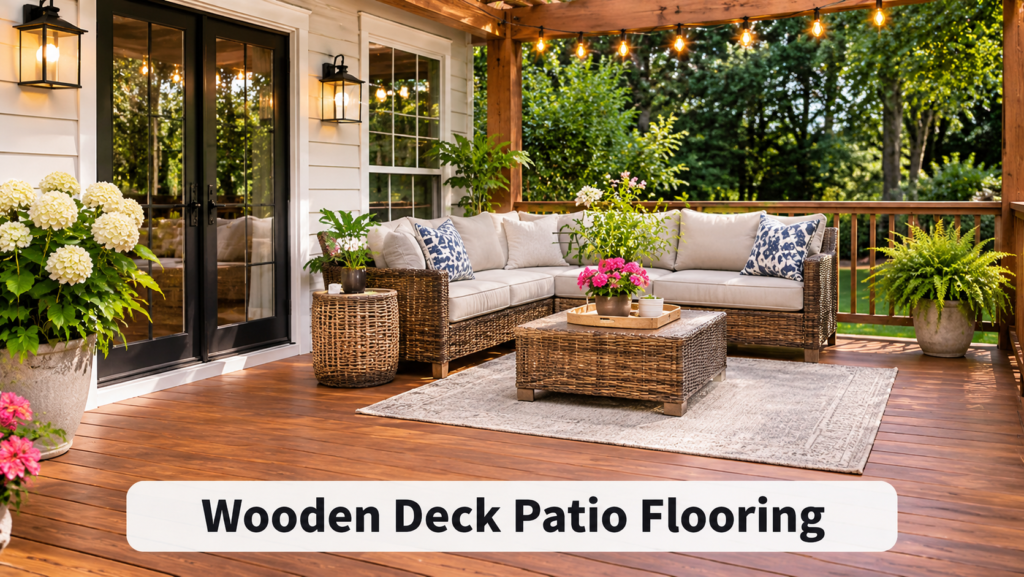
Wooden decking adds natural warmth and creates a welcoming outdoor environment. Its rich textures complement plants, garden furniture, and rustic decorative elements.
Wood also provides a comfortable visual transition between indoor living spaces and outdoor relaxation areas.
Design and Installation Tips
- Choose naturally durable or appropriately treated wood.
- Install boards on a suitable supporting structure.
- Use consistent board spacing for drainage.
- Apply an exterior finish when recommended.
Best Placement and Maintenance
Wooden decking is especially suitable for raised patios, garden terraces, and covered outdoor seating areas.
Regular cleaning helps remove dirt and algae. Depending on the wood species and desired appearance, periodic refinishing may be necessary.
6. Composite Decking Patio Flooring

Composite decking provides a wood-inspired appearance with comparatively low maintenance requirements. Made from combinations of wood fibers, plastics, or other engineered materials, composite boards come in different colors and surface textures.
They are popular for homeowners who want a neat outdoor floor without regularly staining natural wood.
Design and Installation Tips
- Choose boards designed for exterior use.
- Select colors that complement the house.
- Follow manufacturer spacing and fastening requirements.
- Use lighter shades in areas exposed to strong sunshine.
Best Placement and Maintenance
Composite decking works well for raised patios, outdoor lounges, and covered seating areas.
Routine washing removes surface dirt. Some boards can become hot in direct sunlight, so consider sun exposure before choosing a color.
7. Budget-Friendly Gravel Patio Flooring
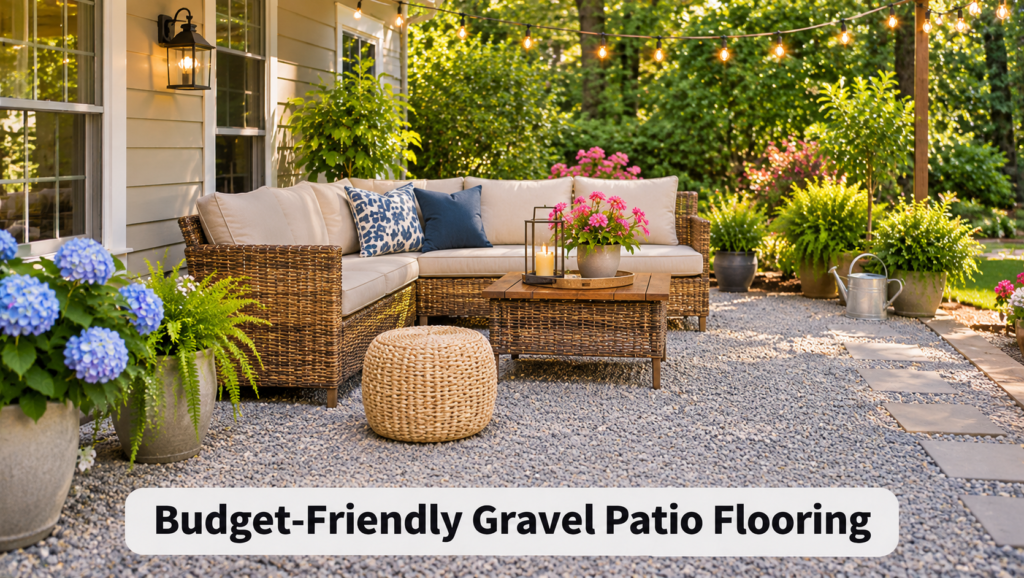
Gravel is an affordable and flexible option for creating casual outdoor patios. Its natural appearance works beautifully with garden plants, timber edging, and simple seating arrangements.
Gravel also allows water to move through the surface when the underlying construction supports drainage.
Design and Installation Tips
- Prepare and level the ground before installation.
- Use appropriate landscape edging to contain gravel.
- Choose compactable angular gravel for better stability.
- Add large stepping stones for comfortable access.
Best Placement and Maintenance
Gravel flooring suits informal garden patios, backyard seating corners, and rustic outdoor spaces.
Occasional raking keeps the surface even. Gravel can shift beneath chairs and may be difficult for wheelchairs or wheeled furniture, making stable pavers preferable for accessible routes.
8. Stamped Concrete Patio Flooring

Stamped concrete offers the appearance of decorative stone, brick, or tile while using a continuous concrete surface. Patterns and textures are pressed into fresh concrete before it hardens.
It is a popular choice for creating decorative patios without installing individual paving units.
Design and Installation Tips
- Choose a stone or brick-inspired stamping pattern.
- Select colors that complement the home exterior.
- Incorporate a suitable textured finish.
- Plan control joints and drainage before pouring.
Best Placement and Maintenance
Stamped concrete works particularly well on large backyard patios and outdoor entertaining areas.
Periodic cleaning and compatible sealing help preserve the finish. Avoid overly glossy sealers that may reduce traction when wet.
9. Pea Gravel and Stepping Stone Flooring
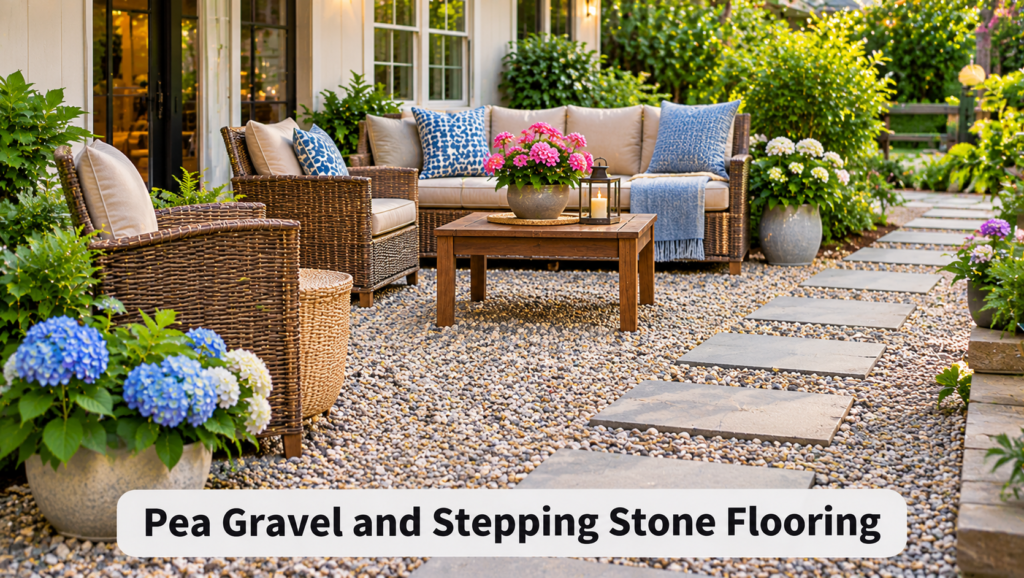
Combining pea gravel with stepping stones creates a charming garden-inspired patio floor. Smooth gravel provides a decorative background, while solid stones create convenient walking and furniture surfaces.
This arrangement works especially well in natural landscapes.
Design and Installation Tips
- Place large stepping stones along primary walking routes.
- Fill surrounding areas with decorative pea gravel.
- Install secure edging around the patio.
- Use stable paving beneath dining furniture.
Best Placement and Maintenance
This design suits garden courtyards, small backyard retreats, and informal seating areas.
The stepping stones should remain level and secure. Because rounded pea gravel moves easily, it is better used decoratively rather than as the primary support for furniture.
10. Flagstone Patio Flooring

Flagstone creates a naturally textured patio with distinctive shapes and earthy colors. Its irregular appearance blends beautifully with landscaped gardens and traditional outdoor environments.
Depending on the chosen stone, colors may range from warm tan to gray and muted brown.
Design and Installation Tips
- Select durable flagstone suitable for your climate.
- Arrange irregular pieces in a natural pattern.
- Maintain consistent walking surfaces.
- Fill joints with suitable jointing material.
Best Placement and Maintenance
Flagstone is ideal for garden patios, outdoor conversation areas, and pathways surrounded by flowers.
A properly compacted base is essential for preventing shifting. Regular cleaning and maintaining the joints help preserve a safe, attractive surface.
11. Interlocking Deck Tile Patio Flooring

Interlocking deck tiles provide a convenient solution for updating an existing patio surface. Available in wood, composite, and other outdoor-rated materials, these modular tiles connect to create a coordinated floor.
They can be especially useful for small patio makeovers.
Design and Installation Tips
- Choose tiles compatible with the existing surface.
- Measure the area before purchasing.
- Select matching or alternating patterns.
- Maintain drainage channels underneath the tiles.
Best Placement and Maintenance
Interlocking tiles work best over stable, relatively level concrete and other manufacturer-approved surfaces.
They are suitable for covered patios, balconies, and compact outdoor seating areas. Lift removable tiles periodically when necessary to clear debris and maintain drainage.
12. Decorative Pebble Patio Flooring
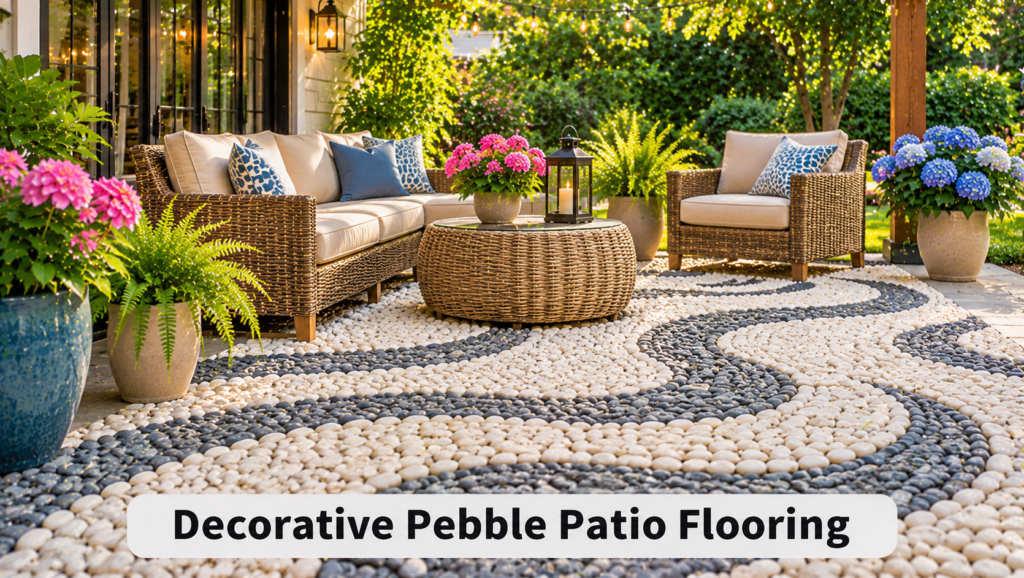
Decorative pebble flooring adds natural texture and visual interest to outdoor spaces. Smooth stones in gray, white, beige, or mixed colors can create an attractive garden-inspired design.
Pebbles work especially well when combined with larger paving slabs.
Design and Installation Tips
- Choose decorative pebbles in coordinated colors.
- Use paving slabs for main walking areas.
- Install strong edging to contain loose stones.
- Create borders around planting beds or seating areas.
Best Placement and Maintenance
Pebble flooring is well suited to decorative patio borders, garden corners, and landscaped courtyards.
Loose pebbles are not ideal beneath dining chairs or on main accessible walkways. Use secure hard surfaces wherever stability is important.
13. Artificial Grass Patio Flooring
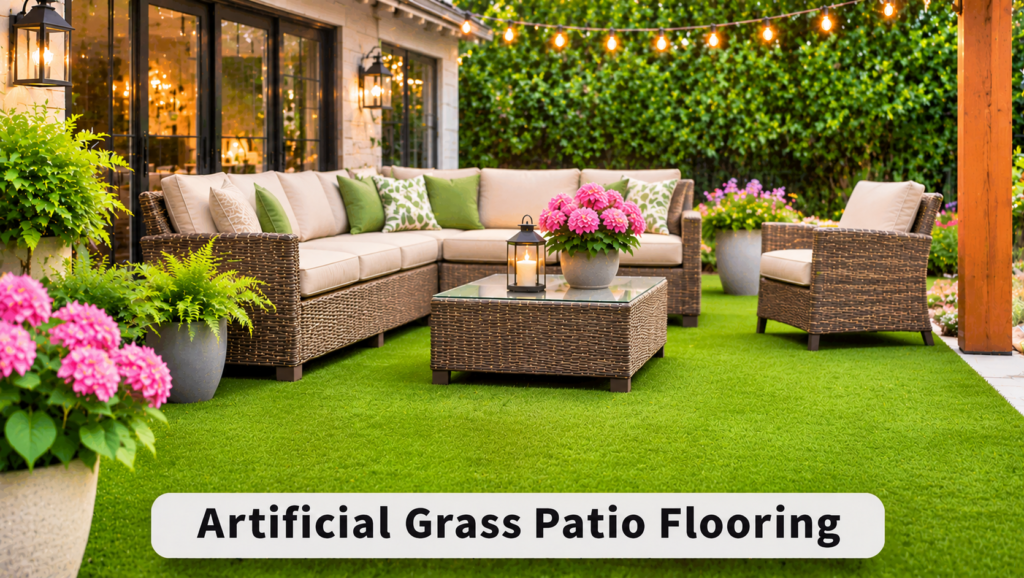
Artificial grass introduces a green, lawn-inspired appearance without requiring regular mowing. It can soften the visual character of patios dominated by stone or concrete.
This option is particularly useful for small urban patios where natural grass may be difficult to establish.
Design and Installation Tips
- Select outdoor turf with suitable drainage backing.
- Prepare a stable and well-drained base.
- Combine turf with concrete stepping stones.
- Use proper edging to secure the material.
Best Placement and Maintenance
Artificial grass suits decorative backyard corners and family relaxation areas.
Remove debris regularly and rinse when necessary. Synthetic turf may become very hot in direct sunlight, so shaded placement and appropriate material selection are important.
14. Painted Concrete Patio Flooring
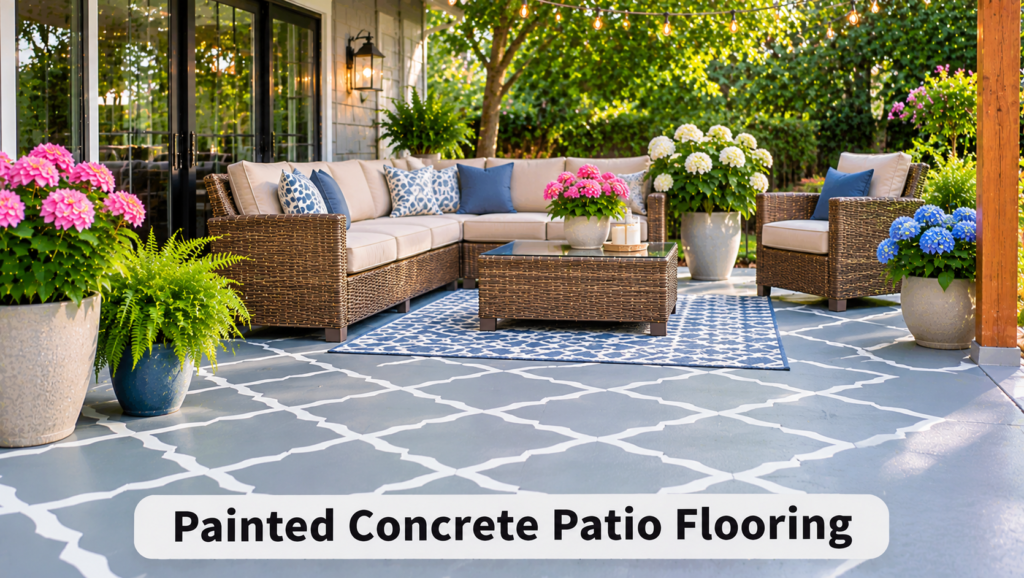
Painting existing concrete is an affordable way to refresh an older patio without completely replacing the floor. Exterior concrete coatings are available in numerous colors and finishes.
A painted surface can create a clean modern look or imitate decorative tiles through stencil patterns.
Design and Installation Tips
- Clean and prepare the existing concrete thoroughly.
- Repair cracks and damaged areas before painting.
- Use a coating designed for exterior concrete.
- Include an appropriate slip-resistant finish.
Best Placement and Maintenance
Painted concrete works well on covered patios, small backyard terraces, and older concrete surfaces that remain structurally sound.
Choose neutral colors for a modern appearance or subtle patterns for decorative appeal. Coatings may need periodic touch-ups, particularly in high-traffic areas.
15. Terracotta Tile Patio Flooring
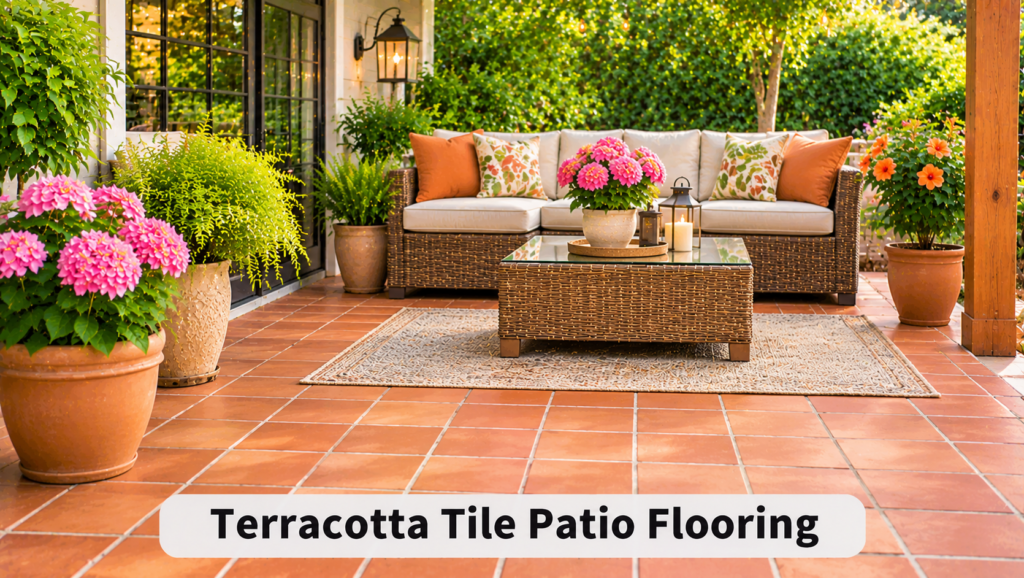
Terracotta tiles bring warm Mediterranean character to outdoor patios. Their earthy orange and reddish-brown tones create a welcoming atmosphere when paired with greenery, wooden furniture, and natural fabrics.
Terracotta can make simple backyard spaces feel more traditional and inviting.
Design and Installation Tips
- Choose terracotta products rated for exterior use.
- Use textured finishes for improved traction.
- Combine warm tiles with white or cream furniture.
- Install appropriate drainage and expansion joints.
Best Placement and Maintenance
Terracotta works beautifully in Mediterranean-inspired courtyards and sheltered outdoor patios.
Its porous nature may require sealing, and not all terracotta is suitable for freezing climates. Always verify the product’s weather resistance before installation.
16. Large-Format Concrete Slab Flooring
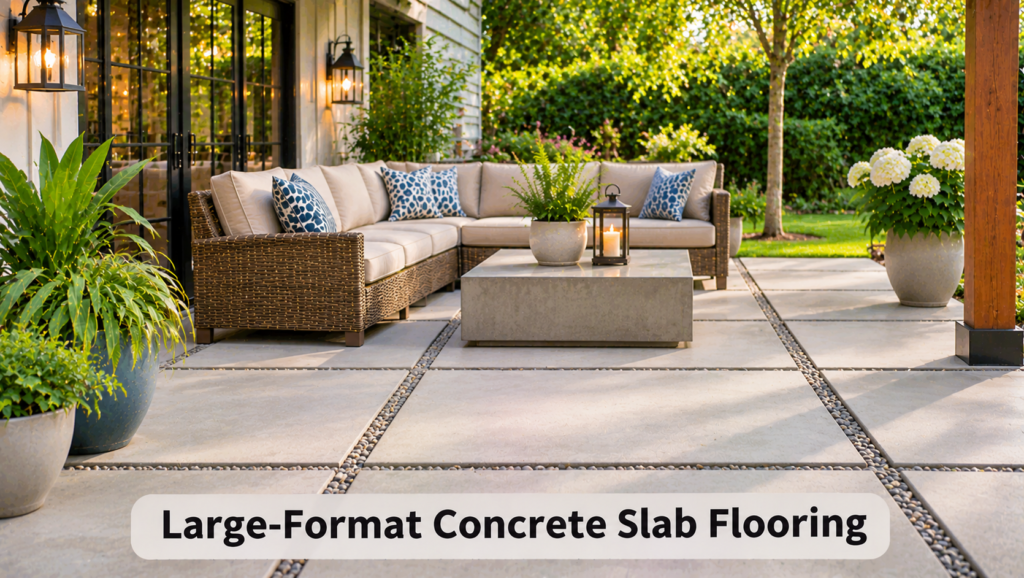
Large-format concrete slabs create a clean and spacious patio appearance. Their simple shapes and limited number of joints suit minimalist landscapes and contemporary homes.
They are especially effective when surrounded by gravel, decorative stones, or planted borders.
Design and Installation Tips
- Choose large square or rectangular concrete slabs.
- Arrange them in a symmetrical layout.
- Maintain uniform joints between pieces.
- Use a stable, properly compacted base.
Best Placement and Maintenance
Large slabs work well for modern outdoor dining areas, minimalist patios, and open backyard lounges.
Light gray tones pair beautifully with black furniture and architectural greenery. Clean regularly to prevent dirt buildup, and monitor joints for movement or weeds.
17. Mixed-Material Patio Flooring
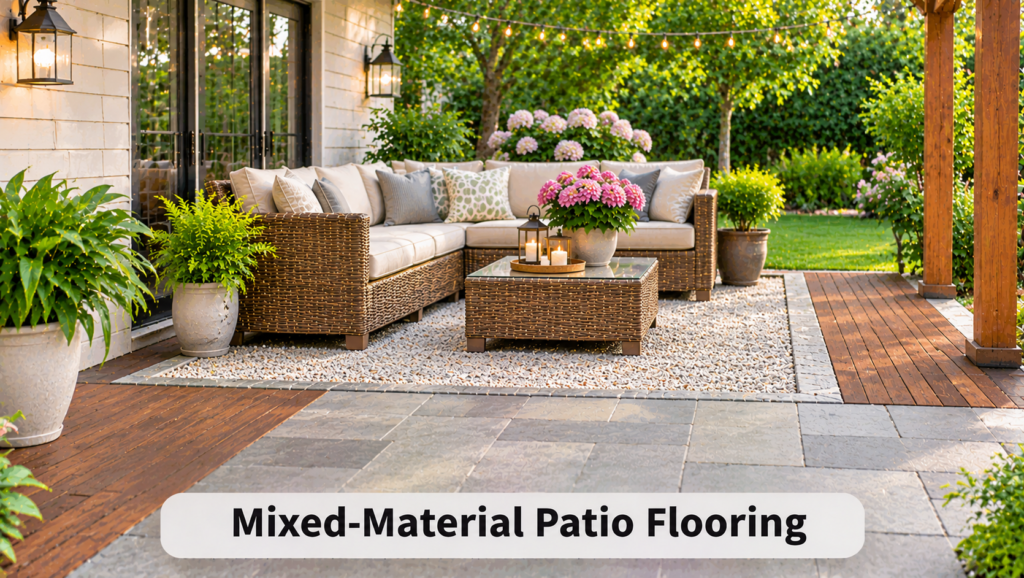
Mixed-material flooring combines two or more surfaces to create visual contrast and define different outdoor zones. For example, concrete pavers can be paired with gravel, while natural stone can complement wooden decking.
This approach adds character to patios without depending on a single flooring material.
Design and Installation Tips
- Combine concrete pavers with decorative gravel.
- Pair wooden decking with natural stone borders.
- Use contrasting materials to define seating areas.
- Keep transitions level and comfortable for walking.
Best Placement and Maintenance
Mixed flooring works especially well on larger patios with separate dining, lounging, and garden sections.
Choose materials with compatible installation requirements and plan drainage carefully. A consistent color palette helps maintain a cohesive design even when textures vary.
Frequently Asked Questions
1. What Is the Cheapest Flooring for an Outdoor Patio?
Gravel and basic concrete pavers are often among the most affordable patio flooring options. Painting existing concrete may cost less when the surface is already sound. Total expenses depend on base preparation, materials, installation labor, and drainage requirements.
2. What Is the Best Low-Maintenance Patio Flooring?
Outdoor porcelain pavers and composite decking are popular low-maintenance options. Porcelain generally resists staining and requires routine cleaning, while composite decking avoids much of the refinishing associated with natural wood. Both require appropriate installation and occasional maintenance.
3. Can You Install Patio Flooring Over Concrete?
Yes, several flooring products can be installed over existing concrete, including certain porcelain tiles and interlocking deck tiles. However, the concrete must be structurally sound and provide adequate drainage. Each flooring system has specific installation requirements that should be followed.
4. What Patio Flooring Is Best for Rainy Weather?
Textured porcelain pavers, suitable natural stone, and properly installed concrete pavers can perform well in rainy conditions. The most important factors are wet-weather slip resistance, drainage, and a stable foundation. Avoid smooth, slippery finishes in exposed outdoor areas.
5. How Can I Make a Small Patio Floor Look Bigger?
Use light-colored flooring, larger paving units, and simple patterns to create a more open appearance. Maintaining consistent colors between the patio and surrounding areas can also help. Avoid excessive decorative borders that visually divide an already compact space.