
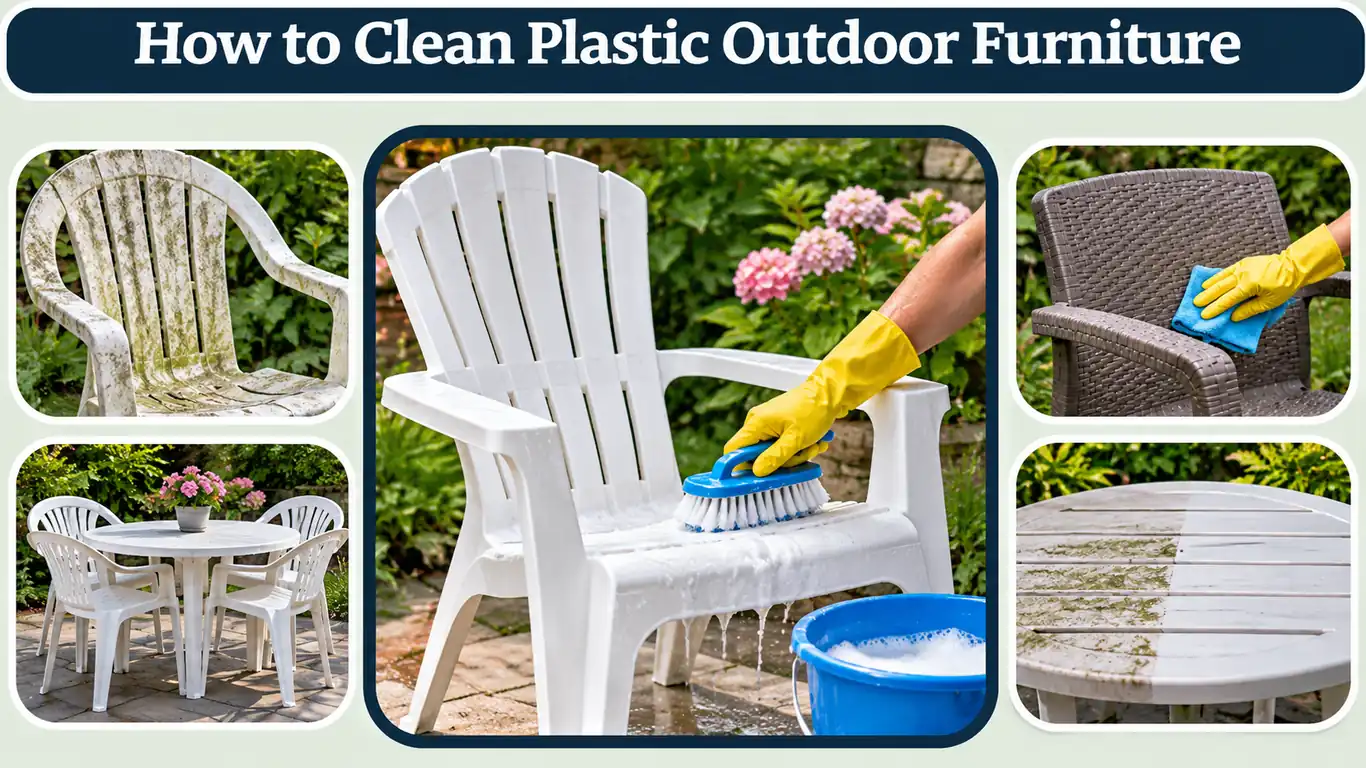
Plastic outdoor furniture is affordable, lightweight, and durable, but regular exposure to sunlight, rain, dust, and moisture can leave it dirty and discolored. Knowing how to clean plastic outdoor furniture helps maintain its appearance and extend its usable life without damaging the surface.
Whether you have white plastic chairs, resin tables, recycled plastic benches, or synthetic wicker furniture, proper cleaning can remove stubborn dirt, mold, and algae. This guide explains effective cleaning methods, stain removal techniques, restoration tips, and ways to protect your outdoor furniture throughout the year.
What Do You Need to Clean Plastic Outdoor Furniture?
Cleaning plastic patio furniture does not require expensive cleaning products or specialized equipment. Most everyday stains can be removed using common household supplies and gentle cleaning solutions. Gathering the right materials beforehand makes the cleaning process easier while reducing the risk of scratches, discoloration, and surface damage, especially on textured or weathered plastic furniture.
Essential Cleaning Supplies
- Mild liquid dish soap
- Warm water
- Soft-bristled cleaning brush
- Microfiber cloth or soft sponge
- Garden hose
- Baking soda
- White vinegar, if compatible with the finish
- Cleaning bucket
- Protective gloves
Cleaning Products to Avoid
Avoid steel wool, abrasive scrubbers, acetone, harsh solvents, and concentrated bleach. These products may scratch, discolor, or weaken certain plastic and resin surfaces.
Always check the manufacturer’s cleaning instructions before applying unfamiliar cleaning products.
How to Clean Plastic Outdoor Furniture in 7 Easy Steps
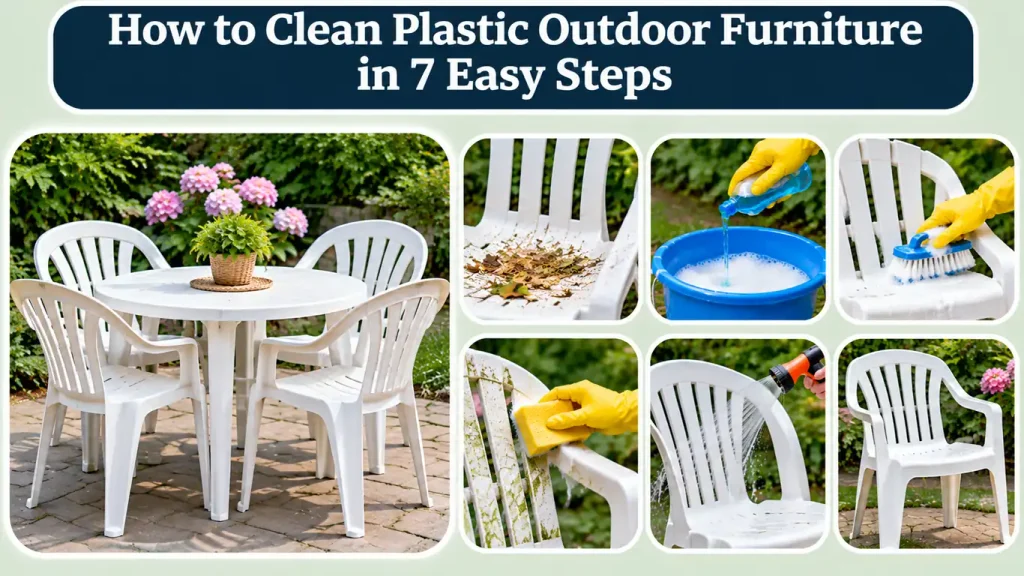
Regular cleaning removes accumulated dirt, food residue, pollen, and other outdoor contaminants that can make plastic furniture look worn. A gentle cleaning method is generally suitable for plastic chairs, patio tables, benches, and loungers. Following these seven steps helps achieve a thorough clean without exposing your furniture to unnecessarily harsh chemicals or excessive scrubbing.
1. Remove Cushions and Accessories
Remove cushions, pillows, and decorative accessories before cleaning. This provides better access to the furniture frame and prevents cleaning solutions from soaking into fabrics.
2. Remove Loose Dirt and Debris
Use a soft brush or dry cloth to remove dust, leaves, cobwebs, and loose debris. Pay particular attention to corners, joints, and areas underneath the furniture.
3. Prepare a Mild Cleaning Solution
Mix a small amount of liquid dish soap with a bucket of warm water. Stir gently until the soap dissolves and creates a suitable cleaning solution.
4. Scrub the Plastic Surface
Dip a soft sponge or brush into the soapy water and scrub the furniture gently. Focus on armrests, seats, table surfaces, and areas where dirt frequently accumulates.
5. Treat Stubborn Stains
Apply a small amount of baking soda mixed with water to stubborn stains, provided the finish tolerates it. Test an inconspicuous area first and scrub gently to avoid scratching.
6. Rinse With Clean Water
Use a garden hose or bucket of clean water to remove soap and loosened dirt. Thorough rinsing prevents cleaning residue from leaving streaks or attracting additional dust.
7. Allow the Furniture to Dry
Wipe the furniture with a clean microfiber cloth or allow it to air-dry in a shaded area. Make sure all surfaces are dry before replacing cushions or using furniture covers.
How to Clean Different Types of Plastic Outdoor Furniture
Plastic outdoor furniture comes in several materials, finishes, colors, and textures. Although mild soap and water work well for many surfaces, certain furniture types require additional attention to prevent damage. Understanding the differences between white plastic, hard plastic, recycled plastic, synthetic wicker, and resin furniture helps you select the most appropriate cleaning technique.
How to Clean White Plastic Outdoor Furniture
Wash white plastic furniture using warm water and mild dish soap. For persistent marks, gently apply a baking soda paste if the manufacturer permits mildly abrasive cleaners.
Rinse thoroughly to remove residue and dry the surface. Permanent yellowing caused by UV exposure may not disappear through cleaning alone.
How to Clean Hard Plastic Outdoor Furniture
Use a soft-bristled brush and soapy water to remove dirt from hard plastic chairs and tables. A small cleaning brush can help reach textured surfaces and narrow joints.
Avoid aggressive scrubbing because scratches may permanently affect the appearance of glossy plastic.
How to Clean Plastic Wicker Outdoor Furniture
Remove loose debris from woven surfaces using a soft brush or vacuum attachment. Wash the synthetic wicker with mild soapy water, paying attention to spaces between the woven strands.
Rinse with low-pressure water and allow the furniture to dry completely to prevent moisture accumulation.
How to Clean Recycled Plastic Outdoor Furniture
Clean recycled plastic furniture using mild dish soap, warm water, and a soft brush. Textured recycled plastic lumber may require additional brushing to remove trapped dirt.
Avoid harsh chemicals and high-pressure washing unless specifically approved by the manufacturer.
How to Clean Plastic Resin Outdoor Furniture
Wash resin furniture with a soft sponge and gentle cleaning solution. Clean around molded details, joints, and textured surfaces where dirt tends to collect.
Rinse thoroughly and dry with a soft cloth to maintain the original finish.
How to Remove Mold and Algae From Plastic Outdoor Furniture

Mold and algae commonly develop on outdoor furniture exposed to humidity, rainfall, and prolonged shade. These growths can produce green, black, or gray patches that affect the appearance of plastic surfaces. Removing them promptly and keeping furniture dry helps reduce recurring buildup without relying on unnecessarily strong cleaning chemicals that could damage the material.
How to Clean Mold Off Plastic Outdoor Furniture
- Wear protective gloves and clean the furniture outdoors.
- Wash affected surfaces with mild detergent and water.
- Scrub gently using a soft-bristled brush.
- Rinse thoroughly to remove loosened mold.
- Allow the furniture to dry completely.
How to Clean Green Algae Off Plastic Furniture
- Prepare a mild soapy water solution.
- Apply it to affected surfaces.
- Gently scrub away the green buildup.
- Use a manufacturer-approved cleaner for persistent algae.
- Rinse and dry the furniture thoroughly.
Never mix bleach with vinegar, ammonia, or other cleaning products.
How to Clean and Restore Weathered Plastic Outdoor Furniture
Continuous exposure to sunlight, rain, temperature changes, and outdoor pollutants can cause plastic furniture to become faded, chalky, or dull. Cleaning removes surface contamination, but restoring weathered furniture may require additional treatment. Choosing products specifically designed for outdoor plastics can improve its appearance while helping preserve the original surface and preventing unnecessary material damage.
Remove Chalky Surface Residue
Wash the furniture thoroughly using warm water and mild detergent. Use a microfiber cloth to remove loose, chalky residue caused by surface weathering.
Repeat the cleaning process if necessary without using aggressive abrasives.
Restore Faded Plastic Surfaces
Apply a compatible outdoor plastic restoration product according to its instructions. Test the product on a hidden area before treating the entire surface.
Restoration products may improve faded appearances, but they cannot reverse severe UV degradation or structural damage.
Protect the Restored Finish
Use a manufacturer-approved UV protectant suitable for outdoor plastic furniture. Proper protection may help reduce further fading and surface deterioration. Replace furniture that has developed significant cracks, brittleness, or structural weakness.
How to Keep Plastic Outdoor Furniture Clean Longer
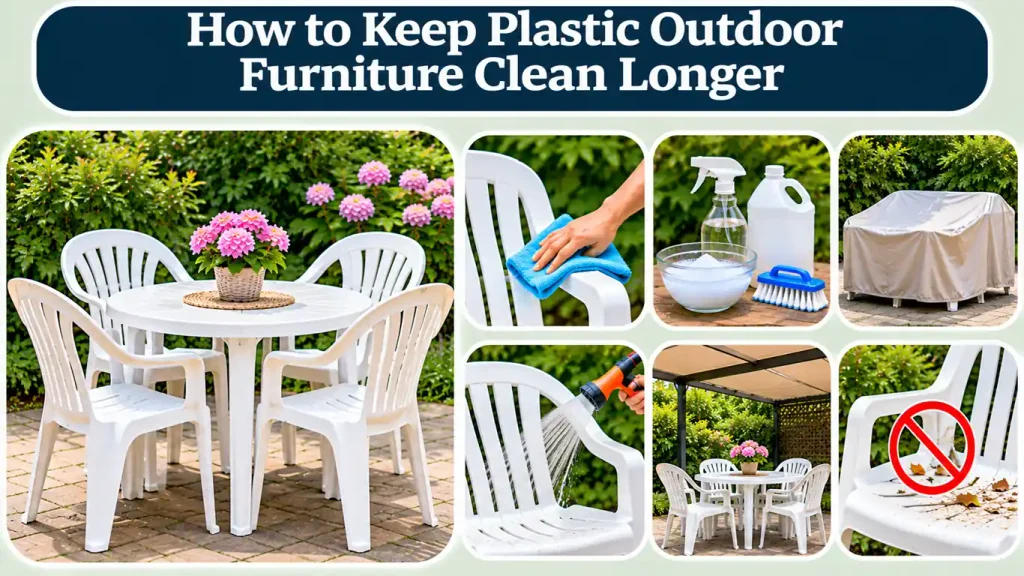
Preventive maintenance is an effective way to reduce the amount of cleaning your outdoor furniture requires. Protecting plastic surfaces from excessive moisture, direct sunlight, food spills, and accumulated debris helps preserve their appearance. Establishing a simple maintenance routine also reduces stubborn stains and biological growth while keeping your patio seating comfortable and presentable throughout different seasons.
Outdoor Furniture Maintenance Tips
- Wipe furniture regularly with a damp microfiber cloth.
- Clean food and drink spills immediately.
- Use breathable, weather-resistant furniture covers.
- Keep furniture away from standing water.
- Remove accumulated leaves and debris.
- Store furniture during extended periods of severe weather.
- Use suitable UV protection products.
- Perform a thorough cleaning at the beginning and end of each season.
Common Mistakes When Cleaning Plastic Outdoor Furniture
Using inappropriate cleaning techniques can cause permanent scratches, discoloration, and surface deterioration. Although plastic furniture is generally durable, its protective finish and structural condition can be affected by harsh chemicals and aggressive cleaning. Avoiding common mistakes helps preserve the furniture’s appearance and reduces the need for unnecessary restoration or premature replacement.
Cleaning Mistakes to Avoid
- Using metal brushes or steel wool.
- Applying undiluted bleach.
- Using excessively hot water.
- Pressure washing at close range.
- Leaving cleaning solutions to dry on surfaces.
- Covering furniture while it is still wet.
- Applying incompatible restoration products.
- Ignoring cracks and signs of structural deterioration.
FAQs
1. What is the best cleaner for plastic outdoor furniture?
Mild dish soap mixed with warm water is one of the best cleaning solutions for most plastic outdoor furniture. It effectively removes everyday dirt, grease, and dust without unnecessarily damaging the surface when used with a soft sponge.
2. Can you clean plastic outdoor furniture with vinegar?
Diluted white vinegar may help remove certain surface deposits when the furniture manufacturer permits its use. Test it on a hidden area first, rinse thoroughly afterward, and never combine vinegar with bleach or other incompatible cleaning chemicals.
3. How do you make white plastic outdoor furniture look new again?
Clean white plastic furniture with mild soap and water, then treat stubborn stains using a compatible cleaning product. A suitable plastic restorer may improve its appearance, although permanent yellowing and severe UV damage may not be reversible.
4. Can you pressure wash plastic outdoor furniture?
Some plastic furniture can tolerate low-pressure washing when approved by the manufacturer. However, excessive water pressure may damage woven materials, weaken weathered surfaces, or remove protective finishes, making gentle handwashing a safer general option.
5. How often should you clean plastic outdoor furniture?
Plastic outdoor furniture should generally be wiped down weekly during regular use and thoroughly cleaned every one to three months. Furniture exposed to heavy rainfall, pollen, dust, or humid conditions may require more frequent cleaning.