

A small pergola can transform a compact patio, backyard, or garden into a stylish and comfortable outdoor retreat. Whether you prefer modern minimalist designs, rustic wooden structures, or budget-friendly DIY options, there are plenty of creative ways to maximize limited space. From cozy seating areas to climbing plants and decorative lighting, these 16 small pergola ideas will help you create a beautiful and functional outdoor space.
1. Modern Minimalist Small Pergola
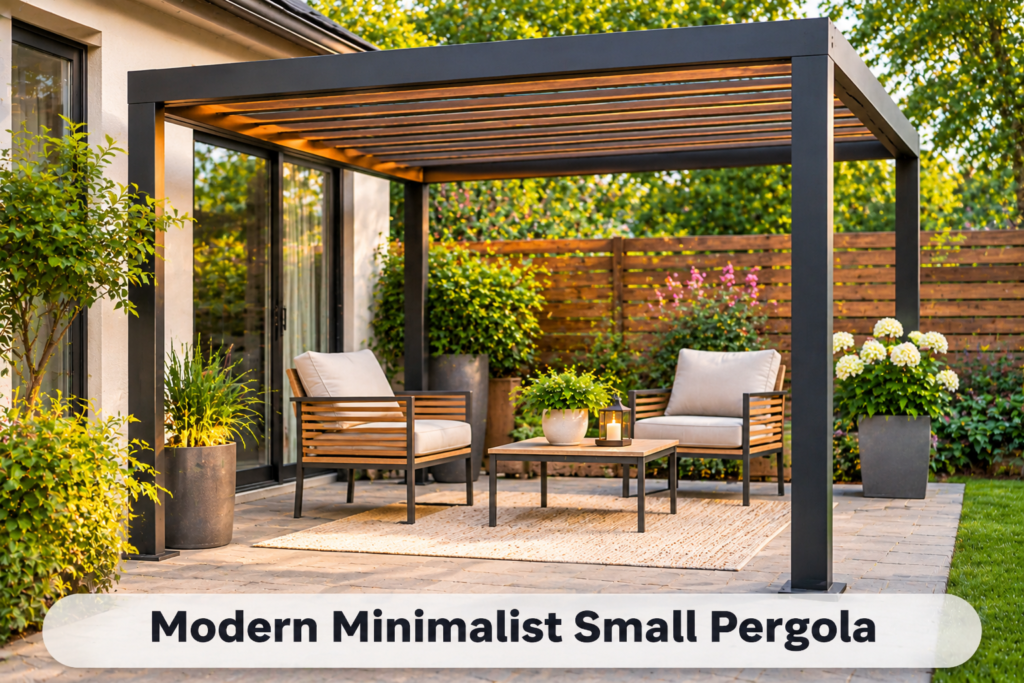
A modern minimalist small pergola is an excellent choice for homeowners who want a stylish and functional outdoor space without overwhelming a compact patio or backyard. This design features clean lines, slim supporting posts, and a simple rectangular structure that creates an open and uncluttered appearance. Black aluminum, white steel, and natural wood are popular materials for achieving a contemporary look. With compact furniture, neutral colors, and subtle lighting, a minimalist pergola can transform even a small outdoor area into a comfortable and attractive retreat for everyday relaxation.
Design Tips
- Choose slim aluminum or steel posts for a sleek, modern appearance.
- Use neutral colors such as black, white, charcoal, or light gray.
- Select a simple square or rectangular pergola structure.
- Add compact outdoor chairs or a small loveseat to maximize available space.
- Install subtle LED lighting or minimalist string lights.
- Include a few decorative planters to introduce natural greenery.
Best Placement
A modern minimalist small pergola works particularly well in compact backyards, narrow patios, and small garden corners. Position it near the house to create a seamless connection between indoor and outdoor living areas.
For limited outdoor spaces, an attached pergola can help maximize usable patio space while maintaining a clean appearance. A freestanding design also works beautifully in a small backyard when positioned near a garden boundary. Consider sunlight direction and walking space when choosing the location.
Maintenance and Care
Modern minimalist pergolas are generally easy to maintain, especially when constructed from powder-coated aluminum. Clean the frame periodically with mild soap and water to remove dust, dirt, and accumulated debris.
Inspect supporting posts, connecting brackets, and roof components regularly for signs of damage or looseness. Wooden structures may require occasional staining or sealing to protect against moisture and weather exposure.
Keep drainage channels clear and trim nearby plants to prevent excessive contact with the structure. Regular maintenance helps preserve the pergola’s attractive appearance and structural stability.
2. Small Wooden Pergola
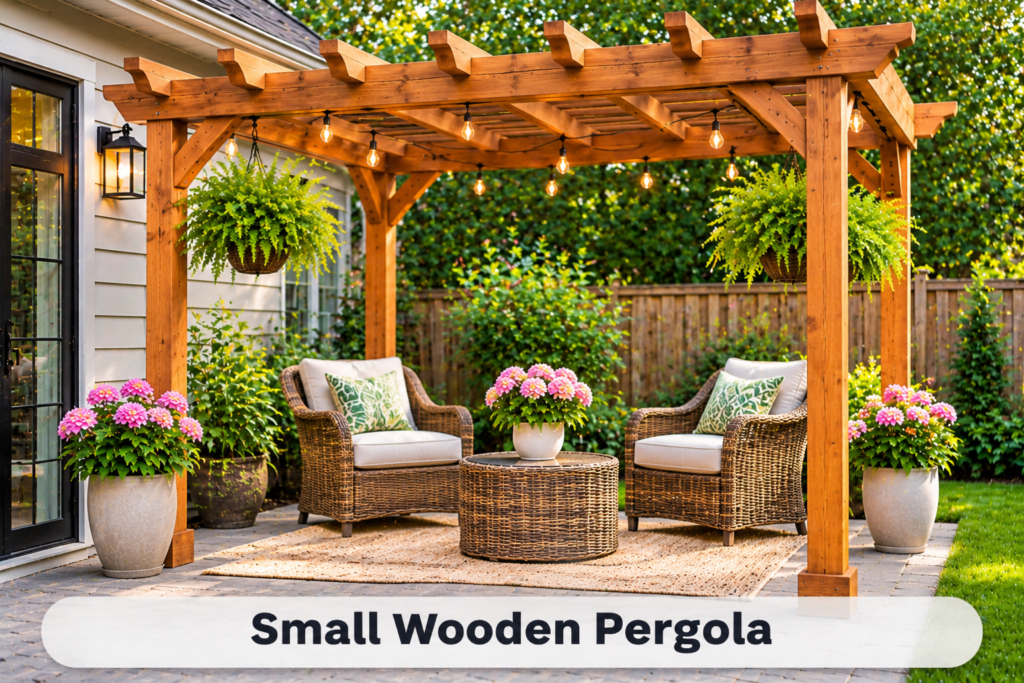
A small wooden pergola adds natural beauty, warmth, and timeless charm to a compact outdoor space. This design features sturdy wooden posts, horizontal beams, and an open roof structure that allows sunlight to filter through. Cedar, redwood, and pressure-treated pine are popular materials because of their attractive appearance and outdoor durability. A small wooden pergola complements traditional homes, cottage gardens, and cozy backyard patios. With comfortable seating, decorative plants, and soft outdoor lighting, this pergola can transform a limited outdoor area into a peaceful and inviting retreat for relaxation.
Design Tips
- Choose cedar, redwood, or pressure-treated pine for a durable wooden structure.
- Use a simple square or rectangular design to maximize available space.
- Apply natural wood stain to highlight the beautiful timber grain.
- Add compact wooden benches or wicker chairs for comfortable seating.
- Install warm string lights or decorative lanterns along the overhead beams.
- Include potted flowers or climbing plants to enhance the natural appearance.
Best Placement
A small wooden pergola works beautifully in compact backyards, garden corners, and patios surrounded by natural landscaping. Position it near flower beds or greenery to create a peaceful outdoor seating area that blends with the surrounding environment.
For smaller patios, place the pergola close to the house to establish a comfortable extension of the living space. A freestanding wooden pergola can also fit nicely in a quiet garden corner. Consider sunlight direction, ground conditions, and sufficient walking space when choosing the location.
Maintenance and Care
Small wooden pergolas require regular maintenance to preserve their natural appearance and structural strength. Clean the wooden surfaces periodically using mild soap and water to remove dirt, pollen, and accumulated debris.
Inspect supporting posts, roof beams, and connecting hardware for signs of moisture damage, insect activity, or loose connections. Apply a suitable exterior wood stain or sealant according to the manufacturer’s recommendations.
Keep the base of supporting posts protected from standing water and trim nearby vegetation to improve airflow. Regular inspections and protective treatments help maintain the pergola’s appearance and extend its lifespan.
3. Small Metal Frame Pergola

A small metal frame pergola offers a sleek, durable, and contemporary solution for enhancing limited outdoor spaces. This pergola design features slim metal posts, clean architectural lines, and a compact overhead structure that complements modern homes and patios. Aluminum and steel are commonly used materials, with powder-coated black, charcoal, and white finishes providing an attractive appearance. Metal frame pergolas work especially well in urban backyards, narrow patios, and minimalist gardens. With comfortable furniture, subtle lighting, and decorative plants, a small metal pergola creates a practical outdoor retreat without making the surrounding area feel crowded.
Design Tips
- Choose powder-coated aluminum for a lightweight, corrosion-resistant pergola frame.
- Select black, charcoal, white, or bronze finishes for a contemporary appearance.
- Use slim rectangular posts and straight roof beams for a minimalist design.
- Add compact outdoor chairs or a small sofa to maximize seating space.
- Install integrated LED lighting or subtle string lights for evening relaxation.
- Decorate with modern planters and low-maintenance greenery for visual balance.
Best Placement
A small metal frame pergola works particularly well on concrete patios, tiled outdoor spaces, and modern backyard layouts. Position the structure near the house to create an attractive transition between indoor and outdoor living areas.
For narrow patios, a compact rectangular metal pergola can provide partial shade without occupying excessive space. A freestanding design also works well in a small garden corner or beside a landscaped seating area. Choose a stable, level location with sufficient clearance around the supporting posts.
Maintenance and Care
Small metal frame pergolas are generally low-maintenance, particularly when constructed from powder-coated aluminum. Clean the frame periodically with mild soap and water to remove dust, dirt, and environmental residue.
Inspect supporting posts, connecting brackets, and mounting hardware for signs of corrosion, looseness, or structural movement. Steel pergolas may require additional protective treatment if the exterior coating becomes scratched or damaged.
Avoid abrasive cleaning products that can damage painted surfaces. Keep overhead beams and drainage channels free of leaves and debris. Regular maintenance helps preserve the pergola’s modern appearance and long-term durability.
4. Small Attached Pergola

A small attached pergola is a practical and space-saving solution for creating a comfortable outdoor living area beside the house. This pergola design connects directly to an exterior wall, allowing homeowners to maximize limited patio space without installing a completely freestanding structure. Wooden and aluminum frames are popular choices because they complement different architectural styles and provide attractive overhead coverage. A small attached pergola works especially well near sliding doors, kitchen entrances, and compact backyard patios. With comfortable furniture, decorative lighting, and a few plants, it can create an inviting extension of the home’s living space.
Design Tips
- Choose a compact rectangular pergola design that fits comfortably against the house.
- Match the pergola frame color and material with the home’s exterior appearance.
- Use slim supporting posts to maximize available patio space.
- Add a retractable canopy or adjustable louvers for flexible sunlight control.
- Install wall-mounted lights or subtle string lighting for evening use.
- Include compact outdoor furniture and decorative planters for a welcoming atmosphere.
Best Placement
A small attached pergola works best on patios located directly outside living rooms, kitchens, or dining areas. Positioning the structure near sliding glass doors creates a seamless transition between indoor and outdoor spaces while providing a convenient shaded seating area.
For narrow patios, install a compact pergola that extends outward without blocking important walking paths. A small dining table, loveseat, or pair of lounge chairs can fit comfortably underneath. Consider door clearance, sunlight direction, and roof drainage when determining the ideal location.
Maintenance and Care
Small attached pergolas require regular inspection, particularly where the structure connects to the house. Check mounting brackets, bolts, flashing, and surrounding wall surfaces for signs of movement, corrosion, or moisture damage.
Clean wooden or metal surfaces periodically using mild soap and water. Wooden pergolas may require occasional staining or sealing, while powder-coated aluminum generally needs less maintenance.
Keep nearby gutters and drainage channels clear to prevent water accumulation around the attachment points. Ensure connections are secured to suitable structural elements rather than decorative siding alone. Proper installation and routine maintenance help protect both the pergola and the home’s exterior.
5. Small Freestanding Pergola
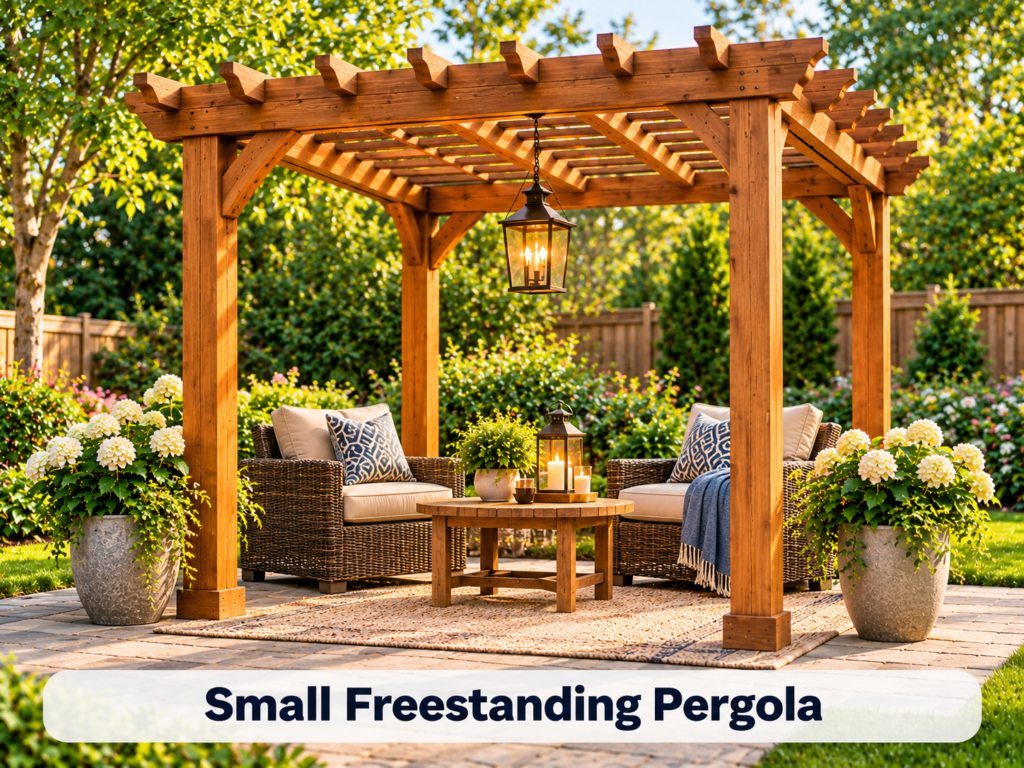
A small freestanding pergola creates a beautiful and flexible outdoor living area without requiring a connection to the house. This independent structure typically features four supporting posts and an open roof with evenly spaced beams, making it suitable for compact patios, small gardens, and backyard corners. Wooden, aluminum, and steel pergolas offer different styles to complement traditional and modern homes. A small freestanding pergola can provide a dedicated space for outdoor seating, reading, or relaxation. With decorative plants, comfortable furniture, and soft lighting, it can transform a limited outdoor area into an attractive and peaceful retreat.
Design Tips
- Choose a compact square or rectangular pergola design to maximize available space.
- Use natural wood for a traditional appearance or aluminum for a contemporary style.
- Install evenly spaced overhead beams to create attractive patterns of sunlight and shade.
- Add a small outdoor loveseat, two chairs, or a compact bistro table.
- Decorate the supporting posts with climbing plants or hanging flower baskets.
- Incorporate warm string lights or outdoor lanterns for comfortable evening relaxation.
Best Placement
A small freestanding pergola works particularly well in compact backyards, garden corners, and open patio areas. Position it near flower beds, landscaped borders, or a small lawn to establish a separate outdoor seating space.
For limited outdoor areas, place the pergola where it provides comfortable shade without blocking important walking paths. A corner location can help maximize usable space while
Maintenance and Care
Small freestanding pergolas require regular inspection to maintain their structural stability and attractive appearance. Check supporting posts, overhead beams, connecting brackets, and anchoring points for signs of damage or movement.
Clean wooden or metal surfaces periodically using mild soap and water to remove dirt, pollen, and accumulated debris. Wooden pergolas may require protective staining or sealing, while powder-coated aluminum generally needs occasional washing.
Keep surrounding drainage areas clear to prevent standing water near the foundations. Ensure the supporting posts remain securely anchored and trim nearby vegetation when necessary. Regular maintenance helps extend the pergola’s lifespan and preserve its appearance.
6. Small Corner Pergola

A small corner pergola is an excellent space-saving solution for homeowners who want to transform an unused backyard or patio corner into an attractive outdoor retreat. This design fits neatly into a corner, helping maximize available space while creating a comfortable area for relaxation. Small corner pergolas can feature wooden beams, slim metal frames, or compact triangular and rectangular structures. They work beautifully with built-in benches, small lounge chairs, and decorative planters. With soft lighting, climbing plants, and comfortable cushions, a corner pergola can turn an overlooked outdoor area into a charming and functional seating space.
Design Tips
- Choose a compact triangular, square, or rectangular design that fits the available corner.
- Use slim wooden or aluminum posts to maintain an open and spacious appearance.
- Install built-in corner benches or an L-shaped seating arrangement to save space.
- Select neutral colors that complement the surrounding patio and garden.
- Add hanging planters or climbing plants to introduce natural greenery.
- Install subtle string lights or solar lanterns for a warm evening atmosphere.
Best Placement
A small corner pergola works particularly well in backyard corners, narrow patios, and garden areas with limited usable space. Position the structure near a fence, garden wall, or landscaped boundary to create a cozy outdoor sitting area.
For compact patios, an L-shaped bench beneath the pergola can provide comfortable seating without occupying excessive floor space. A small coffee table or decorative planter can complete the arrangement. Consider sunlight exposure, privacy, and sufficient walking clearance when choosing the corner location.
Maintenance and Care
Small corner pergolas require regular cleaning and inspection to maintain their appearance and structural stability. Remove accumulated dirt, fallen leaves, and debris from overhead beams and supporting posts.
Inspect connecting brackets, mounting hardware, and wooden surfaces for signs of corrosion, moisture damage, or loose connections. Wooden structures may need occasional staining or sealing, while aluminum frames generally require less maintenance.
Keep nearby fences and walls accessible for inspection and maintenance. Trim climbing plants and surrounding vegetation to prevent excessive moisture buildup. Proper drainage and routine care help preserve the pergola’s durability and attractive appearance.
7. Small Pergola with Retractable Canopy

A small pergola with a retractable canopy provides flexible shade and comfort while making efficient use of limited outdoor space. This pergola design features a compact wooden or metal frame with an adjustable fabric canopy that can be extended for shade or retracted to enjoy natural sunlight. It is particularly useful for small patios and backyards where sunlight conditions change throughout the day. Retractable canopies are available in manual and motorized options, offering convenient shade control. With compact furniture, decorative lighting, and attractive planters, this pergola creates a versatile outdoor retreat for relaxing, dining, and entertaining.
Design Tips
- Choose a compact pergola frame that fits comfortably within the available patio space.
- Select UV-resistant and weather-resistant canopy fabric designed for outdoor use.
- Use neutral canopy colors such as beige, cream, light gray, or charcoal.
- Consider a manual retractable canopy for a simple and budget-friendly design.
- Add compact outdoor chairs, a small loveseat, or a bistro dining set.
- Install subtle LED lights or decorative lanterns to enhance the evening atmosphere.
Best Placement
A small pergola with a retractable canopy works especially well on patios that receive strong afternoon sunlight. Position it near the house, beside a garden, or over a compact seating area where adjustable shade can improve comfort.
For narrow patios, an attached pergola with a retractable canopy can help maximize usable space. A freestanding version also works beautifully in a small backyard corner. Consider sunlight direction, wind exposure, and sufficient clearance for the canopy mechanism when selecting the installation location.
Maintenance and Care
Retractable canopy pergolas require regular maintenance to keep the fabric and operating mechanism in good condition. Clean the canopy according to the manufacturer’s instructions using mild soap and water or an appropriate fabric cleaner.
Inspect tracks, rollers, cables, and moving components periodically for dirt, damage, or signs of wear. Allow the canopy to dry completely before retracting it for extended periods to reduce the risk of mildew.
Retract the canopy during strong winds, heavy rain, or snow unless the manufacturer specifically rates it for those conditions. Keep the pergola frame clean and ensure all mounting hardware remains secure. Regular maintenance helps preserve smooth operation and extends the canopy’s service life.
8. Small Pergola with Adjustable Louvered Roof

A small pergola with an adjustable louvered roof offers a modern and practical solution for controlling sunlight, shade, and ventilation in compact outdoor spaces. This pergola design features rotating roof slats that can be opened or closed according to weather conditions and personal preferences. Aluminum is a popular material because of its durability, attractive appearance, and relatively low maintenance requirements. A small louvered pergola works beautifully on contemporary patios, narrow backyards, and compact garden spaces. With comfortable furniture, subtle lighting, and decorative plants, it creates a versatile outdoor retreat for everyday relaxation.
Design Tips
- Choose a compact aluminum pergola frame with adjustable roof louvers.
- Select neutral colors such as black, charcoal, white, or light gray.
- Consider a manual louver system for a simple and budget-friendly design.
- Install integrated LED lighting for comfortable evening relaxation.
- Add compact lounge chairs or a small outdoor dining set.
- Include decorative planters and minimalist furniture to maintain an open appearance.
Best Placement
A small pergola with an adjustable louvered roof works particularly well on patios that receive changing sunlight throughout the day. Position it near the house to create a comfortable outdoor living extension with flexible shade control.
For narrow patios, a compact rectangular louvered pergola can provide practical coverage without occupying excessive space. A freestanding design also works well in a small backyard or garden corner.
Maintenance and Care
Small louvered pergolas require regular cleaning to keep the roof panels and adjustment mechanisms functioning properly. Remove accumulated leaves, dust, and debris from the louvers and drainage channels.
Clean aluminum surfaces periodically using mild soap and water. Inspect hinges, moving components, and mounting hardware for signs of wear, corrosion, or looseness. Motorized systems may require additional maintenance according to the manufacturer’s instructions.
Avoid operating the louvers when ice or debris prevents normal movement. Keep drainage outlets clear to reduce water accumulation. Routine inspections and cleaning help preserve the pergola’s appearance and reliable performance.
9. Small Pergola with Climbing Plants
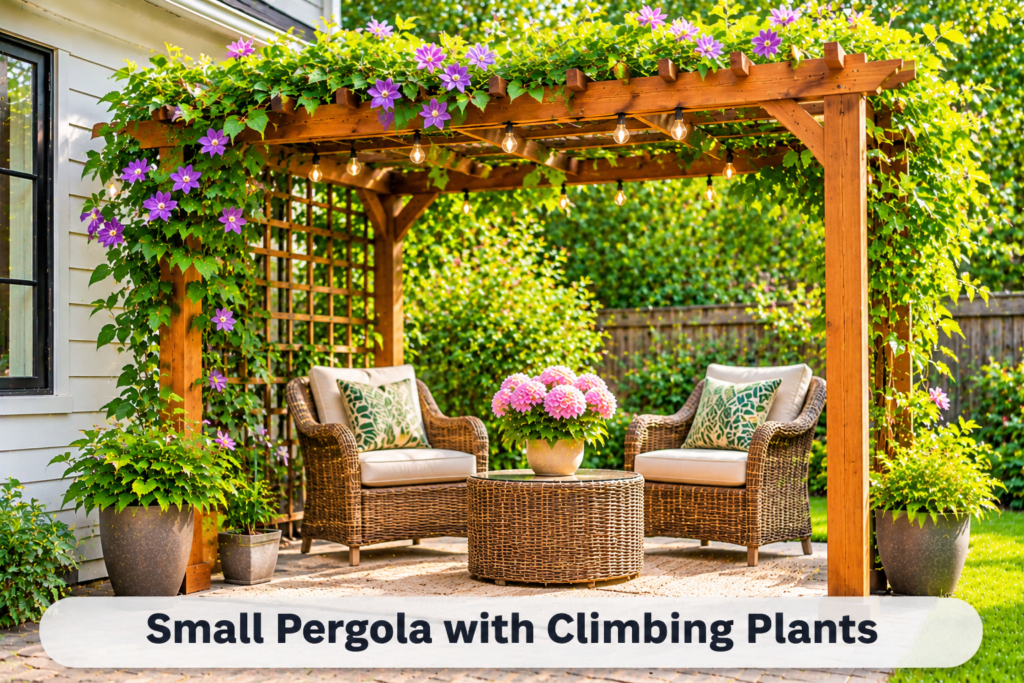
A small pergola with climbing plants creates a beautiful garden-inspired retreat while adding natural greenery to a compact outdoor space. This pergola design combines a simple wooden or metal structure with flowering vines and climbing plants that gradually grow along supporting posts and overhead beams. Jasmine, clematis, climbing roses, and other suitable vines can introduce colorful flowers, pleasant fragrances, and seasonal shade. A plant-covered pergola works especially well in small gardens, backyard corners, and cozy patios. With comfortable seating, decorative planters, and subtle lighting, it creates a peaceful outdoor area surrounded by natural beauty.
Design Tips
- Choose climbing plants that suit your local climate and available sunlight.
- Install sturdy trellises or support wires to guide vines along the pergola.
- Select a wooden or metal frame strong enough to support mature plant growth.
- Combine flowering vines with evergreen varieties for year-round greenery.
- Add compact wooden benches or wicker chairs for comfortable seating.
- Include decorative planters and warm string lights to enhance the garden atmosphere.
Best Placement
A small pergola with climbing plants works beautifully in garden corners, narrow backyard patios, and outdoor spaces surrounded by flower beds. Position the structure where climbing plants receive enough sunlight for healthy growth and flowering.
For compact patios, grow vines along one or two supporting posts to introduce greenery without covering the entire structure. A small freestanding pergola near a garden border can also create an attractive seating area. Consider nearby planting space, drainage conditions, and accessibility when choosing the location.
Maintenance and Care
Climbing plants require regular pruning and maintenance to prevent excessive growth and maintain the pergola’s attractive appearance. Remove dead, damaged, or diseased branches and guide new shoots along suitable support structures.
Inspect overhead beams, supporting posts, and climbing supports for signs of moisture damage or excessive plant weight. Water and fertilize plants according to their individual growing requirements, particularly during hot and dry weather.
Keep vigorous vines away from gutters, electrical fixtures, and surrounding structures. Trim overcrowded foliage to improve airflow and reduce moisture buildup. Regular plant care and structural inspections help maintain a healthy and attractive pergola.
10. Small Pergola with String Lights
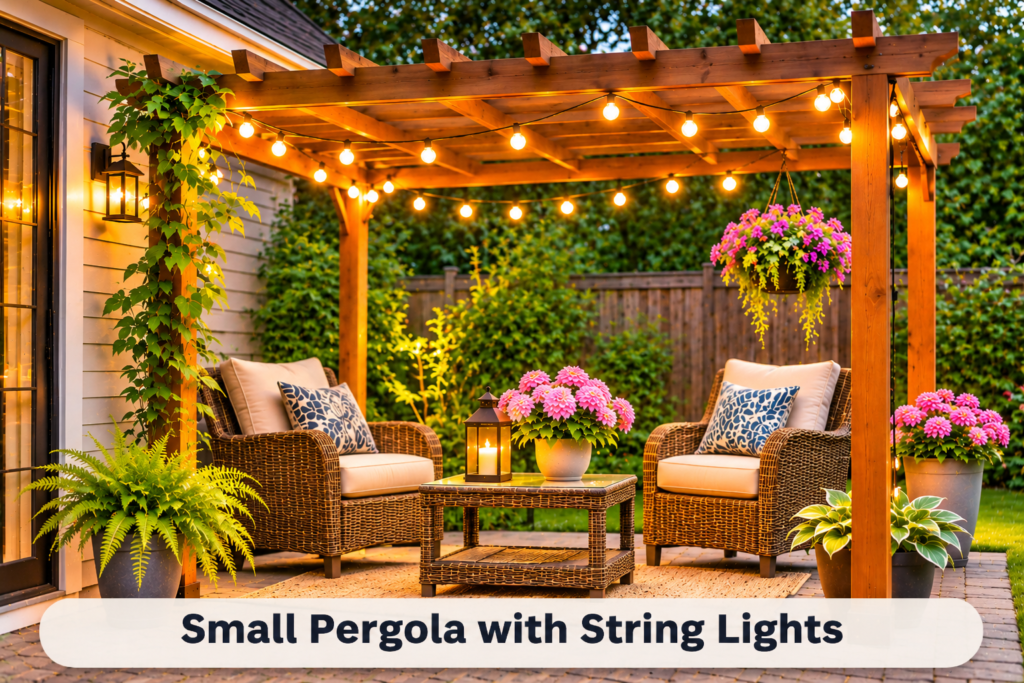
A small pergola with string lights creates a warm and welcoming atmosphere that transforms a compact patio or backyard into a charming evening retreat. This design combines a simple wooden or metal pergola with decorative lighting suspended along the roof beams or wrapped around supporting posts. Warm white LED string lights are particularly popular because they provide soft illumination without overwhelming a small outdoor space. A pergola decorated with lights works beautifully with comfortable seating, small tables, and decorative plants. Whether used for quiet relaxation or family gatherings, this design creates a cozy outdoor environment after sunset.
Design Tips
- Choose warm white LED string lights for a soft and relaxing atmosphere.
- Arrange lights in parallel, zigzag, or crisscross patterns across the overhead beams.
- Wrap smaller decorative lights around supporting posts for additional illumination.
- Use outdoor-rated, weather-resistant lighting suitable for exterior installation.
- Add compact lounge chairs, a small loveseat, or a comfortable bistro set.
- Include decorative planters, outdoor cushions, and a small rug for a cozy appearance.
Best Placement
A small pergola with string lights works particularly well on compact patios, backyard seating areas, and garden corners. Position the structure near the house to create a convenient outdoor relaxation space with access to suitable electrical connections.
For narrow patios, install string lights along the overhead beams to provide attractive illumination without occupying floor space. A small freestanding pergola near a landscaped garden can also create a beautiful nighttime retreat. Consider electrical outlet locations, headroom, and surrounding vegetation when selecting the placement.
Maintenance and Care
String lights require occasional cleaning and inspection to maintain their appearance and electrical safety. Check bulbs, cords, sockets, and mounting clips regularly for signs of wear, cracks, or other damage.
Clean lighting fixtures gently with a soft cloth after disconnecting the power supply. Replace damaged bulbs or lighting strands according to the manufacturer’s instructions. Use outdoor-rated electrical connections and avoid overloading outlets.
Secure string lights properly to prevent excessive movement during windy conditions. Keep cords away from standing water and areas where they may become damaged. Regular maintenance helps ensure reliable illumination and keeps the pergola comfortable for evening use.
11. Small Pergola with Cozy Seating
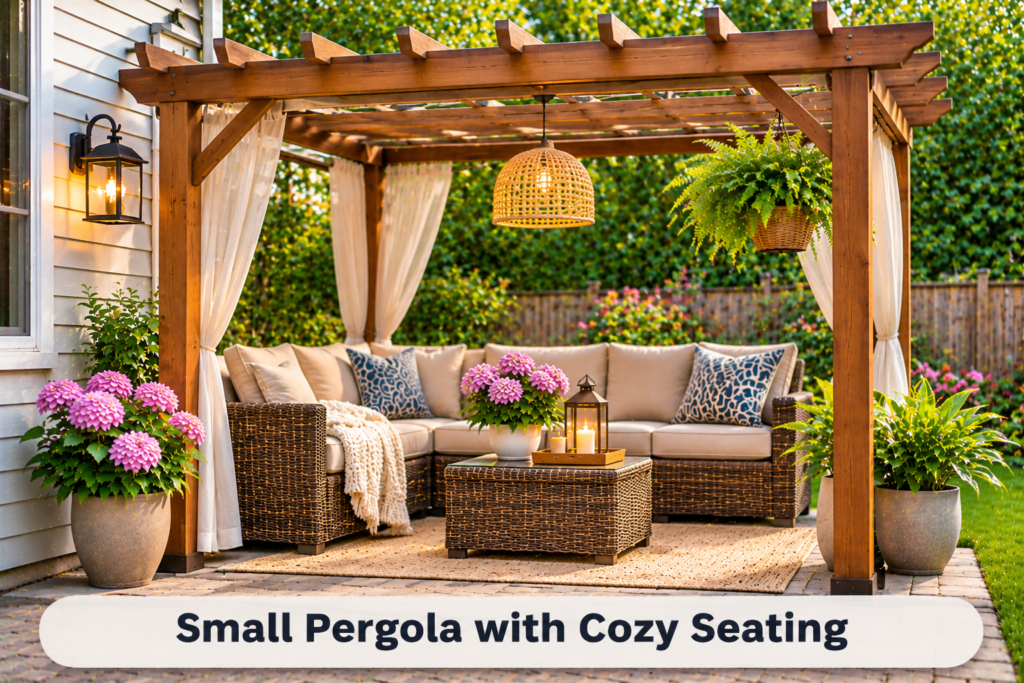
A small pergola with cozy seating transforms a compact outdoor area into a comfortable and inviting retreat for relaxation. This design combines a simple wooden or metal pergola with soft cushions, compact furniture, and decorative accessories to create a welcoming atmosphere. Small outdoor loveseats, cushioned benches, and lightweight lounge chairs are excellent choices for maximizing limited patio space. Neutral colors, outdoor rugs, and warm lighting can make the seating area feel like an extension of the home. With thoughtful furniture placement and attractive decorations, a small pergola can become a peaceful space for reading, relaxing, and spending time with family.
Design Tips
- Choose a compact outdoor loveseat or cushioned bench to maximize seating space.
- Use weather-resistant cushions in neutral colors such as beige, gray, or cream.
- Add a small coffee table or nesting side tables for convenience.
- Place an outdoor rug beneath the furniture to define the seating area.
- Install warm string lights or decorative lanterns for evening relaxation.
- Include small potted plants and decorative pillows for a welcoming appearance.
Best Placement
A small pergola with cozy seating works particularly well on compact patios, narrow backyards, and quiet garden corners. Position the structure near the house to create a comfortable outdoor living extension with easy access from indoor spaces.
For limited patios, arrange a small loveseat against one side of the pergola and place a compact coffee table in front. A corner seating arrangement can also maximize available space while maintaining comfortable walking paths. Consider privacy, sunlight direction, and surrounding garden views when choosing the location.
Maintenance and Care
Small pergolas with cozy seating require regular cleaning to maintain their comfort and attractive appearance. Brush dirt and debris from cushions, furniture, and overhead beams to prevent unnecessary buildup.
Clean removable cushion covers according to their care instructions and allow them to dry completely before use. Inspect the pergola frame, supporting posts, and furniture connections for signs of wear or damage.
Store cushions and lightweight decorative accessories indoors or in weather-resistant containers during heavy rain. Keep outdoor rugs dry and remove accumulated leaves from the seating area. Routine maintenance helps preserve the furniture and keeps the pergola comfortable throughout the year.
12. Small Pergola with Hanging Swing

A small pergola with a hanging swing creates a charming and relaxing outdoor space while making creative use of a compact backyard or patio. This design features a sturdy pergola structure with a suspended swing chair or bench that provides comfortable seating without requiring a large furniture arrangement. Wooden swing benches offer a traditional appearance, while woven hanging chairs complement modern and bohemian outdoor styles. Soft cushions, decorative pillows, and surrounding plants can make the seating area even more inviting. With thoughtful placement and suitable structural support, a small hanging swing pergola becomes an attractive retreat for enjoying fresh air and peaceful moments.
Design Tips
- Choose a pergola specifically engineered to support a suspended swing and its moving loads.
- Select a compact hanging chair or single-seat swing to save space.
- Use weather-resistant cushions and soft decorative pillows for additional comfort.
- Choose natural wood, white, or black finishes to complement your outdoor design.
- Install subtle string lights or decorative lanterns around the pergola.
- Add small potted plants and climbing greenery to create a relaxing atmosphere.
Best Placement
A small pergola with a hanging swing works beautifully in compact garden corners, quiet backyard spaces, and patios overlooking natural landscaping. Position the structure where users can enjoy pleasant views and comfortable shade while relaxing.
For narrow patios, a single hanging chair may be more practical than a traditional swing bench. A small freestanding pergola can accommodate the swing when the structure is properly designed and anchored. Allow sufficient clearance around the swing for safe movement, and keep nearby furniture, walls, and obstacles outside its swinging path.
Maintenance and Care
Small pergolas with hanging swings require regular structural inspections to maintain safety and stability. Check suspension hardware, chains, ropes, mounting brackets, and overhead supporting beams for signs of wear, damage, or looseness.
Follow the swing manufacturer’s weight limits and installation recommendations. Replace damaged suspension components immediately, and avoid using the swing if any supporting connection appears unstable.
Clean the pergola frame and swing surfaces periodically using suitable outdoor cleaning products. Store removable cushions during severe weather and inspect wooden surfaces for moisture damage. Regular maintenance helps preserve the swing’s appearance and ensures a comfortable outdoor seating experience.
13. Small Pergola with Outdoor Dining Area
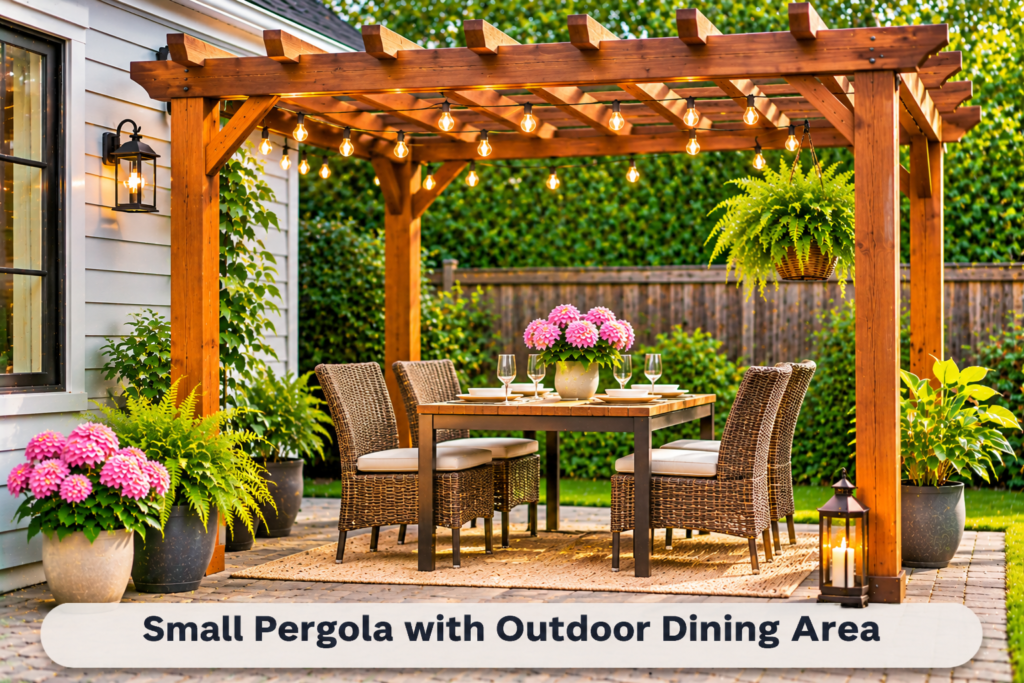
A small pergola with an outdoor dining area creates a practical and attractive space for enjoying meals in a compact backyard or patio. This pergola design combines a simple overhead structure with a small dining table, comfortable chairs, and decorative accessories to establish a welcoming outdoor eating space. Wooden pergolas provide a warm and traditional appearance, while aluminum frames complement contemporary homes. A compact bistro set or folding dining table can maximize limited space without sacrificing functionality. With soft lighting, decorative plants, and weather-resistant furniture, a small dining pergola becomes an inviting setting for morning coffee, family meals, and casual gatherings.
Design Tips
- Choose a compact round or square dining table that fits comfortably beneath the pergola.
- Use folding chairs or stackable seating to maximize available patio space.
- Select weather-resistant furniture materials such as aluminum, teak, or treated wood.
- Install warm pendant lighting or string lights above the dining area.
- Add a retractable shade canopy for comfortable daytime dining.
- Decorate with small potted plants, table centerpieces, and outdoor cushions.
Best Placement
A small pergola with an outdoor dining area works particularly well on patios located near kitchens, dining rooms, or sliding glass doors. Positioning the pergola close to the house makes carrying food, drinks, and dining accessories more convenient.
For narrow patios, a two-person bistro table can create a comfortable dining arrangement without occupying excessive space. Slightly larger areas may accommodate a four-person dining set. Choose a level location with enough clearance for chairs and walking paths, and consider sunlight direction when positioning the pergola.
Maintenance and Care
Small outdoor dining pergolas require regular cleaning to maintain a pleasant and hygienic environment. Wipe down dining tables and chairs after meals to remove food particles, spills, and accumulated dust.
Clean wooden or metal pergola frames periodically using mild soap and water. Inspect supporting posts, overhead beams, furniture connections, and mounting hardware for signs of damage or looseness.
Store removable cushions and lightweight dining accessories in weather-resistant containers during heavy rain. Keep overhead lighting fixtures clean and replace damaged components when necessary. Routine maintenance helps preserve the dining furniture and keeps the outdoor space comfortable for everyday use.
14. Small Pergola with Privacy Screens

A small pergola with privacy screens creates a comfortable and secluded outdoor retreat while maximizing limited patio or backyard space. This design combines a compact wooden or metal pergola with decorative side panels that provide privacy from neighboring properties. Wooden slats, bamboo screens, and modern aluminum panels are popular choices for achieving an attractive appearance. Privacy screens can also help define a dedicated seating area without making the outdoor space feel completely enclosed. With comfortable furniture, decorative plants, and subtle lighting, a small pergola with privacy screens can transform an exposed patio into a peaceful and inviting relaxation area.
Design Tips
- Choose horizontal wooden slats or aluminum privacy panels for a stylish appearance.
- Use neutral colors such as natural wood, charcoal, white, or light gray.
- Install privacy screens along one or two sides to maintain an open atmosphere.
- Add compact outdoor chairs or a small loveseat for comfortable seating.
- Incorporate climbing plants or decorative planters to soften the appearance.
- Install warm string lights or wall-mounted lanterns for evening relaxation.
Best Placement
A small pergola with privacy screens works particularly well on compact patios, narrow backyards, and outdoor areas close to neighboring properties. Position the structure near a fence or garden boundary to create a comfortable seating space with additional privacy.
For smaller patios, install privacy panels on the side facing neighboring windows or frequently used outdoor areas. A corner pergola with two screened sides can create a cozy retreat without occupying excessive space. Consider sunlight direction, ventilation, and surrounding views when selecting the placement.
Maintenance and Care
Small pergolas with privacy screens require regular cleaning to maintain their attractive appearance and structural stability. Remove accumulated dust, dirt, and debris from the pergola frame and decorative panels.
Inspect wooden screens for signs of moisture damage, warping, or loose connections. Apply suitable exterior stain or sealant when necessary. Aluminum panels generally require occasional washing with mild soap and water.
Check mounting brackets and supporting posts regularly, especially in areas exposed to strong winds. Trim nearby climbing plants and maintain proper drainage around the structure. Routine maintenance helps preserve privacy, appearance, and long-term durability.
15. Small Rustic Timber Pergola
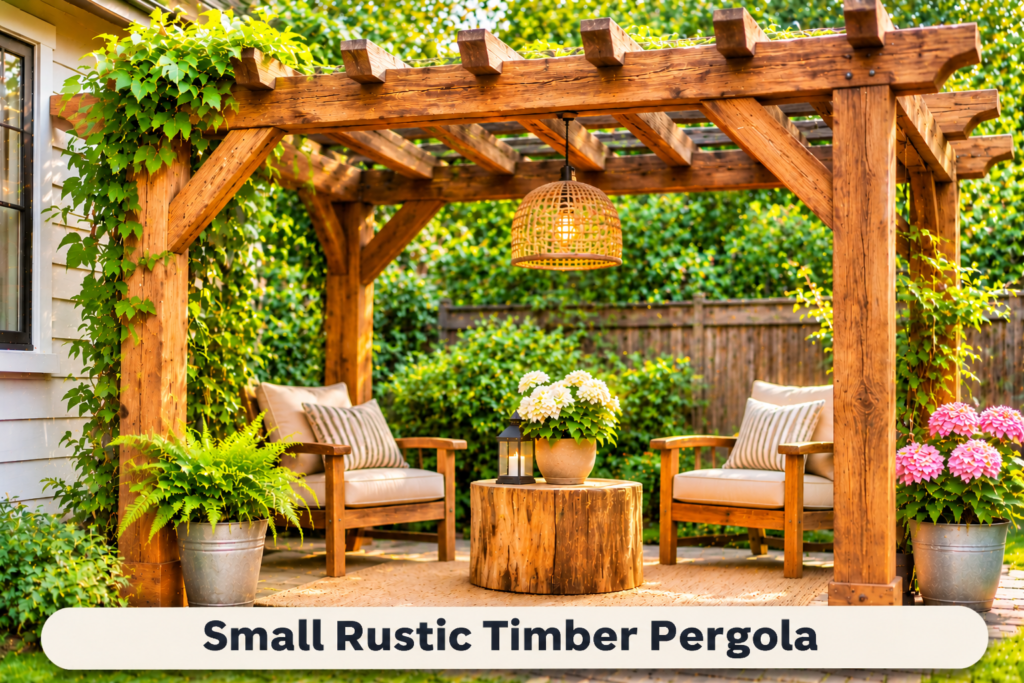
A small rustic timber pergola adds natural warmth, traditional charm, and a countryside atmosphere to a compact outdoor space. This design features sturdy wooden posts, exposed beams, and textured timber surfaces that highlight the beauty of natural materials. Reclaimed wood, rough-sawn cedar, and weathered timber finishes are popular choices for creating an authentic rustic appearance. A small rustic pergola complements cottage gardens, farmhouse patios, and backyard spaces surrounded by greenery. With comfortable wooden furniture, vintage lanterns, and decorative flowers, it can transform a limited outdoor area into a welcoming retreat for relaxation and peaceful gatherings.
Design Tips
- Choose rough-sawn cedar or suitably treated reclaimed timber for a rustic appearance.
- Use exposed wooden beams and sturdy posts to create a traditional design.
- Select warm brown, natural wood, or weathered gray finishes.
- Add compact wooden benches or wicker chairs for comfortable seating.
- Install vintage-style lanterns or warm string lights along the beams.
- Decorate with clay planters, climbing flowers, and natural outdoor fabrics.
Best Placement
A small rustic timber pergola works beautifully in compact garden corners, cottage-style backyards, and patios surrounded by natural landscaping. Position the structure near flower beds, stone pathways, or wooden fences to create a harmonious outdoor appearance.
For smaller patios, choose a simple rectangular pergola with a wooden bench and small side table. A freestanding rustic pergola can also create a peaceful seating area near a garden boundary. Consider sunlight exposure, drainage conditions, and sufficient walking space when choosing the location.
Maintenance and Care
Small rustic timber pergolas require regular maintenance to protect the wood from moisture, insects, and weather-related damage. Clean the wooden surfaces periodically using mild soap and water to remove dirt, pollen, and accumulated debris.
Inspect supporting posts, overhead beams, and connecting hardware for signs of decay, cracks, or looseness. Apply a suitable exterior wood stain or protective sealant according to the manufacturer’s recommendations.
Keep the base of each supporting post protected from standing water and remove leaves from overhead beams. Trim nearby vegetation to maintain proper airflow around the timber. Regular inspections and protective treatments help preserve the pergola’s rustic charm and structural strength.
16. Budget-Friendly DIY Small Pergola

A budget-friendly DIY small pergola offers an affordable and creative way to improve a compact patio or backyard without investing in an expensive custom structure. This design focuses on simple construction, practical materials, and functional outdoor features that homeowners can adapt to their available space. Pressure-treated lumber, standard-sized beams, and straightforward rectangular layouts can help reduce construction expenses. A small DIY pergola can define a seating area, provide partial shade, and enhance the overall appearance of an outdoor space. With inexpensive furniture, decorative plants, and simple string lights, even a basic pergola can become a charming retreat for everyday relaxation.
Design Tips
- Choose a simple square or rectangular pergola design to reduce construction complexity.
- Use pressure-treated lumber or another affordable material suitable for outdoor structures.
- Select standard lumber dimensions to minimize cutting and unnecessary material waste.
- Apply exterior wood stain or paint to improve appearance and weather resistance.
- Add inexpensive solar string lights or decorative lanterns for evening use.
- Decorate with budget-friendly planters, recycled furniture, and comfortable cushions.
Best Placement
A budget-friendly DIY small pergola works particularly well on compact backyard patios, garden corners, and small outdoor seating areas. Position the structure on a level surface where it can provide partial shade without blocking important walking paths.
For narrow patios, choose a compact rectangular pergola with two chairs and a small coffee table. A freestanding DIY structure can also fit comfortably near a garden border or landscaped corner. Consider sunlight direction, underground utilities, drainage conditions, and suitable foundation locations before beginning construction.
Maintenance and Care
DIY wooden pergolas require regular inspection to maintain their appearance and structural stability. Check supporting posts, roof beams, connecting brackets, and anchoring points for signs of wear, damage, or movement.
Clean wooden surfaces periodically with mild soap and water to remove dirt and debris. Apply exterior stain or sealant according to the manufacturer’s recommendations to protect exposed timber from moisture and sunlight.
Keep surrounding drainage areas clear to prevent standing water near the foundations. Replace damaged boards and corroded hardware when necessary. Ensure the pergola follows appropriate structural plans and local building requirements. Regular maintenance helps keep a budget-friendly pergola attractive, stable, and functional for years.
FAQs
1. What Is the Best Pergola Design for a Small Backyard?
A modern minimalist or corner pergola is an excellent choice for a small backyard. These designs maximize available space while providing comfortable shade and attractive outdoor features. Compact wooden or aluminum frames, simple furniture, and decorative plants can create a stylish seating area without making the backyard feel crowded.
2. What Is the Ideal Size for a Small Pergola?
A small pergola typically measures around 6×6, 8×8, or 8×10 feet, depending on the available outdoor space. An 8×8-foot pergola works well for compact seating arrangements, while an 8×10-foot structure can accommodate additional furniture. Always consider walking space, furniture dimensions, and local building requirements before choosing a size.
3. How Much Does It Cost to Build a Small Pergola?
A basic DIY small pergola may cost approximately 300–1,500, while professionally installed structures can cost 1,500–5,000 or more in the United States. Prices depend on materials, dimensions, labor, foundations, and additional features. Simple wooden designs are often more affordable than motorized aluminum pergolas with adjustable roofs.
4. Can You Install a Pergola on a Small Patio?
Yes, a pergola can be installed on a small patio with proper planning and suitable dimensions. Attached, corner, and compact freestanding designs are particularly effective for limited spaces. Choose slim supporting posts, space-saving furniture, and an open roof structure to maintain comfortable movement and prevent overcrowding.
5. How Can I Make a Small Pergola Look More Attractive?
You can decorate a small pergola with warm string lights, climbing plants, outdoor cushions, and compact furniture. Neutral colors, hanging flower baskets, and decorative lanterns create a welcoming atmosphere. Avoid excessive decorations and oversized furniture, as a simple, coordinated design helps make the outdoor space feel larger and more comfortable.