
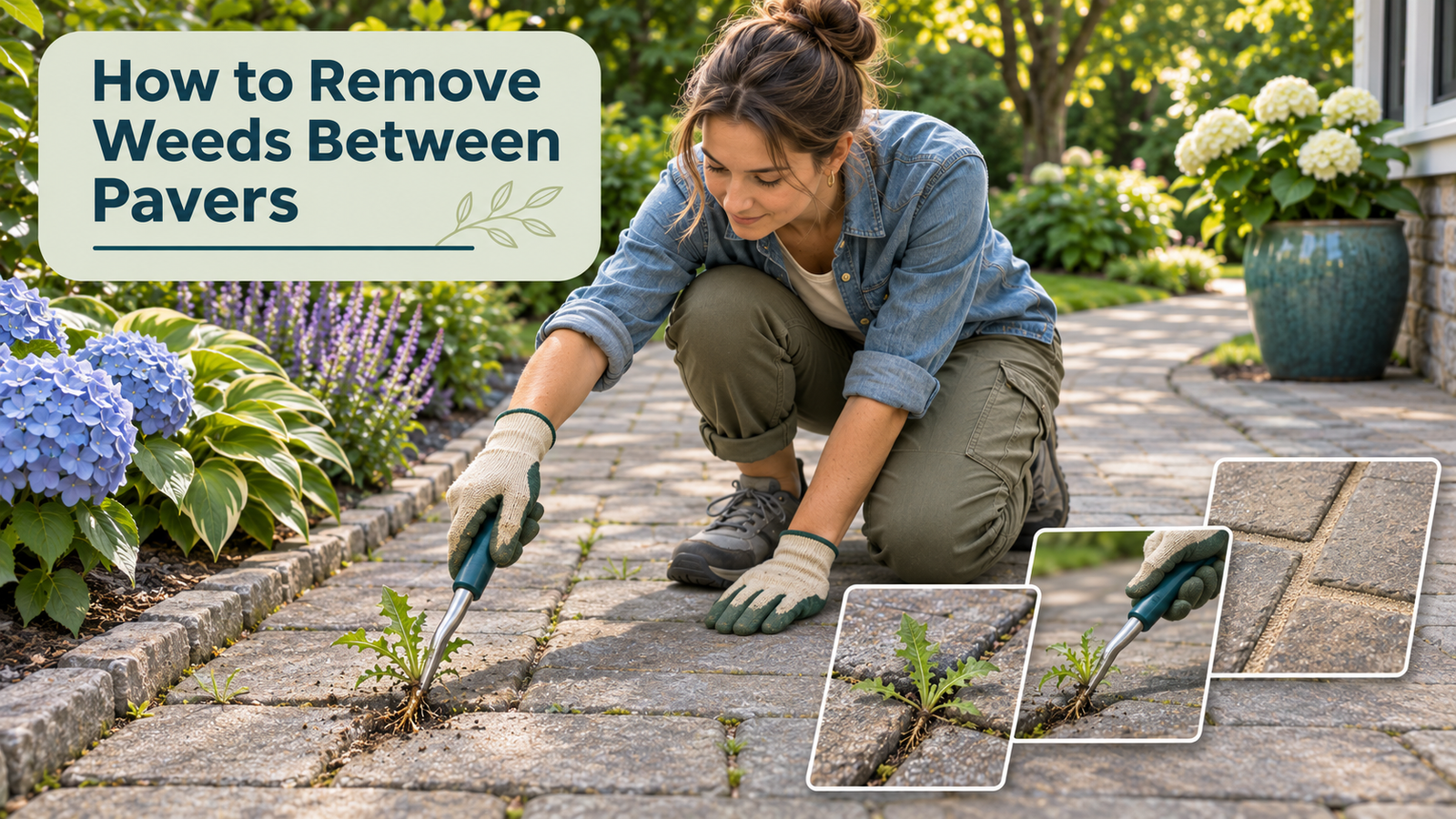
Weeds growing between pavers can make a patio, walkway, or driveway look untidy and may loosen the joint material as they spread. Removing them is easier when you choose a method that suits the size of the growth and the surface around it. You can pull small weeds by hand, use simple tools for deeper roots, or apply a suitable weed treatment carefully. This guide explains how to remove weeds between pavers and prevent them from returning, while protecting nearby plants and paver joints.
Why Weeds Grow Between Pavers
Paver joints collect windblown seeds, dust, and bits of organic matter. When rain or irrigation adds moisture, seeds can sprout in that material. Some weeds also spread into joints from nearby lawns or garden beds. If joint sand has washed away, the gaps may leave more room for weeds to take hold.
The best approach depends on how many weeds have appeared and how established their roots are. Small seedlings are usually easy to remove by hand. Larger weeds may need a joint tool or repeated treatment. After removing them, check whether the joints need fresh sand or another suitable filler.
Remove Weeds by Hand
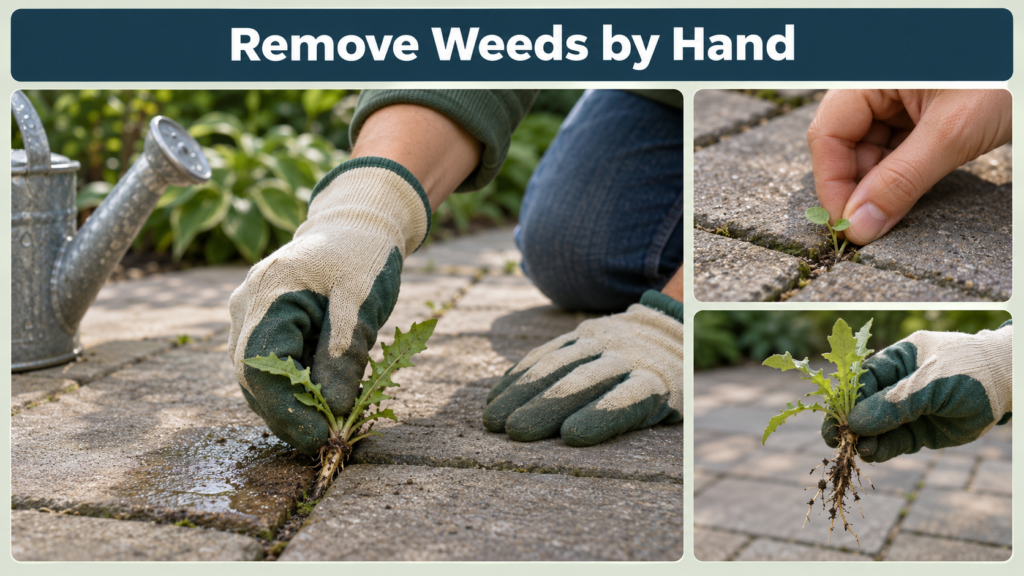
For a few small weeds, hand-pulling is often the simplest method. Pull slowly from near the base so you remove as much of the root as possible. The job is easier after rain or after lightly watering the joints, when the soil and debris are softer.
Wear gardening gloves, especially when handling unfamiliar weeds. Put pulled weeds in a yard-waste bag or compost them only if they do not have mature seeds and are suitable for your compost. Leaving uprooted weeds on the pavers can allow them to dry, scatter seeds, or take root again if they remain damp.
Use a Paver Weeding Tool
A narrow weeding knife, patio weeder, or hooked joint scraper can reach into tight gaps between pavers. Slide the tool alongside the weed’s base and loosen the roots before lifting the plant out. Use controlled pressure so you do not chip the paver edges or scrape out more joint material than necessary.
For deep-rooted weeds, work around the plant from more than one side. Remove loose roots and debris from the gap, then sweep the surface clean. If a weed breaks off at ground level, return to the remaining root later or use another appropriate removal method; cutting the top alone often allows it to regrow.
Try Boiling Water Carefully
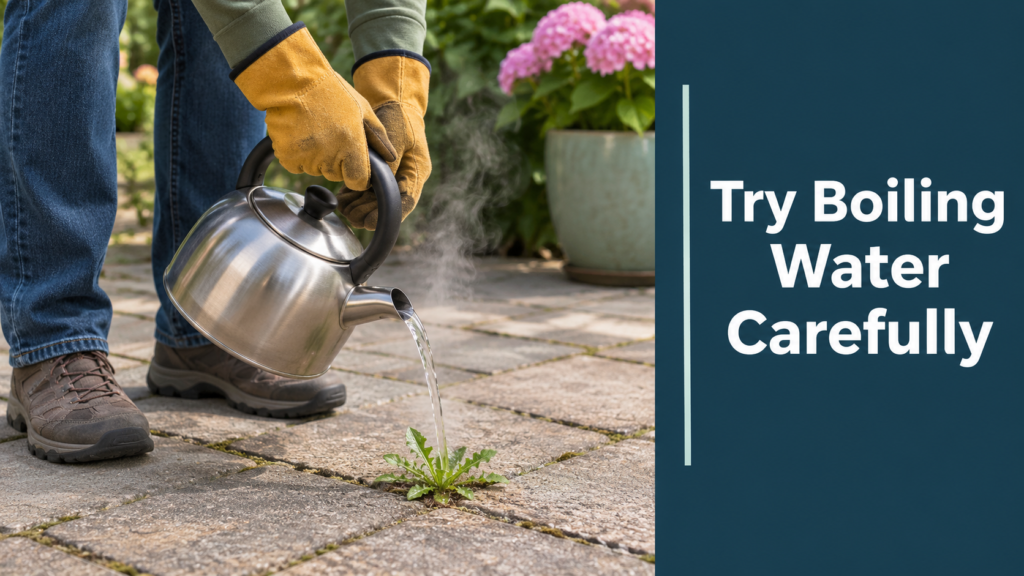
Boiling water can damage small weeds growing in joints. Pour it directly onto the weed, using only enough to wet the plant and its immediate root area. Take care around your feet, pets, children, and nearby garden plants. Hot water can injure people and may harm any vegetation it touches.
This method may not kill deep or well-established roots in one treatment. Check the area after a few days and repeat only if needed. Avoid pouring boiling water near pavers that may be sensitive to sudden temperature changes or in places where the water could run into desirable plants.
Use a Weed Treatment Safely
If weeds cover a large area or keep returning, a weed-control product may be an option. Choose a product labeled for the type of surface and weeds you are treating, and follow its directions for application, protective equipment, and re-entry. Apply it carefully on a calm day so spray does not drift onto grass, flowers, or shrubs.
Some products kill only the parts of a weed they touch, while others work through the plant. Read the label to understand what the product controls and whether it may affect nearby vegetation. Keep people and pets away for the period stated on the product label. Avoid using household salt or concentrated vinegar as a shortcut; they can damage nearby plants or soil and may affect paver surfaces.
Clear the Joints and Restore Joint Material
After removing weeds, clear loose leaves, roots, and debris from the gaps. A stiff outdoor broom can remove material from the surface. If joint sand has washed out or been pulled away, refill the gaps with a paver joint material suitable for your installation.
Follow the product instructions for filling and settling the joints. Do not use ordinary soil as a replacement, since it can hold moisture and give new seeds a place to grow. If the pavers move, sink, or have wide, uneven gaps, the underlying base or joint material may need repair before refilling.
How to Prevent Weeds Between Pavers
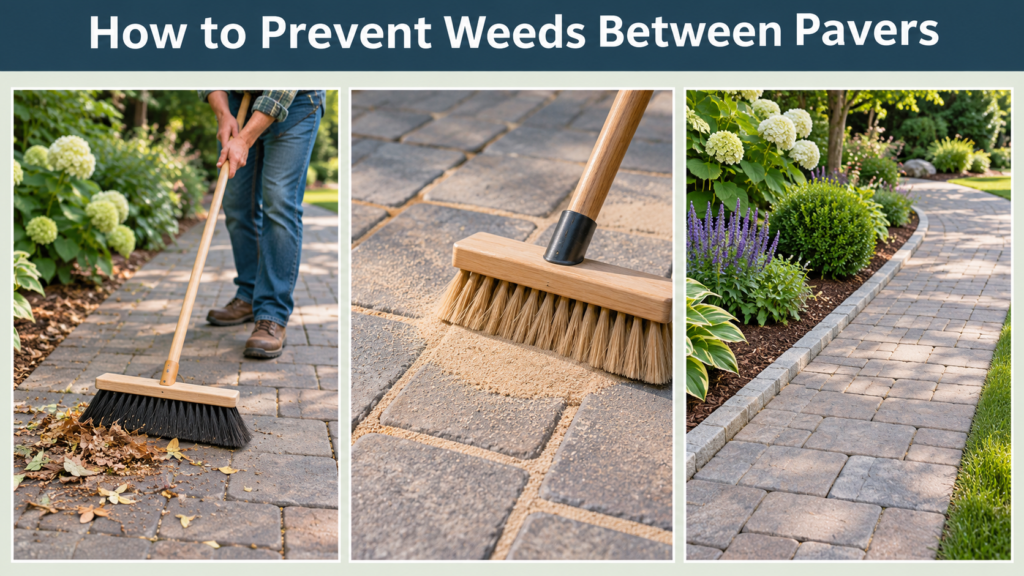
Prevention starts with keeping joints filled and the surface clear of material where seeds can settle. Sweep the pavers regularly, especially after storms or when trees nearby shed seeds and leaves. Clear debris from the joints before it breaks down into a seed-friendly layer.
These habits can help reduce new growth:
- Pull seedlings as soon as you notice them.
- Keep joint material at the level recommended for your pavers.
- Repair joints where sand or filler has washed away.
- Trim nearby grass and plants so they do not spread into the gaps.
- Check shaded or damp areas regularly, since they may stay moist longer.
- Direct sprinklers away from paver joints when practical.
No method can prevent every seed from reaching the joints, but regular checks make weeds easier to remove while they are small.
Common Mistakes to Avoid
Avoid scraping aggressively with metal tools. They can damage paver edges, remove too much joint sand, or leave scratches. If you use a pressure washer to clear debris, choose a suitable setting and keep the spray controlled; strong pressure can dislodge joint material and create gaps where weeds can return.
Do not rely on cutting weeds at the surface if roots remain established in the joint. Also avoid applying weed treatments on windy days or before rain if the product label warns against it. A quick label check helps prevent accidental damage to nearby plants and surfaces.
FAQs
What Is the Best Way to Remove Weeds Between Pavers?
For a small number of weeds, pull them out by hand or use a narrow paver weeding tool to loosen the roots. For widespread growth, consider a product labeled for paver joints. After removal, clear debris and refill gaps where joint material is missing.
Does Boiling Water Kill Weeds Between Pavers?
Boiling water can damage small weeds it directly touches, but it may not kill deep roots in one application. Pour carefully to avoid burns and keep hot water away from nearby plants. Check the area later and remove any regrowth.
Can I Use Vinegar to Kill Weeds Between Pavers?
Vinegar can injure plants it contacts, but household vinegar may not kill established roots. Stronger products can be hazardous and may affect nearby vegetation or surfaces. Use a labeled weed-control product if needed, and follow its directions.
Why Do Weeds Keep Growing Between My Pavers?
Seeds can settle in dust, leaves, and organic debris that collect in the joints. Weeds may also return when roots remain or joint material is missing. Regular sweeping, early removal, and properly filled joints can help reduce regrowth.
Should I Refill Paver Joints After Removing Weeds?
Refill joints if weeding or weather has left them low or empty. Use a joint material suited to your paver system and follow its instructions. Properly filled joints help stabilize the pavers and leave less space for seeds to settle.