
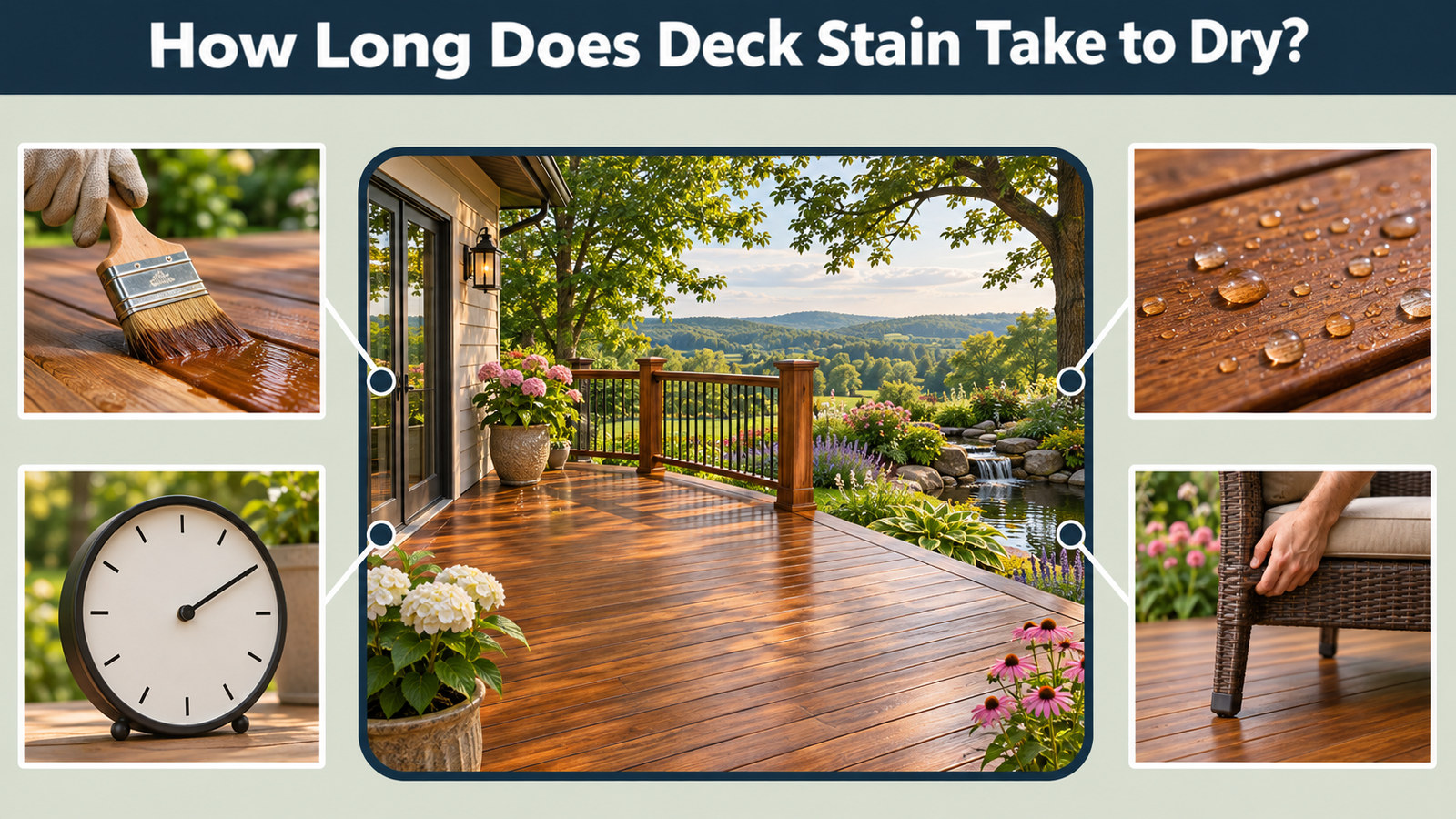
Deck stain often takes 24 to 48 hours to dry enough for light foot traffic, but some products allow earlier use and others need more time. Cool temperatures, high humidity, shade, and heavy application can all slow drying. The surface may feel dry before it can handle shoes, furniture, or an outdoor rug. Check the label on your exact stain for four separate times: when you can apply another coat, when rain can hit the deck, when you can walk on it, and when you can put furniture back.
How Long Does Deck Stain Take to Dry?
Use 24 to 48 hours as a planning estimate for light foot traffic. If you finish staining late Sunday afternoon, for example, check the deck Monday afternoon at the earliest and be prepared to wait until Tuesday or longer. The label for your exact product takes priority because formulas vary, even among stains of the same type. When a label gives a window, use the longer end if the deck is shaded, the weather turns damp, or the evening temperature drops.
| Drying stage | What it means | What to check |
|---|---|---|
| Dry to the touch | The surface feels dry when lightly touched | The finish may still be too soft for shoes or furniture |
| Ready for another coat | The product has reached its specified recoat window | Some products call for a second coat while the first is still wet |
| Ready for rain | The finish has had its required rain-free window | Count the time from when you finish applying the last coat, unless the label directs otherwise |
| Ready for light foot traffic | You can start walking on the deck under the conditions specified | Give shaded areas and steps extra attention |
| Ready for furniture or rugs | The finish can handle weight or being covered | Check for separate guidance for heavy furniture, rugs, and planters |
| Fully cured | The finish has reached its intended hardness or performance | Full cure can take longer than the wait for light foot traffic |
What Affects Deck Stain Drying Time?
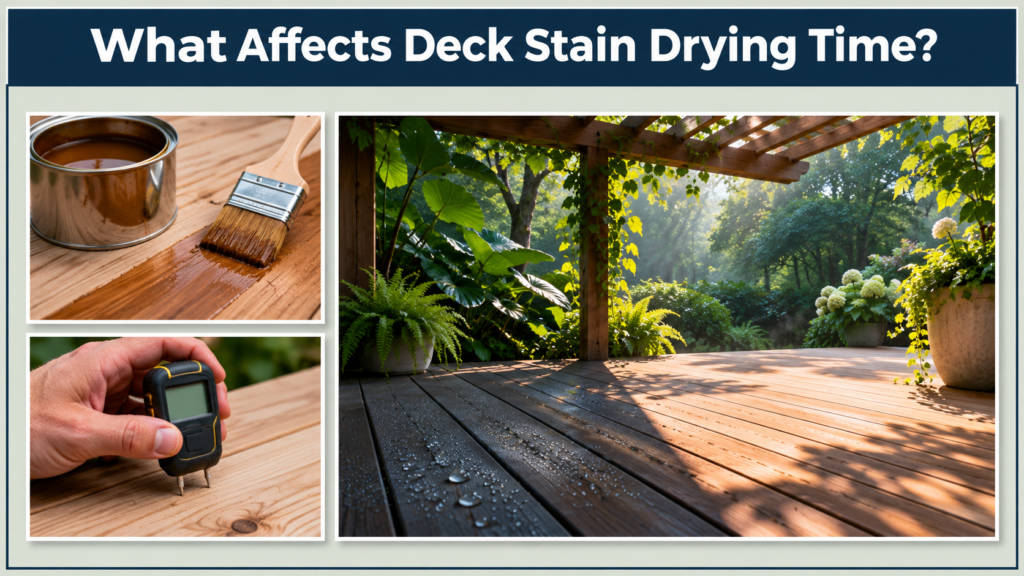
Two decks stained with the same product can dry at different speeds. One might get a breeze and warm afternoon light, while the other sits under a roof and stays cool. Consider the conditions on the boards themselves and how those conditions will change after you finish applying the stain.
Stain Formula and Number of Coats
Water-based deck stains often dry to the touch sooner than oil-based products, but the exact formula matters. Check the product’s directions for foot traffic, rain exposure, and recoating. A short recoat time tells you when to apply another coat. The waiting time for walking may be considerably longer.
Applying extra stain can also slow drying. When a penetrating stain has soaked in as much as the wood will accept, excess product can sit on the surface and leave glossy or tacky spots. Follow the stated coverage rate and number of coats. Check board ends, gaps, and the bases of railing posts for puddles while the stain is still workable.
Temperature, Humidity, and Shade
Cool boards and humid air can slow drying, particularly on a covered deck or in an area with little airflow. Check both daytime and overnight conditions before starting. A warm afternoon may give you enough time to apply the stain, while a cool, damp evening can extend the wait before you can use the deck.
Direct sun can create a different problem. Hot boards can cause stain to set before you have time to blend adjacent strokes, leaving darker overlap marks. Work within the product’s recommended air and surface temperature ranges. If the deck gets strong afternoon sun, consider staining earlier, after the morning dew has evaporated.
Wood Moisture and Old Finish
Deck boards can look dry after washing while shaded steps, board ends, and joints around posts still hold moisture. Check the stain’s requirements for wood dryness before you apply it. If the label specifies a maximum moisture level, a wood moisture meter can help you check several areas across the deck.
Old finish can affect how evenly the new stain absorbs. A deck with glossy patches, peeling areas, and exposed wood may need different preparation across the surface. Clean the deck and prepare the existing finish as directed, then test the stain in an inconspicuous spot. A small test patch can reveal uneven absorption before you coat the entire deck.
How Long Should Deck Stain Dry Before Rain?
Check the stain label for the minimum rain-free period and choose a forecast that covers the entire application plus the required drying time. If the label calls for 24 rain-free hours after application and you finish at 4 p.m., that window runs until 4 p.m. the next day. Consider overnight dew, too, especially if the deck regularly feels damp in the morning. If rain arrives early, let the boards dry before inspecting them. Look for pale spots, streaks, or uneven color. Follow the stain manufacturer’s instructions for correcting those areas once you can see how the finish dried.
When Can You Walk on a Stained Deck or Put Furniture Back?
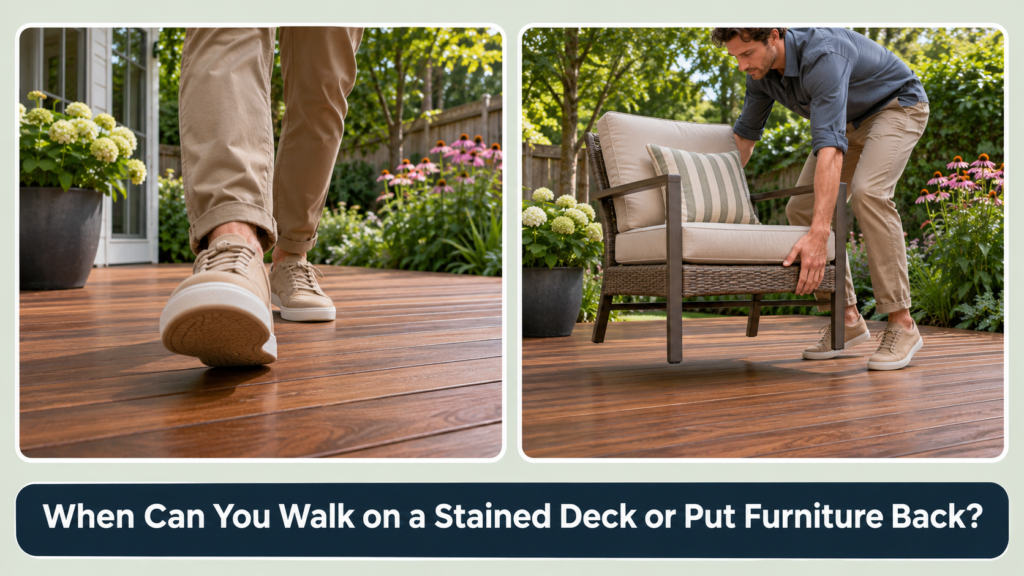
Wait until the product’s light foot traffic window has passed, then check the slowest-drying areas before using the deck. Shaded steps and areas near posts are good places to inspect. A small spot that still feels tacky needs more time. When you return chairs and tables, lift them into place to avoid dragging the feet across the fresh finish. Follow any separate instructions for heavy items, planters, and outdoor rugs. Rugs cover a large area and restrict airflow, while planters can trap moisture beneath their bases. Both may need to stay off the deck longer than lightweight furniture.
Why Is My Deck Stain Still Sticky?
If the entire deck feels slightly tacky after a cool, humid night, give it more time under conditions that meet the product’s drying requirements. If only a few spots are sticky and those spots look unusually glossy, excess stain may have collected there. A previous coating can also prevent a penetrating stain from soaking in. Inspect the deck in daylight and compare the sticky spots with areas that dried normally. If the finish stays tacky after the expected drying window and conditions have improved, check the manufacturer’s instructions for removing excess stain or correcting an incompatible coating before applying anything else.
Frequently Asked Questions
Can deck stain dry in a few hours?
Some products can feel dry to the touch in a few hours when applied under suitable conditions. That early surface dryness can help you decide when to inspect the finish.
Use the product’s separate instructions for walking, rain exposure, and returning furniture. A dry-feeling board can still take a shoe print or show an indentation from a chair leg.
How long should you wait between coats of deck stain?
Follow the recoat instructions on the stain label. Some products call for a second coat while the first is still wet, while others require the first coat to dry for a specified period.
If the stain is designed for a single coat, apply it at the stated coverage rate. This helps avoid the glossy or sticky patches that can develop when too much product sits on the surface.
Does deck stain dry faster in the sun?
Warm, dry conditions and good airflow can help a deck dry. Strong sun can also heat the boards enough to shorten the time you have to spread and blend the stain.
Choose an application window that fits the product’s temperature range. On a sunny deck, start after morning dew has dried or work when the boards are shaded and cool enough for application.
Can you stain a deck the day after washing it?
You can stain the next day if the deck meets the product’s wood-moisture requirements. Sunny, breezy conditions may dry exposed boards quickly, while shaded steps and areas under railings can take longer.
Check several areas before starting. When the label specifies a maximum moisture level, use a wood moisture meter to confirm that the slowest-drying boards are ready.
How long does deck stain take to fully cure?
Full cure depends on the formula, application thickness, and weather. A deck can be ready for light foot traffic while the finish is still hardening.
Use the label’s guidance for heavier use, furniture, rugs, and cleaning. If it gives a light foot traffic time but no full-cure time, check the product’s technical instructions before covering the deck or washing it.