
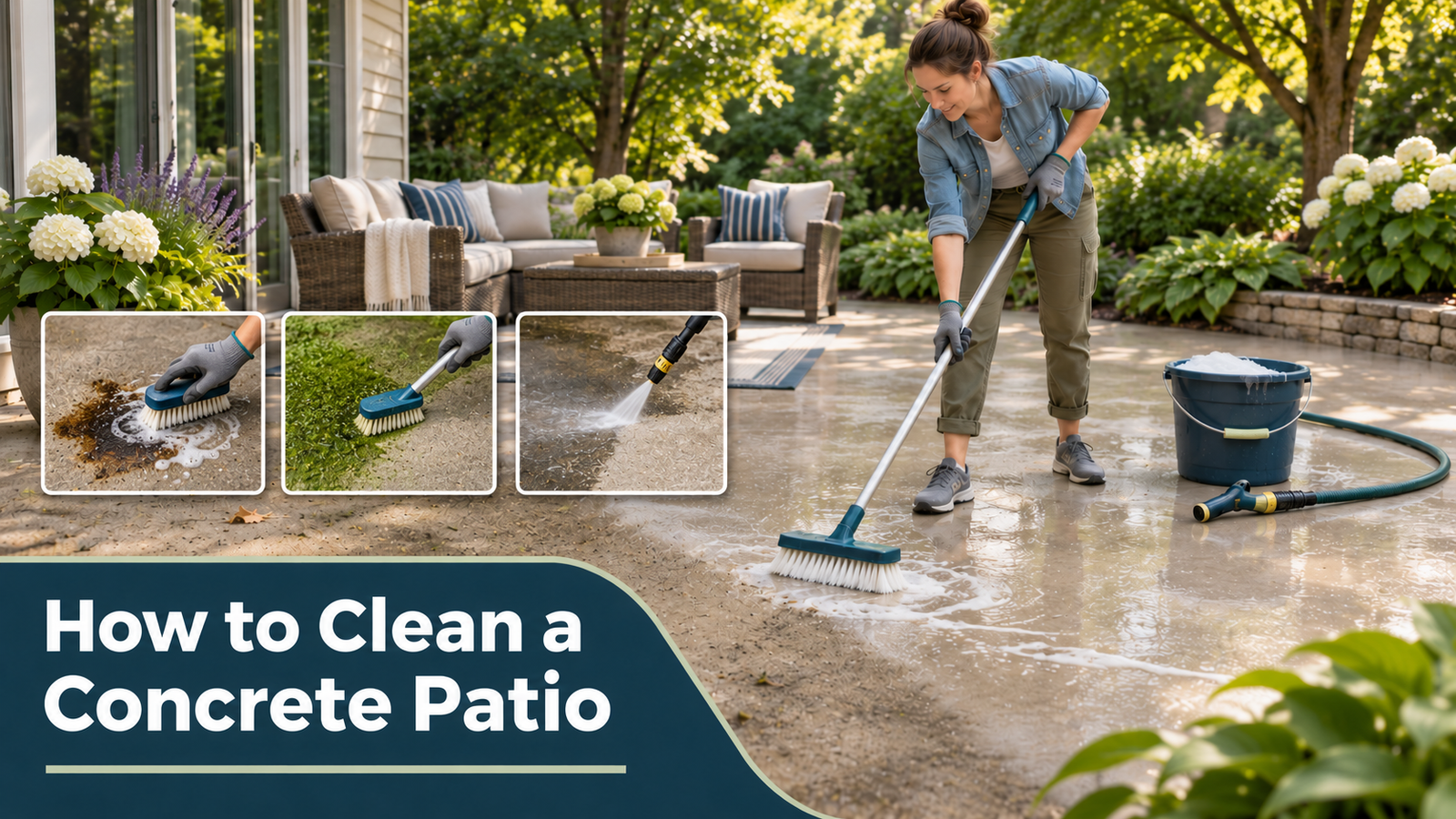
A concrete patio can collect dirt, grease, algae, and stains from everyday use and changing weather. You can often clean it with basic supplies, without expensive equipment or harsh chemicals. The best method depends on the type of mess and the condition of the concrete. This step-by-step guide covers preparation, routine washing, stain removal, pressure-washer safety, and simple upkeep to help your patio look cleaner for longer.
What You’ll Need
Gather your supplies before you start. For ordinary dirt, a hose, bucket, mild dish soap, and stiff nylon brush are usually enough. A push broom clears loose debris, while gloves and eye protection help protect you during cleaning.
Basic cleaning supplies
- Push broom or leaf blower
- Garden hose with a spray nozzle
- Bucket and warm water
- Mild dish soap or a concrete-safe cleaner
- Stiff-bristled nylon brush or deck brush
- Gloves and eye protection
Supplies for specific stains
For oil, algae, or rust, you may need a concrete degreaser, an outdoor cleaner labeled for algae or mildew, or a concrete-safe rust remover. Check the product label to confirm it is suitable for your patio. Avoid wire brushes, which can scratch the surface or leave metal marks.
Prepare the Patio for Cleaning
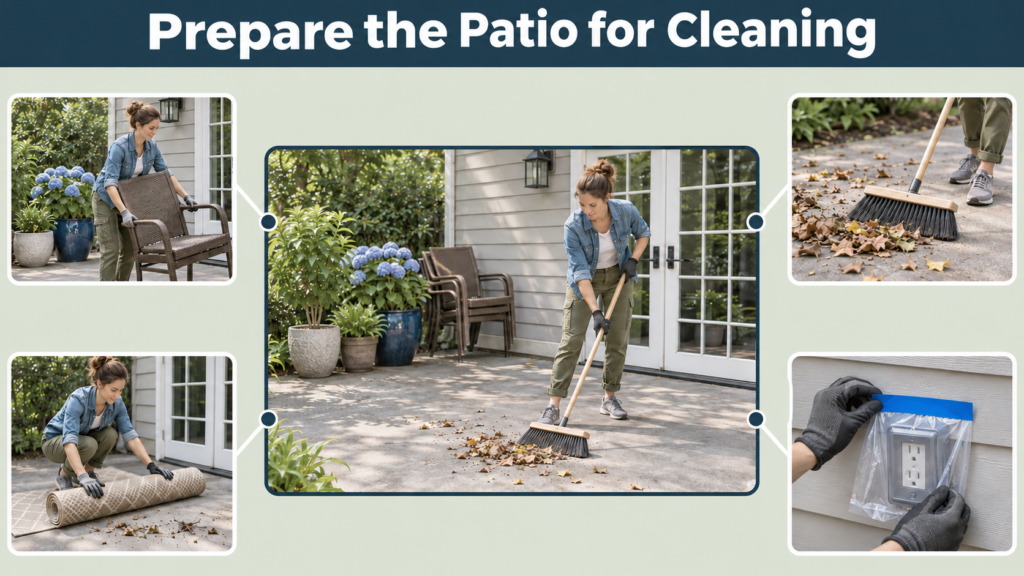
Preparing the area makes cleaning easier and helps prevent dirt from spreading. Move furniture, planters, rugs, and decorations off the patio. Sweep the surface, paying attention to corners and the areas around steps or posts.
Clear the surface
Remove loose leaves, soil, and other debris before adding water. If a mat or planter has left damp debris underneath, lift it carefully and sweep the area. Check for cracks or loose pieces of concrete; use a gentler method around damaged areas.
Protect nearby items
Move delicate plants and objects out of the way. Cover outdoor electrical outlets before rinsing, and keep water away from electrical fixtures. If the patio slopes toward a garden or drain, use cleaners sparingly and manage runoff according to the product label.
Clean Concrete With Soap and Water
For dust, mud, and light grime, start with the mildest method. A mild cleaner is often enough for routine washing, and it gives you more control than strong chemicals or high-pressure equipment.
Wash in small sections
Mix a small amount of dish soap with warm water, or dilute a concrete cleaner according to its label. Wet a manageable section of the patio, spread the solution over it, and scrub with a stiff nylon brush. Work in sections so the cleaner does not dry on the surface.
Rinse each area thoroughly with a garden hose before moving on. If dirt remains, repeat the process rather than immediately using a stronger cleaner. Let the concrete dry before judging the result, because wet concrete can look darker than it is.
Remove Common Concrete Patio Stains
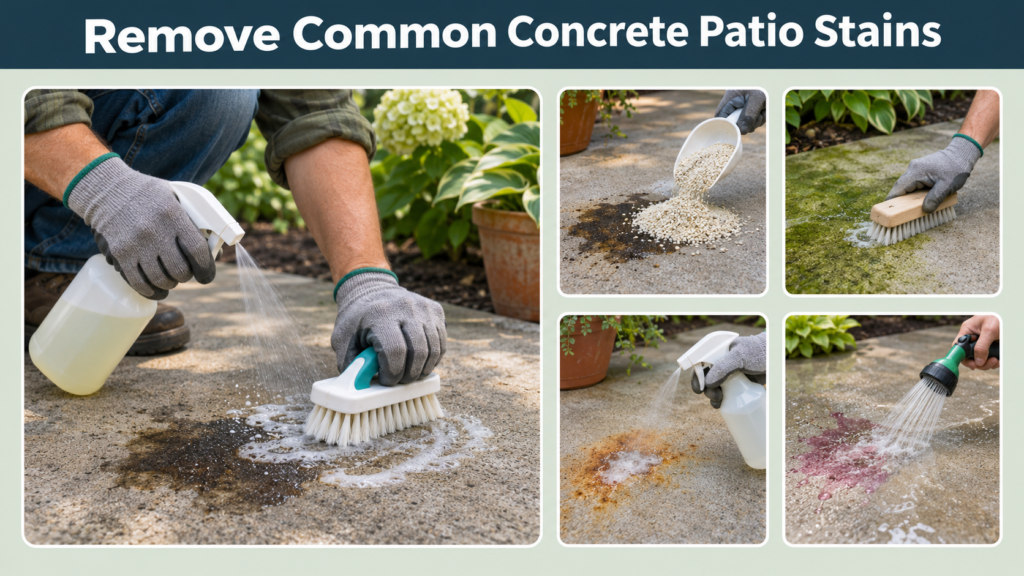
Stains can need different treatments, so handle them individually instead of scrubbing the whole patio harder. Test any cleaning product in a small, inconspicuous area first, and follow its label instructions.
| Stain | First step |
|---|---|
| Oil or grease | Absorb fresh spills, then use a concrete degreaser |
| Algae or mildew | Scrub with an outdoor cleaner labeled for concrete |
| Rust | Apply a concrete-safe rust remover |
| Food or drink | Clean promptly with soap and water |
Oil and grease
For a fresh oil spill, cover it with cat litter or another absorbent material. Let it sit long enough to soak up the liquid, then sweep it into a bag for disposal. Avoid rubbing or scrubbing fresh oil, which can push it deeper into porous concrete.
For residue, apply a concrete degreaser according to its directions. Scrub with a nylon brush and rinse well. Older oil stains may have soaked into the slab and can take several treatments; some may not disappear completely.
Algae and mildew
Shaded, damp areas can develop green or dark growth. Apply an outdoor cleaner labeled for concrete and algae or mildew, then scrub and rinse thoroughly. Keep people and pets away while the product is being used, and follow the label’s directions for rinsing and drying.
To reduce regrowth, clear leaves regularly, trim plants that block airflow, and address standing water where possible. Never mix cleaning products, especially bleach with vinegar, ammonia, or other cleaners.
Rust and food stains
Use a product specifically labeled as safe for concrete to treat rust. Some rust removers contain acids that can damage concrete, so follow the label carefully and rinse the area well.
Clean food, coffee, and drink spills promptly with soap and water. If a mark remains, use a concrete-safe stain remover intended for that type of stain. Avoid scraping with metal tools, which can scratch the slab.
How to Pressure Wash a Concrete Patio
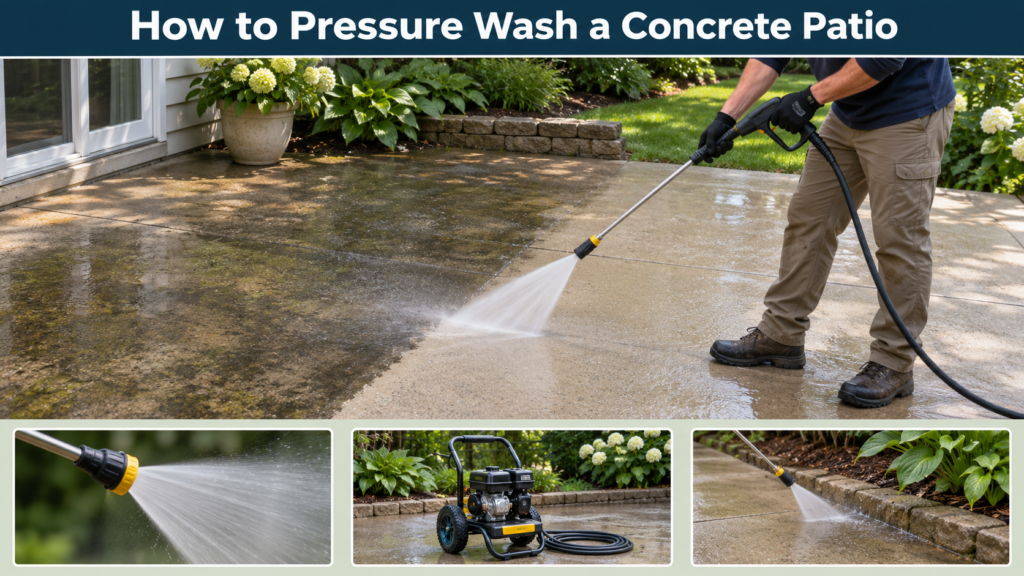
A pressure washer can clean a large patio efficiently, but too much pressure can etch the concrete or damage nearby surfaces. Use the lowest effective pressure, and test an inconspicuous spot before cleaning the full area.
Use a steady, controlled technique
Rinse loose debris first. Hold the nozzle at a consistent distance and use a wide spray pattern. Keep the wand moving in even, overlapping passes instead of concentrating the spray on one spot. This helps reduce streaking and surface damage.
Keep the spray away from doors, windows, plants, and electrical fixtures. If the concrete is old, cracked, or already flaking, or you are unsure which setting to use, clean it with a hose and brush instead.
Clean a Concrete Patio Without a Pressure Washer
You do not need a pressure washer to clean concrete. Sweep the patio, wet it with a hose, apply mild soapy water or a concrete-safe cleaner, and scrub with a nylon brush. Rinse each small area thoroughly as you go.
A long-handled deck brush can make the job easier on a large patio. Give stubborn spots extra attention and repeat the cleaning if needed. The process takes more effort than pressure washing, but it lets you control how much force reaches the surface.
Common Mistakes to Avoid
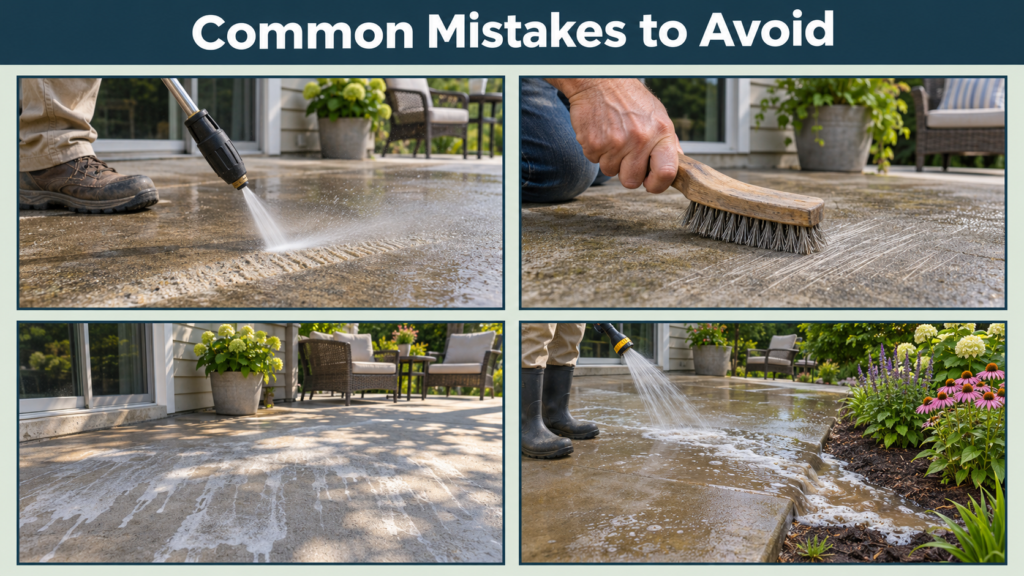
A few common cleaning errors can damage concrete or make stains harder to remove. Use a gentle approach first, and follow the instructions on any product or equipment you use.
- Using excessive pressure: A narrow spray or nozzle held too close can etch the surface.
- Scrubbing with a wire brush: Metal bristles may scratch concrete or leave dark marks.
- Letting cleaner dry: Dried residue can leave streaks and be harder to rinse away.
- Mixing cleaning products: Combining cleaners can create dangerous fumes or reactions.
- Using an untested product: Strong or unsuitable cleaners may discolor or damage concrete.
- Ignoring runoff: Cleaner flowing into plants or drains may cause problems; follow the product label.
How to Keep a Concrete Patio Clean
Regular, light maintenance can reduce the need for deep cleaning. Sweep every week or two, rinse away soil before it gets ground into the surface, and wipe up oil, food, and drink spills promptly.
If you use a grill, place a mat beneath it to catch grease. Move planters occasionally so moisture and debris do not stay trapped underneath. Trim nearby shrubs to improve airflow, and check that water drains away instead of pooling. A concrete sealer may help reduce staining on some patios; choose one made for outdoor concrete and follow its application instructions.
FAQs
What Is the Best Thing to Clean a Concrete Patio With?
For general dirt, use warm water, a small amount of dish soap, and a stiff nylon brush. For oil, rust, or algae, choose a cleaner labeled for that specific stain and safe for concrete. Test it first and follow the product instructions.
Can I Use Vinegar to Clean Concrete?
Vinegar is acidic and may affect concrete, especially with repeated use or on vulnerable surfaces. A mild detergent or concrete-safe cleaner is a safer starting point. Avoid applying acidic products unless they are specifically labeled as suitable for your concrete.
Should I Use Bleach on a Concrete Patio?
Use a bleach-based product only if its label says it is suitable for concrete and the stain you are treating. Follow the directions, protect nearby plants, and never mix bleach with vinegar, ammonia, or another cleaner.
How Often Should I Clean My Concrete Patio?
Sweep regularly and rinse away spills or muddy patches when they appear. A deeper clean once or twice a year is enough for many patios, though shaded or heavily used areas may need more frequent attention.
Will Pressure Washing Damage a Concrete Patio?
It can if the pressure is too high, the nozzle is too close, or the spray stays in one place. Start with a wide spray and a low setting, keep the wand moving, and test a small area first.