
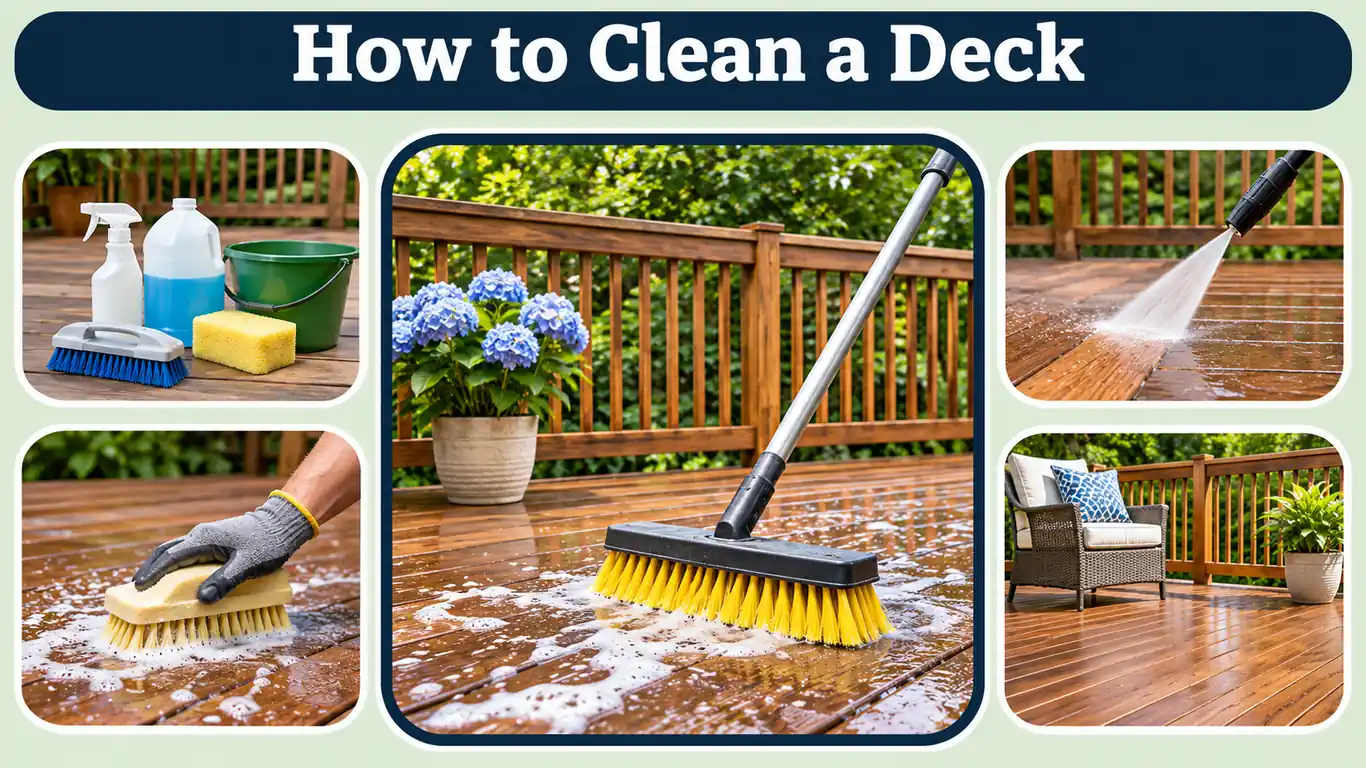
A clean deck makes your outdoor space more attractive, comfortable, and safer for everyday use. Over time, dirt, mold, mildew, algae, and fallen leaves can accumulate on wooden and composite surfaces, making them look dull and slippery. Learning how to clean a deck properly helps remove stubborn stains, protect the surface, and extend its lifespan. Whether your deck is covered in green buildup or simply needs seasonal maintenance, using the right cleaning products and techniques can restore its appearance without damaging the boards.
Why Is Regular Deck Cleaning Important?
Outdoor decks are constantly exposed to changing weather conditions, foot traffic, moisture, and natural debris. Without regular maintenance, dirt and organic material can accumulate between boards and create conditions that encourage algae and mildew growth. Cleaning your deck helps preserve its appearance and reduces potential slipping hazards. It also makes it easier to identify damaged boards and other maintenance problems.
Prevents Mold, Mildew, and Algae Growth
Moisture trapped beneath leaves and furniture creates favorable conditions for mold, mildew, and algae. Regular cleaning removes organic buildup and helps reduce the chances of these problems developing.
Protects the Deck Surface
Dirt, standing water, and accumulated debris can contribute to premature deterioration. Cleaning helps preserve wooden boards and keeps composite decking looking attractive for longer.
Improves Outdoor Safety
Wet algae and accumulated grime can make deck surfaces slippery, especially after rainfall. Removing these contaminants improves traction and creates a more comfortable outdoor environment for family members and guests.
Tools and Materials Needed to Clean a Deck
Before cleaning your deck, gather the necessary equipment and choose products suitable for the decking material. Wooden and composite decks may require different cleaning solutions and techniques, so always check the manufacturer’s recommendations. Using appropriate tools helps remove dirt effectively without scratching the boards or stripping protective coatings. Most basic deck-cleaning projects can be completed with common household supplies.
Essential Deck Cleaning Supplies
- Soft-bristle broom: Removes leaves, dust, and loose debris.
- Deck cleaner: Breaks down dirt, mildew, algae, and surface stains.
- Soft or medium-bristle brush: Helps scrub stubborn areas without damaging the decking.
- Garden hose: Rinses away cleaning products and loosened dirt.
- Bucket: Useful for mixing approved cleaning solutions.
- Protective gloves: Protects your hands when handling cleaning products.
- Safety glasses: Helps prevent splashes from reaching your eyes.
- Plastic sheeting: Protects nearby surfaces when appropriate.
- Pressure washer (optional): Can be used only when the decking manufacturer permits it.
How to Prepare Your Deck Before Cleaning

Preparing the deck properly makes cleaning easier and helps prevent accidental damage to outdoor furniture, plants, and surrounding structures. Start by inspecting the surface and removing objects that could obstruct your work. This preparation also allows you to identify loose fasteners, cracked boards, and areas requiring additional attention. A few simple steps can improve cleaning efficiency and protect your outdoor space.
Step 1: Remove Furniture and Decorations
Move chairs, tables, rugs, planters, and other accessories away from the deck. Clearing the surface gives you enough space to clean every board, including corners and frequently overlooked areas.
Step 2: Sweep Away Loose Debris
Use a soft-bristle broom to remove leaves, twigs, and surface dirt. Pay attention to spaces between deck boards where debris often becomes trapped and holds moisture.
Step 3: Inspect the Deck for Damage
Check for loose screws, protruding nails, splintered wood, and damaged boards before cleaning. Repair serious problems first to avoid injuries or further deterioration during scrubbing.
Step 4: Protect Nearby Plants and Surfaces
Follow your deck cleaner’s instructions for protecting nearby vegetation, siding, and outdoor fixtures. Pre-wet plants when recommended and prevent concentrated cleaner or contaminated runoff from reaching sensitive areas.
How to Clean a Deck: 7 Easy Steps
Cleaning a deck does not require complicated equipment or professional experience. The most important factors are choosing a compatible cleaning solution, working in manageable sections, and rinsing thoroughly. Different deck materials respond differently to chemicals and scrubbing, so use gentle methods whenever possible. Follow these seven practical steps to remove accumulated dirt and restore your deck’s appearance while minimizing surface damage.
Step 1: Choose the Right Deck Cleaner
Select a cleaning product specifically formulated for wooden or composite decking. Avoid harsh household chemicals that may discolor wood, damage protective coatings, or affect surrounding plants.
Step 2: Wet the Deck Surface
Lightly rinse the deck with a garden hose if the cleaning product recommends pre-wetting. This helps loosen surface dirt and can prevent some cleaners from drying too quickly.
Step 3: Apply the Cleaning Solution
Mix and apply the deck cleaner according to its label instructions. Work across small sections to maintain even coverage and prevent the cleaning solution from drying on the surface.
Step 4: Allow the Cleaner to Work
Let the cleaning product remain on the deck for the recommended contact time. This gives it an opportunity to loosen grime, algae, mildew, and other surface contaminants.
Step 5: Scrub the Deck Boards
Use a soft or medium-bristle brush to scrub along the direction of the wood grain. Focus on heavily soiled areas without applying excessive force that could damage the surface.
Step 6: Rinse the Deck Thoroughly
Rinse the deck with clean water until the loosened dirt and cleaning solution are removed. Direct runoff away from sensitive landscaping and follow any disposal guidance provided by the cleaner manufacturer.
Step 7: Allow the Deck to Dry Completely
Let the deck air-dry before replacing furniture or outdoor rugs. Drying may take approximately 24–48 hours for wood, depending on weather conditions, shade, and moisture levels.
How to Clean Different Types of Decking

Not all decks should be cleaned using the same techniques or products. Natural wood, composite boards, and pressure-treated lumber have different surface characteristics and maintenance requirements. Choosing the correct method helps prevent discoloration, scratching, or damage to protective finishes. Before using a new cleaning product, test it on a small, inconspicuous section and follow the decking manufacturer’s recommendations.
How to Clean a Wooden Deck
Use a wood-safe deck cleaner and a suitable soft-bristle brush to remove dirt and mildew. Rinse thoroughly with a garden hose and avoid excessive water pressure that could splinter or roughen the wood.
How to Clean a Composite Deck
Wash composite decking with mild soapy water or a manufacturer-approved cleaner. Use a soft brush to remove debris from textured surfaces, and avoid abrasive tools or chemicals that may damage the protective outer layer.
How to Clean a Pressure-Treated Deck
Pressure-treated wood can usually be cleaned with an exterior wood cleaner designed for treated lumber. Scrub gently, rinse completely, and allow the boards to dry before evaluating whether additional maintenance is necessary.
How to Remove Stubborn Stains From a Deck
Some deck stains require more attention than ordinary surface dirt. Grease, rust, algae, and weather-related discoloration can become difficult to remove when left untreated. Identifying the stain before selecting a cleaning solution helps avoid unnecessary scrubbing and chemical damage. Always use a product compatible with your decking material, and avoid mixing different cleaning chemicals together.
Removing Mold and Mildew
Apply a deck-safe mildew cleaner according to the product instructions. Gently scrub affected areas, rinse thoroughly, and address moisture problems that could cause the growth to return.
Removing Green Algae
Use a cleaner labeled for algae removal on your deck material. Scrub slippery areas carefully and rinse thoroughly to reduce remaining residue.
Removing Grease and Food Stains
Apply a decking-compatible degreaser or mild soap solution to fresh grease stains. Gently scrub the affected boards and rinse before the cleaner dries on the surface.
Removing Rust Stains
Choose a rust remover specifically approved for the decking material. Test a hidden area first, because some acidic rust-removal products can discolor wood or damage composite surfaces.
Common Deck Cleaning Mistakes to Avoid
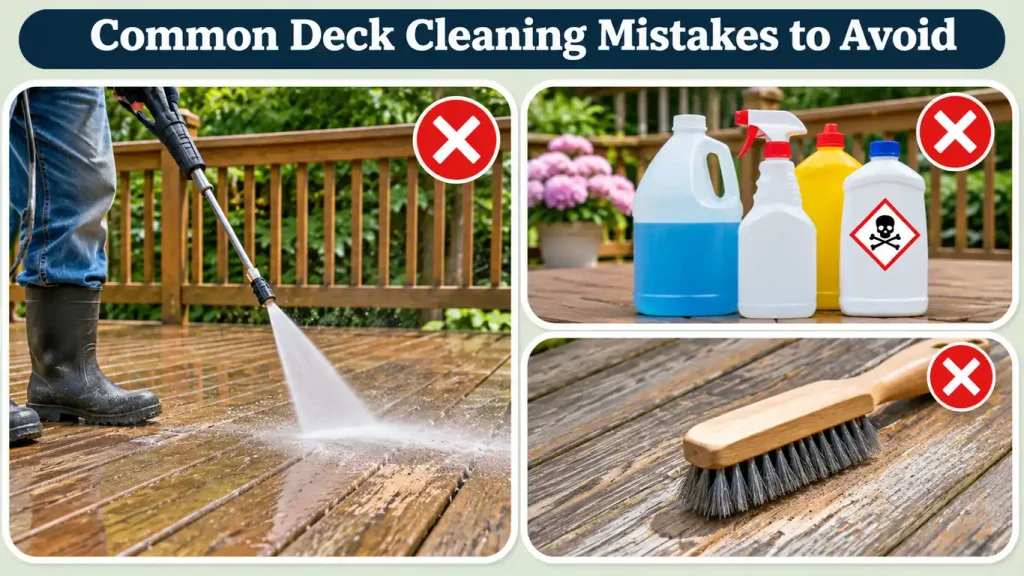
Improper cleaning methods can cause more damage than the dirt you are trying to remove. Excessive pressure, incompatible chemicals, and aggressive scrubbing may strip finishes or damage wood fibers. Understanding these mistakes helps protect your investment and makes future maintenance easier. Following product directions and using the gentlest effective method will generally produce better, more consistent cleaning results.
Using Excessive Pressure
A powerful pressure washer can gouge wooden boards and damage certain composite surfaces. Use a garden hose when possible, and follow the decking manufacturer’s pressure and nozzle recommendations if pressure washing is permitted.
Applying Harsh Cleaning Chemicals
Strong or incompatible chemicals may damage deck finishes and nearby vegetation. Never mix bleach with ammonia, acids, or other cleaners because dangerous fumes can form.
Allowing Cleaner to Dry on the Deck
Cleaning solutions left to dry can cause streaking, discoloration, or residue buildup. Work in smaller sections and rinse within the recommended time.
Scrubbing With Abrasive Tools
Wire brushes and aggressive scrubbing pads can scratch composite boards and roughen wooden surfaces. Use a manufacturer-approved brush instead.
How to Keep Your Deck Clean for Longer
Regular maintenance prevents dirt and organic buildup from becoming difficult to remove. A simple routine of sweeping, inspecting, and washing can help maintain the deck’s appearance throughout the year. Weather conditions, surrounding trees, and outdoor usage influence how frequently cleaning is necessary. Taking preventive measures also reduces the amount of work required during major seasonal cleaning projects.
Sweep the Deck Regularly
Remove fallen leaves, soil, and debris before they trap moisture against the boards. Pay extra attention to shaded corners and areas beneath outdoor furniture.
Clean Spills Immediately
Wipe up food, drinks, grease, and other spills as soon as possible. Prompt cleaning helps prevent stains from penetrating porous wood or settling into textured composite surfaces.
Schedule Seasonal Cleaning
Deep-clean the deck when needed, often once or twice annually. Increase cleaning frequency in damp or shaded locations where algae and mildew develop quickly.
FAQs
1. What is the best way to clean a wooden deck?
The best method is to sweep away debris, apply a wood-safe deck cleaner, scrub gently with an appropriate brush, and rinse thoroughly. Avoid excessive pressure and allow the wood to dry completely before replacing furniture.
2. Can I clean my deck without a pressure washer?
Yes, most routine deck cleaning can be completed using a garden hose, deck cleaner, and soft-bristle brush. This approach is often gentler on wood and composite surfaces while still effectively removing everyday dirt and buildup.
3. How often should I clean my deck?
Most outdoor decks benefit from thorough cleaning once or twice per year. However, shaded decks or surfaces exposed to frequent rainfall, falling leaves, and heavy foot traffic may need more frequent maintenance.
4. Can I use vinegar to clean a wood deck?
Diluted vinegar may remove some light surface residue, but it is not suitable for every wood finish or composite product. A manufacturer-approved deck cleaner is generally more reliable for removing stubborn grime without causing unwanted discoloration.
5. How long should a deck dry after cleaning?
Wooden decks often require approximately 24–48 hours to dry after washing, depending on temperature, humidity, and airflow. If you plan to stain or seal the deck, confirm that the wood meets the coating manufacturer’s moisture requirements.