
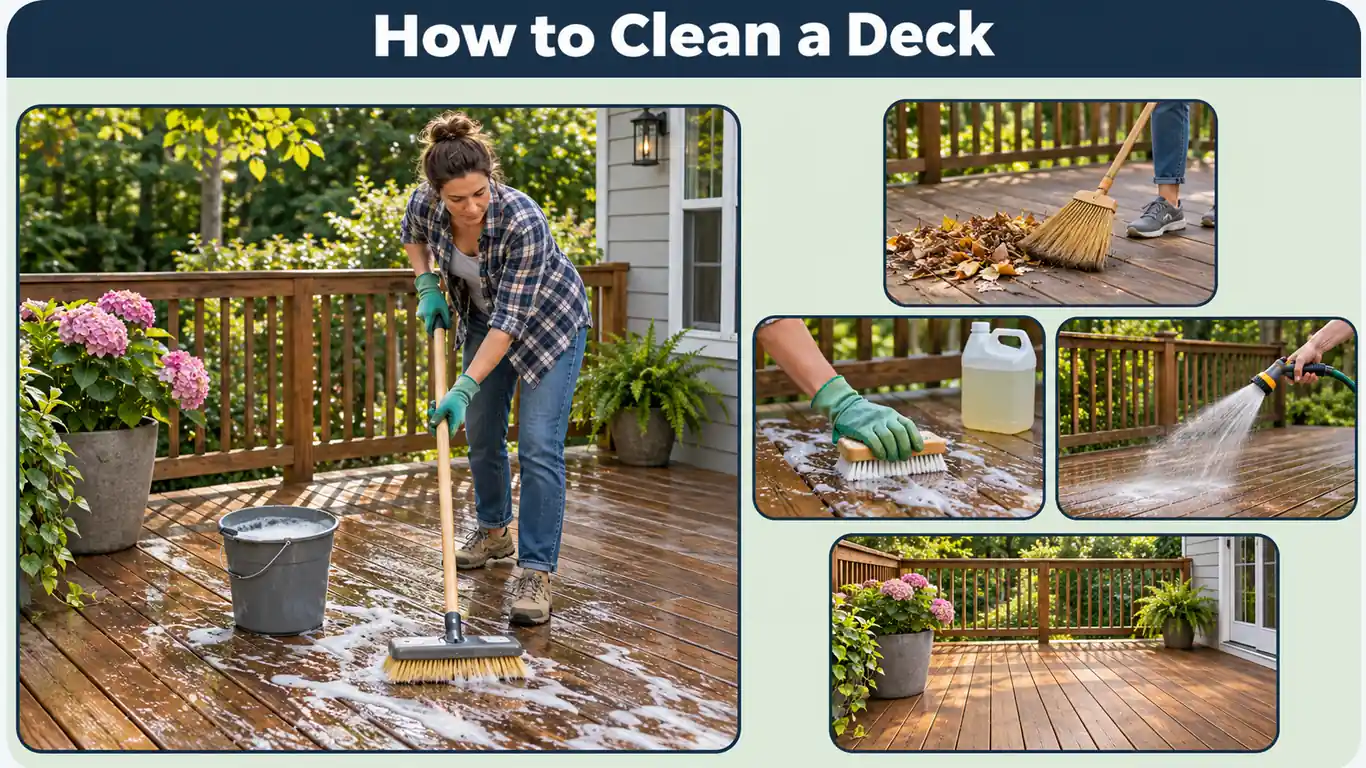
A clean deck makes your outdoor living space more attractive, comfortable, and safe for everyday use. However, dirt, algae, mildew, and weather stains can gradually damage its appearance and make the surface slippery. Learning how to clean a deck properly helps maintain wood, composite, and PVC decking without causing unnecessary damage. Whether you’re preparing for summer gatherings or performing regular maintenance, using the right cleaning products and techniques can make a noticeable difference. This guide explains simple steps for cleaning your deck and keeping it looking fresh throughout the year.
7 Easy Steps to Clean a Deck Properly
Cleaning a deck doesn’t require expensive equipment or professional experience. With the right supplies and a systematic approach, you can remove accumulated dirt, stains, and organic growth while protecting the decking material. The following seven steps cover everything from preparing your outdoor space to rinsing and drying the surface, helping you achieve a cleaner deck without unnecessary scrubbing or damage.
Step 1: Remove Furniture and Clear the Deck
Start by removing outdoor furniture, flowerpots, rugs, grills, and decorative items from your deck. Clearing the area provides enough working space to clean every corner without leaving dirt trapped underneath heavy objects.
Inspect the surface for loose screws, protruding nails, damaged boards, or splinters before cleaning. Repair any obvious hazards and cover nearby electrical outlets or fixtures to prevent accidental water exposure.
Step 2: Sweep Away Dirt and Debris
Use a stiff outdoor broom or a soft-bristle brush to remove leaves, dust, soil, and other loose debris. Pay special attention to corners, railings, and spaces between decking boards where organic material commonly accumulates.
For narrow gaps, use a plastic scraper or a suitable deck-cleaning tool to loosen trapped debris without damaging the boards. Regular sweeping also improves drainage and reduces moisture buildup that encourages algae and mildew.
Step 3: Choose the Right Deck Cleaning Solution
Selecting the correct cleaning solution is essential because different decking materials require different treatments. A mild detergent mixed with warm water works well for routine cleaning on many surfaces, although you should always follow the decking manufacturer’s recommendations.
For stubborn dirt or organic stains, choose a deck cleaner labeled for your specific material. Avoid mixing cleaning chemicals or using concentrated chlorine bleach, which can discolor surfaces and damage nearby plants or metal fixtures.
Step 4: Apply the Cleaning Solution Evenly
Lightly wet the deck with clean water if the cleaning product instructions recommend doing so. Apply the solution using a garden sprayer, soft brush, or mop, working in small sections to maintain consistent coverage.
Allow the cleaner to remain on the surface for the recommended contact time without letting it dry. Follow all label instructions and protect surrounding plants from chemical runoff.
Step 5: Scrub the Deck Surface Gently
Use a suitable deck brush to scrub away dirt, stains, and slippery buildup. For wooden decking, scrub along the direction of the grain to reduce scratching and help lift embedded dirt.
Composite decking generally requires a soft-bristle brush to protect its surface finish. Apply moderate pressure rather than aggressive scrubbing, especially around older boards, painted surfaces, or damaged areas.
Step 6: Rinse the Deck Thoroughly
Rinse the deck using a garden hose fitted with a spray nozzle, removing loosened dirt and cleaning solution from the boards. Work systematically so residue doesn’t settle onto areas you’ve already cleaned.
A pressure washer may be suitable for some decking materials, but excessive pressure can splinter wood or damage composite surfaces. Only use pressure washing when permitted by the manufacturer, following its recommended pressure and nozzle settings.
Step 7: Allow the Deck to Dry Completely
After rinsing, allow the deck to air-dry before replacing outdoor furniture or decorations. Drying time varies depending on temperature, humidity, sunlight, and the decking material.
Check for standing water around corners and between boards, and ensure drainage areas remain clear. If you plan to apply a stain or sealer, follow the coating manufacturer’s moisture and drying requirements before beginning.
How to Clean Different Types of Decking
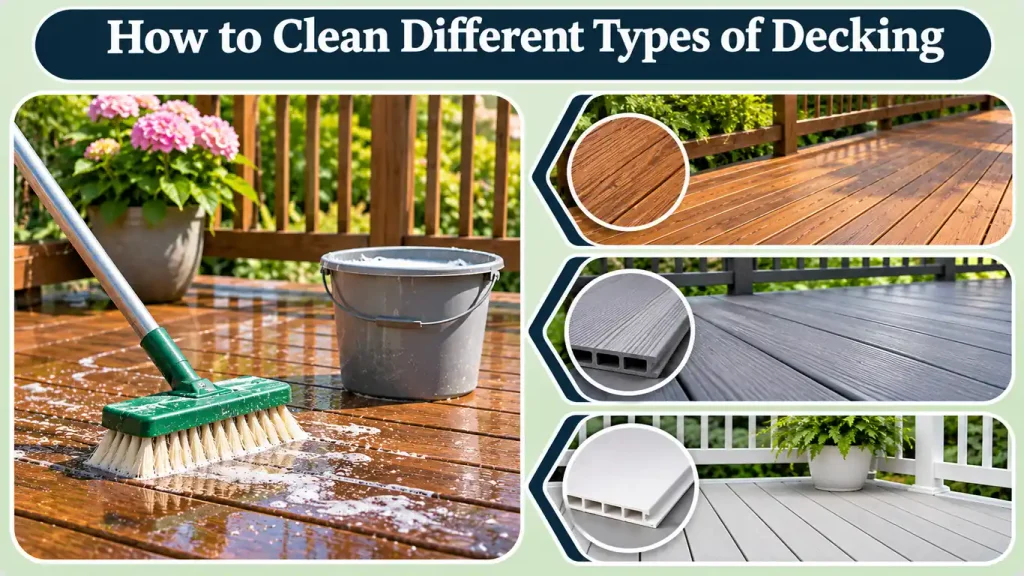
Not every deck should be cleaned using the same products or techniques. Natural wood is more vulnerable to splintering and moisture damage, while composite and PVC decking have specific surface-care requirements. Understanding these differences helps you choose a cleaning method that removes dirt effectively while preserving the material’s appearance, protective finish, and long-term durability.
How to Clean a Wooden Deck
Wooden decks commonly accumulate dirt, mildew, pollen, and weather-related discoloration. Begin with sweeping, then apply a wood-safe deck cleaner according to its instructions and gently scrub along the grain.
For pressure-treated lumber, cedar, or redwood, avoid abrasive tools and excessively strong cleaning solutions. If the surface remains unevenly discolored after cleaning, consider using an appropriate wood brightener or refinishing product before applying a protective coating.
How to Clean a Composite Deck
Composite decking typically requires less maintenance than natural wood, but regular cleaning is still important. Use a soft-bristle brush, warm water, and a manufacturer-approved cleaner to remove surface dirt and common household stains.
Avoid wire brushes, harsh solvents, and abrasive cleaning pads that may damage the protective cap. For food spills or grease stains, clean promptly using a product recommended for the specific composite brand.
How to Clean a PVC Deck
PVC decking resists moisture and does not absorb water like natural wood, making routine maintenance relatively simple. Sweep the surface, wash it with a suitable mild cleaning solution, and rinse thoroughly.
Avoid abrasive tools and incompatible chemical cleaners that could dull or discolor the finish. Some PVC decking products have special coating requirements, so check the manufacturer’s care instructions before treating persistent stains.
How to Remove Mold, Mildew, and Algae From a Deck
Mold, mildew, and algae often develop on decking exposed to shade, humidity, and standing moisture. These growths may create dark patches, green discoloration, and slippery walking surfaces. Removing them safely requires appropriate cleaning products and moisture control, rather than aggressive scraping. Regular inspections and improved drainage can also help prevent organic growth from returning after cleaning.
Remove Green Algae From Deck Boards
Green algae commonly grows in shaded areas where moisture remains trapped for extended periods. Apply an algae-removing product approved for your decking material and allow it to work according to the manufacturer’s instructions.
Gently scrub the affected surface and rinse thoroughly while controlling runoff. After cleaning, trim nearby vegetation where appropriate and improve airflow to help the boards dry faster.
Clean Mold and Mildew Stains
Mold and mildew can leave black, gray, or brown spots, particularly on wooden decking. Use a suitable deck-cleaning product designed to treat organic growth, following the label’s application and safety instructions.
Wear protective gloves and avoid breathing in spray mist or disturbing heavy growth with dry brushing. If decay, widespread contamination, or persistent dampness is present, investigate the moisture problem and consider professional help.
How to Clean a Deck Without a Pressure Washer
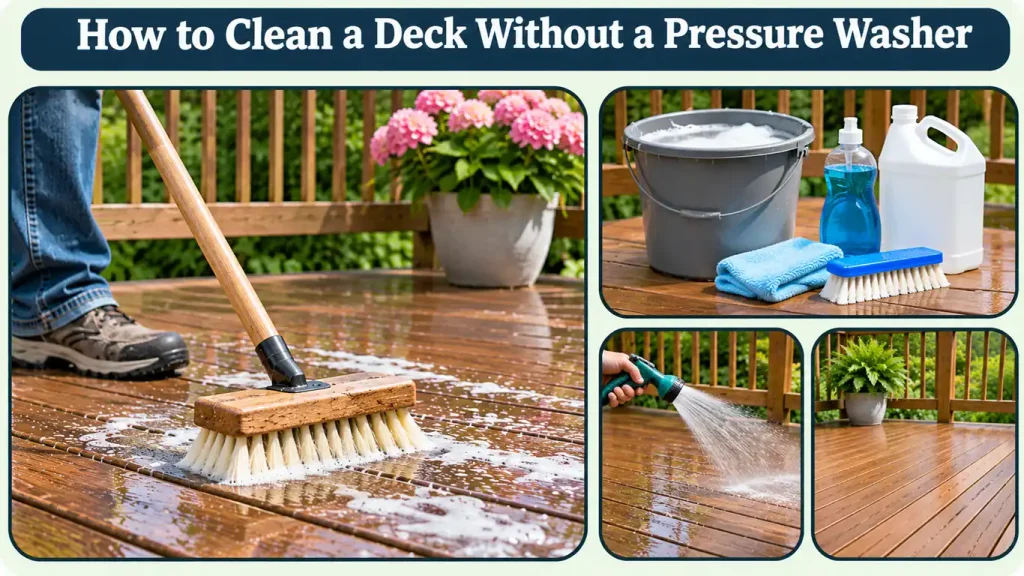
A pressure washer isn’t necessary for most routine deck-cleaning projects. Manual cleaning with a broom, garden hose, suitable detergent, and deck brush can remove common dirt without exposing boards to concentrated water pressure. This approach is particularly useful for aging wooden decks, delicate finishes, and homeowners who want an affordable method that requires minimal equipment.
Materials You’ll Need
- Outdoor broom for removing dust and leaves.
- Soft-bristle deck brush for washing boards.
- Bucket for preparing the cleaning mixture.
- Garden hose with an adjustable spray nozzle.
- Deck-safe cleaning solution appropriate for the material.
- Protective gloves and non-slip footwear.
Manual Cleaning Method
Begin by sweeping the deck thoroughly and preparing the cleaning solution according to the product label. Apply the cleaner in manageable sections, gently scrub affected areas, and rinse each section with clean water.
For stubborn spots, repeat the manufacturer-approved cleaning process rather than increasing scrubbing pressure excessively. Allow the surface to dry and inspect any remaining stains before deciding whether additional treatment is necessary.
Best Time and Weather Conditions for Deck Cleaning
Weather conditions affect how effectively cleaning products work and how quickly decking dries afterward. Very hot temperatures can cause cleaning solutions to evaporate too quickly, while heavy rain may dilute treatments and interfere with rinsing. Choosing suitable weather makes the process easier and helps produce more consistent results, especially when cleaning a large outdoor deck.
Choose a Mild, Dry Day
A mild, overcast day is generally ideal for cleaning a deck because solutions are less likely to dry prematurely. Avoid washing during thunderstorms, freezing conditions, or periods of strong wind.
Check the cleaning product’s recommended temperature range and allow sufficient drying time afterward. If you’re planning to stain or seal the deck, choose a period that meets the coating manufacturer’s weather requirements.
How Often Should You Clean Your Deck?
Most decks benefit from regular sweeping and a more thorough wash approximately once or twice a year. However, shaded locations, heavy tree cover, and frequent outdoor use may require more cleaning.
Inspect the surface after rainy periods and remove slippery buildup promptly. Maintaining consistent cleaning habits reduces the amount of stubborn dirt that accumulates over time.
Common Deck Cleaning Mistakes to Avoid
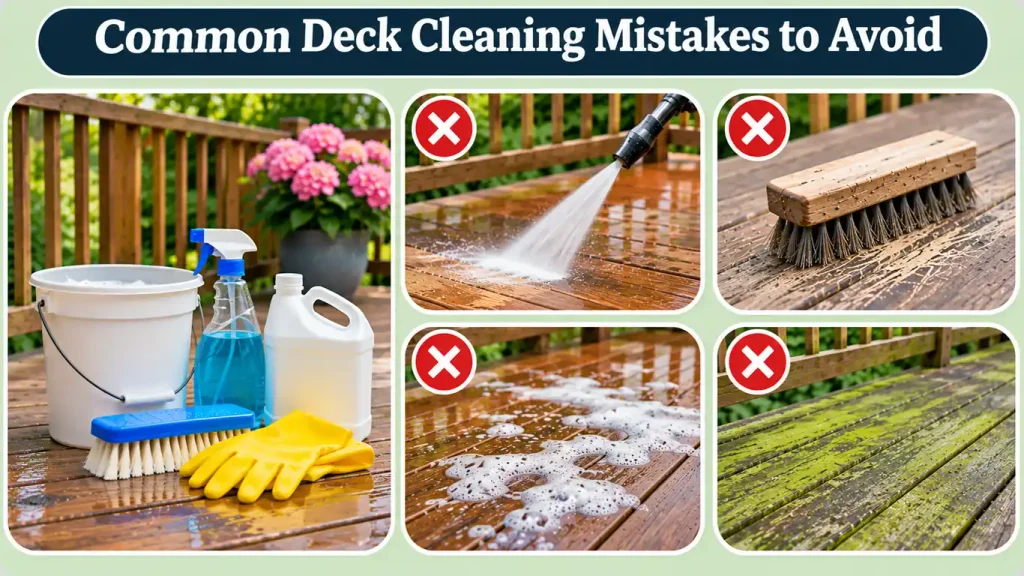
Even a simple cleaning project can damage decking when unsuitable chemicals or techniques are used. Excessive water pressure, aggressive scrubbing, and improper rinsing may shorten the lifespan of protective finishes or leave permanent surface marks. Understanding common mistakes helps you clean more confidently while reducing unnecessary repair costs and maintaining a safer outdoor environment.
- Using excessive pressure: High-pressure washing can splinter wooden boards and damage composite finishes.
- Applying harsh chemicals: Incompatible cleaners can cause discoloration, corrosion, or surface deterioration.
- Ignoring manufacturer instructions: Decking materials and protective coatings often have different care requirements.
- Allowing cleaner to dry: Dried cleaning solution may leave residue or uneven discoloration.
- Forgetting nearby plants: Chemical runoff can harm grass, flowers, and landscaping.
- Replacing furniture too early: Trapped moisture beneath rugs and furniture may encourage staining and organic growth.
Tips to Keep Your Deck Clean for Longer
Keeping a deck clean is easier when maintenance becomes part of your regular outdoor routine. Small preventive measures can reduce dirt accumulation, improve surface drainage, and minimize recurring algae or mildew growth. By protecting the decking from prolonged moisture and promptly addressing spills, you can maintain a more attractive outdoor space between major cleaning sessions.
Maintain Regular Cleaning Habits
Sweep your deck every week or two when leaves, pollen, or dirt are accumulating. Remove spilled food, grease, and beverages promptly to reduce staining, especially on composite surfaces.
Move outdoor planters occasionally and check beneath rugs for trapped moisture. Keep spaces between boards clear so rainwater can drain properly.
Protect the Deck Surface
Inspect wooden decking for worn finishes, loose fasteners, and signs of deterioration. Apply a suitable stain or water-repellent sealer when needed, following the product’s surface preparation and application requirements.
Keep furniture feet clean and use compatible protective pads where necessary. Maintaining nearby gutters and controlling dripping water can also reduce the amount of moisture reaching the deck.
FAQs
1. What is the easiest way to clean a deck?
The easiest method is to sweep away debris, apply a suitable deck-safe cleaner, gently scrub with a brush, and rinse using a garden hose. This approach works for routine maintenance on many wooden, composite, and PVC decks.
2. Can I clean my deck with dish soap?
Mild dish soap may be suitable for certain types of decking, but it isn’t recommended for every surface or finish. Check the manufacturer’s cleaning instructions first and rinse thoroughly to prevent slippery soap residue.
3. Is it better to pressure wash or scrub a deck?
Gentle scrubbing is usually the safer choice, particularly for older wood or delicate finishes. Pressure washing can clean large areas efficiently, but it should only be used when your decking manufacturer permits it.
4. How long should a deck dry after cleaning?
Drying time depends on weather, ventilation, and decking material. A surface may dry within several hours, while damp wood can take considerably longer. Always verify the required dryness before sealing or staining.
5. How do I clean a very dirty wooden deck?
Start by removing debris and applying a wood-safe deck cleaner designed for heavy dirt or organic stains. Scrub gently, rinse completely, and repeat approved treatments when necessary. Inspect the wood for damage before applying protective finishes.