
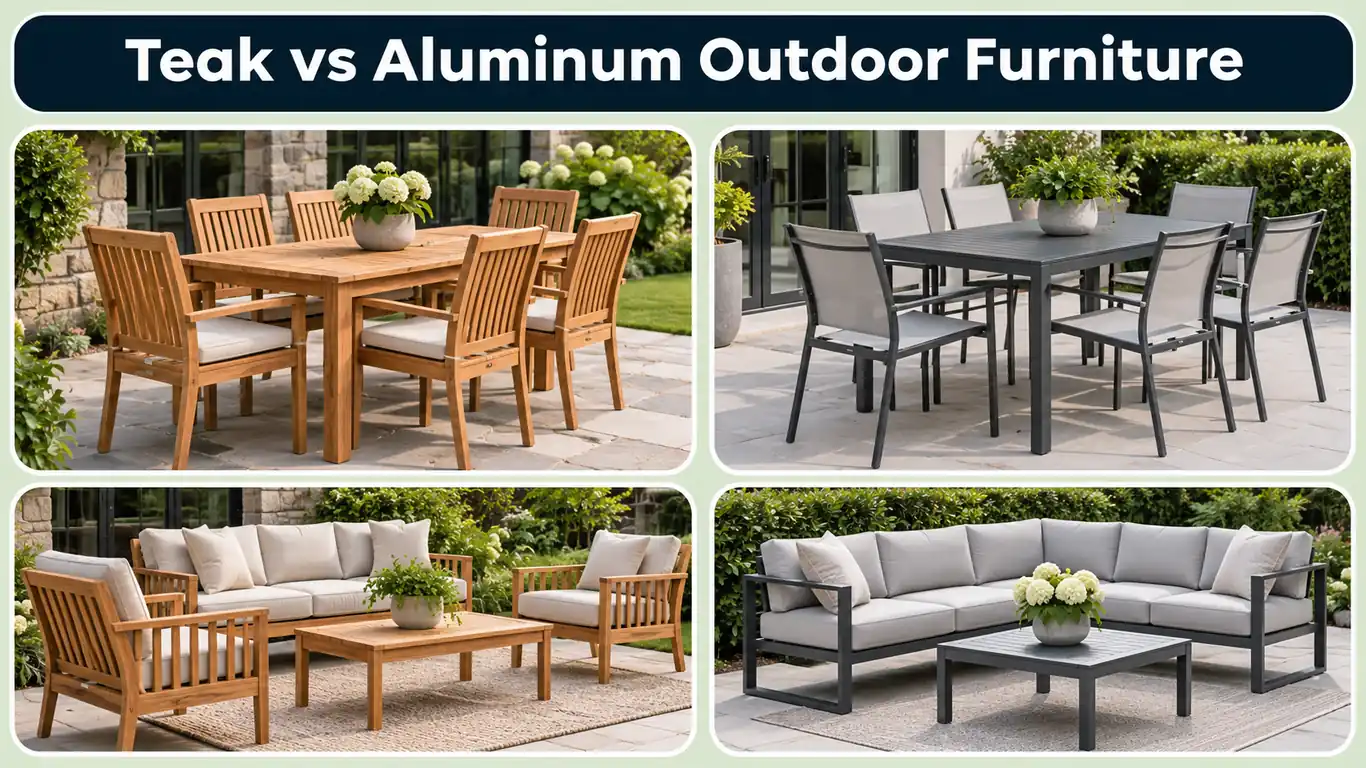
Choosing the right patio furniture can improve your outdoor space’s comfort, appearance, and long-term durability. When comparing teak vs aluminum outdoor furniture, both materials offer excellent benefits, but they differ in maintenance, weather resistance, weight, cost, and style. Teak provides natural warmth, exceptional durability, and a timeless wooden appearance, while aluminum offers lightweight construction, modern designs, and easy maintenance. Understanding these differences helps homeowners select furniture that suits their climate, budget, and lifestyle. This guide compares both materials to help you make the best decision.
Teak vs Aluminum Outdoor Furniture: Key Differences
Teak and aluminum are popular choices for patios, decks, gardens, and outdoor dining areas. Although both materials can withstand outdoor conditions, their characteristics are considerably different. Teak is a dense hardwood containing natural oils, while aluminum is a lightweight metal commonly protected with a powder-coated finish. Comparing their main features helps determine which material better suits your outdoor living needs.
| Feature | Teak Furniture | Aluminum Furniture |
| Material | Natural hardwood | Lightweight metal |
| Durability | Excellent | Excellent |
| Weather resistance | Naturally weather-resistant | Naturally rust-resistant |
| Maintenance | Moderate for preserving color | Low |
| Weight | Relatively heavy | Lightweight |
| Appearance | Warm and natural | Modern and versatile |
| Initial cost | Usually expensive | Budget to premium |
| Lifespan | Often several decades | Often 10–20+ years |
| Portability | Harder to move | Easy to rearrange |
| Best for | Classic, luxury patios | Modern, low-maintenance spaces |
What Is Teak Outdoor Furniture?
Teak outdoor furniture is manufactured from teak hardwood, valued for its strength, natural oils, and resistance to moisture and decay. Its attractive golden-brown color makes it a popular option for traditional gardens, luxury patios, and outdoor dining spaces.
Over time, untreated teak develops a silver-gray patina without necessarily losing its structural durability. High-quality teak furniture can last for decades when properly constructed and maintained.
What Is Aluminum Outdoor Furniture?
Aluminum outdoor furniture is made from lightweight, corrosion-resistant metal, often finished with a protective powder coating. It is available in numerous colors, shapes, and styles, making it suitable for modern patios and contemporary outdoor spaces.
Unlike iron or untreated steel, aluminum does not develop red rust. Its lightweight construction and minimal maintenance requirements make it especially practical for homeowners who frequently rearrange their outdoor seating.
1. Durability and Lifespan: Teak vs Aluminum Furniture
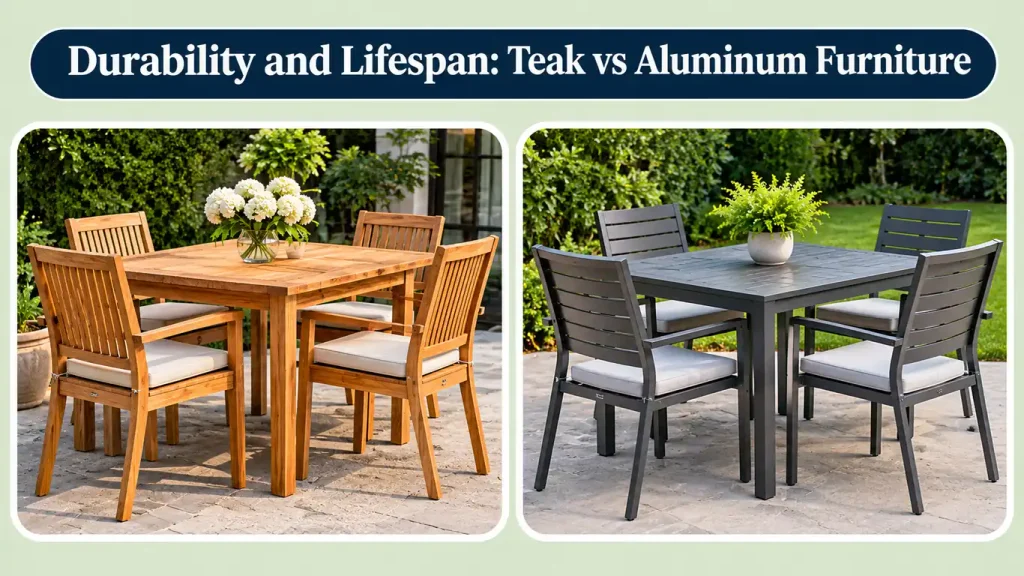
Durability is one of the most important considerations when investing in outdoor furniture. Both teak and aluminum perform well outdoors, but their longevity depends on material quality, construction, environmental exposure, and maintenance. Teak is especially valued for its natural resistance to deterioration, while aluminum provides excellent corrosion resistance without the weight associated with many other metals.
Teak Furniture Durability
Quality teak contains natural oils and has a dense structure that helps resist moisture, insects, and decay. Well-built teak tables, benches, and chairs can remain functional for several decades, especially when their joints and hardware are maintained.
However, repeated exposure to moisture may encourage surface mildew, and prolonged sunlight gradually changes its color. Regular cleaning helps preserve its appearance and prevent surface buildup.
Aluminum Furniture Durability
Aluminum furniture resists corrosion and generally performs well in rainy or humid environments. High-quality powder-coated aluminum can provide many years of reliable service, although its coating may eventually wear, chip, or fade.
Thin aluminum frames can bend under excessive pressure, while poorly constructed joints may loosen. Choosing reinforced frames and quality hardware significantly improves durability.
2. Weather Resistance: Which Material Performs Better?
Outdoor furniture faces constant exposure to sunlight, rain, humidity, wind, and temperature changes. Weather resistance is therefore essential for maintaining both appearance and structural performance. Teak and aluminum have different strengths in these conditions. Understanding how each responds to moisture, heat, and strong winds will help you choose furniture suitable for your local climate.
Teak Furniture in Rain and Humidity
Teak’s natural oils help protect it against moisture absorption and decay, making it suitable for humid environments and frequently wet patios. Its density also provides stability in exposed outdoor areas.
However, dirt and trapped moisture can encourage mildew on the surface. Cleaning the furniture and allowing adequate airflow help maintain its condition.
Aluminum Furniture in Sun and Rain
Aluminum naturally forms a protective oxide layer that helps prevent corrosion, making it suitable for rainy climates. Powder-coated aluminum also provides additional surface protection and a wide selection of finishes.
Dark-colored frames may become hot under direct sunlight, and coatings can deteriorate with prolonged exposure. In coastal environments, regular freshwater rinsing helps remove salt deposits and protect finishes and hardware.
Which Is Better for Windy Areas?
Teak furniture is generally heavier, making it less likely to shift during ordinary windy conditions. Its substantial construction is advantageous for open decks and exposed backyard patios.
Lightweight aluminum chairs and tables are easier to move but may be displaced by strong winds. Heavy-duty frames, furniture anchors, or secure storage can reduce this problem.
3. Maintenance and Cleaning Requirements

Maintenance plays an important role in determining whether outdoor furniture remains attractive and functional over time. Homeowners who prefer minimal upkeep often favor aluminum, while those who appreciate natural wood may choose teak despite its additional care requirements. Fortunately, both materials can remain in excellent condition with simple cleaning routines and appropriate seasonal protection.
How to Maintain Teak Outdoor Furniture
Teak does not require constant sealing to remain durable, but occasional maintenance helps preserve its appearance. Follow these practical care tips:
- Clean regularly: Use mild soap, water, and a soft brush to remove dirt.
- Preserve the golden color: Apply a suitable teak protector when recommended by the manufacturer.
- Avoid harsh chemicals: Strong cleaners can damage or discolor the wood.
- Remove mildew: Clean affected surfaces promptly using a wood-safe product.
- Use breathable covers: Protect furniture while allowing trapped moisture to escape.
Allow teak furniture to dry properly after cleaning. Avoid aggressive pressure washing because it can damage the wood’s surface.
How to Maintain Aluminum Outdoor Furniture
Aluminum requires relatively little maintenance compared with natural wood. Basic cleaning and occasional inspections generally keep it looking attractive.
- Wash with mild soap: Remove dust, pollen, and outdoor debris.
- Rinse thoroughly: Prevent cleaner residue and dirt buildup.
- Inspect the coating: Check for scratches, chips, or damaged areas.
- Protect the finish: Avoid abrasive brushes and strong chemicals.
- Check connections: Tighten loose screws and inspect moving parts.
Use furniture covers or store aluminum pieces during severe weather when practical. This helps preserve the finish and extend their usable life.
4. Comfort, Weight, and Outdoor Furniture Design
Comfort and appearance are just as important as durability when creating an inviting outdoor living space. Teak offers a substantial wooden feel, while aluminum supports lightweight frames and diverse contemporary designs. Seating proportions, cushions, construction quality, and surface temperature also affect everyday comfort. Comparing these characteristics helps you create a patio that is both functional and attractive.
Comfort and Seating Experience
Teak generally provides a solid, stable seating experience, and its natural wood surface can feel comfortable without cushions. However, cushions may still improve support during extended use.
Aluminum seating frequently incorporates fabric slings, mesh, or removable cushions for comfort. Bare metal may feel particularly hot in direct sunlight or cold during cooler weather.
Weight and Portability
Aluminum furniture is ideal for homeowners who rearrange their patio frequently. Lightweight chairs and tables are easy to carry, stack, or relocate for gatherings.
Teak is heavier and better suited to more permanent furniture arrangements. Its weight contributes to stability but makes moving large dining sets more difficult.
Style and Visual Appeal
Teak complements rustic gardens, traditional homes, coastal patios, and luxury outdoor spaces. Its natural grain and warm tones create an inviting appearance that develops character over time.
Aluminum suits minimalist, industrial, and contemporary outdoor designs. Powder-coated finishes offer flexibility, including black, white, bronze, gray, and other decorative colors.
5. Cost and Long-Term Value of Teak vs Aluminum
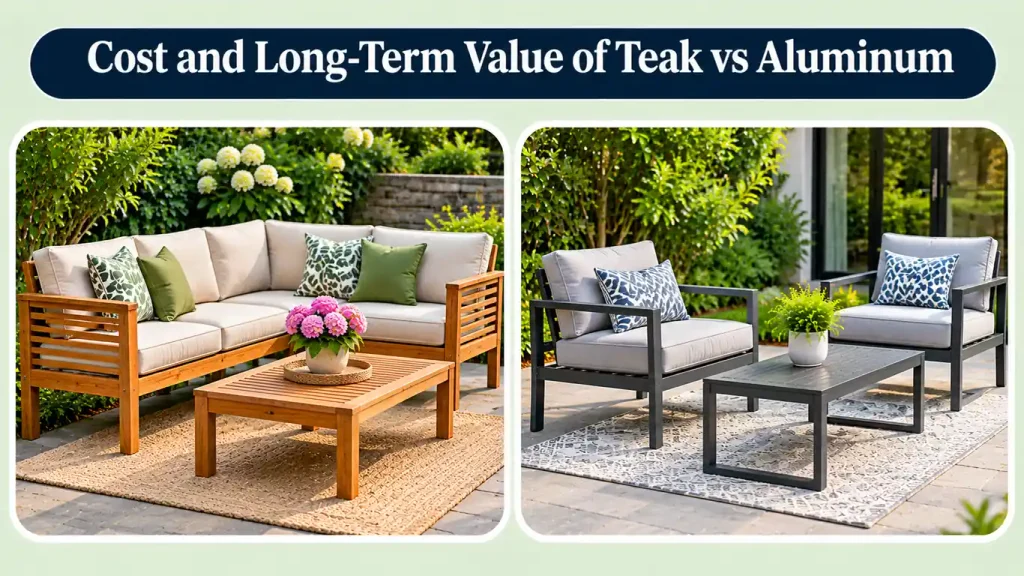
The initial purchase price can vary significantly between teak and aluminum outdoor furniture. Teak generally requires a larger investment because quality hardwood is expensive and craftsmanship can be labor-intensive. Aluminum is available across a broader range of budgets, from affordable lightweight sets to premium designer collections. Evaluating lifetime costs helps homeowners make a more practical decision.
Initial Purchase Cost
Teak outdoor furniture is usually more expensive than standard aluminum furniture. Premium plantation-grown teak, thicker wood components, and carefully constructed joints contribute to its higher price.
Aluminum offers more affordable entry-level options, particularly for compact dining sets and individual patio chairs. However, premium cast-aluminum and designer collections can cost as much as high-end wooden furniture.
Long-Term Investment
Teak’s potential lifespan makes it attractive for homeowners planning to keep their furniture for decades. Its timeless appearance may also remain desirable as outdoor design trends change.
Aluminum provides excellent value through easy cleaning, low maintenance, and convenient replacement options. High-quality models can deliver long-term performance without extensive care.
6. Pros and Cons of Teak and Aluminum Outdoor Furniture
Every outdoor furniture material has advantages and limitations that influence its suitability for specific spaces. Teak offers a premium natural appearance and substantial durability, while aluminum emphasizes convenience, design flexibility, and corrosion resistance. Reviewing their strengths and weaknesses helps homeowners avoid unnecessary expenses and choose furniture that fits their daily requirements.
Advantages and Disadvantages of Teak Furniture
Pros:
- Naturally resistant to moisture, insects, and decay.
- Can last several decades with proper care.
- Attractive natural wood grain and warm color.
- Heavy construction provides good stability.
- Complements traditional and luxury outdoor designs.
Cons:
- Higher initial purchase price.
- Heavy furniture can be difficult to move.
- Golden color fades without cosmetic maintenance.
- Surface mildew and dirt require periodic cleaning.
Advantages and Disadvantages of Aluminum Furniture
Pros:
- Lightweight and easy to rearrange.
- Naturally resistant to red rust.
- Requires minimal regular maintenance.
- Available in numerous styles and finishes.
- Offered across a wide range of budgets.
Cons:
- Lightweight models may move in strong winds.
- Thin frames can bend under excessive loads.
- Dark metal surfaces may become hot in sunlight.
- Powder-coated finishes can chip or scratch.
7. Which Is Better: Teak or Aluminum Outdoor Furniture?
The better choice depends on how you use your outdoor space, the conditions your furniture faces, and the amount of maintenance you prefer. Neither material is universally superior. Teak excels in natural beauty and potential longevity, while aluminum offers lightweight convenience and simple upkeep. Considering your lifestyle will make the final decision easier.
Choose Teak for Luxury and Longevity
Teak is an excellent option if you prefer natural wooden furniture and plan to keep your outdoor dining or lounge set for many years. Its substantial construction works especially well in established gardens and traditional patios.
It is also suitable for homeowners who appreciate the natural silver-gray appearance that develops over time. Choose responsibly sourced teak and inspect its construction quality before purchasing.
Choose Aluminum for Convenience and Modern Style
Aluminum is often the better option for busy households, smaller patios, and frequently rearranged outdoor spaces. Its lightweight frame and straightforward cleaning routine reduce everyday maintenance.
It is particularly practical for contemporary designs and humid environments. Choose thick, well-constructed frames with durable finishes rather than relying solely on a low purchase price.
FAQs
1. Is teak or aluminum better for outdoor furniture?
Both materials are excellent choices, but the best option depends on your priorities. Teak offers natural beauty, substantial construction, and excellent longevity, while aluminum provides lightweight convenience, corrosion resistance, and minimal maintenance. Consider your climate, furniture style, and budget before deciding.
2. Does teak outdoor furniture last longer than aluminum?
High-quality teak furniture can last several decades, sometimes outlasting inexpensive aluminum furniture. However, premium aluminum sets can also provide long service life. Construction quality, environmental exposure, cleaning, and maintenance determine how long either furniture type remains functional.
3. Can aluminum outdoor furniture stay outside all year?
Aluminum furniture can generally remain outdoors throughout the year because it naturally resists corrosion. However, prolonged exposure to salt, severe storms, and harsh weather may damage coatings or hardware. Protective covers and occasional cleaning help extend its useful life.
4. Is teak outdoor furniture worth the extra money?
Teak can be worth the additional investment if you value its natural appearance, substantial durability, and potential decades-long lifespan. Its upfront cost is higher, but quality teak may provide excellent long-term value when properly maintained and purchased from responsible suppliers.
5. Which outdoor furniture requires less maintenance, teak or aluminum?
Aluminum generally requires less maintenance because cleaning with mild soap and water is usually sufficient. Teak also needs routine cleaning, but preserving its original golden-brown appearance requires additional attention. Homeowners seeking a low-maintenance solution will usually prefer aluminum.