
Outdoor furniture is constantly exposed to dust, rain, sunlight, pollen, and other environmental elements that can affect its appearance and durability. Knowing how to clean outdoor furniture properly helps remove stubborn dirt, prevent mold growth, and extend the lifespan of your patio furniture.
Different materials, including wood, metal, plastic, wicker, and fabric, require different cleaning methods. Using suitable cleaning products and techniques can protect their surfaces from unnecessary damage. This guide explains the best ways to clean, maintain, and protect your outdoor furniture throughout the year.
What Do You Need to Clean Outdoor Furniture?
Gathering the right cleaning supplies makes outdoor furniture maintenance easier and more effective. Most patio furniture can be cleaned using common household products without expensive cleaning equipment.
However, always consider the furniture material before selecting a cleaning solution. Harsh chemicals and abrasive tools can damage protective coatings, fabrics, and delicate surfaces.
Essential cleaning supplies include:
- Mild dishwashing soap
- Warm water
- Soft-bristled cleaning brush
- Microfiber cloth
- Soft sponge
- Garden hose
- White vinegar, where material-compatible
- Baking soda
- Cleaning bucket
- Protective gloves
Always test unfamiliar cleaning solutions on a small, hidden area before applying them to the entire surface.
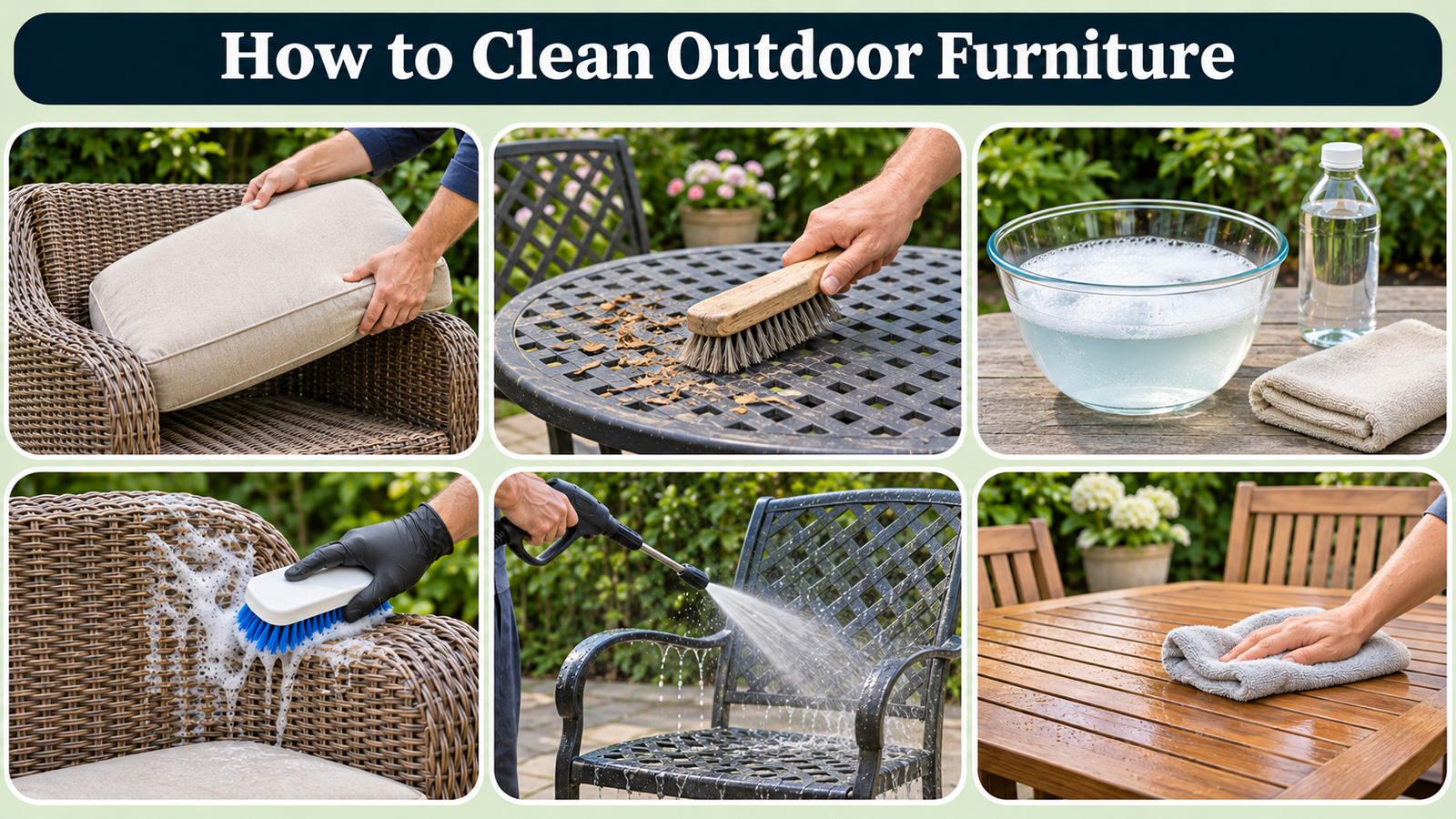
How to Clean Outdoor Furniture in 6 Easy Steps

Regular cleaning removes accumulated dirt, food residue, pollen, and moisture that may contribute to furniture deterioration. Although different furniture materials require specific care, a basic cleaning routine works for most outdoor furniture.
Follow these six steps to restore the appearance of your patio furniture while protecting its original finish.
1. Remove Cushions and Accessories
Start by removing cushions, pillows, furniture covers, and decorative accessories. This provides better access to surfaces, corners, and hidden areas where dirt often accumulates.
Clean fabric accessories separately according to their manufacturer’s care instructions.
2. Remove Loose Dirt and Debris
Use a soft brush or dry microfiber cloth to remove dust, leaves, cobwebs, and loose debris. Pay particular attention to furniture joints, woven surfaces, and underneath seating areas.
Removing loose particles before washing helps prevent unnecessary scratching.
3. Prepare a Cleaning Solution
Fill a bucket with warm water and add a small amount of mild dishwashing soap. Mix the solution gently until the soap is evenly distributed.
Avoid strong detergents unless the furniture manufacturer specifically recommends them.
4. Scrub the Furniture Gently
Dip a soft sponge or brush into the cleaning solution and gently scrub the furniture. Focus on areas with visible stains, dirt buildup, and food residue.
Avoid applying excessive pressure, particularly when cleaning painted, wooden, or woven furniture.
5. Rinse With Clean Water
Use a garden hose at low pressure or a damp cloth to remove soap residue. Make sure cleaning products do not remain trapped in furniture joints or decorative details.
Avoid soaking materials that are sensitive to moisture, especially natural wicker and untreated wood.
6. Allow the Furniture to Dry
Wipe away excess moisture using a clean microfiber cloth. Allow the furniture to air-dry completely in a well-ventilated area.
Do not replace cushions or install protective covers until the furniture is fully dry.
How to Clean Different Types of Outdoor Furniture

Outdoor furniture is available in various materials, each with unique cleaning and maintenance requirements. Using an unsuitable cleaning method may cause discoloration, corrosion, cracking, or surface damage.
Understanding how to clean each furniture material helps maintain its appearance, structural condition, and long-term durability.
How to Clean Wooden Outdoor Furniture
Clean wooden outdoor furniture using mild soap, warm water, and a soft-bristled brush. Scrub gently in the direction of the wood grain to remove dirt without damaging the surface.
Avoid excessive water and high-pressure washing because they can damage wood fibers. Once the furniture dries, apply a suitable wood protectant if recommended for its finish.
How to Clean Metal Outdoor Furniture
Aluminum, steel, and wrought iron furniture can generally be cleaned using mild soapy water and a soft cloth. Remove dirt carefully, especially around metal joints and decorative sections.
Inspect the furniture for rust, scratches, and damaged protective coatings. Dry thoroughly and repair damaged finishes using manufacturer-recommended products.
How to Clean Plastic Outdoor Furniture
Plastic outdoor furniture is relatively easy to maintain because most surfaces resist moisture. Wash it with warm soapy water and a soft sponge.
For stubborn marks, use a gentle cleaner approved for the particular plastic material. Avoid abrasive brushes that may scratch the surface and make future cleaning more difficult.
How to Clean Wicker Outdoor Furniture
Use a vacuum cleaner with a brush attachment or a soft brush to remove debris between woven fibers. Clean synthetic wicker with mild soapy water and rinse gently.
Natural wicker requires more careful handling because excessive moisture can weaken its fibers. Use a slightly damp cloth and allow it to dry thoroughly.
How to Clean Glass Outdoor Furniture
Remove loose dirt before cleaning glass tabletops with mild soapy water or a suitable glass cleaner. Use a microfiber cloth to eliminate fingerprints, watermarks, and surface residue.
Avoid abrasive cleaning products and sudden temperature changes that could damage the glass.
How to Clean Outdoor Furniture Cushions
Check the care label before washing outdoor cushions. Removable, machine-washable covers can be cleaned according to the manufacturer’s instructions.
For non-removable covers, use a soft brush and an approved fabric cleaning solution. Avoid saturating the cushion filling and allow cushions to dry completely before use.
How to Remove Mold and Mildew From Outdoor Furniture
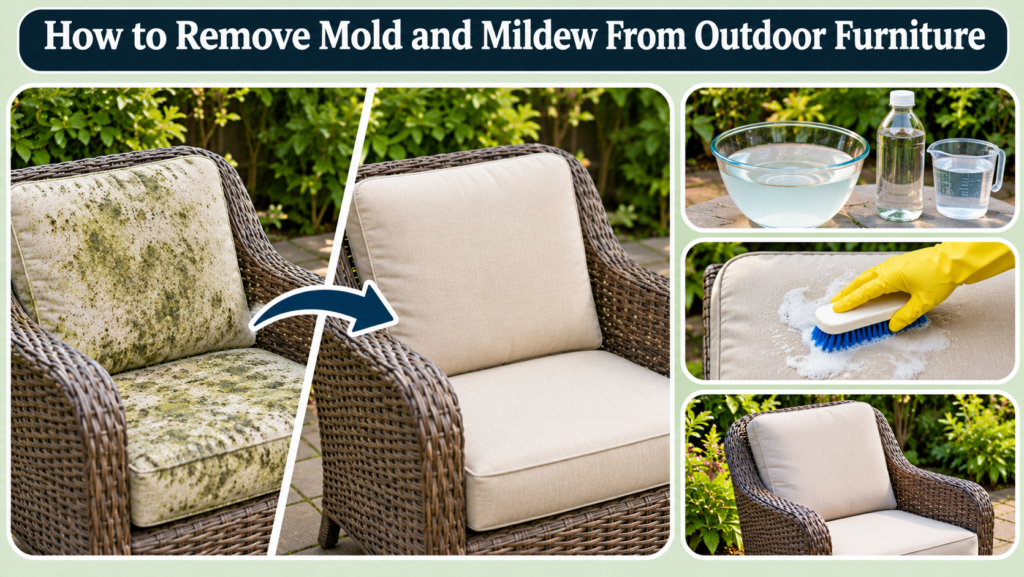
Mold and mildew commonly develop on outdoor furniture exposed to humidity, rain, and poor ventilation. They can create unpleasant odors, discoloration, and gradual material deterioration.
Prompt cleaning and proper drying help control fungal growth. Always select a cleaning solution compatible with your furniture material.
Use a White Vinegar Solution
For compatible nonporous surfaces, mix equal parts white vinegar and water. Apply the solution to affected areas, gently scrub, and rinse thoroughly.
Do not use vinegar on acid-sensitive materials, natural stone, or finishes that may react with acidic cleaners.
Use Mild Soap and Water
Mild soap and warm water can help remove surface mold and mildew from washable furniture materials. Wear protective gloves and clean affected furniture outdoors.
Allow the furniture to dry completely after cleaning to reduce the likelihood of recurring growth.
Improve Air Circulation
Position furniture in areas with adequate airflow and avoid leaving wet cushions on seating surfaces. Remove standing water after rainfall and allow damp materials to dry.
Use breathable furniture covers to minimize trapped moisture during storage.
Common Mistakes to Avoid When Cleaning Outdoor Furniture
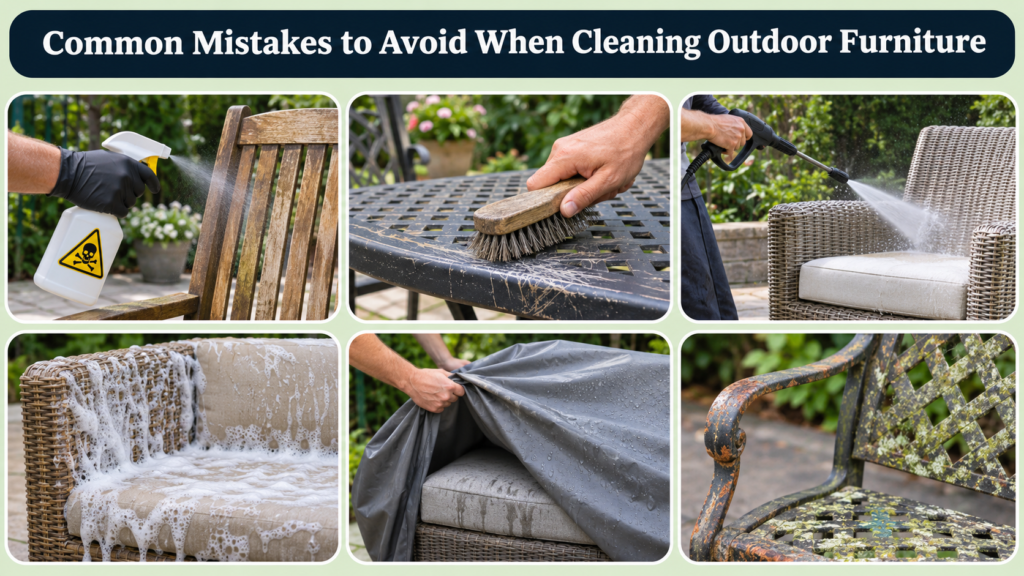
Improper cleaning techniques can shorten the lifespan of outdoor furniture and damage its protective finishes. Even durable weather-resistant materials require appropriate maintenance.
Avoid these common outdoor furniture cleaning mistakes:
- Using harsh chemical cleaners unnecessarily.
- Scrubbing furniture with metal or abrasive brushes.
- Using high-pressure washers on delicate materials.
- Leaving soap residue on furniture surfaces.
- Covering furniture before it dries completely.
- Ignoring early signs of rust and mold.
- Washing cushions without checking care instructions.
- Mixing incompatible cleaning chemicals.
Following material-specific cleaning instructions helps prevent unnecessary damage and keeps furniture looking attractive.
How Often Should You Clean Outdoor Furniture?
Outdoor furniture should generally receive light cleaning every one to two weeks during periods of regular use. Remove dust, pollen, leaves, and food spills whenever they appear.
Deep cleaning every two to three months is a reasonable starting point for most patio furniture. Furniture exposed to frequent rain, coastal air, heavy pollen, or high humidity may require more frequent attention.
Seasonal cleaning before summer and winter storage can also help maintain furniture condition.
Tips to Keep Outdoor Furniture Clean for Longer
Preventive maintenance reduces the need for intensive cleaning and protects outdoor furniture from environmental damage. Simple daily and seasonal care habits can make a noticeable difference in furniture durability.
Follow these practical outdoor furniture maintenance tips:
- Use breathable, weather-resistant furniture covers.
- Store cushions indoors during heavy rainfall.
- Clean food and drink spills immediately.
- Apply material-appropriate protective finishes.
- Remove leaves and standing water regularly.
- Keep furniture in well-ventilated areas.
- Store furniture in a dry location during severe weather.
- Inspect furniture regularly for rust, cracks, and mold.
Consistent maintenance helps preserve the appearance and functionality of your outdoor seating and dining areas.
Frequently Asked Questions
1. What is the best thing to clean outdoor furniture with?
Mild dishwashing soap and warm water are suitable for most outdoor furniture materials. Use a soft sponge or microfiber cloth to remove dirt gently, and always check the manufacturer’s cleaning instructions before using stronger products.
2. Can you clean outdoor furniture with vinegar?
Diluted white vinegar can help clean certain outdoor furniture surfaces and remove some mildew deposits. However, it is unsuitable for acid-sensitive materials, natural stone, and some protective finishes, so always check compatibility before applying it.
3. Can you pressure wash outdoor furniture?
Pressure washing may be suitable for some durable furniture if the manufacturer permits it. However, excessive water pressure can damage wood, wicker, paint, protective coatings, and fabrics. Gentle handwashing is generally a safer option.
4. How do you remove green algae from outdoor furniture?
Apply warm soapy water and gently scrub affected areas using a soft-bristled brush. For stubborn algae, use a manufacturer-approved outdoor furniture cleaner. Rinse thoroughly and allow the furniture to dry completely.
5. How do you make old outdoor furniture look new again?
Start with thorough cleaning to remove dirt, stains, and mildew. Repair damaged sections, restore suitable protective finishes, and replace worn cushions when necessary. Regular maintenance can significantly improve the appearance of aging outdoor furniture.