
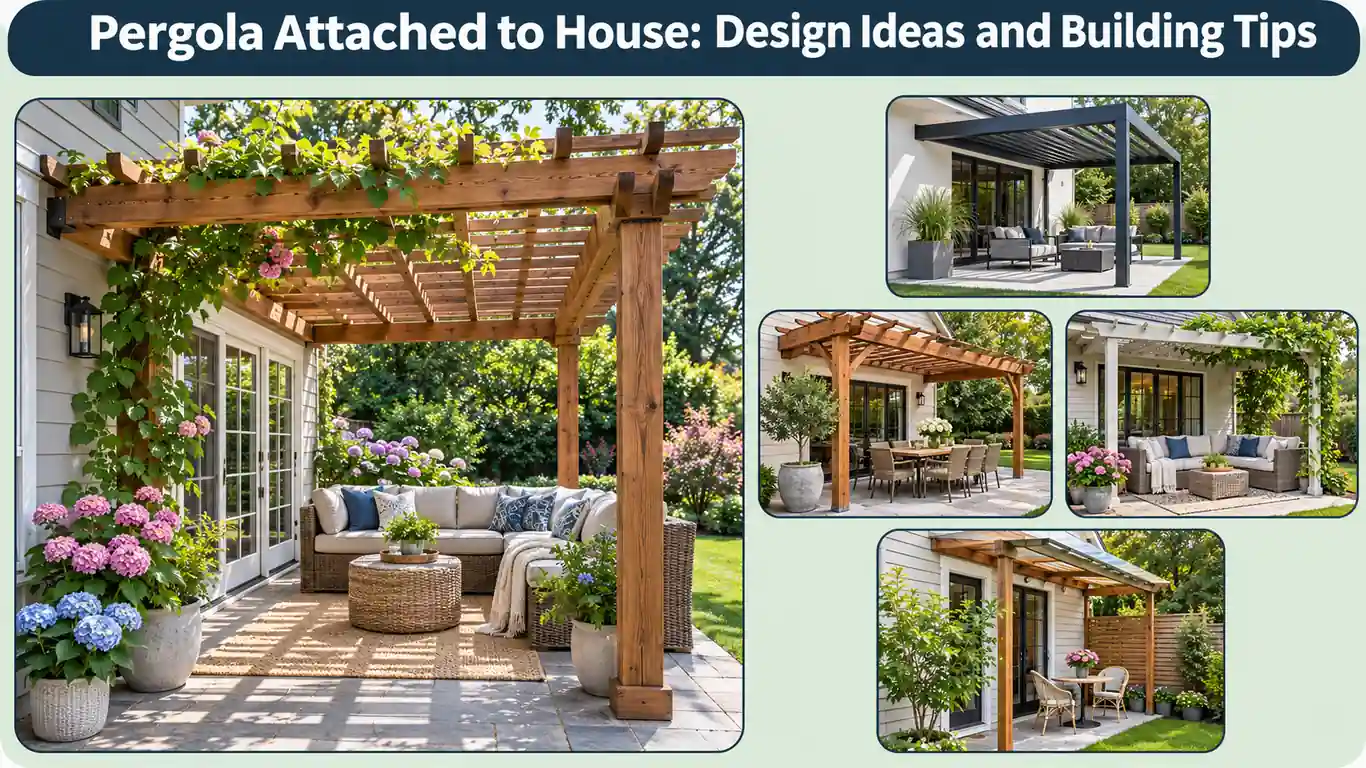
A pergola attached to house is a practical way to create a shaded outdoor living space while extending your home’s architectural style into the backyard. Unlike freestanding pergolas, attached designs connect to an exterior wall and often use fewer support posts, creating an open and convenient patio area. Whether you want a modern aluminum pergola, a traditional wooden structure, or a covered outdoor dining space, proper planning is essential. Choosing suitable materials, secure attachment methods, and weather-resistant features helps create a beautiful, functional, and long-lasting outdoor addition.
What Is a Pergola Attached to a House?
An attached pergola is an outdoor structure connected directly to a home’s exterior, typically using an engineered ledger or another approved attachment system. It usually extends over a patio, deck, or outdoor seating area, providing partial shade and architectural interest. Unlike a freestanding pergola, it relies partly on the existing building for structural support, making proper installation particularly important.
How Does an Attached Pergola Work?
An attached pergola commonly uses a wall-mounted ledger to support one side of the structure, while posts and beams support the opposite side. Rafters or overhead slats extend between these supports to create an open-roof design.
The attachment must transfer structural loads into suitable framing rather than relying on siding or exterior cladding. Structural connections, flashing, foundations, and lateral stability should follow an approved design.
Attached Pergola vs. Freestanding Pergola
An attached pergola connects to the house and often creates a seamless transition between indoor and outdoor living spaces. It may require fewer posts but introduces additional structural and waterproofing considerations.
A freestanding pergola has independent supports and can be positioned almost anywhere in the yard. It offers greater placement flexibility and avoids transferring structural loads into the house.
Benefits of Installing a Pergola Attached to Your House
Adding an attached pergola can improve both the appearance and functionality of your outdoor space. It creates a defined area for relaxing, dining, and entertaining while connecting naturally with your home’s exterior. Depending on its orientation and roof design, it can also reduce direct sunlight near windows and patio doors, improving outdoor comfort during warmer weather.
Extends Your Outdoor Living Space
An attached pergola creates a natural extension of your home by connecting the patio or deck with the indoor living area. This arrangement makes outdoor dining, entertaining, and everyday relaxation more convenient.
Provides Comfortable Shade
Overhead rafters, slats, or adjustable shade systems help reduce direct sunlight throughout the day. The amount of shade depends on the pergola’s orientation, spacing, and seasonal sun angles.
Enhances Home Architecture
A thoughtfully designed pergola can complement your home’s roofing, siding, windows, and exterior colors. Matching materials and proportions creates a cohesive appearance rather than making the structure look like an unrelated addition.
Creates Flexible Entertainment Space
An attached pergola can accommodate an outdoor dining table, lounge furniture, or a simple seating arrangement. It provides a comfortable gathering place while keeping guests close to the house.
Popular Pergola Attached to House Design Ideas

Attached pergolas come in different architectural styles, making them suitable for traditional houses, contemporary homes, and compact patios. The best design should complement your home’s exterior while meeting your practical needs. Consider how much shade you want, the amount of available space, and your maintenance preferences before choosing a particular pergola style.
1. Modern Aluminum Pergola Attached to House
A modern aluminum pergola features clean lines, slim support posts, and a contemporary appearance. Black, charcoal, or white powder-coated finishes work particularly well with minimalist homes and modern patios.
2. Traditional Wooden Pergola
A wooden pergola creates a natural and timeless appearance that complements brick, stone, and traditional siding. Cedar or appropriately treated lumber can provide an attractive framework when maintained correctly.
3. Pergola With Retractable Canopy
A retractable canopy offers adjustable shade for sunny afternoons and comfortable outdoor gatherings. Choose outdoor-rated fabric and a system designed for local wind and weather conditions.
4. Attached Pergola Over Patio
A patio pergola creates a defined space for seating, dining, and entertaining directly outside the house. Coordinate the post locations with existing paving and ensure the supports have adequate foundations.
5. Attached Pergola With Outdoor Kitchen
An attached pergola can visually connect an outdoor cooking area with your home’s interior kitchen. Position grills carefully because overhead materials, wall openings, and combustible surfaces can restrict safe appliance placement.
6. Small Pergola Attached to House
A compact pergola is suitable for narrow backyards, small patios, and limited outdoor spaces. Using simple beams, fewer decorative details, and appropriately sized furniture helps maintain an open appearance.
How to Plan a Pergola Attached to Your House

Planning an attached pergola requires careful attention to structural design, location, dimensions, and weather conditions. Unlike a freestanding structure, an attached pergola interacts directly with your home’s exterior wall and supporting framework. Proper planning helps prevent water intrusion, unstable connections, and construction problems while ensuring the finished pergola complements the surrounding outdoor space.
Choose the Best Location
Select a location that offers convenient access from the house and enough room for outdoor furniture. Consider doors, windows, roof overhangs, drainage, and nearby utility lines before finalizing the position.
Determine the Correct Pergola Size
Measure the available patio or deck area and account for walking space around furniture. The pergola should be proportionate to the house without blocking important windows or creating awkward access points.
Evaluate the Existing House Structure
The wall must contain suitable structural elements capable of supporting the pergola’s loads. Brick veneer, siding, fascia boards, and other nonstructural exterior materials generally should not serve as the primary attachment point.
Check Local Building Requirements
Building permits, setback rules, attachment requirements, and foundation specifications vary by location. Consult the relevant building authority and a qualified structural professional before beginning construction.
Best Materials for a House-Attached Pergola
Material selection affects the pergola’s appearance, durability, structural performance, and maintenance requirements. Attached pergolas experience exposure to moisture, sunlight, wind, and temperature changes, making weather resistance especially important. The chosen materials must also be compatible with approved connectors and the home’s exterior construction to reduce deterioration and connection problems over time.
Cedar Wood
Cedar offers a natural appearance and reasonable resistance to decay when properly detailed and maintained. Regular cleaning and suitable exterior finishes help preserve its appearance and reduce moisture damage.
Pressure-Treated Lumber
Pressure-treated lumber is commonly used for outdoor structures because preservative treatment helps resist decay and insect damage. Use connectors and fasteners approved for contact with the specific treatment chemicals.
Aluminum
Aluminum pergolas provide a streamlined appearance with relatively low maintenance requirements. Look for structurally rated systems with suitable corrosion resistance and manufacturer-approved wall connections.
Steel
Steel pergolas can support contemporary designs with relatively slender structural members. Appropriate protective coatings and professional structural design are particularly important for long-term durability.
How to Attach a Pergola to a House Safely
Attaching a pergola to a house requires more than fastening a beam to an exterior wall. The connection must safely resist gravity, wind uplift, and lateral forces while protecting the building from water penetration. Because house construction varies significantly, attachment details should follow an engineered plan or a manufacturer-approved system rather than a universal installation method.
Inspect the Wall Structure
Identify the home’s load-bearing framing and determine whether it can accommodate the additional loads. A structural assessment may be necessary for older houses or homes with unusual exterior construction.
Install an Approved Ledger or Connection System
A ledger, where permitted, must connect to suitable structural members using specified fasteners and spacing. Never assume ordinary siding screws or decorative brackets provide sufficient support.
Provide Proper Flashing and Waterproofing
Wall penetrations and ledger connections can create pathways for rainwater if they are not sealed correctly. Use an appropriate flashing assembly integrated with the home’s weather-resistant barrier.
Secure Posts and Foundations
Outer pergola posts require suitable anchoring and foundations based on soil conditions, structural loads, and local requirements. Existing patio slabs should not be assumed capable of supporting the structure without verification.
Roofing and Shade Options for Attached Pergolas

The overhead design determines how much sunlight, rain, and airflow your attached pergola allows. Traditional pergolas use spaced rafters, while modern systems may incorporate retractable covers or adjustable louvers. Choosing an appropriate shade system helps improve comfort without compromising structural stability or causing unwanted drainage problems against the house.
- Open wooden rafters: Create a traditional appearance with partial shade and natural airflow.
- Adjustable aluminum louvers: Allow flexible sunlight control and may offer rain protection when designed for that purpose.
- Retractable fabric canopy: Provides adjustable shade but requires appropriate wind protection and maintenance.
- Exterior-rated shade panels: Offer additional sun protection when supported by an approved structural system.
- Climbing plant coverage: Creates natural greenery but requires plant maintenance and consideration of additional structural loads.
Decorating an Attached Pergola for Outdoor Living
Decorating an attached pergola can turn a simple structural addition into a welcoming outdoor retreat. Furniture, landscaping, and carefully chosen accessories help define its purpose and enhance comfort. Select weather-resistant products that complement the home’s exterior, and avoid overcrowding the available floor space with unnecessary decorative elements.
Comfortable Outdoor Seating
Choose furniture that fits the pergola without obstructing access to the house. A compact sectional, woven lounge chairs, or a small dining set can create a practical gathering area.
Natural Landscaping
Potted plants, raised garden beds, and nearby shrubs help soften the pergola’s structural lines. Select plants suited to the available sunlight and keep roots and irrigation away from vulnerable foundations.
Coordinated Outdoor Colors
Neutral cushions, wooden furniture, and simple textured accessories work well with many house styles. Matching two or three colors with the home’s exterior creates a balanced, consistent appearance.
Common Mistakes to Avoid When Building an Attached Pergola

Building an attached pergola without sufficient planning can lead to structural issues, drainage problems, and unnecessary expenses. Since the structure connects directly to the house, errors may affect the existing building as well as the new pergola. Understanding common installation mistakes helps homeowners make safer decisions and achieve a more durable finished design.
- Attaching directly to siding: Exterior cladding generally does not provide sufficient structural support for pergola loads.
- Ignoring waterproofing: Improper flashing around wall connections can allow moisture into the building envelope.
- Using inadequate foundations: Weak or undersized footings may cause movement, settlement, or instability.
- Overlooking wind loads: Pergolas and their roof coverings must withstand applicable local wind conditions.
- Choosing unsuitable fasteners: Incompatible or undersized hardware can weaken connections and accelerate corrosion.
- Skipping permits: Beginning construction without checking local requirements may lead to compliance problems or costly modifications.
Maintenance Tips for a Long-Lasting Attached Pergola
Regular maintenance helps preserve the pergola’s appearance and protects its structural components from deterioration. Outdoor structures experience constant exposure to weather, making inspections particularly important around connections, beams, and support posts. A simple seasonal maintenance routine can help identify developing problems before they require more extensive repairs.
Inspect Structural Connections
Examine brackets, bolts, post bases, and wall connections for corrosion, movement, or visible damage. Contact a qualified professional if you notice loose structural components or unusual movement.
Clean Pergola Surfaces
Remove leaves, dirt, and debris from the roof components and surrounding areas. Clean wood, aluminum, or steel surfaces using methods recommended for their specific finishes.
Protect Against Moisture Damage
Inspect flashing, sealants, and nearby drainage pathways, especially after heavy storms. Repair deteriorated waterproofing promptly to reduce the risk of damage to the house.
FAQs
1. Can You Attach a Pergola Directly to a House?
Yes, a pergola can be attached to a house when the existing structure is suitable and the connection follows an approved design. Proper attachment to structural framing, waterproofing, and compliance with local building regulations are essential.
2. Does an Attached Pergola Need Footings?
Most attached pergolas require properly designed footings or foundations for their outer support posts. Foundation requirements depend on soil conditions, structural loads, and local building codes. Existing concrete patios may not provide adequate support without evaluation.
3. Is an Attached Pergola Better Than a Freestanding Pergola?
An attached pergola is often convenient for creating an outdoor living area directly beside the house. However, freestanding pergolas offer greater placement flexibility and avoid structural connections to the building. The better option depends on your property.
4. How Much Does a Pergola Attached to a House Cost?
Costs vary depending on size, materials, structural requirements, foundation work, and installation complexity. Simple prefabricated systems may be more affordable than custom-built pergolas, while electrical work, engineered connections, and specialized roofing can increase total project expenses.
5. Can You Install a Pergola Over an Existing Patio?
Yes, a pergola can be built over an existing patio if the layout and foundations are suitable. However, ordinary patio slabs may not be designed to support structural posts, so additional footings and proper anchoring may be necessary.