
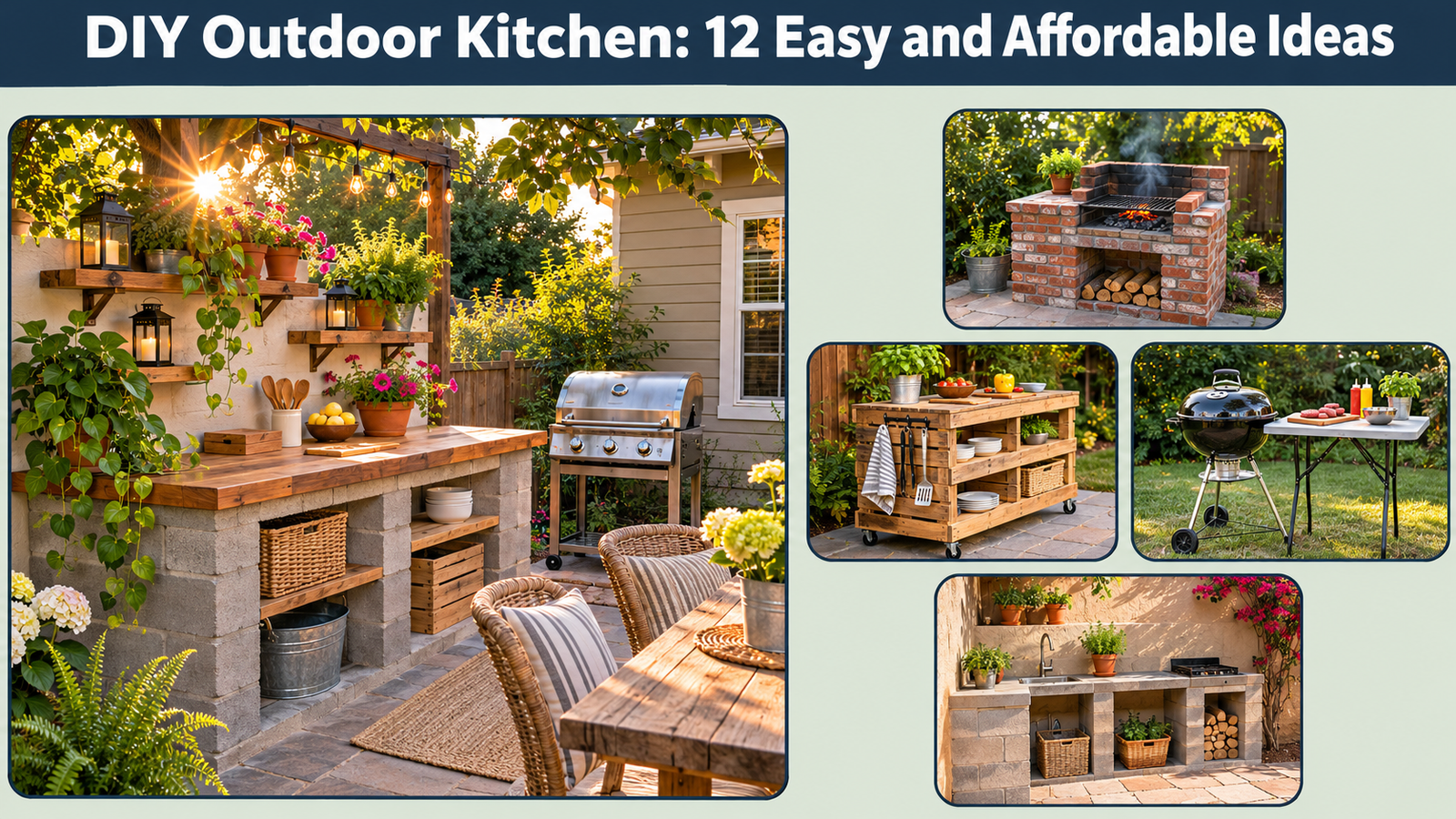
Building a DIY outdoor kitchen is an excellent way to transform your backyard into a functional cooking and entertainment space without spending thousands of dollars. Whether you have a small patio, a spacious backyard, or a limited budget, you can create an attractive outdoor kitchen using simple materials and creative designs. From concrete block grill stations and wooden countertops to portable cooking carts and outdoor kitchen islands, there are plenty of options for every homeowner. This guide explores 12 DIY outdoor kitchen ideas, essential materials, construction steps, estimated costs, and practical tips for building your own backyard cooking space.
12 Best DIY Outdoor Kitchen Ideas for Your Backyard

A DIY outdoor kitchen can be as simple as a portable grill with a preparation counter or as elaborate as a permanent cooking station with storage and seating. The best design depends on your available space, budget, and cooking preferences. These 12 outdoor kitchen ideas combine affordable materials, functional layouts, and attractive finishes to help you create a practical backyard cooking area.
1. DIY Concrete Block Outdoor Kitchen
A concrete block outdoor kitchen is one of the most practical choices for homeowners who want a durable cooking station. Concrete masonry units are widely available, relatively affordable, and suitable for creating countertop supports and storage compartments.
Start with a stable, level foundation capable of supporting the completed structure. Build the block base according to a suitable masonry design, leaving space for storage and preparation areas. Install a weather-resistant countertop to finish the cooking station.
You can decorate the blocks with stucco, exterior tile, or stone veneer. Keep a freestanding grill separate unless its manufacturer specifically approves built-in installation.
2. DIY Outdoor Kitchen With Wood Frame
A wood-frame outdoor kitchen offers a warm, rustic appearance and can be customized to suit different backyard layouts. Pressure-treated lumber or naturally durable outdoor wood may be suitable for preparation counters and storage units.
Construct a sturdy frame and cover it with weather-resistant materials. Add a countertop made from suitable exterior-grade wood, tile, or concrete.
Wooden construction must remain outside the required clearances around grills, burners, and other hot appliances. Avoid enclosing a freestanding gas grill inside a combustible wooden structure.
3. DIY Outdoor Kitchen With Pallets
Wooden pallets can be repurposed into affordable outdoor kitchen storage units, shelving, and decorative panels.
Choose clean, structurally sound pallets marked HT, indicating heat treatment. Avoid pallets with unknown chemical contamination or previous hazardous uses.
Sand the wood thoroughly and apply an exterior-grade finish to protect it against moisture.
Pallet materials work best for storage and preparation furniture located away from cooking heat. Add a separate grill and durable work surface to complete the kitchen.
4. DIY Outdoor Kitchen With Grill Station
A simple grill station is ideal for beginners who want an outdoor kitchen without extensive construction.
Place your existing barbecue grill on a stable, level outdoor surface. Add a separate preparation counter or weather-resistant cart beside it.
Install hooks or shelves in safe locations for barbecue tools, serving trays, and accessories.
This design requires minimal building work and can be upgraded with additional storage or seating in the future.
5. DIY Outdoor Kitchen Island
An outdoor kitchen island creates a convenient space for preparing food, serving meals, and entertaining guests.
Build a sturdy freestanding base using appropriate masonry materials or a suitable outdoor-rated cabinet system. Install a durable countertop with enough workspace for cutting boards and serving dishes.
Add open shelves underneath for cookware and supplies.
If you want to incorporate a built-in grill, use an appliance specifically designed for built-in installation and follow its ventilation and clearance requirements.
6. DIY Outdoor Kitchen With Concrete Countertop
A concrete countertop can give your outdoor kitchen a modern appearance without the cost of premium natural stone.
Construct suitable formwork, provide the required reinforcement, and use a concrete mix appropriate for the project.
Allow sufficient curing time before applying a suitable outdoor countertop sealer.
Because concrete countertops are heavy, the supporting structure must be designed to carry their weight.
Pair the finished countertop with masonry supports and simple outdoor accessories for a clean, contemporary design.
7. DIY Outdoor Kitchen With Brick
Brick outdoor kitchens offer a timeless appearance that complements traditional and rustic backyards.
Create a masonry preparation station using suitable bricks and mortar over an appropriate foundation.
You can incorporate open storage compartments and finish the top with concrete, stone, or exterior-rated tile.
For cooking, use a separate grill or a purpose-built masonry barbecue designed for the intended fuel and heat conditions.
A brick kitchen works particularly well alongside a garden patio or outdoor dining area.
8. DIY Outdoor Kitchen With Bar Seating
An outdoor kitchen with bar seating combines food preparation and casual entertainment in one convenient space.
Build a countertop extension supported by a suitable frame or masonry structure. Provide enough overhang and legroom for comfortable seating.
Choose weather-resistant bar stools and materials that complement your backyard design.
This layout is useful for families who enjoy outdoor meals and social gatherings.
9. DIY Outdoor Kitchen Under a Pergola
A pergola can make an outdoor kitchen feel more inviting by creating a defined entertainment area.
Build or install a simple pergola over an outdoor dining or preparation space. Decorate it with suitable outdoor lighting and climbing plants.
A wooden pergola can complement rustic cabinetry and stone countertops.
Keep cooking appliances outside overhead structures unless the manufacturer specifically approves the installation and all required clearances and ventilation provisions are met.
10. DIY Outdoor Kitchen With Portable Cart
A portable outdoor kitchen cart is perfect for homeowners who prefer a flexible and inexpensive setup.
Choose a sturdy cart made from stainless steel, powder-coated metal, or other weather-resistant materials.
Look for features such as preparation space, storage shelves, and locking wheels.
Place the cart beside your grill while cooking and move it into storage afterward.
This design is especially practical for renters and homeowners with small patios.
11. DIY Small Outdoor Kitchen
A small outdoor kitchen can fit comfortably into a narrow backyard, compact deck, or limited patio space.
Choose a straight-line layout with a grill and preparation counter.
Use vertical shelving and compact storage units to keep cooking equipment organized.
Avoid unnecessary appliances that take up valuable space.
A simple design with coordinated materials and a few plants can make even a small outdoor kitchen look attractive.
12. DIY Outdoor Kitchen With Reclaimed Materials
Reclaimed materials can help reduce construction costs while adding character to an outdoor kitchen.
Consider suitable leftover bricks, exterior tiles, salvaged stone, and reusable wood for decorative or noncombustible components.
Inspect materials carefully before installation to ensure they are structurally sound and appropriate for outdoor exposure.
Combine reclaimed materials with a durable countertop and separate cooking equipment for a functional, environmentally conscious design.
How to Build a DIY Outdoor Kitchen Step by Step
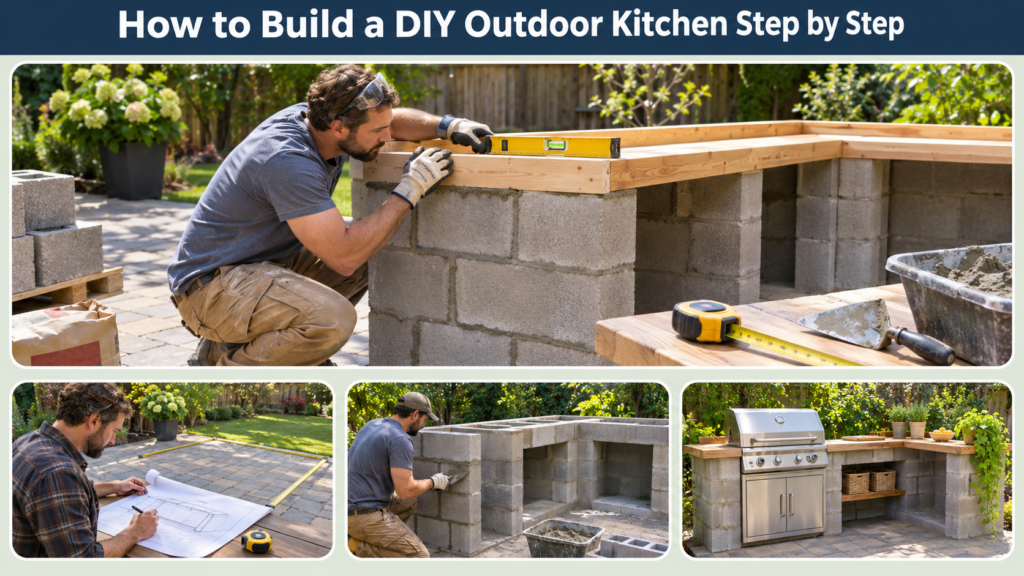
Building an outdoor kitchen requires careful planning, suitable materials, and a safe installation. Simple preparation stations are manageable DIY projects for many homeowners, while permanent masonry structures and integrated cooking appliances may require professional assistance. Following a clear construction plan can help reduce unnecessary expenses and prevent common mistakes.
Step 1: Choose the Right Location
Select a level outdoor area with adequate space for cooking and movement.
Consider:
- Distance from combustible walls and fences.
- Access to the indoor kitchen.
- Drainage and surface stability.
- Available space for seating.
- Appliance ventilation requirements.
Follow local building rules and appliance instructions when choosing the location.
Step 2: Plan Your Outdoor Kitchen Layout
Measure your available space and sketch a simple layout.
Straight-line designs are often easiest for beginners. L-shaped kitchens provide additional preparation space but require more materials.
Determine where the grill, countertop, storage, and seating will go.
Plan adequate working space while keeping walking routes clear.
Step 3: Choose Your Materials
Select materials based on durability, appearance, and total project cost.
| Material | Common DIY Application | Main Advantage |
|---|---|---|
| Concrete Blocks | Counter supports and bases | Durable and affordable |
| Brick | Masonry stations | Traditional appearance |
| Stainless Steel | Carts and appliances | Easy maintenance |
| Exterior-Grade Wood | Shelves and prep furniture | Rustic appearance |
| Concrete | Countertops | Modern finish |
| Porcelain Tile | Countertop surfaces | Variety of designs |
Step 4: Build the Kitchen Base
Construct the foundation or supporting base according to your chosen design.
For masonry kitchens, use a suitable foundation and ensure the structure is level and stable.
For freestanding preparation furniture, assemble the frame securely and verify its load capacity.
Leave adequate openings for storage and any required ventilation.
Step 5: Install the Countertop
Choose a countertop suitable for outdoor weather conditions.
Concrete, suitable stone, and exterior-rated tile are popular options.
Ensure the supporting structure can carry the countertop’s weight.
Seal applicable surfaces to help prevent moisture damage and staining.
Step 6: Add Cooking Equipment and Storage
Position your grill according to the manufacturer’s instructions.
Install cabinets, open shelves, or hooks away from excessive heat.
Gas, electrical, and plumbing installations should be completed by qualified professionals when required.
Finish with weather-resistant accessories, lighting, and outdoor furniture.
How Much Does a DIY Outdoor Kitchen Cost?

The cost of a DIY outdoor kitchen depends on the size, appliances, materials, and amount of professional work required. Portable kitchen setups generally cost less than permanent masonry installations. Reusing an existing grill and choosing a simple layout can significantly reduce expenses.
Estimated DIY Outdoor Kitchen Costs
| Outdoor Kitchen Type | Estimated Cost |
|---|---|
| Portable Grill and Prep Cart | $200–$600 |
| Simple DIY Grill Station | $400–$1,200 |
| Concrete Block Outdoor Kitchen | $800–$2,500 |
| DIY Wood Preparation Station | $300–$1,500 |
| Small Permanent Outdoor Kitchen | $1,500–$4,000 |
These are approximate US planning ranges, not current contractor quotes. They may exclude permits, utilities, specialized appliances, and professional installation.
A basic DIY outdoor kitchen can sometimes be completed for under $1,000 when an existing grill is reused.
DIY Outdoor Kitchen Mistakes to Avoid
Outdoor kitchen projects can become expensive when homeowners overlook safety requirements, weather exposure, or construction details. Proper planning helps prevent problems and improves long-term durability.
Common Mistakes
- Choosing the wrong location: Poor placement can create ventilation or fire hazards.
- Using indoor materials outdoors: Moisture and temperature changes can damage unsuitable cabinets and countertops.
- Ignoring drainage: Standing water may damage the structure and surrounding patio.
- Installing grills incorrectly: Improper enclosures or insufficient clearances can create serious safety risks.
- Skipping structural planning: Heavy countertops and masonry require adequate support.
- Overcomplicating the design: Excessive appliances and features can quickly increase construction costs.
Start with essential features and expand the kitchen gradually as your needs change.
Frequently Asked Questions
What Is the Cheapest Way to Build a DIY Outdoor Kitchen?
The cheapest approach is to combine an existing grill with a portable preparation table and basic outdoor storage. This avoids major construction costs and allows gradual improvements. Reclaimed materials and simple concrete-block preparation counters can also help reduce expenses.
Can I Build an Outdoor Kitchen Myself?
Yes, many homeowners can build simple outdoor kitchen preparation stations, carts, and storage units. However, permanent masonry structures may require specialized skills. Gas connections, electrical work, and certain appliance installations should be handled by qualified professionals according to applicable regulations.
What Is the Best Material for a DIY Outdoor Kitchen?
Concrete blocks are a practical choice for permanent outdoor kitchen bases because they are durable and relatively affordable. Stainless steel is useful for portable carts and appliances, while exterior-rated tile and properly supported concrete can provide attractive countertop finishes.
Can You Build a DIY Outdoor Kitchen for $500?
Yes, a basic outdoor kitchen setup may cost around $500 if you already own a grill. A portable preparation table, simple storage cart, and inexpensive outdoor accessories can create a functional cooking station. Permanent masonry kitchens generally require a larger budget.
Do You Need a Permit to Build an Outdoor Kitchen?
Permit requirements depend on local building regulations, the kitchen’s size, and whether gas, plumbing, or electrical systems are being installed. Some simple freestanding cooking stations may not require permits. Check with your local building department before starting permanent construction.