

Choosing the right outdoor kitchen countertop can transform your backyard into a beautiful and functional cooking space. From durable granite and sleek stainless steel to rustic concrete and elegant natural stone, there are plenty of materials to explore. These 17 outdoor kitchen countertop ideas will help you find the perfect combination of style, durability, weather resistance, and easy maintenance for your outdoor cooking area.
1. Granite Outdoor Kitchen Countertop

Granite is one of the most popular materials for outdoor kitchen countertops because of its natural beauty, durability, and resistance to outdoor conditions. This natural stone creates a luxurious appearance while providing a strong surface for food preparation, grilling, and entertaining. Available in various colors and patterns, granite countertops complement modern, rustic, and traditional outdoor kitchen designs.
Design and Appearance
Granite outdoor kitchen countertops offer a timeless and elegant appearance. Popular colors include black, gray, white, brown, and earthy tones. A polished granite surface creates a sophisticated look, while honed or textured finishes provide a more natural appearance. Pairing granite with stone cabinetry, stainless steel grills, or wooden pergolas creates an attractive outdoor cooking space.
Benefits of Granite Countertops
- Weather Resistance: Granite can withstand outdoor conditions when properly selected and installed.
- Heat Resistance: The stone tolerates heat well, making it suitable for outdoor cooking areas.
- Durability: Its hard surface resists everyday scratches and wear.
- Design Versatility: Available in numerous natural colors, textures, and patterns.
- Easy Cleaning: Properly maintained granite is simple to clean with mild soap and water.
Maintenance and Care
Granite countertops require occasional maintenance to preserve their appearance and performance. Clean the surface regularly using warm water and a stone-safe cleaner. Depending on the stone’s porosity and finish, periodic sealing may help prevent stains and moisture absorption. Avoid harsh acidic cleaners and protect the countertop from heavy impacts. In freezing climates, proper installation and drainage are especially important for long-term durability.
2. Concrete Outdoor Kitchen Countertop

Concrete outdoor kitchen countertops are an excellent choice for homeowners who prefer a modern, industrial, or minimalist outdoor cooking space. Their customizable shapes, colors, and finishes make them suitable for various kitchen layouts. Concrete countertops can be designed with built-in sinks, extended bar seating, and unique edges. When properly constructed and sealed, they provide a durable cooking surface that complements outdoor grills, stone cabinetry, and wooden pergolas.
Design and Appearance
Concrete countertops create a sleek, contemporary appearance with a natural textured finish. Popular colors include charcoal gray, light gray, beige, and earthy brown. Smooth concrete surfaces complement modern outdoor kitchens, while textured finishes suit rustic backyard designs. Homeowners can also incorporate decorative aggregates or custom edges for a personalized appearance.
Benefits of Concrete Countertops
- Customizable Design: Available in different shapes, sizes, colors, and finishes.
- Heat Resistance: Concrete handles heat well, although sealers may be sensitive to hot cookware.
- Modern Appearance: Creates a stylish industrial or minimalist look.
- Versatile Installation: Can accommodate integrated sinks and custom cooking stations.
- Long-Lasting Material: Proper construction and maintenance support years of outdoor use.
Maintenance and Care
Concrete countertops require proper sealing to protect against moisture, grease, and food stains. Clean the surface regularly with mild soap and water, avoiding acidic or abrasive cleaning products. Inspect the sealer periodically and reapply it according to the manufacturer’s recommendations. Small cracks can develop from temperature changes or movement, so proper reinforcement and installation are important.
3. Quartzite Outdoor Kitchen Countertop
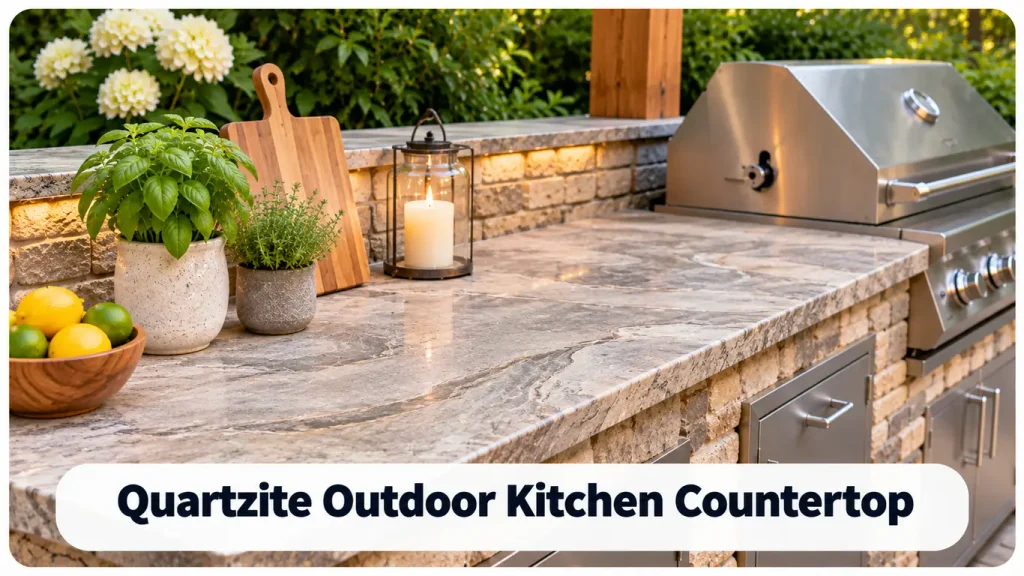
Quartzite outdoor kitchen countertops combine the natural elegance of stone with impressive strength and durability. Unlike engineered quartz, natural quartzite generally performs well in outdoor environments when properly installed. Its distinctive veining and attractive color variations make it a stylish option for luxury backyard kitchens. Quartzite complements stainless steel appliances, stone islands, and covered outdoor cooking areas while providing a practical surface for everyday food preparation.
Design and Appearance
Quartzite offers a sophisticated appearance with natural patterns resembling marble. Popular shades include white, cream, light gray, beige, and soft gold. Its unique veining creates visual interest in outdoor kitchen islands and countertops. Polished finishes enhance the stone’s natural colors, while honed finishes offer a softer appearance. Quartzite pairs beautifully with wooden cabinets and dark metal accents.
Benefits of Quartzite Countertops
- Natural Beauty: Features elegant veining and distinctive stone patterns.
- UV Resistance: Generally maintains its appearance under sunlight.
- Heat Resistance: Natural quartzite tolerates high temperatures.
- Scratch Resistance: Its hardness makes it resistant to everyday scratches.
- Long-Term Durability: Suitable for outdoor kitchens with proper installation and care.
Maintenance and Care
Quartzite countertops should be cleaned regularly using warm water and a pH-neutral stone cleaner. Many varieties benefit from periodic sealing to reduce moisture absorption and staining. Avoid harsh chemicals and abrasive cleaning pads that may damage the finish. Although quartzite is durable, using cutting boards and trivets helps preserve the surface. Choose genuine, outdoor-suitable quartzite for the best performance.
4. Marble Outdoor Kitchen Countertop
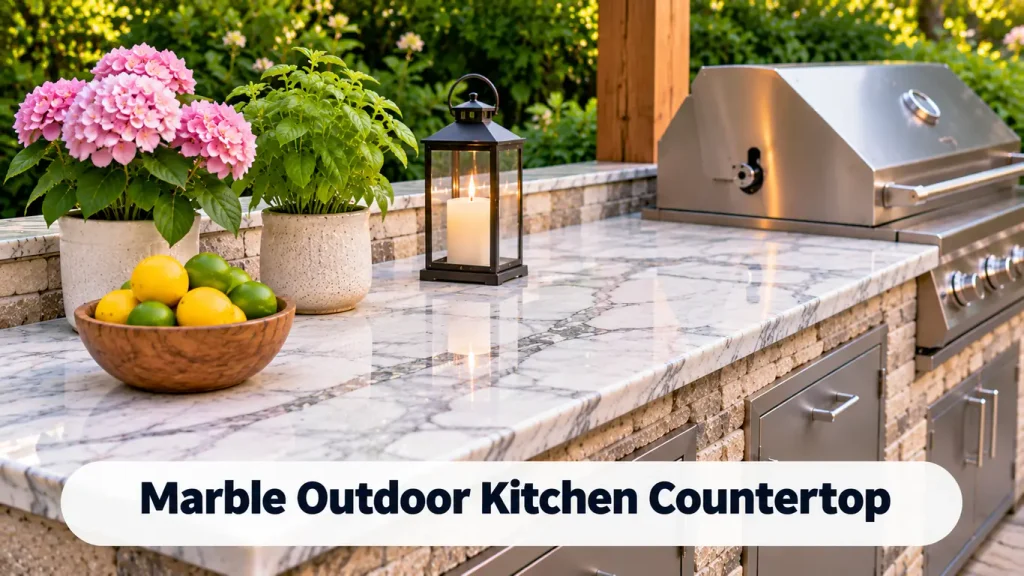
Marble outdoor kitchen countertops bring a luxurious and timeless appearance to backyard cooking spaces. Known for their elegant veining and smooth natural surface, marble countertops create an attractive setting for outdoor dining and entertaining. However, marble requires more maintenance than granite or quartzite because it is vulnerable to staining, scratching, and acidic substances. It works best in covered or sheltered outdoor kitchens where exposure to harsh weather is limited.
Design and Appearance
Marble countertops are available in beautiful shades of white, gray, cream, and black. Their distinctive veining adds elegance to modern and traditional outdoor kitchen designs. White marble paired with dark cabinetry creates a striking contrast, while cream-colored marble complements natural wooden pergolas. Honed finishes are often practical for outdoor applications because they make minor etching less noticeable.
Benefits of Marble Countertops
- Elegant Appearance: Creates a luxurious and sophisticated outdoor kitchen.
- Natural Patterns: Each slab features unique veining and color variations.
- Heat Tolerance: Natural marble tolerates heat, although sudden temperature changes can cause damage.
- Design Versatility: Complements contemporary, Mediterranean, and traditional kitchens.
- Smooth Surface: Provides a convenient area for food preparation and serving.
Maintenance and Care
Marble countertops need regular cleaning and careful protection against outdoor elements. Use mild, pH-neutral cleaners and wipe up spills immediately, especially lemon juice, vinegar, and other acidic liquids. Apply a suitable stone sealer when recommended, but remember that sealing does not prevent acid etching. In exposed locations, prolonged weathering can dull the finish, making sheltered installation a better choice.
5. Stainless Steel Outdoor Kitchen Countertop
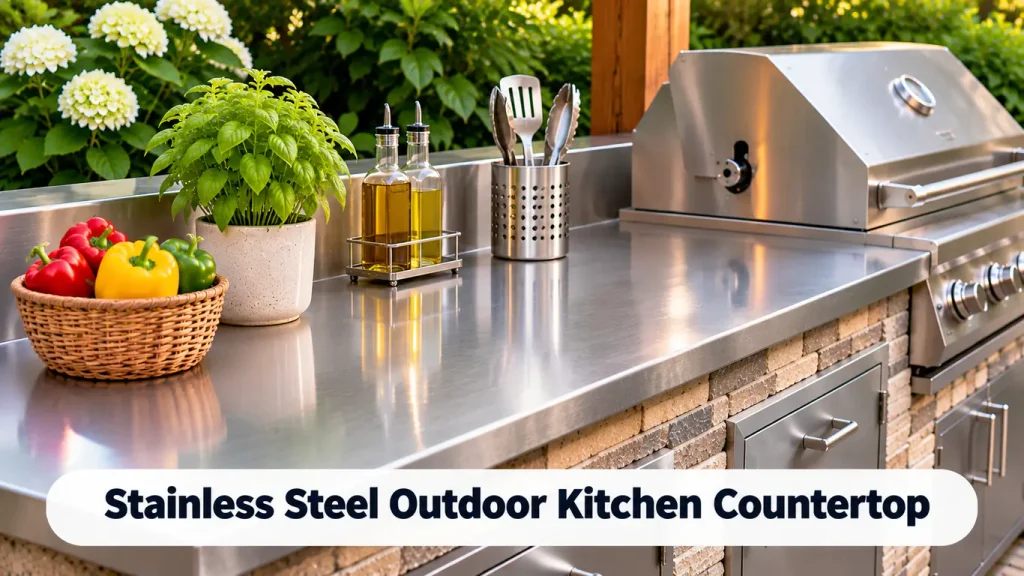
Stainless steel outdoor kitchen countertops are an excellent choice for homeowners who want a sleek, modern, and professional cooking space. Commonly used in commercial kitchens, stainless steel provides a hygienic, nonporous surface that is easy to clean and maintain. Its metallic finish pairs beautifully with built-in grills, outdoor refrigerators, and contemporary cabinetry. Marine-grade stainless steel is especially suitable for outdoor kitchens exposed to moisture or coastal conditions.
Design and Appearance
Stainless steel countertops create a clean, polished appearance that complements modern and industrial outdoor kitchen designs. Brushed finishes are particularly popular because they help conceal fingerprints and minor scratches. Pairing stainless steel with black cabinets, concrete flooring, and wooden pergolas creates a stylish contrast. Integrated sinks and seamless work surfaces can also make the cooking area more functional.
Benefits of Stainless Steel Countertops
- Weather Resistance: Suitable stainless steel grades resist rust and corrosion.
- Hygienic Surface: Nonporous material makes cleaning and food preparation easier.
- Heat Resistance: Handles heat well, although hot cookware may cause discoloration.
- Modern Appearance: Creates a professional outdoor cooking environment.
- Low Maintenance: Requires minimal upkeep compared with many natural stone materials.
Maintenance and Care
Stainless steel countertops should be cleaned regularly using mild soap, warm water, and a soft cloth. Wiping along the grain helps maintain their brushed appearance. Avoid steel wool and harsh abrasive cleaners that can scratch the surface. In coastal environments, choose marine-grade 316 stainless steel for improved corrosion resistance. Regular cleaning helps prevent water spots and surface discoloration.
6. Porcelain Outdoor Kitchen Countertop
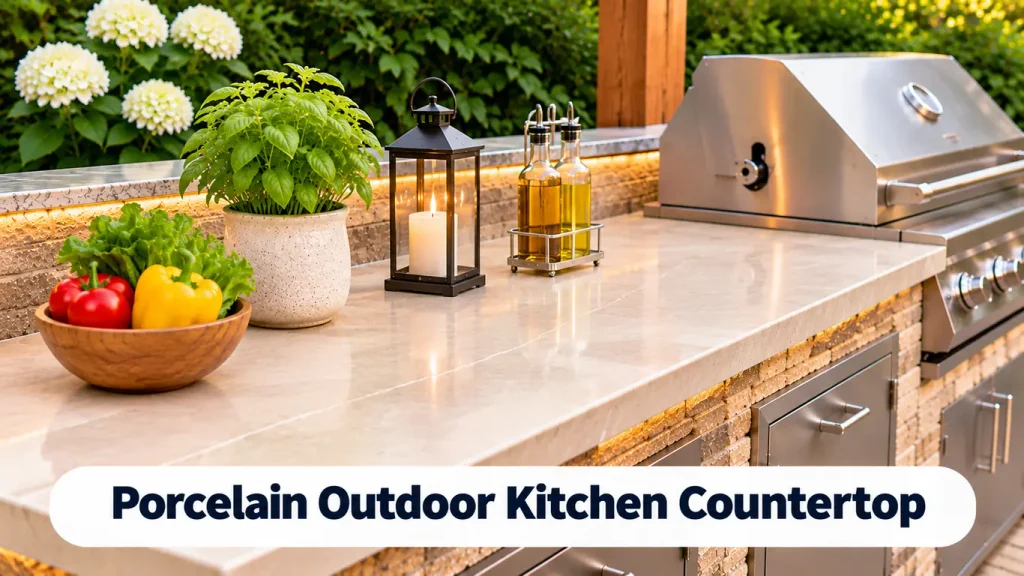
Porcelain outdoor kitchen countertops are becoming increasingly popular because of their durability, elegant appearance, and excellent resistance to outdoor conditions. Manufactured from high-quality ceramic materials fired at extremely high temperatures, porcelain slabs provide a dense, nonporous surface. They are available in numerous colors and patterns, including designs that resemble marble, concrete, and natural stone. Their resistance to sunlight, moisture, and stains makes them a practical choice for contemporary backyard kitchens.
Design and Appearance
Porcelain countertops offer a sophisticated appearance with smooth surfaces and realistic stone-inspired patterns. Popular designs include white marble effects, dark charcoal finishes, light gray concrete textures, and beige natural stone patterns. Large-format porcelain slabs create a seamless appearance with fewer visible joints. Combining porcelain countertops with wooden cabinetry, stainless steel appliances, and modern outdoor lighting creates a beautiful entertainment space.
Benefits of Porcelain Countertops
- UV Resistance: Maintains its color and appearance under direct sunlight.
- Stain Resistance: Nonporous surfaces resist most food and beverage stains.
- Heat Resistance: Handles normal outdoor cooking temperatures effectively.
- Low Water Absorption: Performs well in wet outdoor environments.
- Easy Maintenance: Usually does not require sealing or specialized cleaning products.
Maintenance and Care
Porcelain countertops are relatively easy to maintain. Clean the surface with warm water, mild detergent, and a soft cloth. Remove grease and food spills promptly to preserve their appearance. Although porcelain is highly durable, slab edges can chip if struck by heavy objects. Professional installation with appropriate outdoor-rated support is important, especially for large countertop sections and outdoor kitchen islands.
7. Soapstone Outdoor Kitchen Countertop

Soapstone outdoor kitchen countertops provide a beautiful combination of natural charm, durability, and practical cooking performance. This natural stone is known for its smooth texture, rich colors, and excellent heat resistance. Unlike many other natural stones, soapstone is nonporous and generally does not require sealing. Its classic appearance makes it particularly attractive for rustic, farmhouse, and traditional outdoor kitchens.
Design and Appearance
Soapstone countertops feature a soft, matte appearance with natural shades of gray, charcoal, green, and black. Many varieties contain delicate white or light-colored veining that adds character to the surface. Over time, soapstone may develop a natural patina, creating a deeper and richer appearance. Pairing soapstone with brick cabinetry, wooden pergolas, and stainless steel grills creates a warm and inviting outdoor cooking area.
Benefits of Soapstone Countertops
- Heat Resistance: Naturally tolerates high temperatures without easily cracking.
- Nonporous Surface: Resists liquid absorption and does not require traditional stone sealing.
- Natural Appearance: Offers unique colors, textures, and attractive veining.
- Weather Durability: Suitable for many outdoor environments when properly installed.
- Easy Repairs: Minor scratches can often be reduced through sanding or mineral oil treatment.
Maintenance and Care
Soapstone countertops require minimal maintenance compared with many natural stone surfaces. Clean them regularly using mild soap and warm water. Food-grade mineral oil can be applied occasionally to darken the stone and create a more uniform appearance, although it is not necessary for protection. Because soapstone is softer than granite, scratches and small dents may develop with regular use. Using cutting boards and avoiding heavy impacts helps maintain its appearance.
8. Slate Outdoor Kitchen Countertop

Slate outdoor kitchen countertops are an excellent option for homeowners who prefer a natural, rustic, and elegant backyard cooking space. This durable natural stone features distinctive textures and earthy colors that complement various outdoor kitchen styles. Slate is known for its relatively low water absorption and ability to withstand changing weather conditions. When properly selected and installed, slate countertops create a practical cooking surface that pairs beautifully with stone cabinetry, wooden pergolas, and stainless steel appliances.
Design and Appearance
Slate countertops offer a rich, natural appearance with shades of charcoal, gray, black, green, and earthy brown. Their subtle color variations and unique textures add character to outdoor kitchen designs. Honed slate provides a smooth, contemporary finish, while natural cleft slate creates a more rustic appearance. Pairing dark slate countertops with light-colored stone cabinets and wooden accents produces an attractive contrast.
Benefits of Slate Countertops
- Weather Resistance: Quality slate can withstand rain, sunlight, and seasonal temperature changes.
- Low Water Absorption: Many slate varieties naturally resist moisture penetration.
- Natural Appearance: Provides beautiful colors and distinctive stone textures.
- Heat Resistance: Tolerates normal cooking temperatures without easily becoming damaged.
- Versatile Design: Complements rustic, farmhouse, and contemporary outdoor kitchens.
Maintenance and Care
Slate countertops should be cleaned regularly using mild soap, warm water, and a soft cloth. Avoid harsh acidic cleaners that may damage certain stone finishes. Some slate varieties benefit from periodic sealing to improve stain resistance. Although slate is durable, lower-quality varieties may chip or flake under heavy use. Choosing dense, high-quality slate and ensuring proper installation helps maintain its appearance and performance.
9. Tile Outdoor Kitchen Countertop
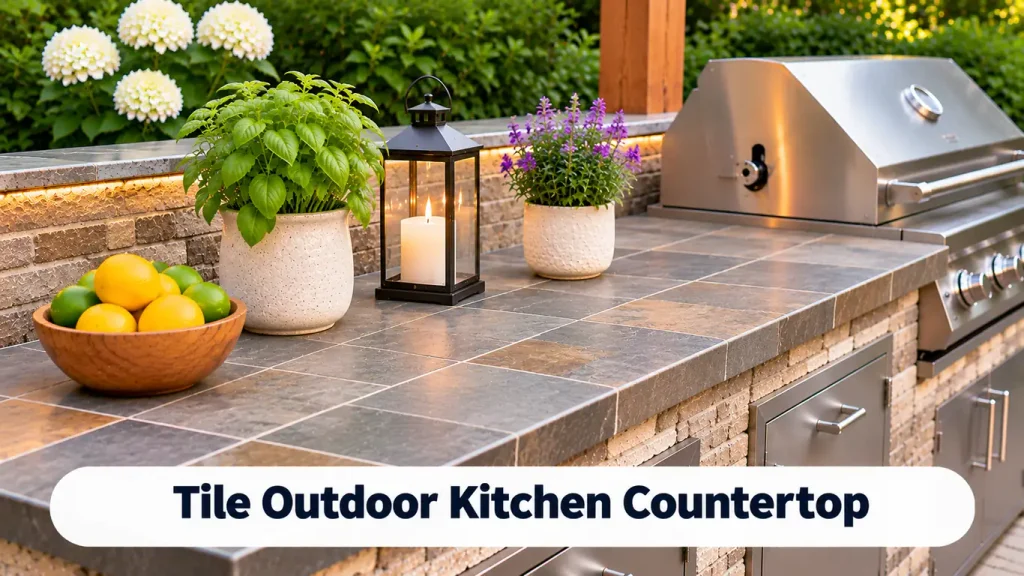
Tile outdoor kitchen countertops provide an affordable and customizable option for creating beautiful backyard cooking spaces. Available in numerous colors, materials, shapes, and patterns, tile allows homeowners to design countertops that match their preferred outdoor kitchen style. Porcelain and frost-rated ceramic tiles are particularly popular for outdoor applications because of their resistance to moisture and changing temperatures. Tile countertops work well with built-in grills, outdoor sinks, and bar-style kitchen islands.
Design and Appearance
Tile countertops offer almost unlimited design possibilities, ranging from Mediterranean-inspired patterns to modern minimalist finishes. Large porcelain tiles create a clean, contemporary appearance, while smaller decorative tiles add colorful details. Neutral shades such as gray, beige, white, and charcoal complement natural backyard settings. Patterned tiles can also create attractive accents around grilling stations and outdoor dining areas.
Benefits of Tile Countertops
- Affordable Options: Available in different price ranges to suit various budgets.
- Design Flexibility: Offers numerous colors, sizes, textures, and decorative patterns.
- Weather Resistance: Outdoor-rated porcelain tiles perform well in changing weather conditions.
- Easy Replacement: Individual damaged tiles can often be replaced without removing the entire countertop.
- Heat Resistance: Suitable tiles tolerate heat from everyday outdoor cooking activities.
Maintenance and Care
Tile countertops require regular cleaning to maintain their appearance. Wipe the tile surfaces using warm water and mild detergent, paying particular attention to grout lines. Choose exterior-rated grout and installation materials to reduce moisture problems. Epoxy grout can provide improved stain resistance and simplify maintenance. Inspect grout joints periodically for cracks or deterioration, especially in climates experiencing freezing temperatures.
10. Brick Outdoor Kitchen Countertop
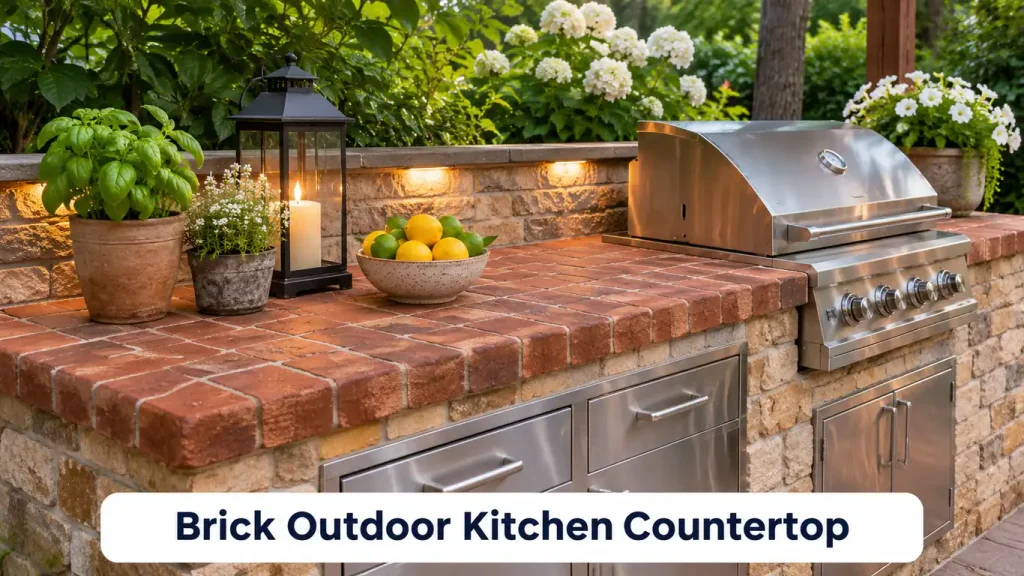
Brick outdoor kitchen countertops create a charming and traditional appearance that works beautifully in rustic, farmhouse, and Mediterranean-style backyard kitchens. Their warm colors and textured surfaces complement outdoor fireplaces, pizza ovens, and built-in grilling stations. Brick is generally more practical as a countertop base or decorative surround than as a direct food preparation surface. However, a properly constructed brick countertop with a suitable protective finish can create a distinctive outdoor cooking area.
Design and Appearance
Brick countertops offer a timeless appearance with natural shades of red, brown, orange, and weathered gray. Traditional red bricks create a classic rustic look, while whitewashed bricks provide a softer farmhouse appearance. Pairing brick countertops with wooden cabinets, stone flooring, and black metal fixtures creates a welcoming outdoor kitchen. Brick surfaces also coordinate beautifully with matching pizza ovens and backyard fireplaces.
Benefits of Brick Countertops
- Rustic Appearance: Adds natural warmth and traditional character to outdoor kitchens.
- Heat Resistance: Properly selected brick materials tolerate high temperatures.
- Design Versatility: Complements farmhouse, Mediterranean, and traditional backyard styles.
- Durable Construction: Quality exterior-rated bricks can provide long-lasting performance.
- Customizable Patterns: Can be arranged in herringbone, running bond, or other decorative layouts.
Maintenance and Care
Brick countertops require careful maintenance because bricks and mortar joints can absorb liquids and collect food residue. Clean the surface with a soft brush, mild detergent, and water. Applying an appropriate masonry sealer may help reduce staining and moisture absorption. Regularly inspect mortar joints for cracks or deterioration. For a more hygienic food preparation area, consider combining a brick countertop structure with a smooth granite, concrete, or porcelain work surface.
11. Natural Stone Outdoor Kitchen Countertop

Natural stone outdoor kitchen countertops are an excellent choice for homeowners who want a durable, elegant, and timeless backyard cooking space. These countertops bring natural textures, unique patterns, and earthy colors that blend beautifully with outdoor surroundings. Different stone materials offer varying levels of heat resistance, weather durability, and maintenance requirements. Whether used in a rustic outdoor kitchen or a modern grilling station, natural stone creates an attractive surface for cooking, serving, and entertaining.
Design and Appearance
Natural stone countertops offer unique colors and textures that enhance outdoor kitchen designs. Popular choices include granite, quartzite, sandstone, and other suitable natural stones. Earthy shades such as beige, gray, brown, and charcoal complement wooden pergolas, brick walls, and stainless steel grills. Rough-textured edges create a rustic appearance, while polished or honed surfaces provide a contemporary finish.
Benefits of Natural Stone Countertops
- Natural Beauty: Each stone slab features unique colors, patterns, and textures.
- Durability: Suitable stone varieties provide strong, long-lasting surfaces.
- Heat Resistance: Many natural stones tolerate heat from outdoor cooking activities.
- Design Versatility: Complements modern, rustic, and traditional outdoor kitchens.
- Property Appeal: Quality natural stone can enhance the appearance of backyard entertainment areas.
Maintenance and Care
Natural stone countertops require maintenance based on the specific material. Clean surfaces regularly using mild soap, warm water, and a soft cloth. Some porous stones need periodic sealing to reduce staining and moisture absorption. Avoid harsh acidic cleaners and remove food spills promptly. Selecting a weather-resistant stone suitable for the local climate is essential for long-term outdoor performance.
12. Butcher Block Outdoor Kitchen Countertop

Butcher block outdoor kitchen countertops bring warmth, natural beauty, and a welcoming atmosphere to backyard cooking spaces. Made from joined wooden pieces, these countertops create a charming appearance that complements farmhouse, rustic, and modern outdoor kitchens. Wood surfaces work especially well for covered outdoor bars, serving stations, and food preparation areas. However, butcher block requires careful protection against moisture, direct sunlight, and extreme weather conditions to maintain its durability and appearance.
Design and Appearance
Butcher block countertops feature natural wood grains and warm colors that make outdoor kitchens feel comfortable and inviting. Popular wood choices include teak, white oak, and other durable species suitable for exterior use. Light wood countertops create an airy appearance, while darker finishes add richness to the design. Pairing butcher block with black cabinets, stone walls, and stainless steel appliances produces a beautiful combination of natural and modern materials.
Benefits of Butcher Block Countertops
- Warm Appearance: Creates a natural and inviting outdoor kitchen atmosphere.
- Design Flexibility: Complements farmhouse, rustic, and contemporary kitchen styles.
- Customizable Finish: Can be stained or finished to achieve different appearances.
- Repairable Surface: Minor scratches can often be sanded and refinished.
- Comfortable Texture: Offers a warmer touch than metal or stone countertops.
Maintenance and Care
Butcher block countertops require regular maintenance, especially in outdoor environments. Use an exterior-rated protective finish appropriate for the intended use, and follow the manufacturer’s refinishing recommendations. Clean spills immediately and avoid allowing water to collect on the surface. Direct sunlight and repeated moisture exposure can cause warping, cracking, or discoloration. Installing butcher block beneath a covered pergola or roof helps extend its lifespan.
13. Limestone Outdoor Kitchen Countertop
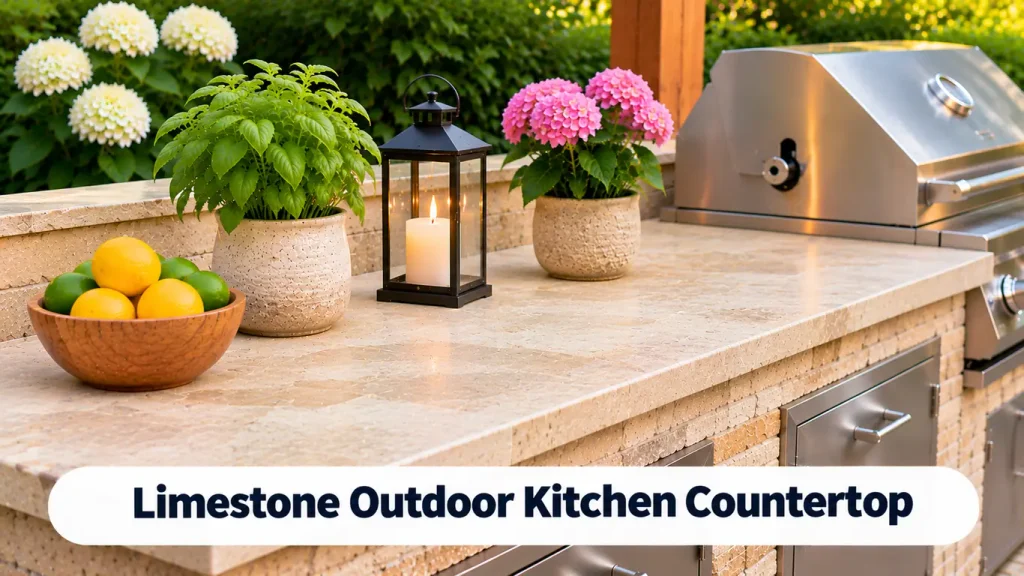
Limestone outdoor kitchen countertops provide a soft, natural appearance that works beautifully in Mediterranean, traditional, and rustic backyard kitchens. This sedimentary stone is available in attractive neutral colors that complement outdoor landscaping and architectural features. Limestone creates a sophisticated cooking surface, particularly in sheltered outdoor areas. However, it is softer and more porous than granite, making proper sealing, cleaning, and weather protection important for maintaining its appearance over time.
Design and Appearance
Limestone countertops feature subtle natural patterns and warm shades of cream, beige, gray, and light brown. Their understated appearance creates a relaxing outdoor cooking environment. Honed limestone surfaces provide a smooth matte finish, while textured finishes create a rustic character. Pairing limestone countertops with wooden pergolas, stone walls, and bronze or black fixtures produces an elegant Mediterranean-inspired outdoor kitchen.
Benefits of Limestone Countertops
- Natural Elegance: Offers soft colors and attractive organic textures.
- Design Versatility: Complements Mediterranean, farmhouse, and traditional outdoor kitchens.
- Heat Tolerance: Natural limestone tolerates moderate heat, although sudden temperature changes can cause damage.
- Customizable Finishes: Available in honed, brushed, and textured appearances.
- Timeless Appeal: Creates a classic outdoor kitchen design that blends with natural surroundings.
Maintenance and Care
Limestone countertops require consistent care because the stone is porous and sensitive to acidic substances. Clean the surface using a pH-neutral stone cleaner and remove spills promptly. Periodic sealing helps reduce moisture absorption and staining, although it does not prevent acid etching. Avoid vinegar, lemon juice, and abrasive cleaning products. In regions with harsh winters, choose frost-resistant limestone and ensure proper installation and drainage.
14. Travertine Outdoor Kitchen Countertop
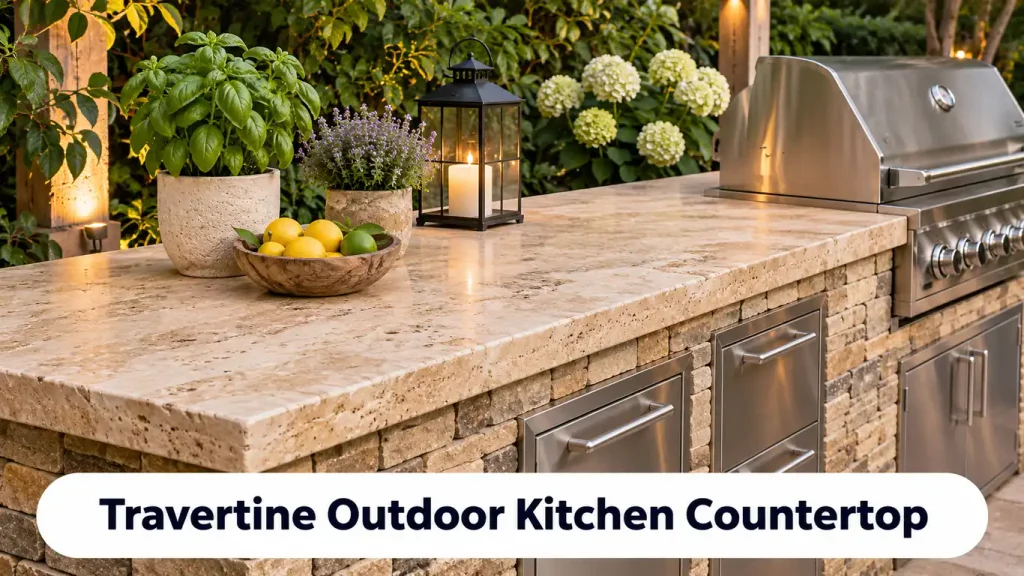
Travertine outdoor kitchen countertops are an attractive choice for homeowners who want a warm, natural, and Mediterranean-inspired cooking space. This natural stone features distinctive textures, earthy colors, and subtle patterns that complement outdoor surroundings. Travertine works beautifully with stone cabinetry, wooden pergolas, and built-in grilling stations. Although it can be used outdoors, its porous structure requires proper sealing and maintenance to protect against stains, moisture, and changing weather conditions.
Design and Appearance
Travertine countertops create a timeless appearance with natural shades of beige, cream, ivory, walnut, and light brown. Their distinctive pores and subtle color variations add character to outdoor kitchen designs. Honed and filled travertine offers a smoother surface suitable for food preparation, while brushed finishes create a rustic look. Pairing travertine with wooden cabinets, stone flooring, and warm outdoor lighting produces an inviting backyard cooking environment.
Benefits of Travertine Countertops
- Natural Beauty: Features warm colors, unique textures, and subtle stone patterns.
- Mediterranean Appeal: Complements Tuscan, rustic, and traditional outdoor kitchen designs.
- Heat Tolerance: Naturally tolerates moderate cooking heat.
- Design Versatility: Available in several colors, finishes, and edge styles.
- Timeless Appearance: Creates an elegant outdoor entertainment space.
Maintenance and Care
Travertine countertops require regular cleaning using warm water and a pH-neutral stone cleaner. Apply a suitable penetrating sealer when recommended to reduce moisture absorption and staining. Avoid acidic cleaning products, including vinegar and lemon juice, because they can damage the stone. Filled travertine may occasionally need repairs if surface fillers deteriorate. In colder climates, choose frost-resistant material and ensure proper drainage.
15. Terrazzo Outdoor Kitchen Countertop
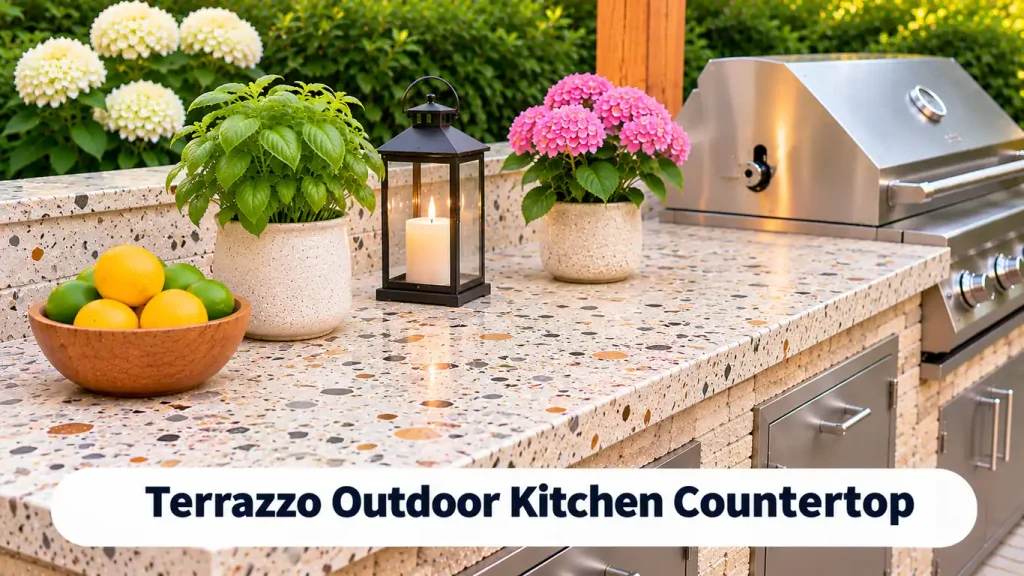
Terrazzo outdoor kitchen countertops provide a stylish combination of modern design, colorful patterns, and durable construction. Made by incorporating stone, marble, glass, or other decorative aggregates into a cement-based or resin-based binder, terrazzo creates a distinctive surface for outdoor cooking areas. Cement-based terrazzo specifically designed for exterior applications is generally the better choice for exposed kitchens. Its decorative appearance makes it especially appealing for contemporary backyard kitchens, outdoor bars, and entertainment islands.
Design and Appearance
Terrazzo countertops feature colorful stone chips embedded within a smooth background, creating a unique decorative appearance. Popular combinations include white with gray aggregates, beige with earthy stone pieces, and charcoal with contrasting light-colored chips. Fine aggregates provide a subtle modern finish, while larger chips create a bold statement. Terrazzo pairs beautifully with minimalist cabinetry, stainless steel grills, and contemporary pergola structures.
Benefits of Terrazzo Countertops
- Unique Appearance: Decorative aggregates create distinctive colors and patterns.
- Customizable Design: Available in different aggregate sizes, colors, and finishes.
- Durable Surface: Properly manufactured terrazzo provides long-lasting performance.
- Modern Appeal: Complements contemporary and minimalist outdoor kitchen designs.
- Smooth Finish: Creates a practical surface for serving and food preparation.
Maintenance and Care
Outdoor terrazzo countertops require maintenance appropriate to their binder material. Clean cement-based surfaces regularly using mild, pH-neutral cleaners and avoid acidic products. Apply suitable sealers when recommended to reduce staining and moisture penetration. Resin-based terrazzo may discolor under prolonged sunlight unless specifically formulated for exterior use. Professional installation, proper drainage, and appropriate expansion joints help prevent cracking and other weather-related damage.
16. Recycled Glass Outdoor Kitchen Countertop
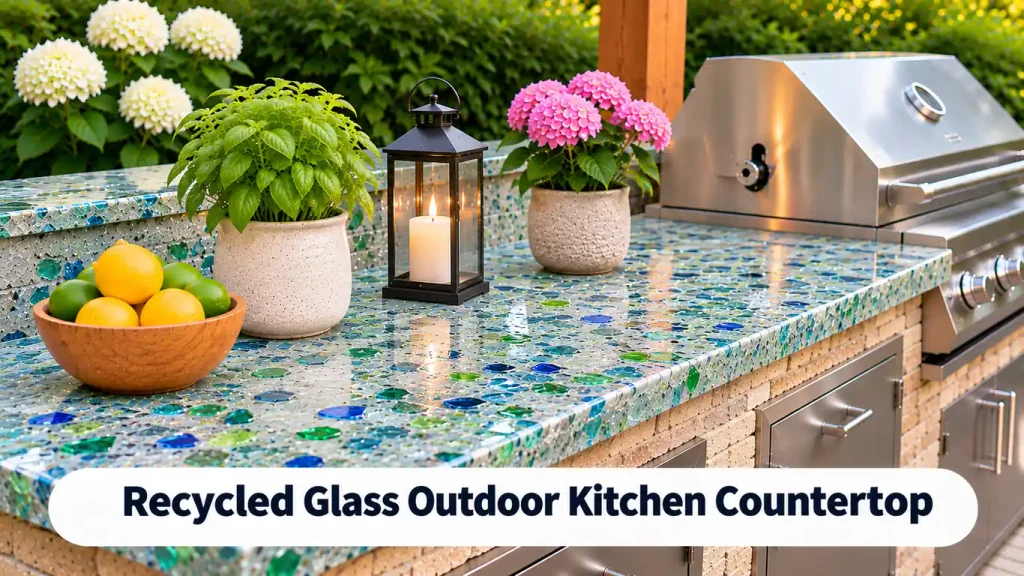
Recycled glass outdoor kitchen countertops offer an environmentally conscious and visually attractive option for modern backyard cooking spaces. These countertops incorporate recycled glass pieces into a binding material, creating colorful patterns and reflective surfaces. Their unique appearance makes them suitable for contemporary outdoor kitchens, poolside bars, and entertainment areas. However, outdoor performance depends heavily on the binder, so choosing a product specifically approved for exterior use is essential.
Design and Appearance
Recycled glass countertops provide an eye-catching appearance with colorful glass fragments embedded in a smooth surface. Popular designs feature blue, green, white, gray, and mixed-color glass pieces. Some countertops have a subtle, terrazzo-like appearance, while others feature larger reflective fragments. Pairing recycled glass with white cabinetry, stainless steel appliances, and modern outdoor furniture creates a bright and stylish backyard kitchen.
Benefits of Recycled Glass Countertops
- Eco-Friendly Materials: Incorporates recycled glass that may otherwise become waste.
- Unique Patterns: Offers distinctive colors, textures, and reflective details.
- Customizable Appearance: Available in various glass colors and aggregate sizes.
- Modern Design: Complements contemporary outdoor kitchens and bar areas.
- Durable Options: Exterior-rated products can provide reliable outdoor performance.
Maintenance and Care
Recycled glass countertops should be cleaned regularly using mild soap, warm water, and a soft cloth. Avoid abrasive cleaning pads that could damage the surface finish. Some cement-based products require periodic sealing, while resin-based varieties may need additional protection against UV exposure. Always verify that the countertop is rated for outdoor installation, particularly in areas exposed to direct sunlight and freezing temperatures. Protecting edges from heavy impacts can also help prevent chips and cracks.
17. Bluestone Outdoor Kitchen Countertop
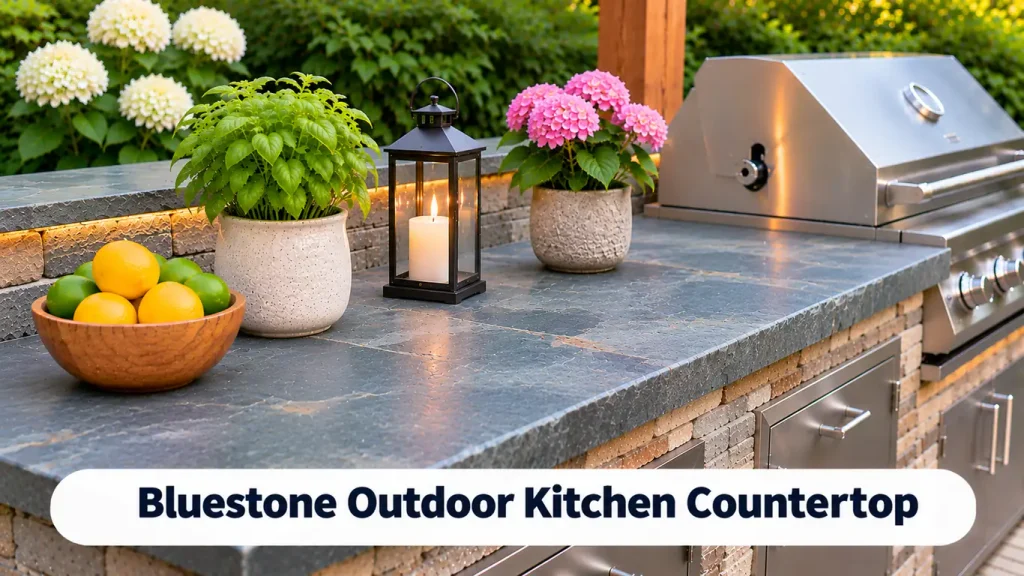
Bluestone outdoor kitchen countertops are an excellent choice for homeowners who want a natural, durable, and sophisticated backyard cooking space. This beautiful natural stone is known for its distinctive blue-gray tones, subtle textures, and timeless appearance. Bluestone complements rustic, contemporary, and traditional outdoor kitchen designs. Its natural charm pairs beautifully with stainless steel grills, wooden pergolas, and stone cabinetry, creating an inviting space for outdoor cooking and entertaining.
Design and Appearance
Bluestone countertops feature attractive shades of blue, gray, charcoal, and occasional earthy brown. Their natural color variations create a distinctive appearance that blends beautifully with outdoor landscapes. Honed bluestone provides a smooth, contemporary surface, while textured finishes offer a more rustic appearance. Pairing bluestone countertops with white stone cabinets, black metal fixtures, and warm wooden accents creates a balanced and elegant backyard kitchen.
Benefits of Bluestone Countertops
- Natural Beauty: Features distinctive blue-gray colors and attractive stone textures.
- Weather Resistance: Dense, properly selected bluestone can withstand various outdoor conditions.
- Heat Tolerance: Natural stone handles normal cooking temperatures well.
- Design Versatility: Complements modern, farmhouse, rustic, and traditional outdoor kitchens.
- Long-Lasting Durability: Quality bluestone can provide years of reliable outdoor performance.
Maintenance and Care
Bluestone countertops require regular cleaning to maintain their natural beauty and durability. Use warm water, mild soap, and a soft cloth to remove dirt, grease, and food residue. Applying a suitable penetrating stone sealer may help reduce staining and moisture absorption. Avoid acidic cleaners and abrasive chemicals that could damage the surface. In colder climates, choose freeze-thaw-resistant bluestone and ensure proper installation and drainage to prevent weather-related deterioration.
FAQs
1. What Is the Best Countertop Material for an Outdoor Kitchen?
Granite, quartzite, porcelain, and stainless steel are among the best materials for outdoor kitchen countertops. These materials offer excellent durability, heat resistance, and weather protection. Granite and quartzite provide natural beauty, while porcelain requires minimal maintenance. Stainless steel is ideal for modern cooking spaces. The best choice depends on your budget, climate, and preferred design.
2. What Is the Most Affordable Outdoor Kitchen Countertop?
Concrete and tile are often among the most affordable outdoor kitchen countertop options. Concrete offers customizable designs and a modern appearance, while outdoor-rated porcelain tiles provide various colors and patterns. Costs depend on material quality, installation, and countertop size. Choosing durable materials with lower maintenance requirements can also help reduce long-term expenses.
3. What Is the Most Weather-Resistant Outdoor Countertop?
Porcelain, granite, and stainless steel are excellent weather-resistant countertop materials. Outdoor-rated porcelain resists sunlight, moisture, and stains, while suitable granite offers durability in different climates. Marine-grade stainless steel performs particularly well in coastal environments. Proper installation, drainage, and material selection are essential for protecting outdoor countertops against rain, sunlight, and freezing temperatures.
4. Can You Use Quartz Countertops in an Outdoor Kitchen?
Engineered quartz countertops are generally not recommended for uncovered outdoor kitchens. Their resin binders can discolor or deteriorate under prolonged UV exposure and extreme temperatures. Natural quartzite is a better outdoor alternative because it offers excellent heat resistance and generally performs well in sunlight. Always confirm that the selected countertop material is approved for exterior installation.
5. How Do You Maintain Outdoor Kitchen Countertops?
Maintaining outdoor kitchen countertops involves regular cleaning, removing spills, and protecting surfaces from unnecessary damage. Use mild soap, warm water, and cleaning products suitable for the countertop material. Natural stones may require periodic sealing, while porcelain and stainless steel generally need less maintenance. Inspect surfaces regularly and follow manufacturer recommendations to maintain their appearance and durability.