
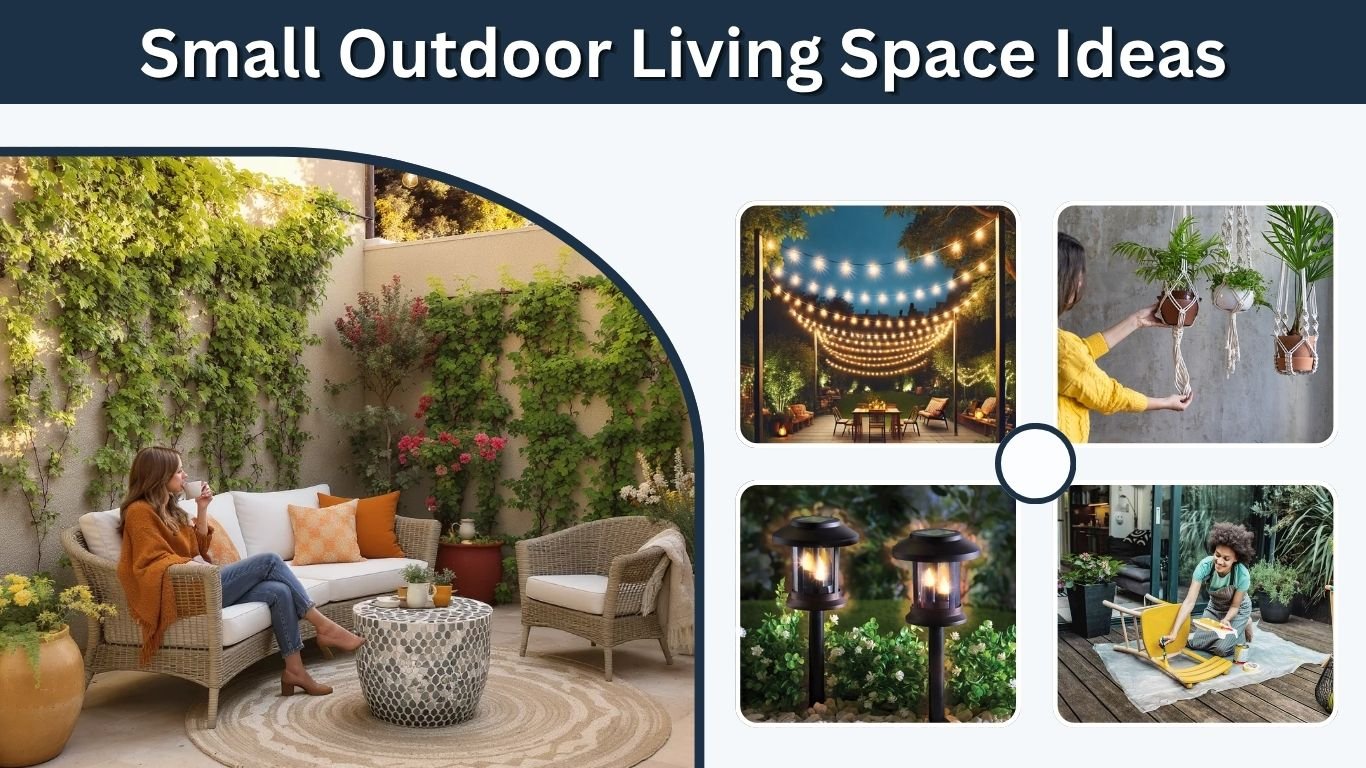
A limited backyard, patio, balcony, or narrow side yard can still become a comfortable place to relax, dine, and entertain. The best small outdoor living space ideas focus on smart furniture placement, vertical design, greenery, lighting, and multifunctional features rather than filling every available corner. Whether you are creating a tiny outdoor patio or improving a compact backyard, thoughtful planning can make the space feel larger and more inviting. These practical ideas can help you design a beautiful outdoor retreat without needing a large yard.
15 Small Outdoor Living Space Ideas
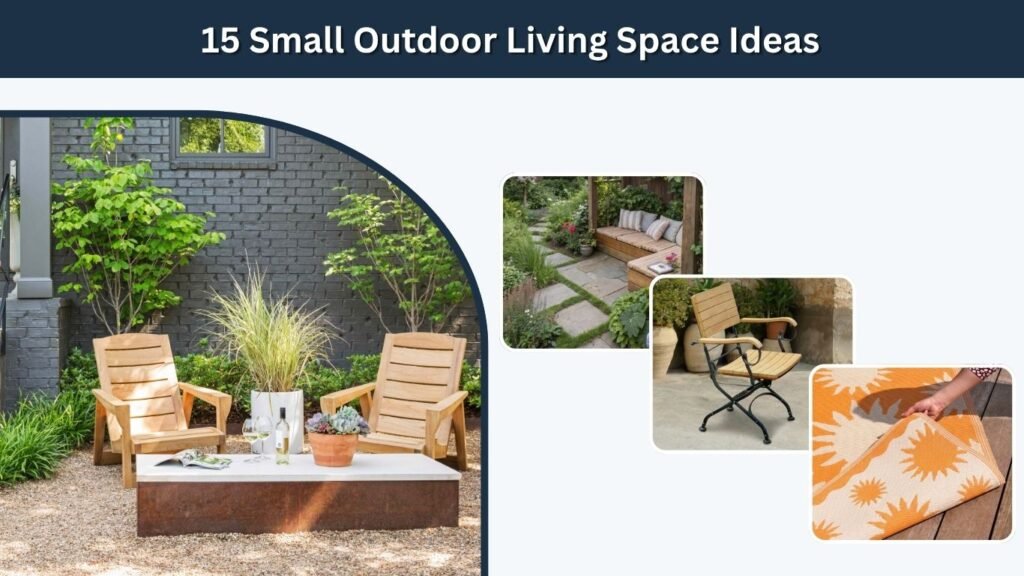
Small outdoor spaces work best when every feature has a purpose. Instead of adding many oversized pieces, choose furniture, plants, storage, and decorations that improve comfort without restricting movement. The following ideas work for patios, balconies, narrow yards, small gardens, and other compact areas. They can also be adapted for different budgets and decorating styles.
1. Create a Compact Conversation Area
Turn one corner into a dedicated sitting area using two comfortable chairs and a small table. Positioning furniture around a central point makes even a tiny patio feel intentional.
For very narrow spaces, armless chairs usually occupy less visual space than bulky outdoor sofas. Add a small outdoor rug underneath to define the seating zone without building permanent walls or dividers.
2. Use Built-In Bench Seating
Built-in benches are one of the most effective small outdoor seating area ideas because they can follow the perimeter of a patio or deck.
A bench can provide seating for several people while using less floor space than individual chairs. Adding storage underneath the seat also gives you somewhere to keep cushions, gardening tools, toys, or outdoor accessories.
3. Choose Folding Outdoor Furniture
Folding furniture makes it easier to change how a compact outdoor setting is used.
Consider:
- Folding bistro chairs
- Collapsible outdoor tables
- Stackable stools
- Folding loungers
- Wall-mounted tables
- Nesting side tables
When you need additional open space, simply fold or stack the furniture away.
4. Add Vertical Greenery
When floor space is limited, start using the walls.
Vertical gardens can transform plain fences and exterior walls into attractive green features without occupying much usable ground space. Wall-mounted planters, hanging pots, climbing vines, and tiered plant stands are particularly useful when developing outdoor garden ideas for small spaces.
5. Define the Area With an Outdoor Rug
A rug can visually organize a small outdoor living room almost instantly.
Choose a rug that fits underneath the main furniture rather than covering the entire patio. This creates a clear living zone while leaving visible flooring around the edges, which can help the area appear more spacious.
Weather-resistant outdoor rugs are usually easier to maintain in exposed environments.
How to Design a Small Outdoor Space
Successful small outdoor space design begins with understanding how you actually want to use the area. A beautiful layout will not be practical if furniture blocks pathways or leaves no room for everyday activities. Consider whether relaxation, entertaining, gardening, dining, or children’s activities are most important before choosing permanent design features.
Prioritize One Main Purpose
Avoid trying to turn a very small area into a dining room, lounge, playground, kitchen, and garden simultaneously.
Instead, choose a primary purpose.
For example, a small patio might primarily function as a relaxing lounge while a compact dining table serves as a secondary feature. Creating a clear priority keeps the space organized.
Keep Walking Paths Open
Allow enough room to move naturally between doors, seating areas, garden beds, and other features.
Furniture positioned directly across important pathways can make an otherwise attractive space feel crowded. Placing larger furniture against walls or fences often opens the center of a small area.
Use a Simple Design Palette
Too many competing colors and materials can visually shrink a compact space.
Using two or three main materials or complementary colors creates continuity. Neutral furniture combined with natural greenery and a few colorful cushions can provide interest without making the design feel overloaded.
Small Outdoor Sitting Area Ideas
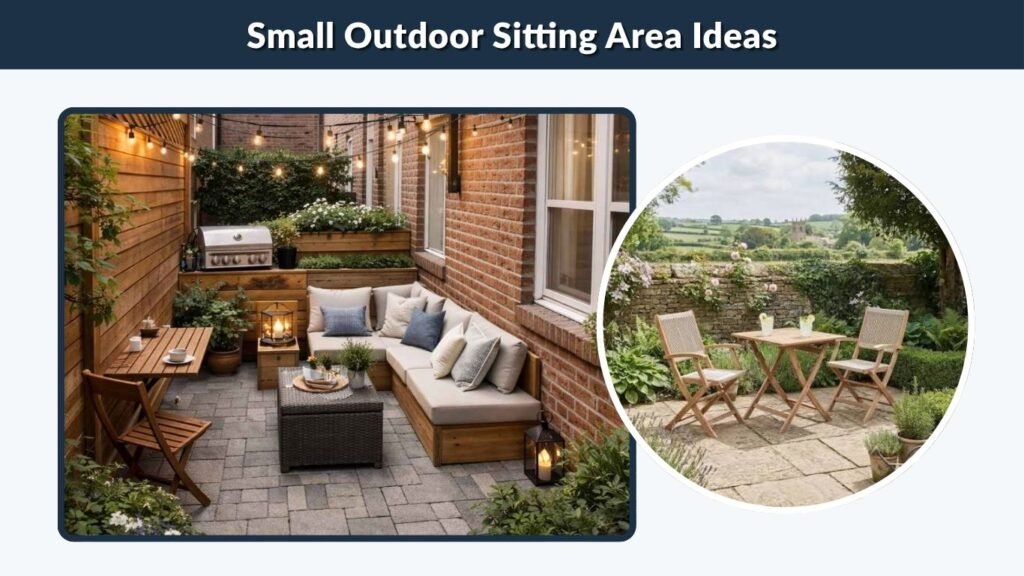
A comfortable place to sit is often the centerpiece of a small outdoor area. The goal should be creating enough seating without filling the entire patio or backyard with furniture. Flexible seating arrangements work especially well because they allow the space to accommodate quiet mornings, family gatherings, or occasional guests.
6. Build a Corner Seating Area
Corners are frequently underused in small backyards.
An L-shaped bench or sectional can transform an unused corner into a cozy outdoor conversation area while keeping the center of the patio open.
Add several cushions and a narrow coffee table to create the feeling of an outdoor living room.
7. Try a Two-Chair Bistro Setup
One of the easiest small outdoor sitting area ideas is a classic bistro arrangement.
You only need:
- Two compact chairs
- One small round table
- A planter
- Outdoor lighting
- A few comfortable cushions
This arrangement is particularly suitable for balconies, apartment patios, narrow decks, and small garden corners.
8. Add Movable Extra Seating
Poufs, lightweight stools, and small benches provide additional seating when guests arrive without permanently occupying valuable space.
They can also function as side tables or footrests. Multifunctional pieces are especially valuable when trying to make the most of a small outdoor space.
Small Outdoor Dining Ideas
You do not need a large patio to enjoy meals outside. Clever furniture selection can create an attractive dining area even on a narrow balcony or compact deck. Look for tables with smaller footprints and avoid oversized dining sets that dominate the entire layout.
9. Choose a Round Dining Table
Round tables generally improve movement in tight spaces because there are no sharp corners extending into walking areas.
A small pedestal table can work especially well because the central base leaves more room underneath for chairs and legs.
10. Install a Wall-Mounted Table
A fold-down table attached to a wall or railing is ideal for extremely limited spaces.
It can be opened during breakfast, dinner, or entertaining and folded flat afterward. Pair it with folding chairs for one of the most efficient outdoor dining ideas for small spaces.
11. Use a Narrow Bar-Height Table
A slim counter-style table can fit along a railing, fence, or wall where a conventional dining table cannot.
Bar stools can often slide underneath the table when they are not being used, leaving additional walking space.
Decorating Small Outdoor Spaces
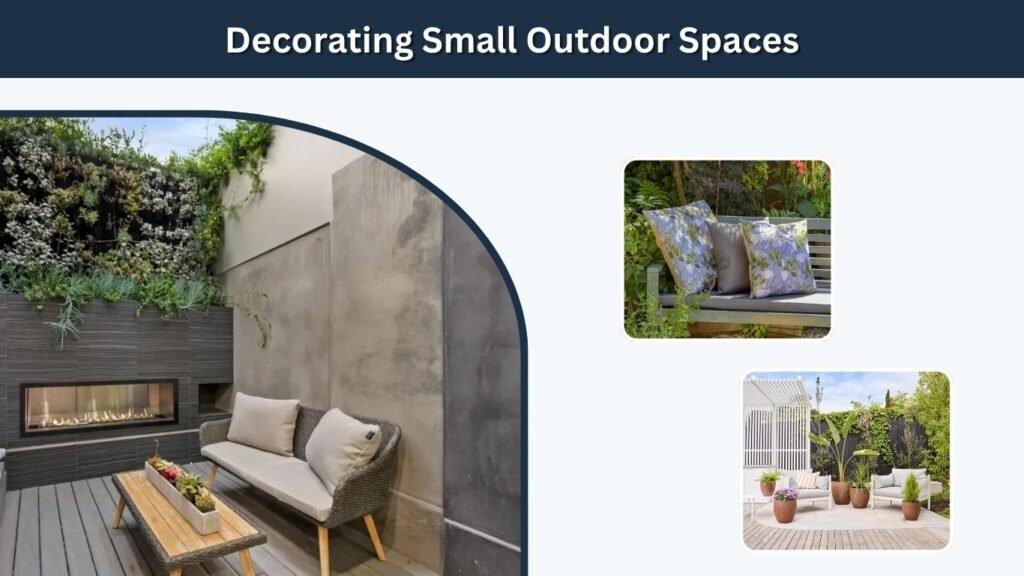
Decorating a small patio requires restraint. Instead of filling every surface with ornaments, select several features that establish the atmosphere you want. Plants, textiles, lighting, and carefully chosen accessories can make a compact space feel complete while keeping it open and functional.
Add Soft Outdoor Textiles
Outdoor cushions and throws create the comfort normally associated with indoor living rooms.
Select weather-resistant materials that can tolerate moisture and sunlight. Coordinating cushions with your outdoor rug can create a more unified design.
Introduce Height With Plants
Place plants at several different heights rather than arranging every pot on the floor.
Tall planters, hanging baskets, wall planters, and climbing plants draw the eye upward. This technique can make beautiful small outdoor spaces feel taller and more layered.
Avoid Excessive Decorations
A few larger decorative features usually look better than dozens of small accessories.
For example, one statement planter, an outdoor rug, several cushions, and attractive lighting may provide enough decoration without creating clutter.
How to Maximize Outdoor Space
Learning how to maximize outdoor space involves using areas that normally go unnoticed. Walls, corners, railings, benches, and even furniture interiors can provide additional functionality. Choosing flexible items also allows the layout to change according to different activities rather than dedicating every square foot to a single permanent use.
12. Use Furniture With Hidden Storage
Storage benches and outdoor coffee tables can conceal items that would otherwise clutter the patio.
Useful items to store include:
- Outdoor cushions
- Gardening tools
- Children’s toys
- Small barbecue accessories
- Outdoor blankets
- Decorative items
Keeping these belongings hidden helps maintain a clean, open appearance.
13. Use Walls and Railings
Install shelves, hanging planters, lantern hooks, or compact storage solutions on available vertical surfaces.
Balcony railings can also support railing planters or narrow tables, giving you additional usable space without reducing the main floor area.
14. Select Multifunctional Furniture
Furniture serving more than one purpose is particularly valuable in small outdoor living spaces.
A bench can provide seating and storage. A stool can work as a plant stand, side table, or extra chair. An ottoman can become additional seating when guests arrive.
Small Outdoor Living Spaces on a Budget
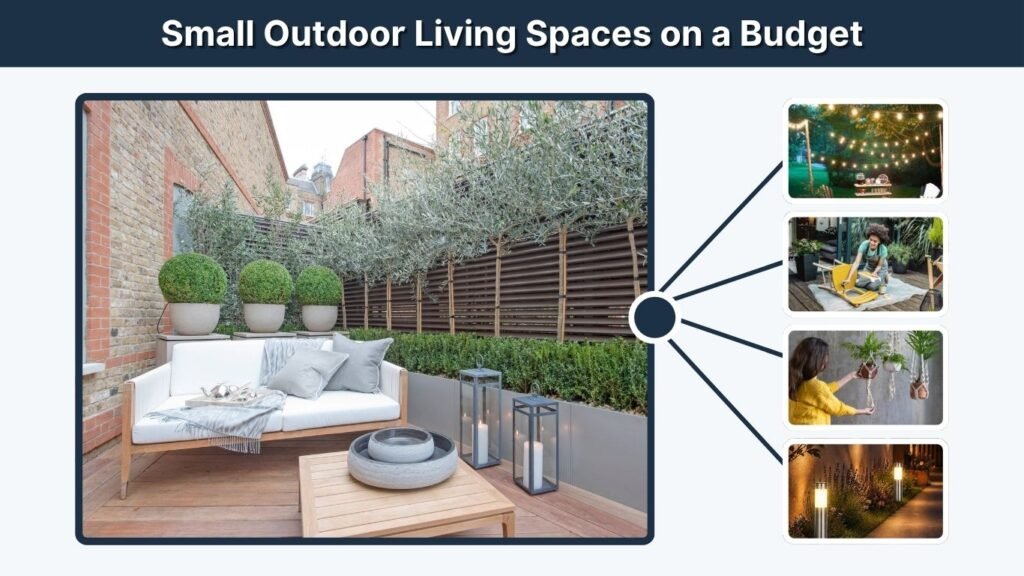
Creating an attractive outdoor retreat does not require an expensive renovation. Many affordable improvements can dramatically change how a patio or backyard feels. Concentrate your budget on comfort and functionality first, then gradually introduce decorative features as needed.
15. Upgrade the Space With Simple Accessories
Affordable changes can include:
- Adding outdoor string lights
- Painting old furniture
- Using inexpensive outdoor cushions
- Installing hanging planters
- Adding solar pathway lights
- Repurposing wooden benches
- Growing plants from smaller starter pots
These small improvements can completely refresh a tired patio without replacing every feature.
Repurpose Existing Furniture
Before buying new furniture, consider whether existing pieces can be reused outdoors.
A sturdy wooden bench may only require weather-resistant paint or sealant. Old stools can become plant stands, while containers can be repurposed as decorative planters.
Build Your Outdoor Space Gradually
Start with the essentials rather than purchasing everything simultaneously.
Create comfortable seating first, then add lighting, plants, storage, and decorative features over time. This approach makes small outdoor spaces on a budget easier to manage and helps prevent unnecessary purchases.
Small Backyard Living Space Ideas
Compact backyards often provide more possibilities than they initially appear to offer. Dividing the yard into simple functional zones can create the impression of a larger environment without physically expanding it. Good landscaping, appropriately scaled furniture, and clear pathways are usually more important than the actual dimensions of the yard.
Create Separate Visual Zones
A small backyard can contain multiple functions when boundaries remain subtle.
A rug might define the seating area while nearby planters identify the garden zone. Changes in paving materials can also distinguish dining and lounging areas without installing walls.
Keep Landscaping Proportional
Large shrubs and oversized trees can overwhelm a tiny yard.
Choose compact plants or varieties that can be maintained at an appropriate size. Layering low-growing plants with medium-height shrubs and vertical greenery creates depth without sacrificing valuable space.
Connect Indoor and Outdoor Areas
Using similar colors or materials inside and outside can make the outdoor area feel like an extension of the house.
Position seating near doors or windows and maintain clear sightlines whenever possible. This approach is particularly effective for small homes where additional living space is valuable.
Small Covered Outdoor Living Spaces
A covered patio can provide shade, weather protection, and greater year-round usability. However, a poorly designed roof or structure may make a small area feel enclosed. Lightweight coverings and visually open structures generally work better for compact environments.
Use a Pergola for Partial Shade
Pergolas provide overhead structure while allowing light and airflow through the space.
Climbing plants, outdoor curtains, or retractable shade panels can be added depending on the climate and level of privacy required.
Consider a Retractable Awning
A retractable awning offers shade when necessary while preserving an open feeling at other times.
This can be especially useful above small patios where a permanent roof might make the area darker.
Keep the Structure Visually Light
Simple posts, open sides, and lighter-looking materials can prevent a compact covered space from feeling boxed in.
Avoid unnecessarily bulky structures when the available yard is already limited.
Lighting Ideas for Small Outdoor Areas
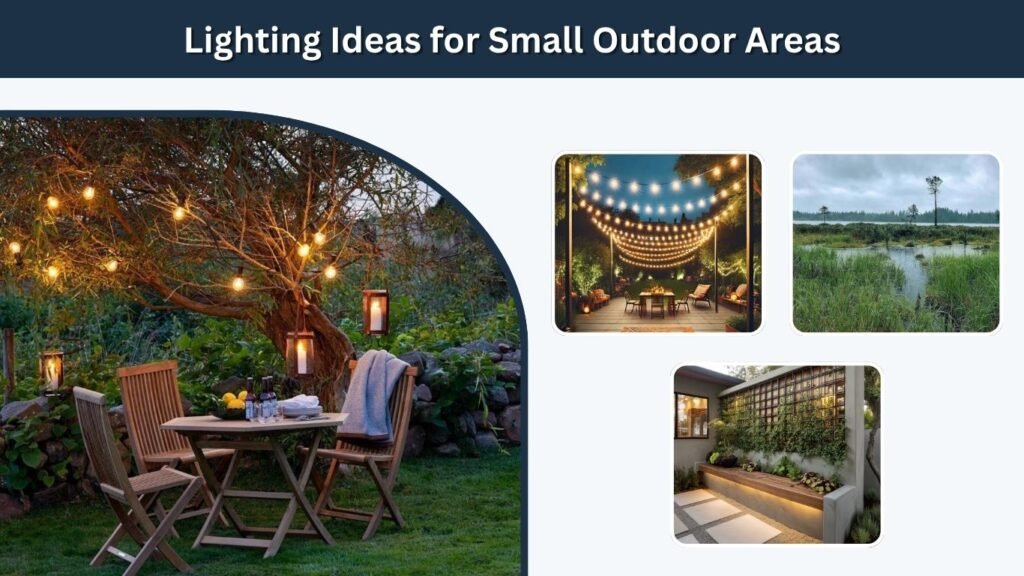
Good lighting can completely change a small outdoor space after sunset. Instead of relying on one bright fixture, several softer light sources usually create a warmer and more relaxing atmosphere. Lighting can also emphasize vertical surfaces and landscaping, making the boundaries of a compact yard less noticeable.
Use String Lights Overhead
String lights are easy to install above patios, balconies, and small sitting areas.
They provide soft illumination without taking up floor or table space.
Add Solar Lighting
Solar lights can illuminate garden paths, containers, walls, and landscaping without requiring complicated electrical installation.
Use them selectively rather than surrounding the entire area with numerous fixtures.
Highlight Plants and Walls
Uplighting a tree, climbing vine, or decorative wall draws attention beyond the center of the seating area.
This added visual depth can make a tiny outdoor area appear larger at night.
FAQs
1. How do I make a small outdoor living space look bigger?
Keep the layout uncluttered, use appropriately sized furniture, maintain clear pathways, and take advantage of vertical space. Light colors, consistent materials, mirrors in protected locations, and strategically placed plants can also create greater visual depth.
2. What furniture is best for a small outdoor space?
Folding chairs, compact bistro tables, benches with storage, nesting tables, lightweight stools, and modular furniture are excellent options. Choose pieces that can perform more than one function whenever possible.
3. How can I decorate a small outdoor space on a budget?
Start with inexpensive upgrades such as outdoor cushions, string lights, repainted furniture, hanging plants, solar lighting, and secondhand accessories. Reusing existing furniture can also significantly reduce costs.
4. How do I create outdoor dining in a small space?
Choose a round bistro table, narrow bar table, or wall-mounted folding table. Stackable or folding chairs can be stored when they are not needed, helping preserve valuable floor space.
5. What plants work well in small outdoor living spaces?
Compact shrubs, herbs, ornamental grasses, climbing vines, dwarf plants, and container-friendly flowers work particularly well. Hanging baskets and vertical planters are useful when you want more greenery without sacrificing floor space.