
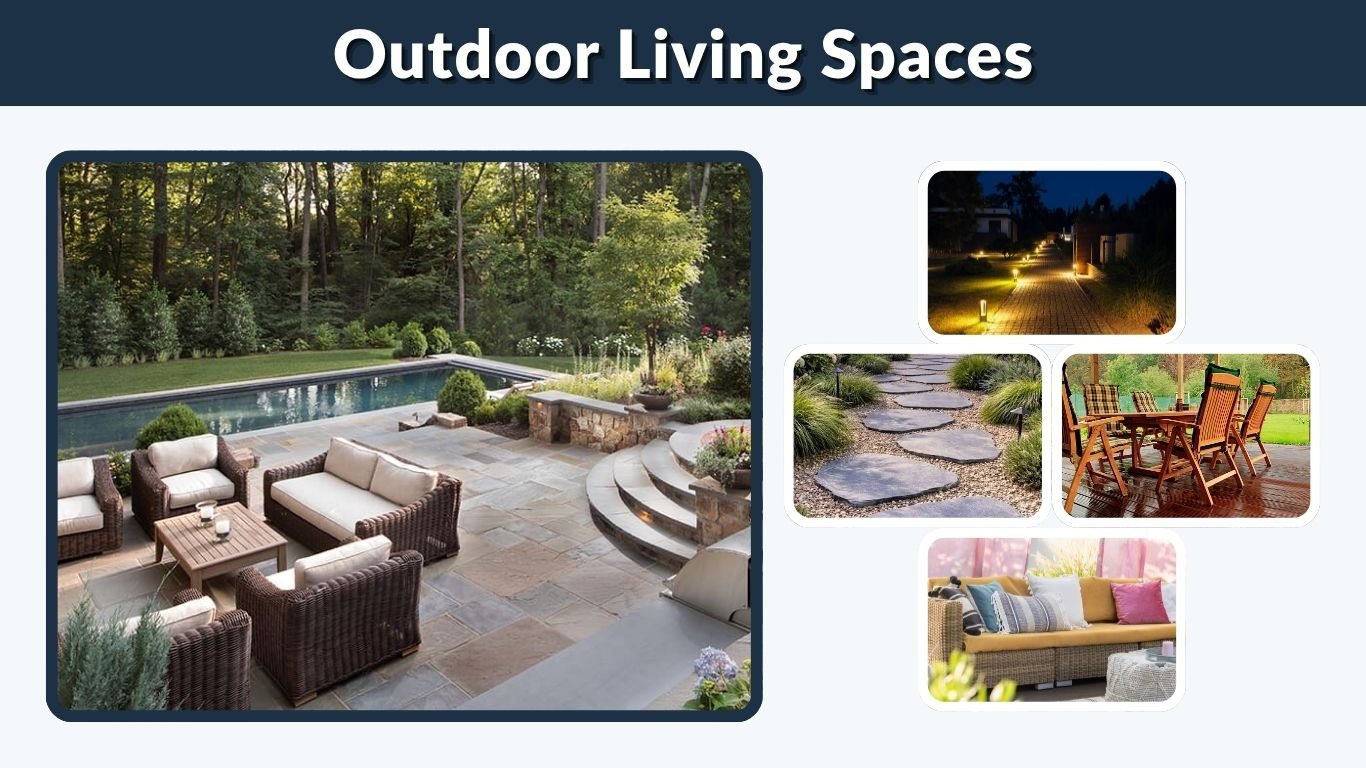
Outdoor living spaces can turn an ordinary backyard, patio, or garden into a comfortable extension of your home. With thoughtful planning, these areas can provide space for dining, relaxing, entertaining guests, cooking, or simply enjoying fresh air. You do not necessarily need a huge yard or an expensive renovation to create an inviting outdoor environment. From simple seating areas to fully equipped outdoor kitchens, there are many ways to design a functional space that matches your lifestyle, available area, and personal style.
What Are Outdoor Living Spaces?
Outdoor living spaces are designed areas outside the home that provide many of the comforts and functions normally associated with indoor rooms. They may include seating, dining furniture, shade structures, kitchens, fireplaces, lighting, gardens, or entertainment features. A successful design connects comfort with nature while making the outdoor area practical enough for regular use throughout the year.
An Extension of Your Indoor Space
A well-designed outdoor area should feel connected to the interior of your home rather than appearing like an unrelated part of the property. Similar furniture styles, materials, colors, and decorative elements can create a smooth transition between indoor and outdoor environments.
Large doors, covered patios, decks, and strategically positioned seating can further strengthen this connection. When the outdoor area is easy to access and comfortable to use, homeowners are more likely to treat it like another room.
Designed Around Everyday Activities
The purpose of the space should influence its layout. Some families want an outdoor dining room, while others prefer a quiet garden retreat or entertainment area.
Consider how frequently the area will be used and which activities matter most. Designing around your normal lifestyle usually produces a more practical space than simply adding decorative features without a clear purpose.
8 Outdoor Living Space Ideas
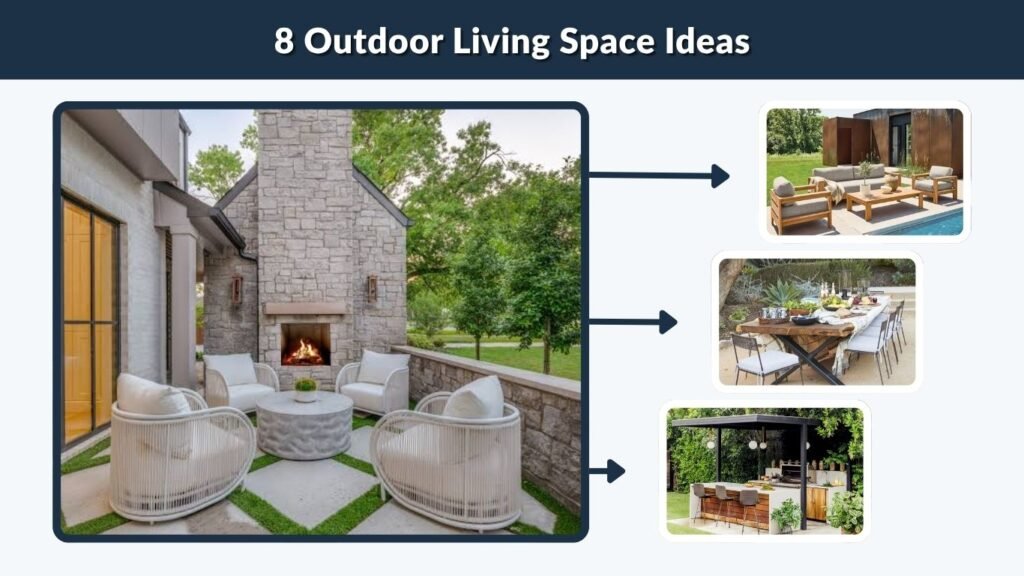
Outdoor areas can range from compact apartment balconies to large backyard entertainment zones. The best idea depends on available space, climate, household needs, and budget. Combining several functional areas can also create a complete backyard environment where family members and guests have different places to relax, eat, socialize, and enjoy outdoor activities.
Popular Outdoor Living Ideas
- Outdoor lounge area: Arrange sofas, chairs, and a coffee table to create a comfortable conversation space.
- Outdoor dining area: Add a weather-resistant dining table where family meals and gatherings can take place.
- Covered patio: A roof, pergola, or pavilion provides shade and makes the space more comfortable during sunny weather.
- Outdoor kitchen: Include a grill, counter space, sink, refrigerator, or storage depending on available room.
- Fire pit area: Build seating around a fire pit to create a warm gathering place for cooler evenings.
- Garden retreat: Surround a bench, swing, or small seating area with flowers, shrubs, and greenery.
- Poolside lounge: Comfortable loungers, umbrellas, and side tables can transform a pool area into a resort-style retreat.
- Backyard entertainment zone: Add a television, projector, speakers, games, or comfortable seating for social events.
Combining Multiple Zones
Larger spaces can include several activity zones instead of serving only one purpose. For example, one side of a patio might contain an outdoor kitchen and dining table while another includes sofas and a fire feature.
Using rugs, furniture arrangements, planters, or changes in flooring can visually separate these areas without constructing walls.
Essential Features for a Comfortable Outdoor Space
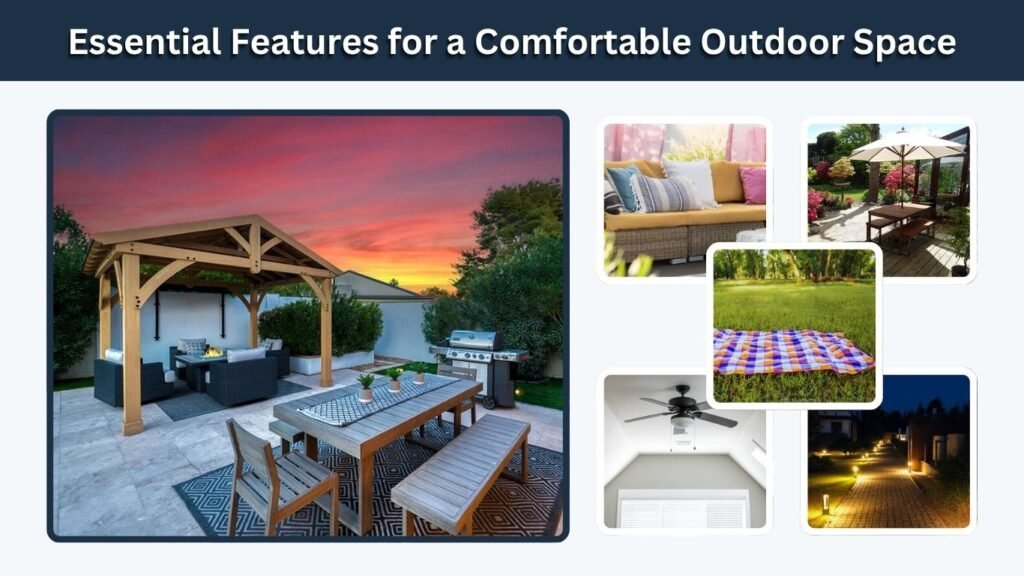
Comfort should remain one of the main priorities when planning outdoor living spaces. Beautiful furniture alone may not make an area enjoyable if it receives excessive sunlight, lacks lighting, or becomes uncomfortable during changing weather. Adding practical features helps create an environment that can be used for longer periods during both the day and evening.
Features Worth Including
- Comfortable weather-resistant seating
- Outdoor cushions and pillows
- Shade from umbrellas, pergolas, or awnings
- Outdoor rugs for defining seating areas
- Side tables and coffee tables
- Landscape and pathway lighting
- Ceiling or portable outdoor fans
- Storage boxes for cushions and accessories
- Planters, flowers, and surrounding greenery
- Privacy screens, fences, or tall plants
Create Enough Shade
Direct sunlight can make an otherwise attractive patio uncomfortable during warmer parts of the day. Pergolas, retractable awnings, umbrellas, trees, and covered patios provide valuable shade.
Consider how sunlight moves across your property before deciding where permanent shade structures should be installed. Proper positioning can make the area considerably more comfortable.
Add Privacy Without Closing the Space
Privacy helps outdoor spaces feel relaxing, particularly in neighborhoods where houses are close together.
Wood screens, decorative panels, fencing, hedges, bamboo, climbing vines, and tall container plants can block unwanted views. Mixing plants with structural screens often creates privacy while maintaining a softer and more natural appearance.
How to Design an Outdoor Living Space
Successful outdoor design starts with planning rather than purchasing furniture immediately. Consider the size and shape of the property, existing landscaping, sun exposure, drainage, access from the house, and intended activities. Establishing these basics first makes it easier to choose furniture, materials, plants, and decorative features that work together instead of competing for limited space.
Start With the Main Purpose
Decide what you want the space to accomplish. Someone who regularly hosts family dinners may prioritize a large dining table and cooking area. Another homeowner may prefer comfortable lounge seating surrounded by plants.
Identifying the primary function prevents unnecessary features from taking up valuable space.
Create Natural Traffic Flow
People should be able to walk between the house, seating areas, garden, grill, and other features without constantly moving around furniture.
Leave comfortable pathways and avoid placing large tables or sofas directly in high-traffic areas. Good circulation is especially important when entertaining groups of guests.
Keep the Design Balanced
Avoid overcrowding the space with furniture and decorations. Outdoor environments often look more attractive when landscaping and open space remain visible.
Choose a few important focal points, such as an outdoor fireplace, large dining table, water feature, or beautiful garden bed, and build the surrounding design around them.
Best Materials for Outdoor Living Areas
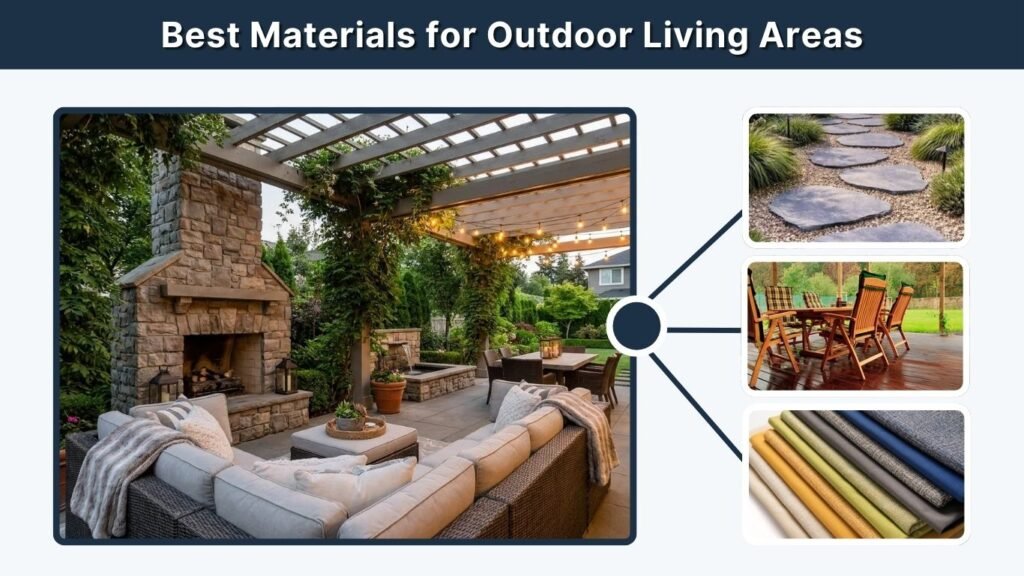
Outdoor materials must handle conditions that indoor furniture rarely experiences, including rain, sunlight, temperature changes, dirt, and moisture. Choosing durable materials can reduce maintenance while extending the usable life of furniture and structural features. Appearance is still important, but durability and suitability for your local climate should play an equally important role in material selection.
Flooring Materials
Concrete is durable and versatile, while natural stone can produce a more refined appearance. Pavers are another popular option because individual pieces can sometimes be replaced if damaged.
Wood decking provides natural warmth but generally requires periodic maintenance. Composite decking offers a similar appearance while often requiring less ongoing care.
Outdoor Furniture Materials
Aluminum furniture is lightweight and resistant to rust, while powder-coated steel provides strength. Teak and other suitable outdoor woods offer a classic natural appearance but may require maintenance.
Synthetic wicker is commonly used for lounge furniture because it combines a traditional woven appearance with better resistance to outdoor conditions.
Outdoor Fabrics
Choose cushions and upholstery made specifically for outdoor use. These fabrics are designed to resist moisture, fading, and mildew better than standard indoor textiles.
Removable cushion covers can also simplify cleaning and make it easier to refresh the appearance of the space.
Outdoor Lighting Ideas
Lighting allows outdoor living spaces to remain functional after sunset while creating a more welcoming atmosphere. Rather than relying on one extremely bright fixture, combining multiple lighting sources usually produces better results. Lighting should help people move safely through the property while also highlighting landscaping, seating zones, architectural details, and important entertainment areas.
Useful Outdoor Lighting Options
- String lights above patios or pergolas
- Pathway lights along walkways
- Wall-mounted lights near entrances
- Step and deck lighting
- Lanterns around seating areas
- Spotlights for trees and landscaping
- Pendant lights above outdoor dining tables
- Solar lights for gardens and pathways
Layer Your Lighting
Layered lighting combines functional and decorative fixtures. Bright lighting may be useful around outdoor kitchens, while softer lights work better around lounge spaces.
Low-level pathway lights improve visibility without overwhelming the landscape. Accent lights can then highlight trees, walls, water features, or architectural details.
Ways to Make Outdoor Living Spaces More Inviting
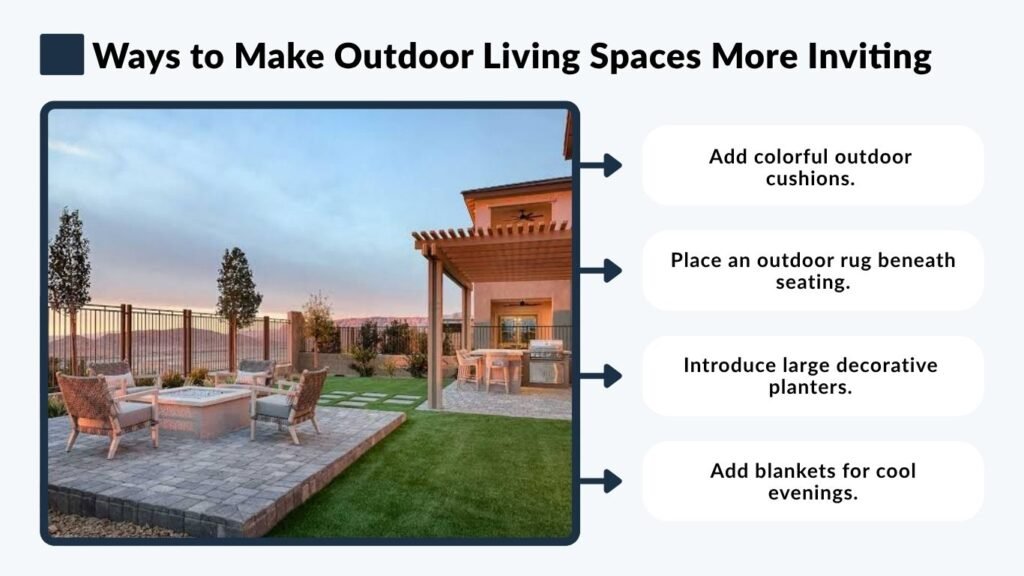
Small finishing touches often determine whether an outdoor area feels like a true living space or simply a patio with furniture. Accessories, plants, lighting, textiles, and personal decorations can introduce warmth and character. The goal is to create an environment comfortable enough that family members naturally want to spend more time outside.
Simple Ways to Improve the Space
- Add colorful outdoor cushions.
- Place an outdoor rug beneath seating.
- Introduce large decorative planters.
- Grow herbs near the dining or cooking area.
- Add blankets for cool evenings.
- Include lanterns or string lights.
- Install a small fountain or water feature.
- Add side tables beside lounge chairs.
- Use weather-resistant artwork or decorations.
Bring Nature Into the Design
Plants help soften hard surfaces such as concrete patios, decks, fences, and walls. Even small outdoor spaces can benefit from container gardens or vertical planters.
Choose plants appropriate for the amount of sunlight the location receives. Mixing different heights and textures can make landscaping appear fuller and more visually interesting.
FAQs
1. What is considered an outdoor living space?
An outdoor living space is an exterior area designed for everyday activities such as relaxing, dining, cooking, entertaining, or socializing. Patios, decks, outdoor kitchens, garden seating areas, and covered porches are common examples.
2. How can I create an outdoor living space on a budget?
Start with essential furniture and gradually add features. Affordable improvements such as string lights, container plants, outdoor rugs, cushions, umbrellas, and simple seating arrangements can significantly transform a patio without major construction.
3. What is the best furniture for outdoor living spaces?
Weather-resistant furniture made from aluminum, teak, synthetic wicker, treated wood, or suitable outdoor-grade materials generally works well. Select pieces based on your climate, available storage, maintenance preferences, and intended use.
4. How can I make a small outdoor space feel larger?
Use appropriately sized furniture, vertical gardens, lighter decorative elements, and clearly defined functional zones. Avoid overcrowding the area with oversized furniture. Keeping pathways open can also make a small patio or balcony feel more spacious.
5. Does an outdoor living space need to be covered?
No. An outdoor living area can be completely open, partially shaded, or fully covered. However, adding an umbrella, pergola, awning, pavilion, or roof can improve comfort by providing protection from strong sunlight and light rain.