
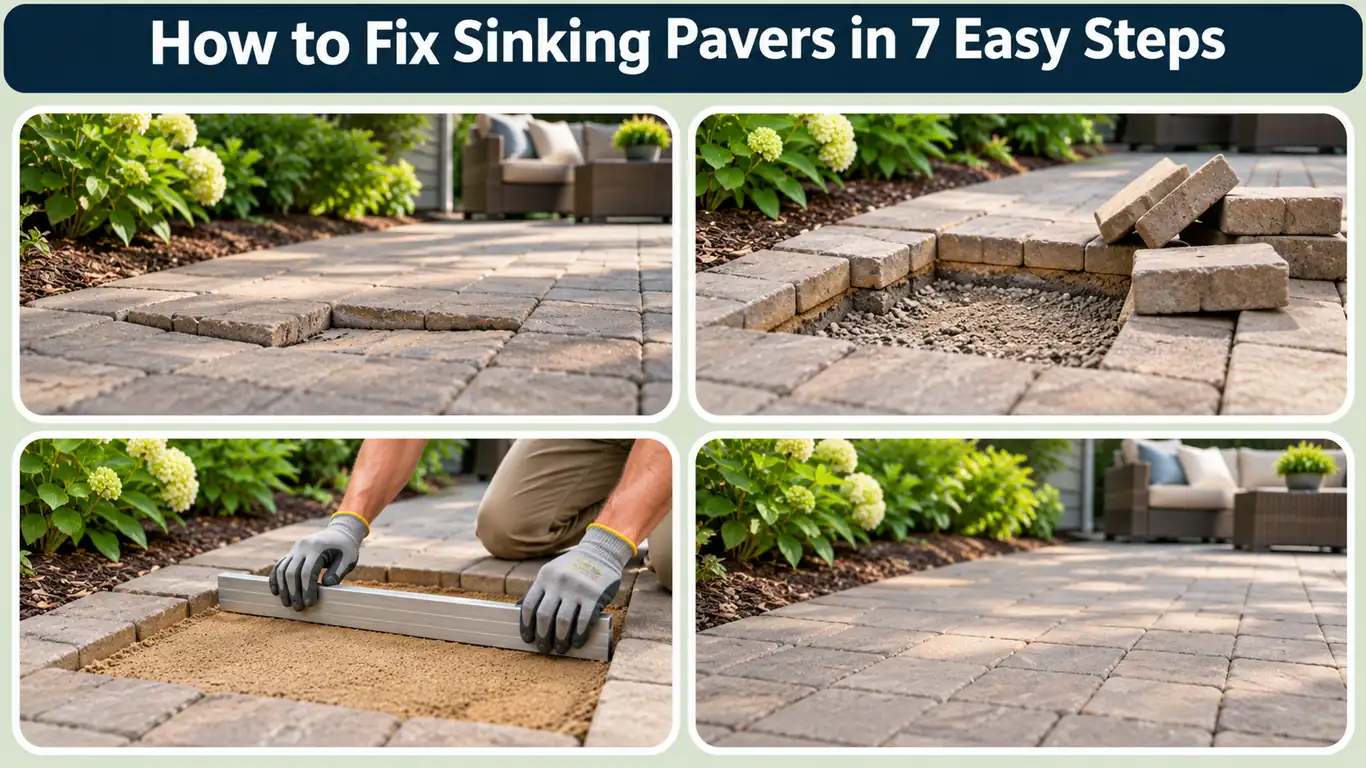
Sinking pavers can make your patio, driveway, or garden walkway uneven, unattractive, and unsafe. This problem often develops because of poor drainage, soil settlement, inadequate compaction, or an unstable foundation. Learning how to fix sinking pavers can help you restore your outdoor surface without replacing the entire paved area. With the right tools, materials, and repair techniques, you can lift sunken pavers, rebuild the damaged foundation, and restore proper alignment. Addressing the underlying cause is also essential for preventing future settlement and maintaining a durable outdoor surface.
Why Do Pavers Sink Over Time?
Pavers are designed to provide a durable outdoor surface, but their stability depends largely on the foundation underneath. When the underlying soil, gravel, or bedding sand becomes unstable, individual pavers may gradually sink or shift. Understanding the common causes of sinking pavers helps you choose the correct repair method and avoid dealing with the same problem repeatedly.
Poor Soil Compaction
Loose soil can settle gradually under the weight of paving stones, furniture, vehicles, and regular foot traffic. Inadequate compaction during installation increases the risk of uneven settlement.
Water Erosion and Poor Drainage
Rainwater and concentrated runoff can wash away bedding materials underneath pavers. Poor drainage may also soften the underlying soil, causing sections of the paved surface to sink.
Insufficient Gravel Base
A shallow or improperly compacted gravel foundation may not provide adequate support. This problem is particularly common in driveways and other areas exposed to heavy loads.
Tree Roots and Underground Movement
Growing or decaying tree roots can disturb the paver foundation. Underground leaks, soil movement, and seasonal freeze-thaw cycles may also contribute to uneven paving surfaces.
Tools and Materials Needed to Fix Sinking Pavers
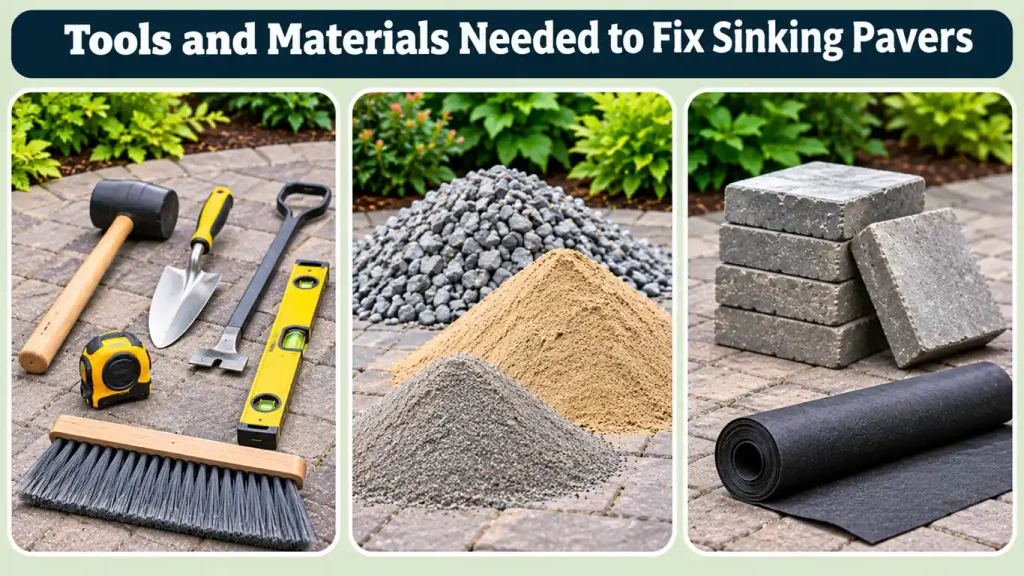
Gathering the appropriate tools and materials before starting your repair makes the process more efficient. Most localized paver repairs require basic landscaping tools and suitable foundation materials. Depending on the size of the damaged area, you may also need specialized compaction equipment to rebuild the foundation and achieve a stable, evenly aligned surface.
Essential Tools
- Paver removal tool
- Shovel or garden trowel
- Spirit level
- Rubber mallet
- Hand tamper or plate compactor
- Straightedge or screed board
- Measuring tape
- Stiff-bristled broom
Required Materials
- Crushed gravel or aggregate base
- Concrete bedding sand
- Polymeric sand or compatible joint sand
- Replacement pavers, if necessary
- Paver edge restraints
- Geotextile fabric, where appropriate
How to Fix Sinking Pavers in 7 Easy Steps
Repairing sinking pavers involves more than simply adding sand beneath the affected stones. A successful repair requires inspecting the foundation, correcting drainage issues, and rebuilding unstable areas. The following seven steps can help restore sunken patio pavers, brick walkways, and other paved outdoor surfaces while reducing the likelihood of recurring settlement.
1. Identify the Sunken Area
Inspect the paved surface and identify any depressed, tilted, or rocking pavers. Place a straightedge across the affected section to determine how far the stones have settled compared with the surrounding surface.
Mark the damaged area before beginning repairs. Check for nearby drainage problems, soil erosion, or loose edge restraints that could contribute to settlement.
2. Remove the Sinking Pavers
Carefully lift the affected stones using a paver removal tool or suitable flat tool. Remove additional surrounding pavers if necessary to provide enough working space.
Place the removed stones in their original arrangement to make reinstallation easier. Set aside cracked or severely damaged pavers for replacement.
3. Remove Damaged Bedding Sand
Use a shovel or garden trowel to remove loose, contaminated, or uneven bedding sand. Continue until you expose the gravel foundation beneath the affected section.
Inspect the exposed base for depressions, moisture, erosion, or unstable aggregate. Avoid covering foundation problems with additional sand because the surface may sink again.
4. Repair and Compact the Gravel Base
Remove unstable material and replace it with suitable crushed gravel. Add the aggregate in manageable layers and compact each layer thoroughly using a hand tamper or appropriate plate compactor.
Check the repaired foundation with a straightedge. Ensure the base is firm and follows the existing drainage slope before adding bedding sand.
5. Add and Level Fresh Bedding Sand
Spread a uniform layer of suitable concrete bedding sand over the repaired gravel foundation. For conventional paver installations, the bedding layer is generally about one inch thick before final compaction.
Use a straight board to smooth the sand and maintain consistent thickness. Avoid using excessive sand to compensate for a poorly prepared gravel base.
6. Reinstall and Align the Pavers
Place the original pavers back into their previous positions while maintaining consistent joint spacing. Use a rubber mallet to make minor adjustments without damaging the paving stones.
Check the repaired section against the surrounding surface using a straightedge. Maintain the intended drainage slope and correct noticeable height differences.
7. Fill the Joints and Finish the Repair
Spread compatible joint sand across the repaired area and sweep it into the gaps. Complete compaction according to the paver manufacturer’s recommendations, using appropriate surface protection when necessary.
Remove excess sand from the surface. If using polymeric sand, follow the manufacturer’s watering and curing instructions before using the repaired area.
How to Fix Sinking Patio Pavers
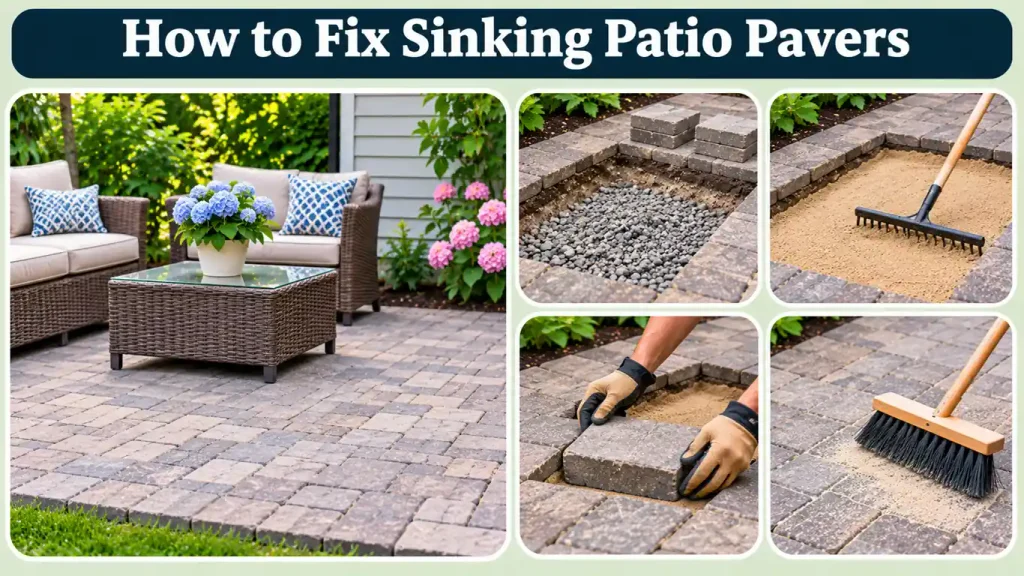
Patio pavers frequently sink because of rainwater runoff, inadequate foundation preparation, or gradual soil settlement. Since patios are primarily designed for pedestrian traffic and outdoor furniture, localized sinking can often be repaired without rebuilding the entire surface. However, identifying the source of the problem is essential for achieving a stable and long-lasting repair.
Repair Localized Depressions
Remove the affected patio stones and inspect the underlying gravel foundation. Rebuild and compact any settled areas before adding fresh bedding sand and reinstalling the pavers.
Improve Patio Drainage
Ensure rainwater flows away from your home and does not collect on the patio. Redirect nearby downspouts and address drainage problems that could cause erosion beneath the paving stones.
How to Fix Sinking Brick Pavers
Brick pavers provide an attractive surface for patios, pathways, and garden areas, but they may become uneven when their foundation deteriorates. Repairing brick pavers requires careful handling because older bricks can chip or crack during removal. Preserving the original paving pattern and rebuilding the underlying foundation helps restore both appearance and stability.
Brick Paver Repair Tips
- Remove sunken bricks carefully using a suitable lifting tool.
- Clean old joint sand from the brick edges.
- Remove unstable bedding and damaged base materials.
- Rebuild and compact the gravel foundation.
- Add a consistent layer of bedding sand.
- Reinstall bricks in their original pattern.
- Refill the joints with compatible joint sand.
How to Fix Sinking Driveway Pavers
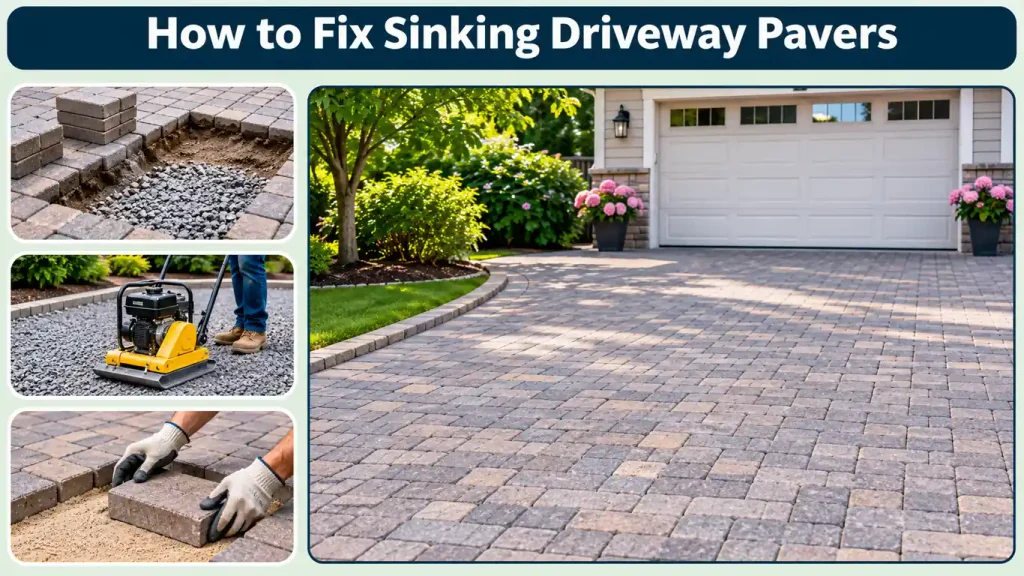
Driveway pavers experience significantly greater pressure than patio or walkway pavers because they support the weight of vehicles. Sinking driveway stones may indicate insufficient base depth, poor compaction, or drainage problems. Repairing these areas requires particular attention to foundation strength and load-bearing capacity to prevent recurring depressions under regular vehicle traffic.
Rebuild the Damaged Foundation
Remove the affected driveway pavers and inspect the full depth of the damaged base. Replace unstable aggregate and compact each layer using suitable equipment designed for the repair area.
Strengthen High-Traffic Areas
Pay particular attention to areas where vehicles regularly park, turn, or travel. If widespread sinking occurs, consider professional assessment and reconstruction of the driveway foundation.
How to Prevent Pavers From Sinking Again
Preventing future settlement is just as important as repairing existing damage. Proper drainage, a well-compacted foundation, and regular maintenance can significantly improve the stability of outdoor paving surfaces. Taking preventive measures also helps reduce unnecessary repair costs while keeping your patio, driveway, or walkway attractive, comfortable, and safe for everyday use.
Effective Prevention Tips
- Install a properly compacted aggregate foundation.
- Maintain consistent bedding sand thickness.
- Provide adequate drainage away from buildings.
- Install secure perimeter edge restraints.
- Replenish missing joint sand when necessary.
- Redirect concentrated water runoff.
- Repair loose or uneven pavers promptly.
- Avoid loads exceeding the pavement’s intended capacity.
FAQs
1. Can you fix sinking pavers without removing them?
Minor joint sand loss can be addressed without removing pavers, but genuinely sunken stones usually require lifting. Removing the affected pavers allows you to inspect and repair the underlying foundation rather than temporarily hiding the problem.
2. Can I use sand to raise sunken pavers?
Bedding sand can correct minor surface height differences when the underlying foundation remains stable. However, significant settlement requires repairing and compacting the gravel base instead of adding an excessively thick layer of sand.
3. Why do my patio pavers keep sinking?
Repeated sinking commonly results from poor drainage, inadequate compaction, unstable soil, or insufficient gravel base depth. Identifying and correcting the underlying cause is essential for preventing recurring settlement and maintaining an even patio surface.
4. Can sinking pavers be repaired without replacing the entire patio?
Yes, localized sinking can usually be repaired by removing the affected stones, rebuilding the foundation, and reinstalling the original pavers. Extensive settlement or widespread foundation damage may require partial or complete patio reconstruction.
5. Does polymeric sand prevent pavers from sinking?
Polymeric sand helps stabilize paver joints and reduce joint material erosion. However, it cannot prevent sinking caused by unstable soil, inadequate gravel foundations, or poor drainage. Proper foundation preparation remains essential for long-term stability.