
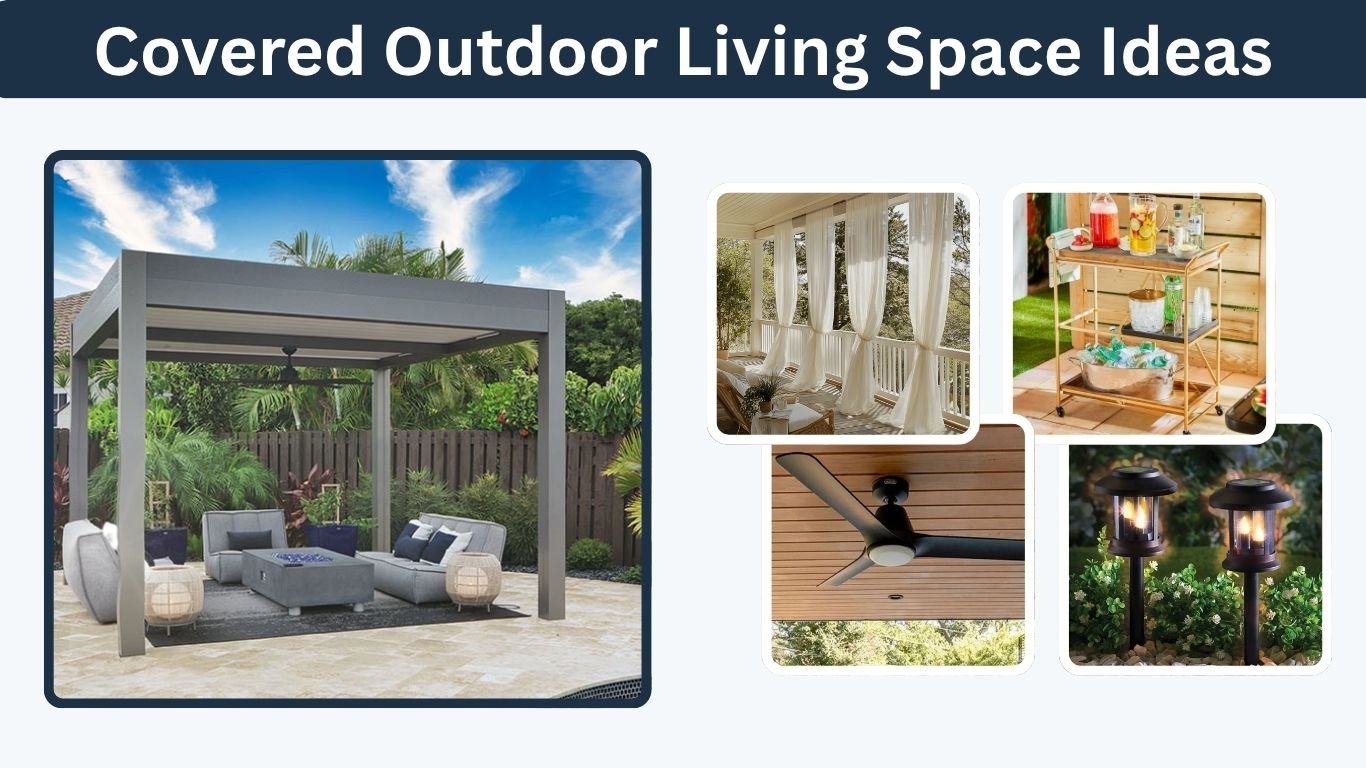
A well-designed covered patio can turn an ordinary backyard into a comfortable extension of your home. The best covered outdoor living space ideas combine shade, weather protection, comfortable seating, lighting, and practical features without making the area feel enclosed. Whether you prefer a modern outdoor room, an attached patio, or a freestanding backyard retreat, the right design can improve both comfort and usability. These ideas will help you create an inviting covered space for relaxing, dining, entertaining, and enjoying your backyard throughout more of the year.
15 Covered Outdoor Living Space Ideas
A successful covered outdoor area should feel connected to both the home and surrounding landscape. The roof provides protection, but furniture placement, materials, lighting, airflow, and landscaping determine how comfortable the space actually feels. These design ideas work for large backyards, compact patios, attached structures, and detached outdoor rooms while supporting different budgets and architectural styles.
1. Create a Covered Outdoor Living Room
Turn your patio into a true covered outdoor living room by arranging a sofa, lounge chairs, and a coffee table beneath the roof.
Choose weather-resistant furniture that feels as comfortable as indoor seating. An outdoor rug can visually define the space, while cushions and throws add softness.
Position the seating around a central feature such as a fireplace, coffee table, garden view, or television to create a natural conversation area.
2. Add a Pergola With a Solid Roof
Pergolas are attractive, but adding a solid or partially solid roof makes them more practical during rain and intense sunlight.
Popular roofing options include:
- Metal panels
- Polycarbonate sheets
- Wood roofing
- Retractable panels
- Insulated roof systems
- Clear roofing sections
This design combines the appearance of a pergola with the functionality of a more permanent covered patio.
3. Build an Attached Covered Patio
An attached patio creates a smooth transition between indoor and outdoor living areas.
Extending the roofline from the house can make the patio feel like another room rather than a separate structure. Large doors opening directly onto the patio enhance this connection even further.
Backyard attached covered patio ideas work especially well beside kitchens, family rooms, and dining areas.
4. Design a Freestanding Covered Retreat
A covered patio does not always need to connect directly to the house.
A freestanding pavilion can create a destination farther into the yard. Surrounding it with gardens, pathways, trees, or landscape lighting helps it feel intentional rather than isolated.
This arrangement works well when homeowners want separate spaces for entertaining and everyday relaxation.
Modern Covered Outdoor Living Spaces
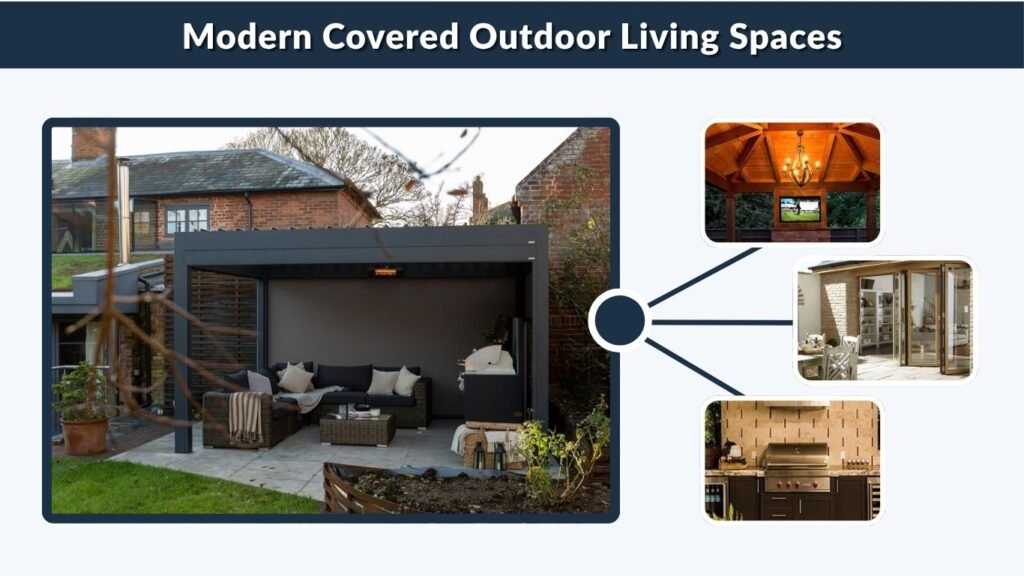
Modern covered spaces typically emphasize clean lines, simple materials, and uncluttered layouts. Instead of heavy decorative details, these designs rely on strong architectural forms, neutral furniture, and thoughtful lighting. Large openings help maintain a connection with the landscape while still providing the weather protection people expect from a covered patio.
5. Use Clean Architectural Lines
Simple roof shapes and minimal supports can make modern covered outdoor living spaces feel sophisticated.
Flat or low-slope roofs work particularly well with contemporary homes. Combine them with large concrete pavers, wood accents, and streamlined furniture to create a cohesive look.
Avoid filling the patio with too many accessories. Modern design usually benefits from visual simplicity.
6. Combine Wood and Dark Metal
Wood adds warmth while dark metal introduces contrast.
This material combination can be used for:
- Ceiling beams
- Furniture frames
- Railings
- Outdoor kitchens
- Light fixtures
- Patio structures
Natural wood ceilings beneath dark structural beams are especially popular because they make covered spaces feel warm without appearing traditional.
7. Install Large Sliding or Folding Doors
Wide doors can blur the boundary between indoor and outdoor spaces.
When open, they allow the kitchen, living room, or dining room to connect directly with the covered patio. This creates a larger entertaining area and makes movement between both spaces easier.
Using similar flooring tones indoors and outside can strengthen this visual connection.
Covered Outdoor Seating Area Ideas
Comfortable seating determines whether a covered patio becomes a frequently used living area or simply an architectural feature. The best covered outdoor seating area ideas provide enough seating for everyday use while still allowing guests to move freely. Furniture should also suit the dimensions of the patio instead of overpowering it.
8. Arrange Seating Around a Fireplace
An outdoor fireplace creates an immediate focal point.
Place a sofa opposite the fireplace and position lounge chairs on either side. This arrangement encourages conversation while allowing everyone to enjoy the warmth and view.
A fireplace can also make covered outdoor living areas more comfortable during cooler seasons.
9. Create an L-Shaped Conversation Area
Sectional sofas work especially well in corners.
An L-shaped layout provides generous seating while keeping the center of the patio open. Add a low coffee table or fire table in the middle to complete the arrangement.
This is particularly useful for covered back patios where available furniture placement may be limited by doors and exterior walls.
10. Include Flexible Extra Seating
Not every seat needs to be permanent.
Consider adding:
- Lightweight stools
- Outdoor poufs
- Small benches
- Stackable chairs
- Movable ottomans
Flexible furniture makes it easier to accommodate additional guests without crowding the patio every day.
Covered Backyard Patio Ideas for Entertaining
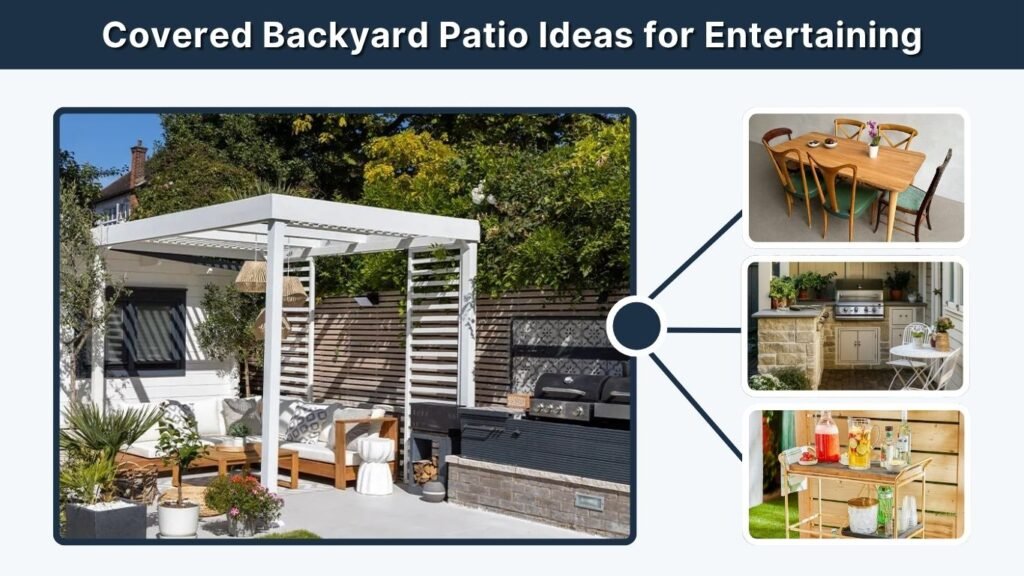
A covered patio can become one of the most useful entertaining spaces around the home. Protection from direct sun and light rain allows gatherings to continue in conditions that might otherwise send everyone indoors. Designing separate areas for cooking, dining, and conversation can make even a moderate-sized patio feel more organized and functional.
11. Add an Outdoor Dining Area
Place a dining table beneath the covered area so meals are protected from direct sunlight.
A ceiling fan above the table can improve airflow during warm weather, while pendant lighting creates atmosphere in the evening.
For smaller patios, choose a round table or narrow rectangular table to preserve walking space.
12. Build an Outdoor Kitchen
An outdoor kitchen can transform a covered outdoor entertaining area into a complete gathering space.
Depending on available room, it may include a grill, countertop, sink, refrigerator, or storage cabinets.
Keep grills and cooking equipment positioned according to manufacturer clearance requirements and local building regulations, particularly beneath combustible roof structures.
13. Add a Beverage Station
A full kitchen is not always necessary.
A small beverage station with counter space and an outdoor-rated refrigerator can make entertaining much easier.
Position it away from major walkways so guests can get drinks without interfering with cooking or seating areas.
Covered Patio Designs Attached to the House
Attached covered patios are popular because they feel like natural extensions of the home. Their design should complement the existing architecture rather than looking like an unrelated addition. Roof pitch, ceiling height, columns, exterior finishes, and drainage all influence how well the new structure integrates with the original building.
Match the Existing Architecture
Use materials that relate to the house.
For example, repeating existing brick, stone, siding, roof colors, or trim details can create continuity. The structure does not need to copy the home exactly, but it should feel visually connected.
Consider Roof Height Carefully
Higher ceilings generally make an attached covered patio feel more spacious.
Vaulted or cathedral ceilings can create an especially open atmosphere while providing room for ceiling fans and statement lighting.
Lower roofs can still work well but usually benefit from lighter ceiling finishes and fewer bulky structural elements.
Plan Drainage Before Construction
Roof runoff needs somewhere to go.
Gutters, downspouts, grading, and drainage systems should direct water away from both the patio and house foundation. Proper planning is particularly important when adding a covered patio to an existing house.
Structural additions may also require permits and professional engineering depending on local regulations.
Wood Covered Patio Ideas
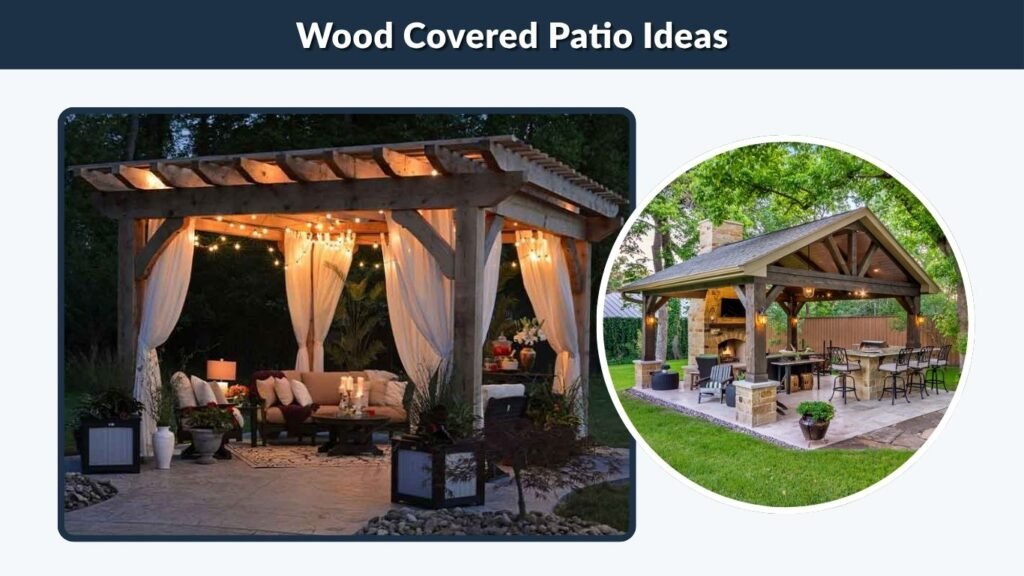
Wood remains one of the most attractive materials for outdoor structures because it adds warmth and natural character. It works equally well with traditional homes, rustic landscapes, and contemporary architecture. However, exposed wood requires appropriate finishing and maintenance to remain attractive in changing weather conditions.
14. Use Exposed Wood Beams
Exposed rafters or beams give a covered patio architectural interest.
Natural wood works particularly well above stone fireplaces, concrete patios, and neutral outdoor furniture.
Staining the wood allows its grain to remain visible while giving you control over the overall tone.
Add a Wood-Plank Ceiling
A finished wood ceiling can make the area feel more like an outdoor room.
Planks running along the length of the patio can visually elongate the space. Recessed lights or ceiling fans can then be integrated into the finished surface.
Proper exterior-grade materials and finishes are essential in humid or exposed environments.
Covered Patio Lighting and Comfort
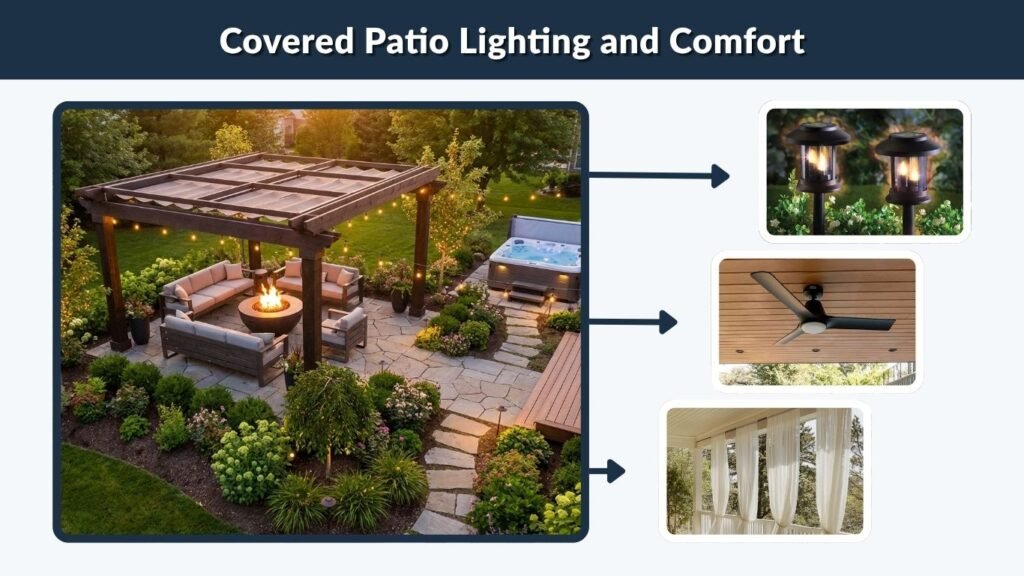
A roof provides an opportunity to incorporate permanent lighting, fans, and other features that are more difficult to install in completely open patios. Layering different types of lighting can make the space practical for evening activities while maintaining a comfortable atmosphere.
15. Layer Different Lighting Sources
Rather than relying on one bright fixture, combine several light sources.
Useful options include:
- Recessed ceiling lights
- Pendant lights
- Wall sconces
- Outdoor lamps
- Landscape lights
- String lights
Task lighting can illuminate dining and cooking areas, while softer accent lighting creates a relaxed atmosphere.
Install Ceiling Fans
Covered patios can trap warm air during hot weather.
Ceiling fans improve air circulation and may make the seating area feel more comfortable. Choose fixtures specifically rated for damp or outdoor environments.
Add Curtains or Screens
Outdoor curtains provide flexible privacy and shade.
Retractable screens can also help reduce insects without permanently enclosing the patio. These features are particularly useful when the covered space faces neighboring properties or receives strong afternoon sunlight.
How to Plan the Best Covered Outdoor Space
The best design depends on how the area will actually be used. A family that frequently hosts large gatherings needs a different layout than someone creating a quiet reading retreat. Establishing priorities before construction or purchasing furniture can prevent expensive mistakes and produce a more functional result.
Determine the Main Function
Decide whether your covered area will primarily be used for dining, relaxing, entertaining, cooking, or several activities.
Give the most important function the largest portion of available space.
Consider Sun, Rain, and Wind
Observe your backyard throughout the day before deciding where to place the structure.
Sun direction, prevailing winds, drainage patterns, and nearby trees can influence roof orientation and furniture placement.
Keep Proportions Balanced
The structure should fit both the house and yard.
An enormous roof may overwhelm a small property, while an undersized patio can feel disconnected from a large home.
Proportion is one of the most important elements of successful covered patio designs.
FAQs
1. What is the best type of cover for an outdoor living space?
The best option depends on your climate, budget, and architectural style. Solid roofs provide maximum weather protection, while pergolas, adjustable louvers, and retractable covers provide greater control over sunlight and ventilation.
2. Does a covered patio need to be attached to the house?
No. Covered patios can be either attached or freestanding. Attached designs provide convenient access to indoor spaces, while detached pavilions can create a separate backyard destination.
3. How can I make a covered outdoor living space look modern?
Use simple rooflines, neutral furniture, minimal decoration, large-format flooring, wood-and-metal combinations, and streamlined lighting. Maintaining open sightlines to the yard can also create a more contemporary appearance.
4. What should I put in a covered outdoor living area?
Common features include weather-resistant seating, dining furniture, ceiling fans, lighting, rugs, fireplaces, televisions, outdoor kitchens, plants, and storage. Choose features according to available space and how you plan to use the area.
5. Is adding a covered patio to a house worth it?
A well-designed covered patio can improve everyday outdoor usability by providing shade, rain protection, and additional space for relaxing or entertaining. Its financial value varies according to construction quality, climate, property type, and local housing market.