
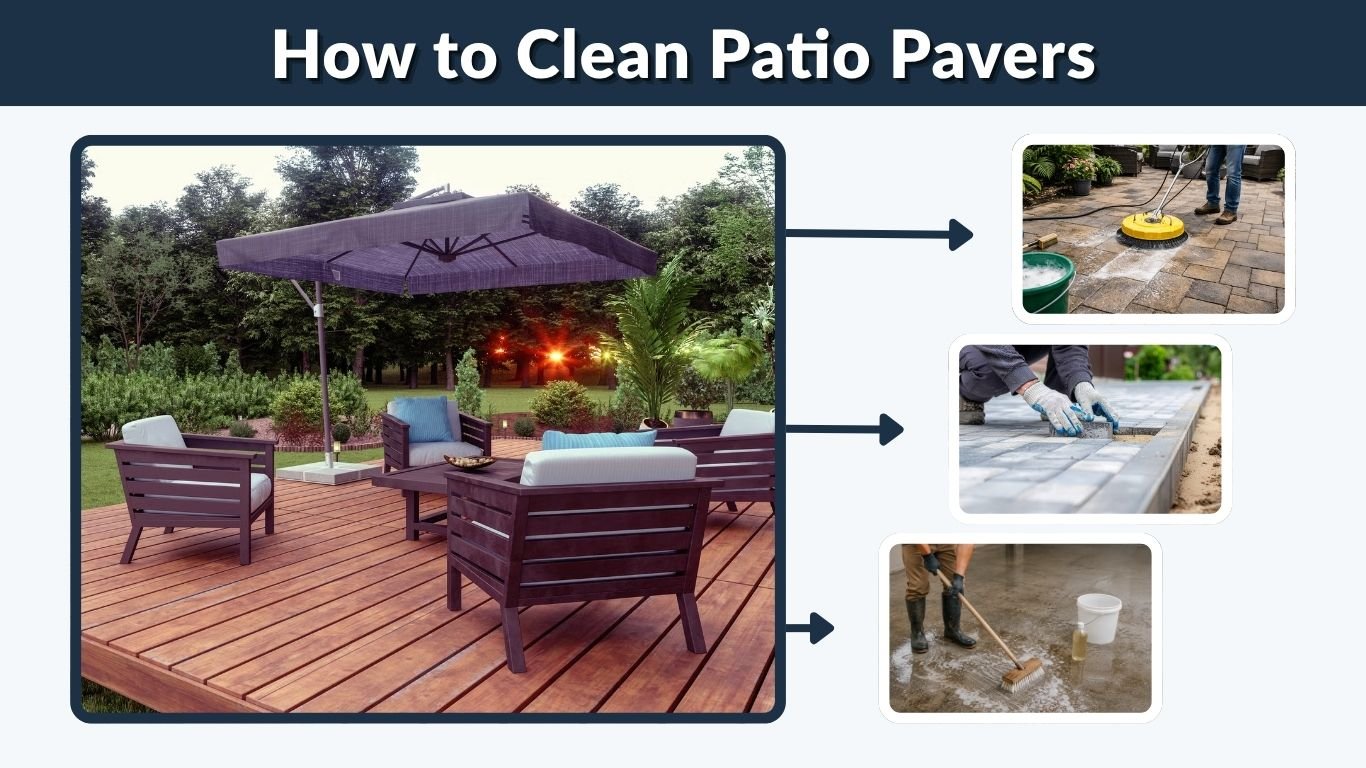
Learning how to clean patio pavers properly can restore a dirty outdoor space and help prevent stains, weeds, moss, and grime from becoming harder to remove. Whether your patio uses concrete, brick, or stone pavers, the safest approach is usually to start with gentle cleaning before trying stronger products or pressure washing. With a few basic tools and the right paver cleaning solution, you can refresh the surface, protect the joints, and keep your patio looking neat throughout the year.
What to Use to Clean Patio Pavers
Choosing the right supplies is an important part of cleaning patio pavers without damaging their color, finish, or jointing material. Most lightly soiled patios do not require harsh chemicals. Warm water, mild soap, and a stiff brush can handle everyday dirt, while specific stains may need a cleaner designed for concrete, brick, or natural stone.
Basic Paver Cleaning Tools
For routine patio cleaning, prepare:
- Stiff-bristle outdoor broom
- Garden hose
- Bucket
- Warm water
- Mild dish soap
- Scrub brush
- Garden gloves
- Weed-removal tool
- Paver-safe cleaning product
- Replacement joint sand if required
Best Cleaning Solution for Pavers
For general dirt, mix warm water with a small amount of mild dish soap. This simple paver cleaning solution helps loosen surface grime without being unnecessarily aggressive.
For grease, rust, mold, or deep discoloration, select a product labeled for your specific paver material. Concrete pavers may tolerate products that are unsuitable for certain natural stones.
Test the Cleaner First
Before covering the entire patio, apply the cleaner to a small, less-visible section. Let it sit according to the product directions, rinse it, and allow the area to dry.
Testing can reveal discoloration, surface changes, or unwanted reactions before they affect a larger area.
How to Clean Patio Pavers Step by Step
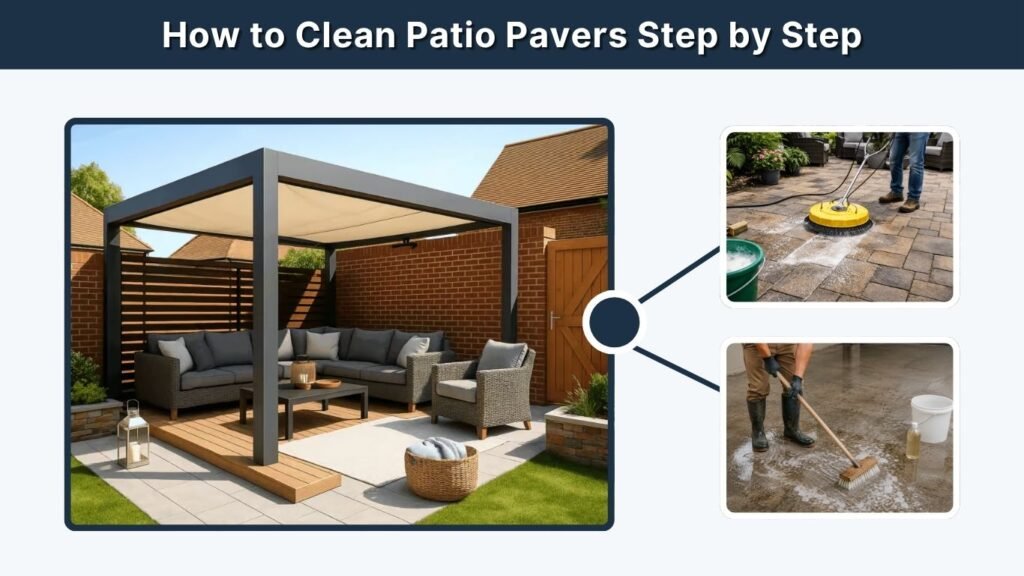
The best way to clean patio pavers is to begin by removing loose debris and then gradually work on embedded dirt. Cleaning in this order prevents leaves and soil from turning into muddy residue when the patio becomes wet. It also reduces the amount of scrubbing or pressure needed later.
Step 1: Clear and Sweep the Patio
Remove patio furniture, grills, containers, toys, and decorations.
Sweep the entire surface carefully, especially:
- Around patio edges
- Between paver joints
- Under furniture
- Near planters
- Around drainage areas
Removing loose dirt first makes the washing process much easier.
Step 2: Rinse the Pavers
Use a garden hose to wet the surface thoroughly. Water helps soften dried dirt and prepares the patio for cleaning solution.
Work in manageable sections so the pavers remain wet while you scrub.
Step 3: Apply the Cleaning Solution
Spread your mild soap-and-water mixture across the patio. Allow it to remain on the surface for several minutes without letting it completely dry.
Heavily stained areas can receive additional cleaner, provided the product is safe for the material.
Step 4: Scrub and Rinse
Use a stiff brush to scrub the pavers in circular or back-and-forth motions.
Concentrate on stained and high-traffic areas, then rinse thoroughly with clean water. Continue rinsing until no visible soap or loosened dirt remains.
How to Clean Pavers Without a Pressure Washer
You do not necessarily need powerful equipment to clean a paver patio. In fact, cleaning manually can be preferable when you want to avoid disturbing joint sand. Regular sweeping, soaking, and scrubbing can remove substantial amounts of dirt while giving you much greater control over the cleaning process.
Use the Soak-and-Scrub Method
Wet the surface and apply warm soapy water. Allow the solution to loosen grime for several minutes before scrubbing with a stiff-bristle brush.
Work on one small area at a time instead of attempting the whole patio at once.
Focus on High-Traffic Areas
Walkways, seating areas, grilling zones, and entrances usually accumulate more dirt than the rest of the patio.
Give these sections extra scrubbing rather than repeatedly cleaning areas that already look good.
Benefits of Cleaning Without Pressure
Manual cleaning offers several advantages:
- Reduces the chance of removing joint sand
- Provides better control around delicate pavers
- Requires less equipment
- Minimizes surface etching
- Works well for routine maintenance
- Helps protect older paving materials
How to Clean Patio Pavers Without Removing Sand
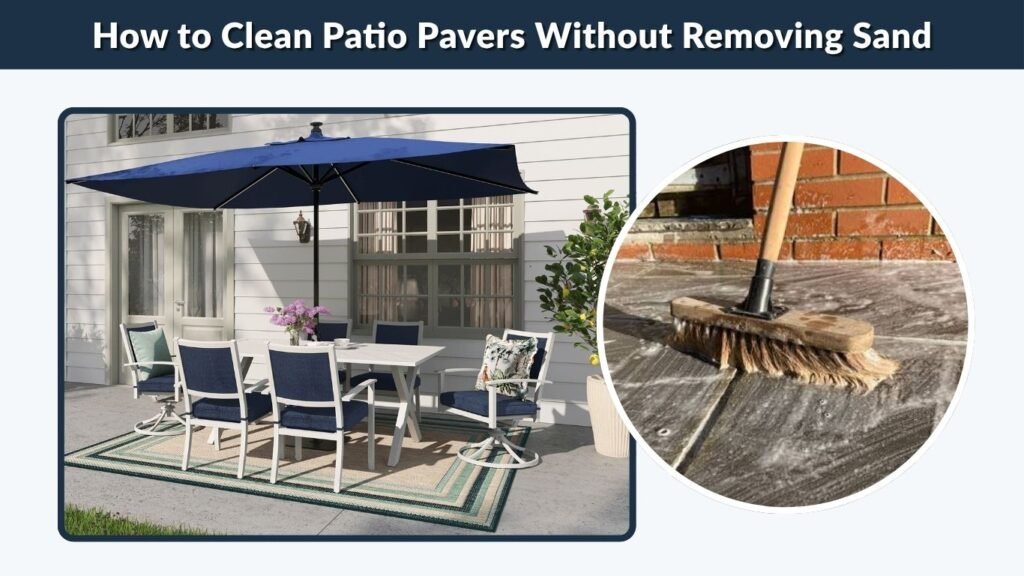
The sand between patio pavers supports the installation and helps prevent unnecessary movement. Aggressive spraying can wash this material away. If your goal is to clean patio pavers without removing sand, use gentle water flow, avoid directing force into the joints, and rely more heavily on surface scrubbing.
Avoid Direct High-Pressure Spraying
If you use a garden hose, direct the water mainly across the surface rather than straight down into the joints.
When using a pressure washer, keep the nozzle a reasonable distance from the patio and avoid concentrating the spray on one joint.
Brush Across the Surface Carefully
Scrub the flat face of the pavers rather than digging deeply into the joint lines.
Some loose sand may naturally move during cleaning, but careful brushing can significantly reduce unnecessary loss.
Replace Missing Joint Sand
After the patio has dried, inspect the joints.
If sand levels are noticeably low, refill them using the appropriate jointing material. Properly filled joints help keep the patio stable and may reduce opportunities for weeds to establish.
Cleaning Different Types of Patio Pavers
Not every paving material should be cleaned in exactly the same way. Concrete, brick, and natural stone vary in porosity, hardness, and sensitivity to cleaning chemicals. Always consider the material before selecting strong products, acids, or high-pressure equipment. When uncertain, follow the paver manufacturer’s maintenance recommendations.
How to Clean Concrete Pavers
Concrete pavers usually respond well to warm water, mild detergent, and a stiff-bristle brush.
Start with this method before moving to stronger products. For oil, rust, or deeply embedded stains, use a cleaner specifically labeled as suitable for concrete pavers.
How to Clean Brick Patio Pavers
Brick can accumulate dirt, moss, and organic staining in porous surfaces.
Gentle scrubbing with water and mild soap is a sensible starting point. Avoid assuming that strong acidic products are safe, because they may affect brick coloration or surrounding mortar and joint materials.
How to Clean Stone Pavers
Natural stone requires extra care because different stones react differently to acidic or alkaline cleaners.
Use a stone-safe product designed for your specific material. Avoid strong acids unless the stone manufacturer clearly recommends them.
How to Remove Stains From Patio Pavers
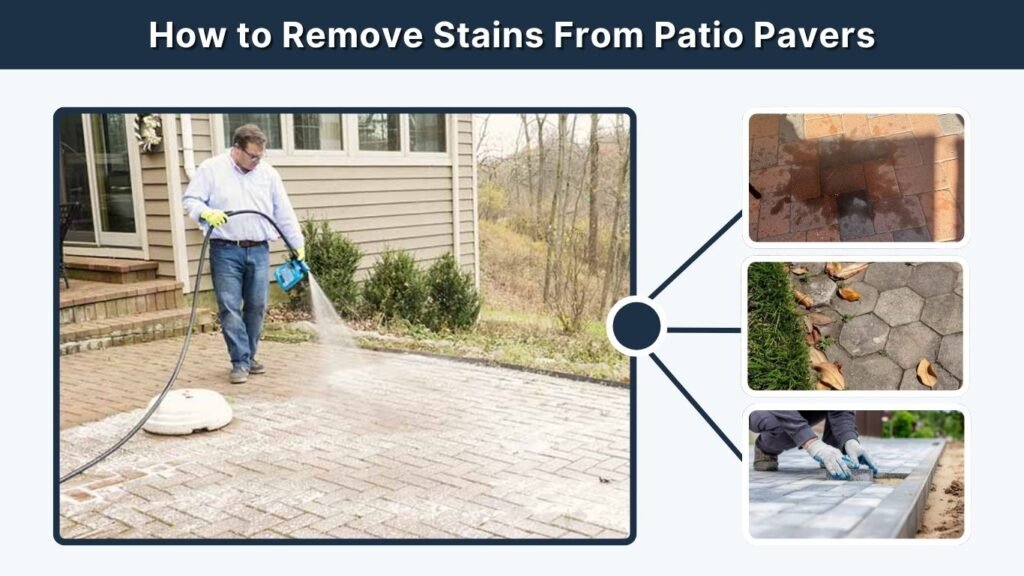
Outdoor patios experience food spills, grease, leaves, rust, and other staining sources. Treating stains quickly usually provides better results because liquids have less time to penetrate porous surfaces. Before using specialized products, remove loose material and identify the likely source of the stain.
Common Paver Stains and Cleaning Methods
- Oil and grease: Absorb fresh oil first, then use a paver-safe degreaser.
- Food stains: Wash quickly with warm water and mild detergent.
- Leaf stains: Scrub away decomposed organic material and use an appropriate cleaner if discoloration remains.
- Rust: Apply a rust remover specifically approved for the paver type.
- Moss and algae: Scrub the growth away and improve drainage or sunlight where possible.
- Mud: Let heavy mud dry, sweep away loose material, then wash remaining residue.
Do Not Mix Cleaning Chemicals
Never combine different cleaning products unless the manufacturer specifically instructs you to do so.
Some combinations can create harmful fumes or damage the paving surface. Use one product at a time and rinse the area properly before switching methods.
Can You Pressure Wash Patio Pavers?
Pressure washing can be useful for heavily soiled patios, but it should not automatically be the first method you try. Excessive pressure may remove joint sand, expose aggregate, or mark softer surfaces. Gentle washing and scrubbing are often enough for normal cleaning, while pressure washing works better as an occasional deeper-cleaning method.
Use Moderate Pressure
Begin with the lowest effective setting. Keep the nozzle moving consistently and maintain adequate distance from the pavers.
Test the spray on a small section before cleaning the entire patio.
Protect the Joints
Avoid spraying directly along joints for extended periods. Angle the water across the surface instead.
After pressure washing, let the patio dry and inspect joint sand levels. Refill the joints if cleaning has removed a noticeable amount.
How to Keep Patio Pavers Clean Longer
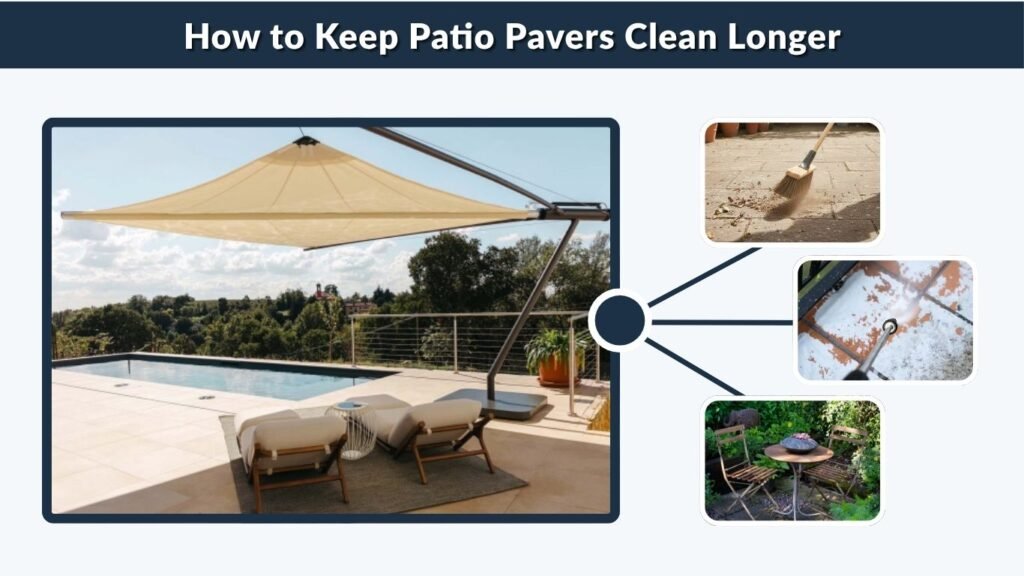
Keeping pavers clean is easier than allowing heavy grime to develop and then trying to remove it all at once. Regular sweeping, fast stain treatment, and proper drainage can significantly reduce deep cleaning requirements. A few simple maintenance habits can also keep weeds and organic buildup under better control.
Follow These Maintenance Tips
- Sweep away leaves regularly.
- Remove food spills quickly.
- Pull weeds while they are small.
- Keep drainage channels clear.
- Move planters occasionally.
- Clean moss before it spreads.
- Check joint sand after heavy rain or cleaning.
- Avoid leaving metal furniture in standing water.
Consider Paver Sealing
Some pavers can benefit from an appropriate sealer after they have been thoroughly cleaned and allowed to dry.
Sealing may reduce liquid penetration and make certain stains easier to remove. However, use a sealer designed for your particular paver material and follow the manufacturer’s application instructions.
How Often Should Patio Pavers Be Cleaned?
There is no single cleaning schedule for every patio. Maintenance frequency depends on weather, surrounding trees, shade, drainage, patio use, and the type of paving material. Patios exposed to frequent leaves or moisture generally require more attention than dry, open areas.
Routine Cleaning
Sweep whenever noticeable dirt, leaves, or debris collects. Frequently used patios may benefit from weekly sweeping during active seasons.
Spills should be cleaned as soon as possible to reduce staining.
Deep Cleaning
A more thorough wash once or twice a year is often adequate for patios that receive regular maintenance.
However, shaded patios that frequently develop moss or heavily used entertaining areas may need deeper cleaning more often.
FAQs
1. What is the best way to clean patio pavers?
The best method for routine cleaning is to sweep away loose debris, wet the patio, apply warm water with mild detergent, scrub with a stiff-bristle brush, and rinse thoroughly. Begin with gentle cleaning before trying pressure washers or stronger chemicals, especially when you do not know how the paver material will react.
2. What is the best cleaner for patio pavers?
The best cleaner depends on the paving material and type of stain. Mild dish soap and warm water work well for everyday dirt. Oil, rust, moss, and deep stains may require specialized paver cleaners. Always choose a product labeled for concrete, brick, or your specific natural stone.
3. How do you clean patio pavers without removing sand?
Use a garden hose with gentle water pressure and scrub mainly across the paver surfaces instead of aggressively working into the joints. Avoid directing concentrated water between the pavers. Once cleaning is complete and the patio dries, inspect the joints and replace any sand that was accidentally removed.
4. Can I clean pavers without a pressure washer?
Yes. Sweeping, soaking with warm soapy water, scrubbing with a stiff brush, and rinsing with a garden hose can handle most routine patio dirt. This method takes more physical effort, but it provides excellent control and reduces the risk of washing away joint sand or damaging softer paving surfaces.
5. How often should I clean patio pavers?
Light cleaning should be done whenever leaves, dirt, or spills accumulate. A deeper cleaning once or twice per year is usually sufficient for a well-maintained patio. Shaded areas, patios beneath trees, or surfaces exposed to frequent moisture may require more frequent cleaning to control moss, algae, and organic staining.