
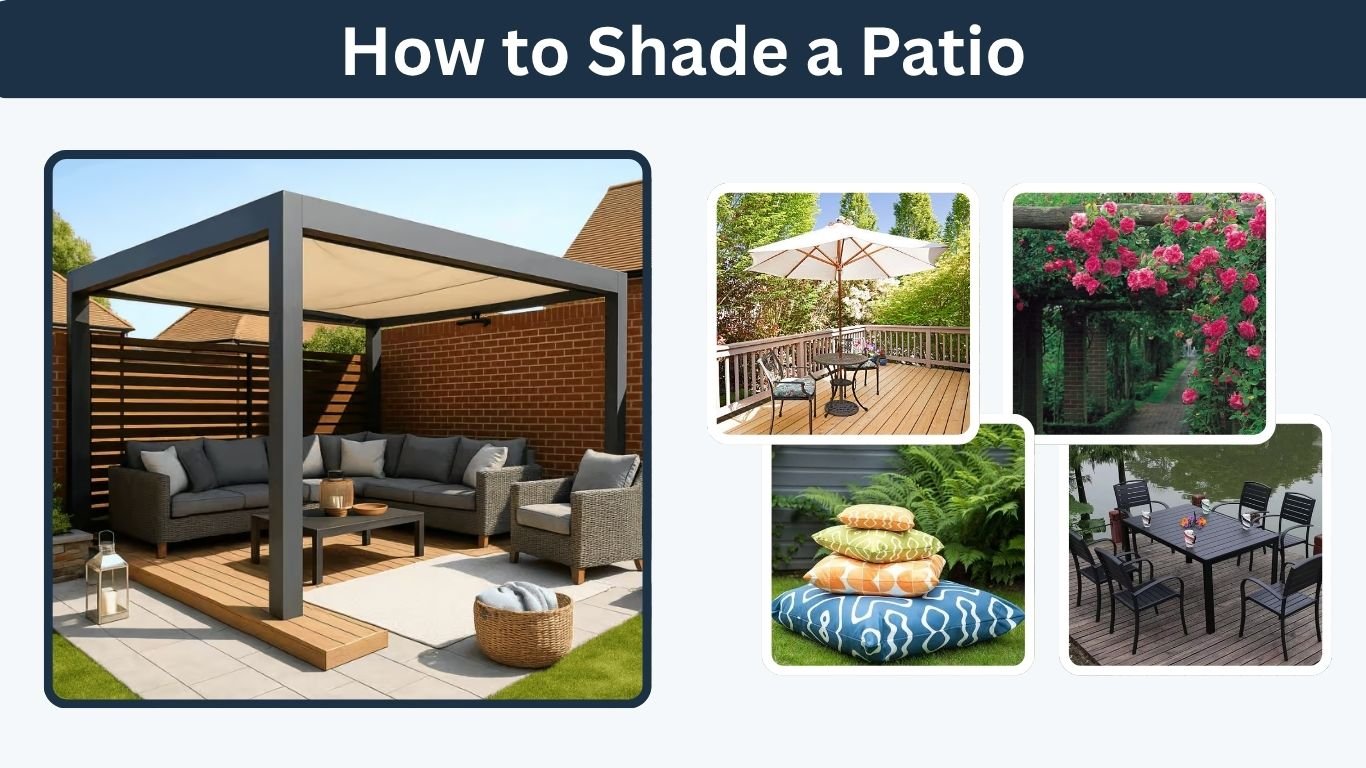
Learning how to shade a patio can make your outdoor area cooler, more comfortable, and easier to enjoy during warm or sunny days. The right shade solution can reduce glare, protect outdoor furniture, and create a more relaxing place for dining, entertaining, or resting. From umbrellas and pergolas to shade sails, awnings, curtains, and natural greenery, there are many practical options. This guide explains the best patio shade ideas, how to choose the right solution, and simple ways to create a cooler outdoor space.
Why Patio Shade Matters
A shaded patio can dramatically improve the comfort and usability of an outdoor living area. Direct sunlight can heat furniture, flooring, and nearby walls, making the space uncomfortable during the hottest parts of the day. Adding shade can help reduce heat buildup while also creating a more inviting environment for meals, conversations, reading, or relaxing.
Improve Everyday Comfort
Strong sunlight can make outdoor chairs, tables, and flooring uncomfortable to touch. A well-positioned shade feature helps reduce direct exposure and creates a more pleasant area for regular use.
This is especially useful during midday and afternoon hours when the sun is strongest. A cooler patio may encourage you to spend more time outdoors instead of avoiding the space during warm weather.
Protect Outdoor Furniture
Outdoor furniture is built for exterior conditions, but prolonged sunlight can still cause fading, cracking, or surface wear.
Shade can reduce direct exposure to ultraviolet light and may help cushions, rugs, wood, plastic, and other materials maintain their appearance longer. Although shade cannot eliminate weather damage completely, it can help slow down sun-related wear.
12 Best Patio Shade Ideas
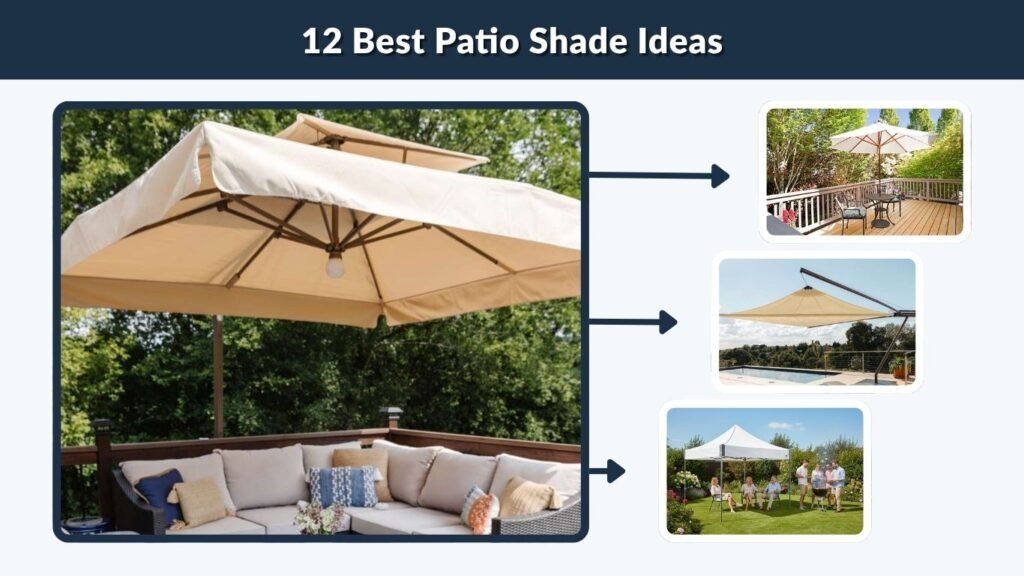
There is no single shade solution that works for every patio. The best option depends on patio size, budget, sun direction, wind exposure, and whether you want a permanent or temporary structure. Some solutions offer quick coverage, while others create a long-term outdoor living feature. These ideas can help you choose what fits your space best.
Easy Patio Shade Options
- Use a patio umbrella for quick and flexible coverage.
- Choose a cantilever umbrella for unobstructed seating space.
- Install a retractable awning for adjustable shade.
- Build a pergola for a permanent architectural feature.
- Add a shade sail for modern overhead coverage.
- Hang outdoor curtains to block low-angle sunlight.
- Use a gazebo for larger shaded areas.
- Grow climbing vines over a pergola or trellis.
- Plant shade trees for long-term natural protection.
- Install bamboo or reed panels for filtered side shade.
- Use a freestanding canopy for affordable seasonal coverage.
- Combine several shade methods for better all-day protection.
Choose Shade Based on Your Patio Size
A compact patio may only need one umbrella, while a larger outdoor space may require multiple shaded zones.
Measure the area before choosing any shade structure. Make sure your preferred option covers the seating or dining area without blocking doors, pathways, or important views.
Use Patio Umbrellas for Flexible Shade
Patio umbrellas are one of the simplest ways to create shade without making permanent structural changes. They are available in many sizes, shapes, and styles, making them suitable for dining tables, lounge areas, balconies, and small patios. Because they can often be tilted or moved, umbrellas are useful when sunlight changes direction during the day.
Market Umbrellas
Market umbrellas usually have a center pole and work particularly well with outdoor dining tables.
Many include tilt features that allow the canopy to block sunlight from different angles. Their relatively simple design also makes them easy to replace or store when necessary.
Choose a strong base that matches the umbrella size and provides adequate stability.
Cantilever Umbrellas
Cantilever umbrellas use an offset pole, allowing the canopy to extend over furniture while keeping the main support outside the seating area.
This makes them especially useful for outdoor sofas, lounge chairs, or larger dining arrangements. Some models rotate, making it easier to reposition shade throughout the day.
Because their weight is offset, a sturdy base or secure mounting system is essential.
Add a Pergola for Long-Term Shade
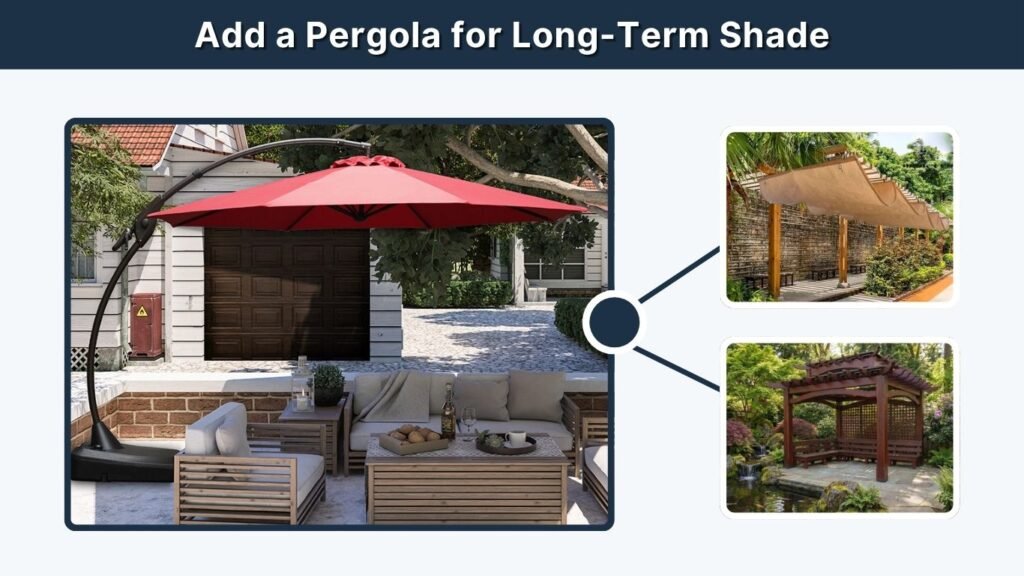
A pergola can create partial shade while also defining the patio as a distinct outdoor living space. Traditional pergolas use spaced beams that allow some sunlight through, while modern designs may include fabric covers, adjustable louvers, or retractable canopies. Pergolas work well over dining areas, outdoor kitchens, and lounge spaces where permanent structure and visual appeal are both important.
Traditional Open-Beam Pergolas
An open-beam pergola creates filtered sunlight rather than complete shade.
The amount of shade depends on beam spacing, orientation, and the position of the sun. This style works well when you want some protection while still keeping the patio bright and airy.
The structure can also support lights, climbing plants, or lightweight curtains.
Add a Retractable Cover
A retractable canopy or fabric panel can provide additional shade whenever needed.
You can open the cover during strong sunlight and retract it when you want more natural light. This flexibility can make a pergola more useful throughout different seasons and weather conditions.
Choose materials specifically rated for outdoor use.
Try Shade Sails for Modern Patio Coverage
Shade sails offer a clean, contemporary way to cover patios without building a solid roof. They are usually made from durable outdoor fabric stretched between secure anchor points. Triangular, square, and rectangular sails can be used individually or layered together to cover larger areas. Proper placement is important because their effectiveness depends heavily on sun direction and installation angle.
Position the Sail Carefully
Watch how sunlight moves across your patio before installing the sail.
Position it so the strongest midday or afternoon sun is blocked from your primary seating area. A sail that is too high or poorly angled may provide less useful coverage than expected.
Slightly sloped installation can also help prevent water from collecting on certain types of fabric.
Use Strong Mounting Points
Shade sails create significant tension on walls, posts, and other anchors.
Make sure every mounting point can safely support the expected load. Use outdoor-rated hardware, and consider professional installation for large sails or uncertain structural conditions.
Secure installation is particularly important in areas exposed to strong winds.
Install an Awning for Adjustable Patio Shade
Awnings are especially useful for patios located directly beside the house. They extend outward from an exterior wall and create overhead shade without placing support posts in the main living area. Both fixed and retractable designs are available, allowing homeowners to choose between constant coverage and adjustable protection depending on their needs.
Retractable Awnings
Retractable awnings can be opened during bright sunlight and closed when you want an unobstructed view of the sky.
Manual versions are usually more affordable, while motorized models offer greater convenience. Some advanced systems include weather sensors that automatically react to changing conditions.
Because awnings attach directly to the house, correct mounting is essential.
Fixed Awnings
Fixed awnings provide constant coverage over a specific section of the patio.
They work best when the same area receives strong sun every day. Because they cannot be adjusted, proper sizing and placement are particularly important before installation.
A fixed awning can also visually define an outdoor dining or seating area.
Use Trees and Plants for Natural Shade
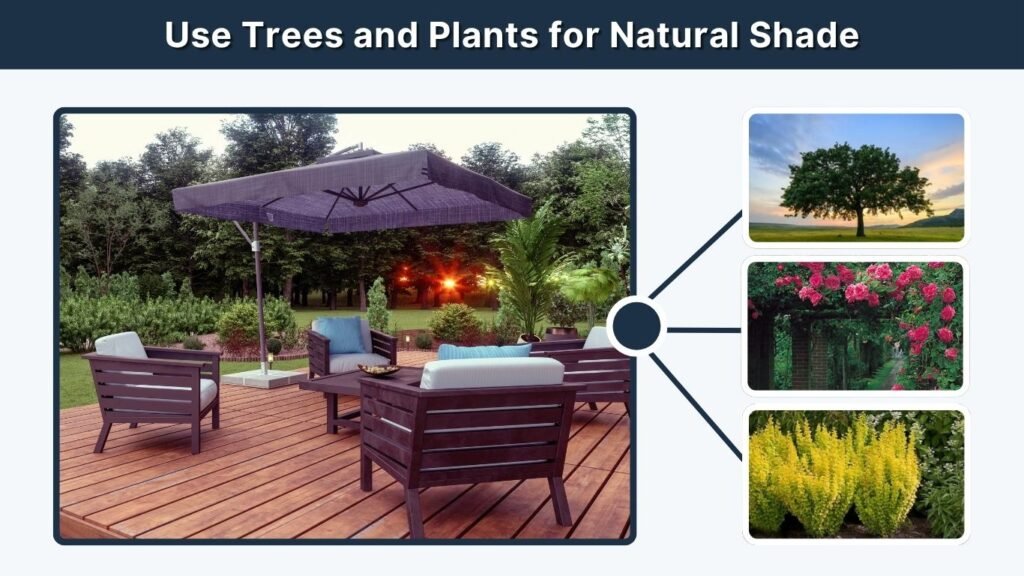
Natural greenery can provide shade while making the patio feel softer, greener, and more relaxing. Trees, climbing plants, and tall shrubs can block sunlight while also improving privacy and visual appeal. Natural shade takes longer to develop than an umbrella or awning, but it can become one of the most attractive long-term solutions.
Natural Shade Options
Consider using:
- Shade trees
- Climbing vines
- Tall shrubs
- Large potted plants
- Trellises with greenery
- Pergolas covered with vines
- Tall ornamental grasses
Grow Vines Over a Pergola
Climbing plants can create filtered shade when trained across a pergola or trellis.
Choose plants that suit your climate, available sunlight, and maintenance preferences. Some vines grow quickly and may require regular pruning to prevent them from becoming too heavy or invasive.
A sturdy structure is important because mature vines can add substantial weight.
Use Potted Trees
Container-grown trees can work well on patios where planting directly in the ground is not possible.
Place them strategically near the side that receives the strongest sun. Narrow, upright varieties are particularly useful for compact patios because they provide height without occupying too much floor space.
Block Side Sun With Curtains and Screens
Overhead shade may not completely protect a patio from early morning or late-afternoon sunlight. At these times, the sun enters from lower angles and can still create glare or heat. Curtains, screens, and side panels can block this light while also providing privacy, making them a useful addition to pergolas, porches, gazebos, and covered patios.
Outdoor Curtains
Outdoor curtains can be opened or closed depending on the sun’s position.
Light-colored curtains can filter harsh light without making the patio feel too dark. They also add softness and create a more comfortable, room-like atmosphere.
Use weather-resistant fabric and secure the curtains during windy conditions.
Bamboo and Reed Screens
Bamboo or reed screens provide filtered shade while maintaining a natural appearance.
They can be installed on fences, railings, or pergola sides. These screens are especially useful when you need privacy and sun protection at the same time.
Because they allow some airflow, they usually feel less enclosed than solid walls.
How to Choose the Best Patio Shade Solution
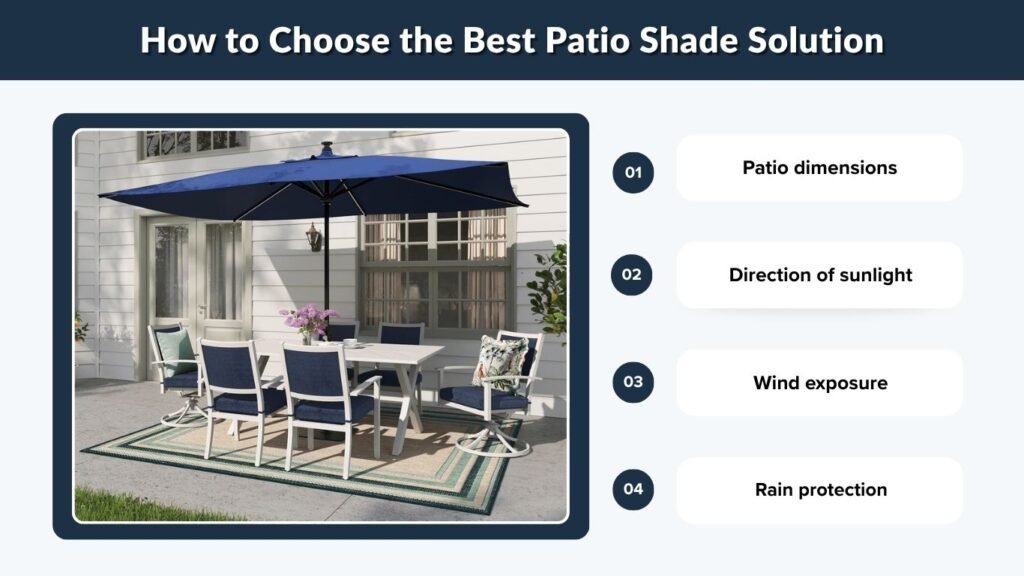
The right patio shade solution should match your daily habits, outdoor layout, climate, and budget. A permanent pergola may be ideal for a frequently used patio, while an umbrella may be sufficient for occasional use. Before spending money, consider when the patio receives the strongest sunlight and exactly which areas need protection.
Important Factors to Consider
Think about:
- Patio dimensions
- Direction of sunlight
- Wind exposure
- Budget
- Permanent or temporary installation
- Amount of shade needed
- Rain protection
- Maintenance requirements
- Available mounting points
- Overall outdoor design
Watch the Sun First
Observe the patio throughout the day before choosing a permanent shade structure.
Notice where sunlight falls in the morning, midday, and afternoon. You may discover that your seating area receives strong western sun rather than overhead sunlight, which could make a side curtain or screen more effective than a large overhead structure.
How to Shade a Patio on a Budget
You do not need an expensive renovation to create meaningful shade. Smaller patios often require only one or two well-placed features. Affordable options can provide immediate relief from direct sunlight and may also be easier to replace or move in the future. Start with the area you use most often and improve additional sections gradually.
Budget Patio Shade Ideas
Affordable options include:
- Basic patio umbrellas
- Simple shade sails
- Outdoor fabric panels
- Bamboo screens
- Reed fencing
- Potted plants
- Freestanding canopies
- DIY trellises
- Outdoor curtains
- Secondhand shade structures
Improve the Space Gradually
Begin by covering your main seating or dining area.
After using the patio for a few weeks, evaluate whether additional shade is necessary. This gradual approach helps prevent unnecessary expenses and allows you to understand how sunlight actually affects the space during different times of day.
Keep a Shaded Patio Cool and Comfortable
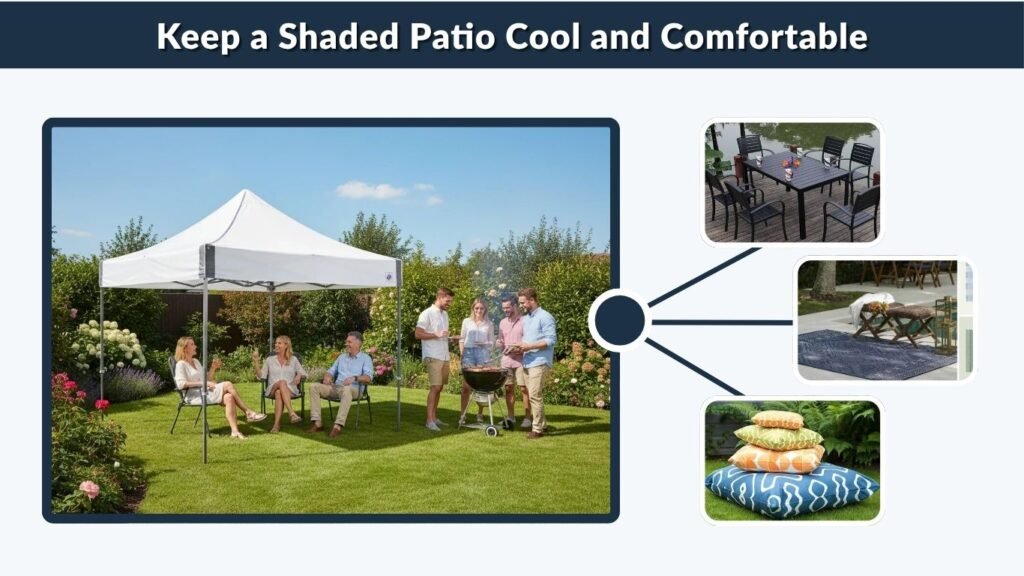
Shade is important, but it works best when combined with good airflow, comfortable furniture, and suitable materials. A completely enclosed patio can still feel hot if air cannot circulate. Keeping the space open, choosing lighter materials, and positioning furniture carefully can improve comfort while preserving the relaxing atmosphere of an outdoor living area.
Maintain Good Airflow
Try not to surround every side of the patio with solid barriers.
Open sides allow natural breezes to move through the space. Covered patios can also benefit from an outdoor-rated ceiling fan or portable fan when additional air movement is needed.
Good ventilation can make shaded areas feel noticeably cooler.
Choose Light-Colored Materials
Dark furniture, rugs, and cushions can absorb significant heat from sunlight.
Lighter fabrics and finishes often remain more comfortable in sunny outdoor environments. Consider neutral or pale tones for umbrellas, curtains, cushions, and other surfaces exposed to direct sun.
Breathable outdoor fabrics can further improve comfort.
FAQs
1. What is the best way to shade a patio?
The best method depends on patio size, budget, and sun direction. Umbrellas provide flexibility, while pergolas, awnings, and shade sails are better for larger or more permanent coverage.
2. How can I shade my patio cheaply?
Affordable options include patio umbrellas, fabric panels, reed screens, shade sails, outdoor curtains, and container plants. You can also combine several inexpensive methods rather than installing one large permanent structure.
3. How can I shade a patio without building a roof?
Use a patio umbrella, pergola, retractable awning, shade sail, outdoor curtain, trellis, or trees. These options can create effective shade without constructing a traditional solid roof.
4. Are patio shade sails worth using?
Shade sails can be very effective when positioned correctly. They offer broad overhead coverage and a modern appearance, but they need secure anchor points and proper tension for safe installation.
5. How do I block afternoon sun on a patio?
Focus on the side facing the strongest afternoon sunlight. Outdoor curtains, retractable screens, tall plants, side panels, awnings, or strategically positioned shade sails can help block low-angle sun and reduce glare.