
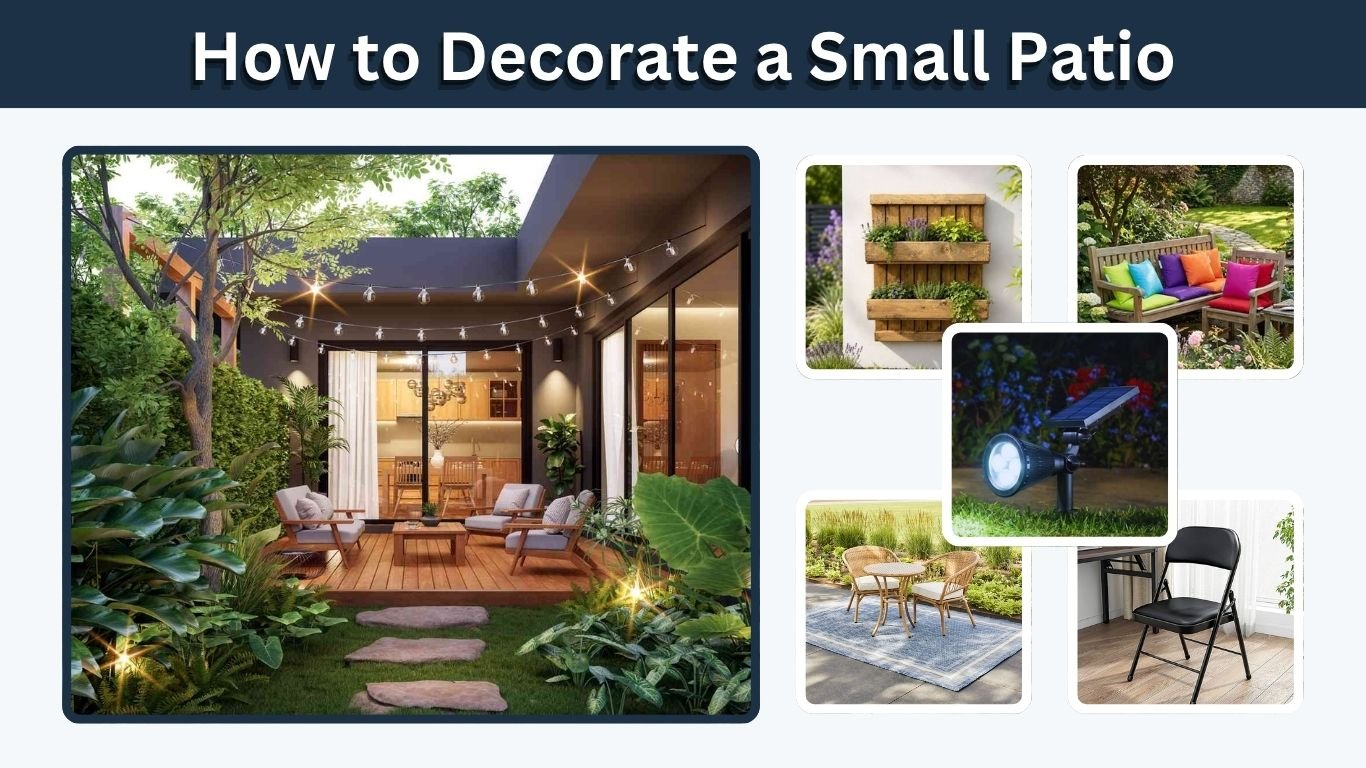
Learning how to decorate a small patio can turn even a limited outdoor area into a comfortable and attractive place for relaxing, dining, or entertaining. The key is choosing appropriately sized furniture, making smart use of vertical space, adding greenery, and keeping the layout open and functional. You do not need an expensive renovation to create a welcoming patio. With thoughtful colors, lighting, textiles, plants, and multipurpose furniture, a compact patio can feel stylish, organized, spacious, and perfectly suited to everyday outdoor living.
Start With a Simple Small Patio Plan
Before purchasing furniture or decorations, think about how you want to use your patio most often. A small outdoor area becomes easier to decorate when every item has a purpose. Consider available floor space, sunlight, privacy, traffic flow, and access from your home. Creating a simple plan can prevent overcrowding while helping the finished patio feel intentional and comfortable.
Decide on the Main Purpose
Start by choosing the primary function of your patio. You may want a quiet reading area, outdoor dining space, coffee corner, or comfortable place to entertain one or two guests.
Trying to include too many activities can quickly make a compact patio feel crowded. Give priority to the activity you expect to enjoy most frequently.
Measure Before Choosing Furniture
Measure the length and width of your patio before purchasing furniture.
Take note of doors, steps, railings, walkways, and other fixed features. Leave enough space for doors to open freely and people to move around without squeezing between chairs and tables.
Accurate measurements can also help you avoid buying attractive furniture that is simply too large for the space.
15 Easy Small Patio Decorating Ideas
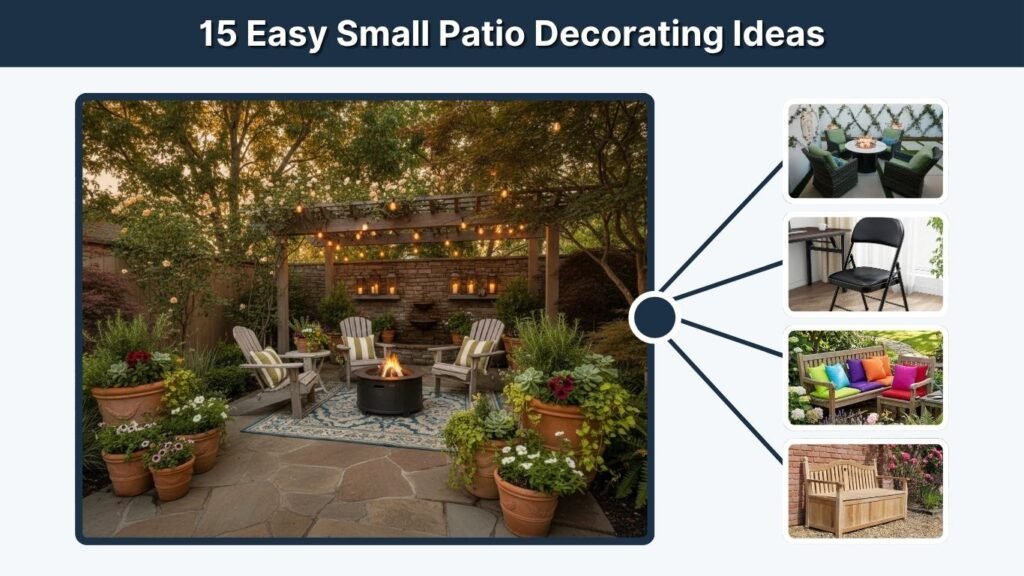
Decorating a small patio is largely about using limited space efficiently while maintaining comfort and personality. Instead of filling every available corner, choose a few features that provide strong visual impact or multiple functions. These easy patio ideas can work for apartments, townhouses, small backyards, balconies, and other compact outdoor spaces without requiring a major remodeling project.
Small Patio Ideas to Try
- Choose compact furniture that fits the scale of the patio.
- Use folding chairs that can be stored when not needed.
- Add a small bistro table for dining or morning coffee.
- Place an outdoor rug beneath the main seating area.
- Use vertical planters instead of filling floor space with pots.
- Hang string lights to create a warm evening atmosphere.
- Add colorful cushions for comfort and personality.
- Install wall-mounted shelves for plants or decorations.
- Use built-in or storage benches for seating and organization.
- Add tall plants to improve privacy.
- Use a large outdoor mirror to visually expand an enclosed patio.
- Choose one focal point, such as a beautiful planter or small table.
- Hang lightweight outdoor curtains for shade and privacy.
- Use nesting tables that can be separated when extra surface space is needed.
- Keep the color palette simple to create a cleaner, more spacious appearance.
Keep Decorations Proportional
Large decorative pieces can overwhelm a small patio. Instead, choose accessories that complement the scale of the furniture and surrounding area.
One attractive planter, lantern, or piece of outdoor artwork may provide more impact than several smaller decorations scattered across the patio.
Choose Furniture That Saves Space
Furniture usually takes up more patio space than any other element, so selecting the right pieces is essential. Oversized sofas and dining tables may make a small patio difficult to navigate. Look for compact furniture with simple profiles, flexible arrangements, and multiple functions. The goal is to create comfortable seating while preserving enough open floor space for movement.
Use Multipurpose Furniture
Furniture that performs more than one function is particularly valuable in compact outdoor spaces.
A storage bench can provide seating while holding cushions, gardening tools, or outdoor accessories. An ottoman can serve as a footrest, extra seat, or small table.
Nesting tables are another useful option because they take up minimal space when stacked together.
Consider Folding Furniture
Folding chairs and tables can help you quickly change the patio layout.
You can keep them open for meals or gatherings and fold them away when you want additional floor space. This flexibility is especially helpful on extremely small apartment patios or balconies.
Add Plants Without Crowding the Patio
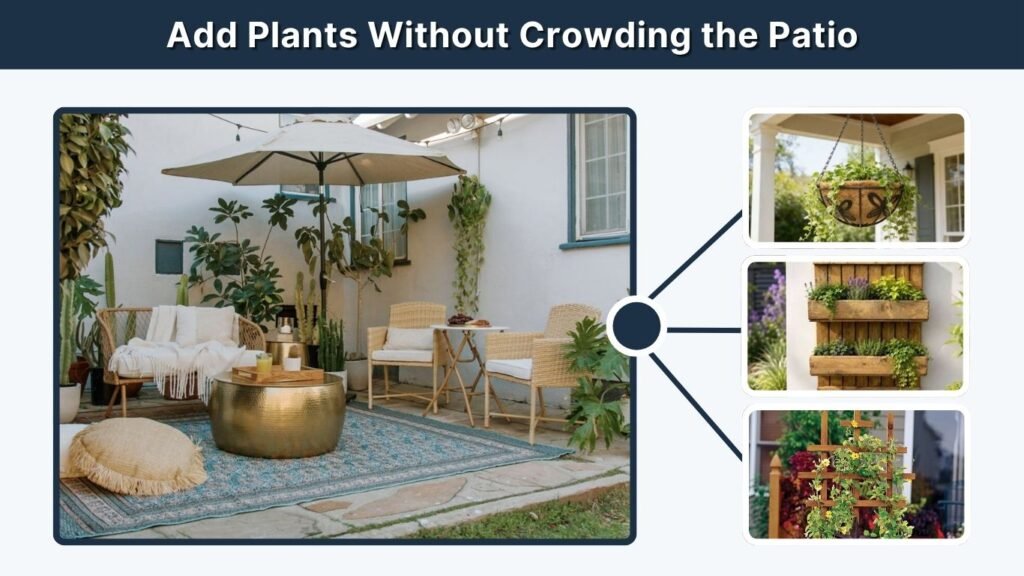
Plants can make a small patio feel fresh, colorful, and more connected to nature. However, too many large containers can quickly consume valuable floor space. Instead of concentrating only on traditional pots, use walls, railings, shelves, and hanging spaces. A carefully planned combination of plants can provide greenery while maintaining an open and comfortable layout.
Best Ways to Add Greenery
Consider these space-saving approaches:
- Hanging baskets
- Wall-mounted planters
- Vertical garden panels
- Railing planters
- Narrow plant stands
- Small tabletop plants
- Tall corner planters
- Climbing plants on trellises
Use Tall Plants for Privacy
Tall plants can perform two functions at once by adding greenery and blocking unwanted views.
Place narrow planters along exposed patio edges rather than distributing them throughout the floor area. Bamboo-like ornamental plants, tall grasses, or suitable shrubs can create a softer privacy barrier.
Always choose plants that match the amount of sunlight your patio receives.
Make a Small Patio Feel Bigger
A limited patio does not necessarily need to feel cramped. Visual design techniques can make the area appear more spacious without changing its actual dimensions. Maintaining clear walking paths, limiting clutter, choosing coordinated colors, and using vertical elements can create an open atmosphere. The way furniture and decorations are arranged often matters more than the total size of the patio.
Keep the Floor Visible
Avoid covering every section of the patio with furniture, pots, and decorations.
Visible floor space creates visual breathing room and makes the layout easier to understand. Position furniture near walls or corners when practical while maintaining comfortable pathways.
Furniture with slim legs can also create a lighter appearance than bulky pieces that extend completely to the floor.
Use a Consistent Color Palette
Too many competing colors can make a small space feel visually busy.
Choose two or three primary colors and repeat them through cushions, rugs, planters, and accessories. Neutral foundations combined with one accent color often work particularly well.
A consistent palette helps separate decorative elements feel like part of one unified design.
Decorate With Outdoor Lighting
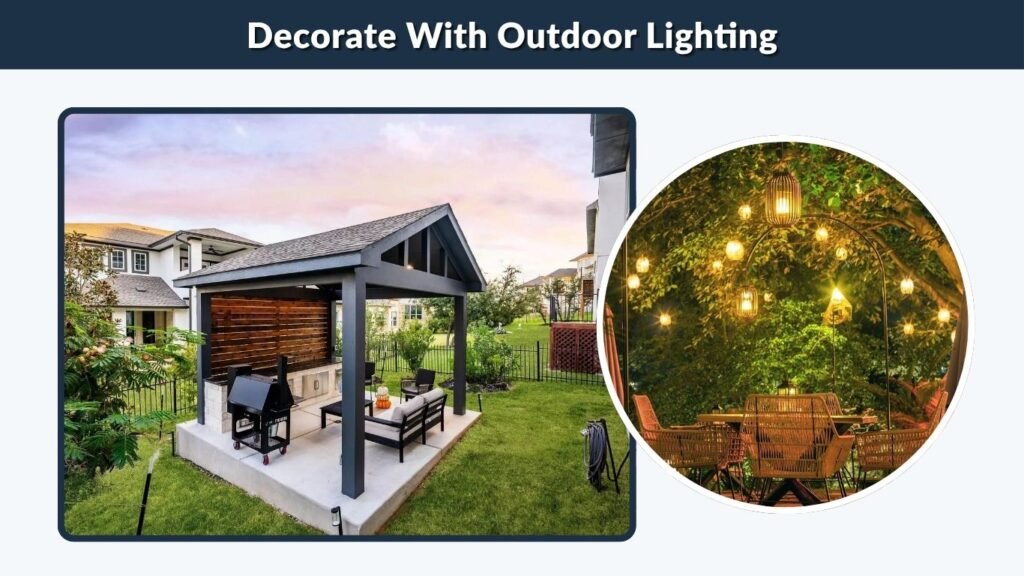
Lighting can dramatically change how a small patio feels after sunset. Instead of depending on one bright fixture, use several softer light sources to create depth and warmth. Compact patios are particularly suitable for decorative lighting because only a few strategically positioned fixtures may be needed. Choose outdoor-rated products that are suitable for exposure to moisture and changing weather conditions.
Layer Different Light Sources
Combine different types of lighting rather than using only one.
String lights can provide general ambiance, while lanterns add gentle light near seating. Wall-mounted fixtures or small solar lights can improve visibility along steps and pathways.
Keeping lighting warm and relatively subtle can make a small patio feel cozy instead of overly bright.
Take Advantage of Vertical Space
Hanging lights above eye level prevents them from occupying tables or floors.
String lights can be attached to fences, railings, pergolas, or appropriate exterior supports. Wall-mounted lights are another space-saving option when permanent installation is practical.
Avoid positioning lights where cables create tripping hazards.
Use Textiles to Add Comfort and Style
Outdoor textiles are among the easiest ways to make a small patio feel like a true extension of your indoor living space. Rugs, cushions, and throws can introduce color and softness without requiring additional furniture. Because these accessories are relatively easy to change, they also provide a simple way to update your patio’s appearance between seasons.
Add an Outdoor Rug
An appropriately sized outdoor rug can visually define the seating area.
Choose a rug large enough to connect your main furniture pieces without completely covering the patio. Patterns can introduce personality, while simpler designs may make a very small area feel less busy.
Select outdoor-rated materials that can handle moisture, sunlight, and regular cleaning.
Use Cushions and Throws Carefully
Cushions can transform simple patio chairs into much more inviting seating.
Use a small number of coordinated colors and patterns rather than covering every surface. Lightweight outdoor throws can also provide additional comfort during cooler evenings.
Store textiles indoors or in weather-resistant storage when conditions become severe.
Create Privacy on a Small Patio
Privacy can make a small patio significantly more comfortable, particularly when neighboring homes or shared outdoor areas are close by. The challenge is creating separation without making the patio feel enclosed. Lightweight screens, plants, curtains, and trellises can block unwanted views while maintaining airflow and allowing natural light into the area.
Try Vertical Privacy Solutions
Privacy features that extend upward are usually more efficient than large objects placed across the floor.
Options include narrow trellises, decorative screens, climbing vines, outdoor curtains, and tall plants.
Position privacy features only where needed. Completely surrounding a tiny patio may make it feel smaller and darker.
Balance Privacy and Openness
A combination of solid and open elements can create better results than a completely enclosed barrier.
For example, a decorative screen combined with climbing plants can filter views while allowing light and air through. This creates separation without making the patio feel isolated.
Add Personality Without Creating Clutter
Personal touches help transform a functional patio into an enjoyable outdoor living area. However, compact spaces can become cluttered very quickly when too many decorations are introduced. Select a few meaningful or visually strong elements instead of filling every wall, table, and corner. A simpler approach often makes individual decorative pieces stand out more effectively.
Choose One Main Focal Point
Every small patio can benefit from a clear focal point.
This could be a decorative wall, statement planter, patterned rug, small fountain, attractive table, or distinctive chair. Building the rest of the design around one feature can create a more polished appearance.
Keep Accessories Organized
Use trays, baskets, shelves, or built-in storage to keep small objects together.
Removing unnecessary items can instantly make a compact patio appear larger. Periodically review your decorations and remove anything that no longer contributes to comfort, function, or the overall design.
Decorate a Small Patio on a Budget
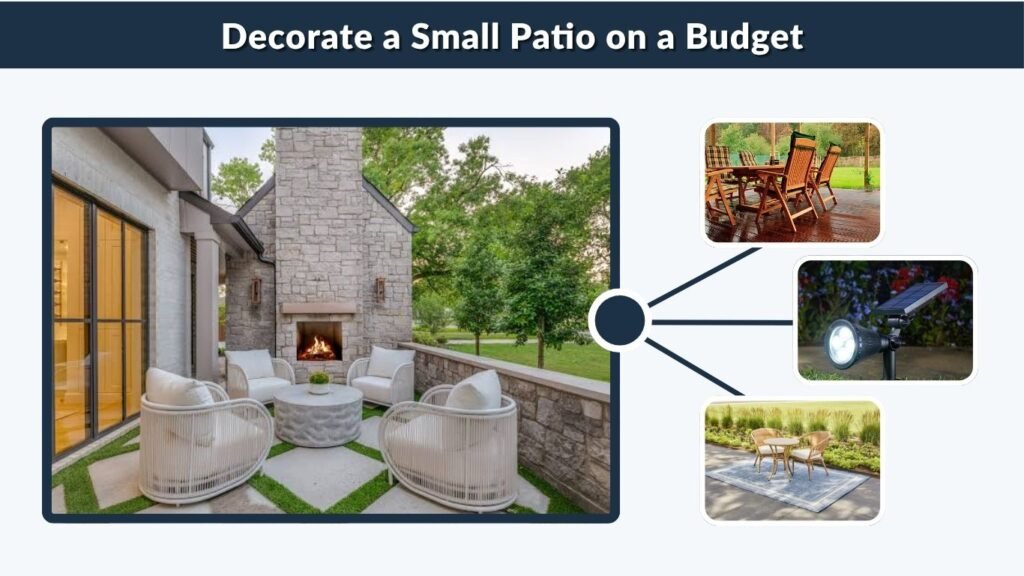
Creating an attractive patio does not require expensive furniture or professional landscaping. Small outdoor areas can often be transformed with relatively inexpensive changes because fewer materials and accessories are needed. Focus your spending on comfortable essentials first, then introduce affordable decorative improvements such as plants, lighting, textiles, and repurposed furniture as your budget allows.
Budget-Friendly Patio Ideas
Try these affordable improvements:
- Refresh old furniture with outdoor paint.
- Add inexpensive outdoor cushions.
- Grow plants from cuttings.
- Use solar-powered lighting.
- Repurpose wooden crates as side tables.
- Choose inexpensive container plants.
- Add a small outdoor rug.
- Install simple hanging planters.
- Use removable outdoor curtains.
- Update existing pots with paint.
Improve the Patio Gradually
There is no need to finish everything at once.
Begin with comfortable seating and one useful table. Add lighting, plants, textiles, and decorations over time after seeing how you actually use the space.
A gradual approach can also prevent unnecessary purchases and make it easier to develop a patio that genuinely fits your lifestyle.
FAQs
1. How can I decorate a very small patio?
Start with compact furniture and limit the number of decorative pieces. Use vertical planters, folding furniture, wall-mounted accessories, and hanging lights to preserve floor space. Keep pathways clear and choose multipurpose furniture whenever possible.
2. How can I make my small patio look bigger?
Keep the layout uncluttered, use appropriately sized furniture, maintain visible floor space, and choose a consistent color palette. Vertical plants and decorations draw the eye upward, while slim furniture can help the patio feel more open.
3. What furniture is best for a small patio?
Compact bistro sets, folding chairs, storage benches, nesting tables, and slim-profile lounge chairs work particularly well. Choose furniture according to your main activity and avoid oversized pieces that restrict movement.
4. How can I decorate a small patio cheaply?
Use existing furniture, add affordable cushions, introduce container plants, install string or solar lights, and repurpose household items for outdoor use when appropriate. Small updates can make a noticeable difference without major construction.
5. What colors make a small patio feel larger?
Light neutrals such as white, beige, gray, and soft natural tones can create an open appearance. Adding one or two accent colors through cushions, rugs, plants, or accessories provides personality without making the space feel visually crowded.