
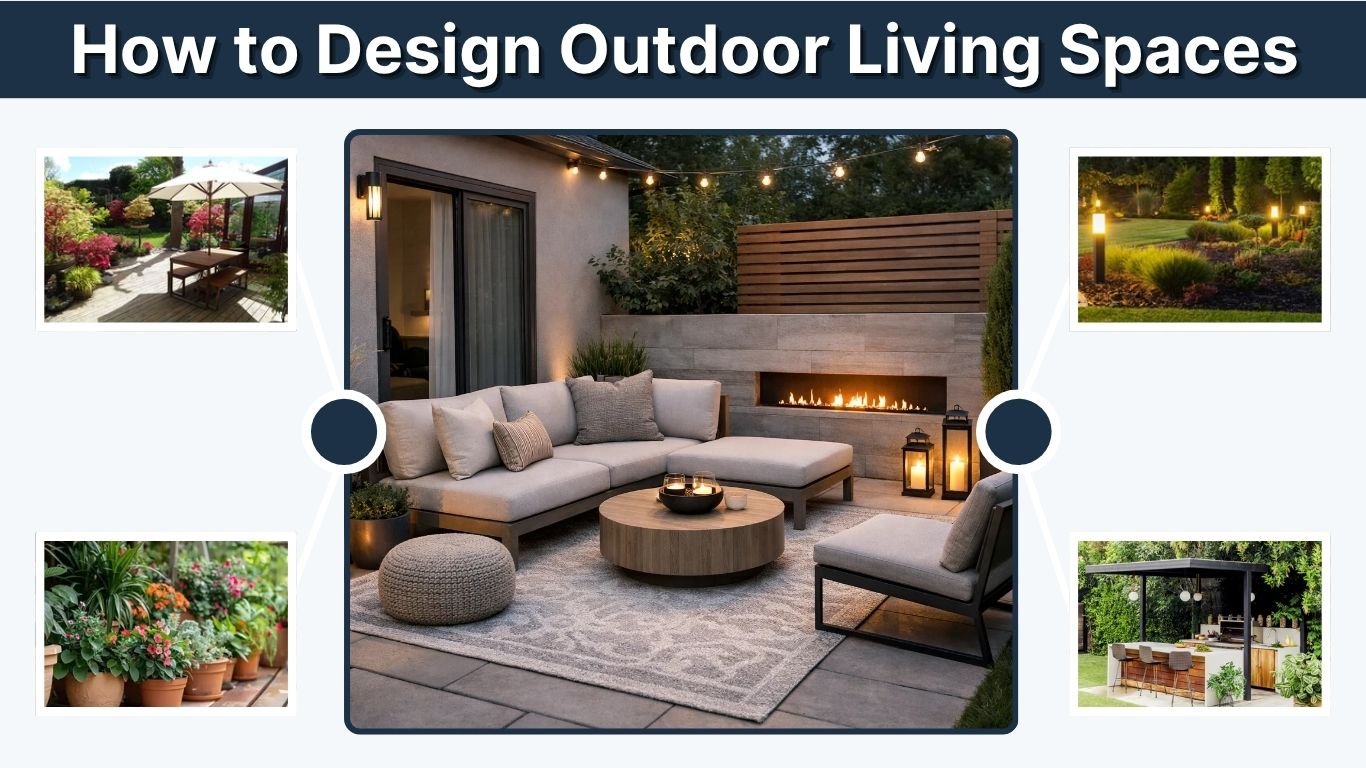
Learning how to design outdoor living spaces can help you turn a plain backyard, patio, or deck into a comfortable extension of your home. A thoughtful outdoor living space design combines seating, shade, lighting, landscaping, and functional zones that fit your lifestyle. Whether you have a compact patio or a large backyard, simple design decisions can make the area more attractive and practical. These 10 easy ideas will help you create an outdoor space for relaxing, dining, entertaining, and everyday enjoyment.
Start With a Clear Outdoor Living Space Design Plan
Before choosing furniture or decorative features, think about how you actually want to use the area. Good outdoor living designs begin with function, available space, climate, traffic flow, and connection to the house. Creating a basic plan first helps prevent overcrowding and makes it easier to choose materials, furniture, lighting, landscaping, and accessories that work together.
Decide How You Will Use the Space
Consider which activities matter most. You may want an outdoor dining area for family meals, a comfortable conversation space, a cooking station, or a quiet place for reading.
A larger backyard can accommodate several functions, while a small patio may work better when designed around one primary purpose.
Measure and Study the Area
Measure the available space before purchasing furniture. Pay attention to doors, pathways, trees, walls, and other permanent features.
You should also observe where sunlight and shade fall throughout the day. Understanding these conditions makes it easier to decide where seating, dining tables, plants, and shade structures should go.
10 Easy Outdoor Living Space Design Ideas
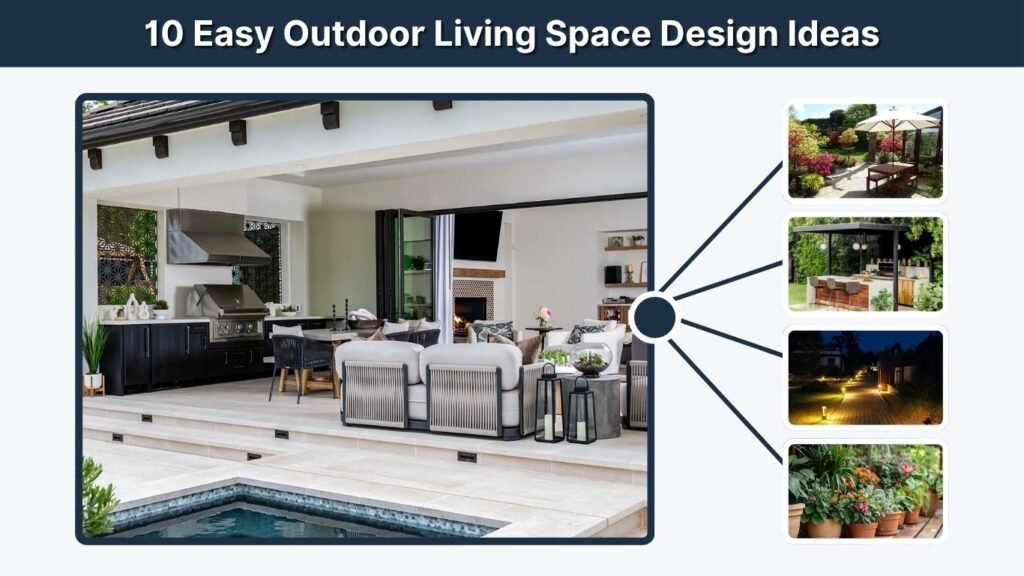
Designing outdoor living spaces does not always require complicated construction or a major renovation. Many effective improvements come from arranging the area around comfort, function, and natural surroundings. The following outdoor living design ideas can work for patios, decks, gardens, courtyards, and backyards, allowing you to choose the features that make the most sense for your home.
1. Create a Comfortable Seating Zone
Start with comfortable outdoor seating that encourages people to stay outside longer. A sofa, sectional, lounge chairs, or simple cushioned chairs can establish the main gathering area.
Arrange the furniture so people can easily talk without blocking walkways. Add a coffee table or side tables for drinks, books, and other small items.
2. Add an Outdoor Dining Area
An outdoor dining space makes backyard meals and gatherings more enjoyable. Select a table that fits your available space without overwhelming it.
Place the dining area near the house or outdoor kitchen when possible. This reduces the distance needed to carry food, dishes, and drinks.
3. Include Plenty of Shade
Shade can dramatically improve the comfort of an outdoor living area.
Consider options such as:
- Patio umbrellas
- Pergolas
- Retractable awnings
- Shade sails
- Covered patios
- Large shade trees
Choose a solution based on the amount of sunlight the area receives and how permanent you want the structure to be.
4. Define Different Activity Zones
Large outdoor spaces often work better when divided into smaller functional areas. One area may contain a dining table while another provides lounge seating.
Outdoor rugs, planters, furniture arrangements, changes in flooring, and lighting can visually separate zones without creating solid walls.
5. Bring in Natural Greenery
Plants make outdoor living spaces feel softer and more connected to nature. Use a combination of flowers, shrubs, container plants, herbs, and small trees.
Vertical gardens are especially useful when designing an outdoor living space with limited floor area. They introduce greenery without taking up much valuable space.
6. Add an Outdoor Kitchen or Grill Station
An outdoor cooking area can become a central feature for entertaining.
A simple setup may only require a grill and preparation table, while larger outdoor living space designs can include:
- Built-in grills
- Countertops
- Outdoor refrigerators
- Storage cabinets
- Sinks
- Pizza ovens
Keep cooking areas separated from highly flammable materials and busy walking paths.
7. Use a Fire Feature as a Focal Point
Fire pits and outdoor fireplaces provide a natural gathering point, especially during cooler evenings.
Arrange seating around the fire feature while maintaining appropriate safety distances. Portable fire pits can work well for flexible backyard designs, while built-in fireplaces can create a stronger architectural focal point.
8. Install Layered Outdoor Lighting
A single bright light rarely creates the most comfortable atmosphere. Instead, combine several types of lighting.
Useful choices include:
- String lights
- Pathway lights
- Wall sconces
- Lanterns
- Step lights
- Landscape spotlights
- Pendant lights
Use brighter task lighting around cooking areas while keeping lounge and dining spaces softer and more relaxing.
9. Create More Privacy
Privacy makes an outdoor living room feel more comfortable and separated from surrounding properties.
Fences, decorative screens, tall plants, hedges, trellises, and climbing vines can reduce unwanted views. Combining structural screens with landscaping often creates privacy without making the space feel completely enclosed.
10. Add Personal Decorative Touches
Finish the space with accessories that reflect your home’s style.
Outdoor rugs, cushions, throw pillows, planters, lanterns, artwork, and decorative objects can transform a basic patio into a more complete living area. Choose outdoor-rated materials that can tolerate sunlight, moisture, and temperature changes.
Essential Elements of a Functional Outdoor Living Area
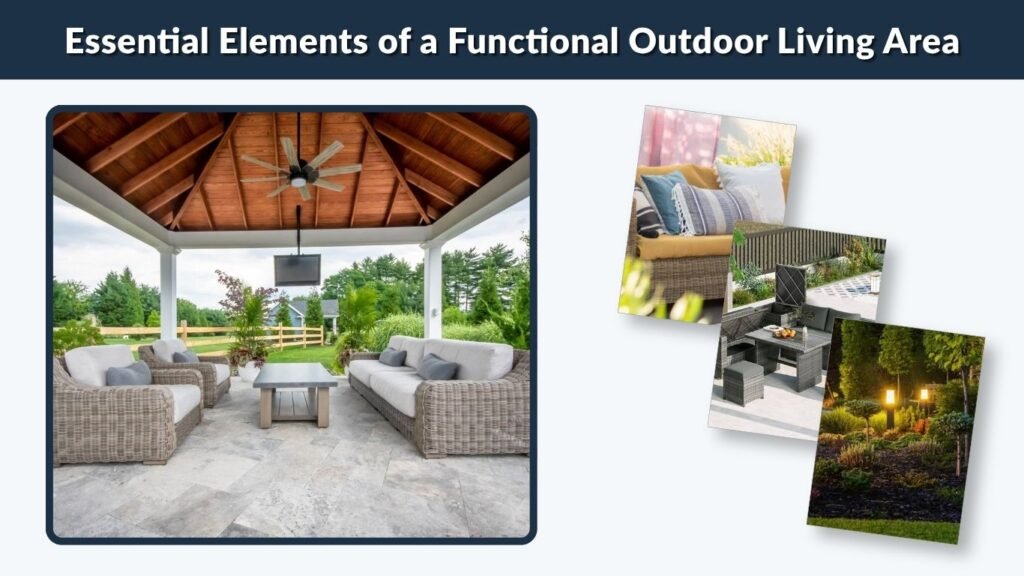
A visually attractive design is only successful when the area is comfortable and practical to use. Outdoor living space designs should respond to changing weather, everyday activities, and maintenance requirements. Combining durable furniture, proper lighting, accessible pathways, privacy, shade, and landscaping creates an outdoor environment that feels more like a genuine room rather than an unfinished part of the yard.
Features Worth Including
Consider incorporating these practical elements:
- Weather-resistant furniture
- Comfortable outdoor cushions
- Adequate shade
- Clear walking paths
- Convenient tables
- Outdoor lighting
- Electrical access when appropriate
- Storage for cushions and accessories
- Privacy features
- Suitable landscaping
Not every backyard needs all of these elements. Select features based on how frequently you use the area and the activities you plan to enjoy there.
Maintain Comfortable Traffic Flow
Leave enough room for people to move comfortably between entrances, seating areas, cooking stations, and gardens.
Avoid placing oversized furniture near doors or narrow pathways. Keeping the primary walking routes clear makes the area more functional when several people are using it at the same time.
Choose Durable Materials for Outdoor Living Designs
Materials used outdoors must withstand more demanding conditions than indoor furnishings. Sunlight, rain, humidity, dirt, wind, and temperature changes can gradually damage surfaces and fabrics. Choosing materials intended for exterior use can reduce maintenance and help your outdoor living space maintain its appearance. Consider your climate before deciding on flooring, furniture, fabrics, countertops, and decorative finishes.
Popular Outdoor Materials
Common options include:
- Concrete: Durable and versatile for patios.
- Natural stone: Provides an attractive, high-end appearance.
- Pavers: Available in numerous shapes, colors, and patterns.
- Composite decking: Offers a wood-like look with relatively easy maintenance.
- Teak: Popular for durable outdoor furniture.
- Aluminum: Lightweight and resistant to rust.
- Synthetic wicker: Useful for comfortable lounge furniture.
Choose Outdoor-Rated Fabrics
Indoor cushions are generally not designed to handle repeated exposure to moisture and direct sunlight.
Look for fabrics specifically designed for exterior environments. Removable covers can also make cleaning easier. Even weather-resistant cushions often last longer when stored in a dry location during severe weather or extended periods of non-use.
Connect Indoor and Outdoor Living Spaces
One of the most effective approaches to designing an outdoor living space is making it feel like a natural continuation of the house. Consistent colors, materials, furniture styles, and sightlines can create a smooth transition between the two environments. Easy access through doors and strategically positioned outdoor zones can also encourage more frequent use of the exterior space throughout the year.
Repeat Interior Design Elements Outside
You do not need to duplicate your indoor décor exactly. Instead, repeat a few visual elements.
For example, an interior with warm natural wood and neutral fabrics may connect well with a wood dining table, beige outdoor cushions, and natural stone flooring outside.
Repeating colors or textures helps both environments feel visually related.
Consider the View From Indoors
Outdoor living space design should also consider what the backyard looks like from inside the house.
Position plants, lighting, furniture, or attractive architectural features where they can be seen through major windows and doors. An outdoor fireplace, garden, water feature, or beautifully arranged seating area can become an appealing view even when you are indoors.
Common Outdoor Living Design Mistakes to Avoid
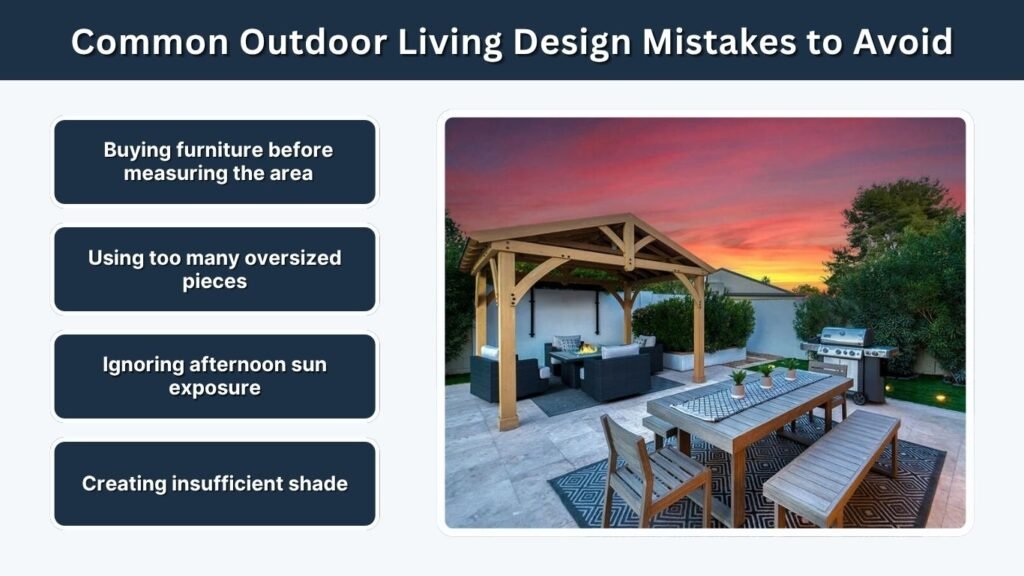
Even attractive outdoor designs can become inconvenient when practical details are overlooked. Oversized furniture, insufficient shade, poor lighting, and unclear traffic patterns may limit how frequently the space is used. Planning around comfort and everyday movement from the beginning can prevent expensive changes later and help create an outdoor living area that remains functional as your family’s needs change.
Avoid These Common Mistakes
- Buying furniture before measuring the area
- Using too many oversized pieces
- Ignoring afternoon sun exposure
- Creating insufficient shade
- Forgetting nighttime lighting
- Blocking important walkways
- Choosing indoor-only fabrics or furniture
- Adding too many decorative accessories
- Ignoring privacy from neighboring properties
- Selecting plants unsuitable for the local conditions
Do Not Overfill the Space
Leaving some open space is just as important as adding furniture.
A patio packed with chairs, tables, planters, and accessories can feel smaller than it actually is. Select fewer functional pieces and allow enough open room for comfortable movement.
A simpler layout can often make outdoor living areas feel larger, cleaner, and more inviting.
FAQs
1. How do you design an outdoor living space?
Start by determining how you want to use the area, measuring the available space, and identifying sunlight, shade, entrances, and traffic patterns. Then create functional zones for activities such as dining, relaxing, cooking, or entertaining. Complete the design with comfortable furniture, lighting, landscaping, shade, and outdoor-rated materials.
2. What should an outdoor living space include?
Most outdoor living spaces benefit from comfortable seating, tables, shade, lighting, clear pathways, landscaping, and some privacy. Additional features can include an outdoor kitchen, dining area, fire pit, television, water feature, or storage depending on your lifestyle and available space.
3. How can I design a small outdoor living area?
Choose appropriately sized furniture and focus on one or two main functions. Multifunctional furniture, vertical gardens, wall-mounted lighting, compact dining sets, and built-in benches can help maximize limited space without making the area feel overcrowded.
4. How can I make an outdoor living space look modern?
Use clean furniture lines, simple layouts, neutral colors, contemporary planters, structured landscaping, and coordinated materials. Modern outdoor living space designs often combine concrete, wood, metal, stone, and carefully positioned lighting while minimizing unnecessary decorative clutter.
5. How can I design an outdoor living space on a budget?
Begin with existing furniture when possible and prioritize improvements that provide the greatest practical benefit. Affordable additions such as string lights, outdoor cushions, potted plants, rugs, umbrellas, and simple DIY privacy screens can transform an outdoor area without requiring major construction.